2 Samuel 8
Azərbaycan dilində Müqəddəs Kitab · Tap a verse to see its cross-references.
Davudun qələbələri
1Bundan sonra Davud Filiştliləri məğlub edib özünə tabe etdi və Meteq-Ammahı Filiştlilərdən aldı. 2Moavlıları da məğlub etdi və yerə uzadaraq ölçü ipi ilə ölçdü, ölçdüyü iki cərgəni öldürdü, bir cərgəni isə sağ buraxdı. Moavlılar Davuda tabe olub xərac verdilər.
3Sova padşahı Rexov oğlu Hadadezer Fərat çayının ətrafında öz hakimiyyətini bərpa etmək üçün gedəndə Davud onu məğlub etdi. 4O, Hadadezerin min yeddi yüz süvarisini və iyirmi min piyada əsgərini əsir etdi və atlardan yüzə qədərini döyüş arabası üçün saxlayaraq qalan atların ayaq vətərini kəsdi. 5Dəməşqdə yaşayan Aramlılar Sova padşahı Hadadezerə kömək etməyə gələndə Davud onlardan iyirmi iki min nəfəri qırdı. 6Davud Dəməşq Aramına hərbi dəstələr yerləşdirdi və Aramlılar ona tabe olub xərac verdilər. Rəbb Davuda getdiyi hər yerdə zəfər qazandırdı. 7O, Hadadezerin zabitlərinin gəzdirdiyi qızıl qalxanları götürüb Yerusəlimə gətirdi. 8Padşah Davud Hadadezerin Betah və Berotay şəhərlərindən çoxlu tunc aldı.
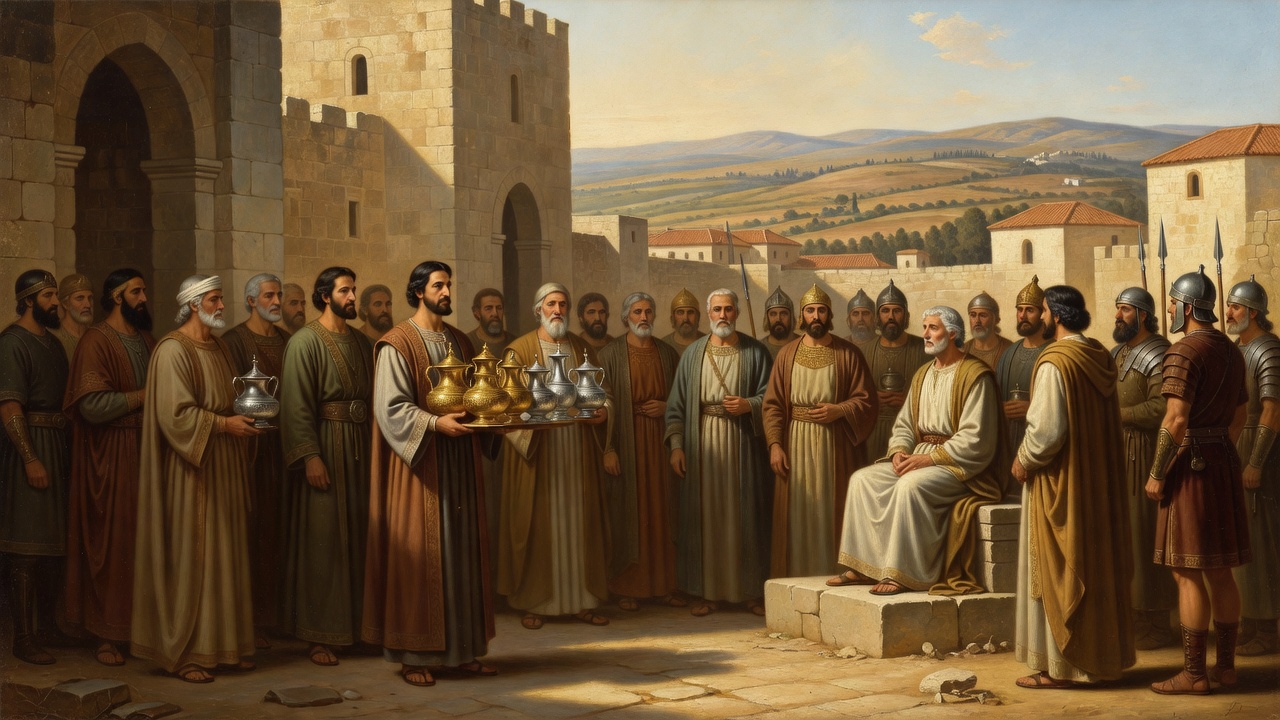
9Xamat padşahı Toi eşitdi ki, Davud Hadadezerin bütün ordusunu məğlub edib. 10Toi padşah Davudu salamlamaq və Hadadezeri döyüşdə məğlub etdiyinə görə təbrik etmək üçün oğlu Yoramı onun yanına göndərdi, çünki Hadadezer Toi ilə həmişə müharibə etmişdi. Yoram Davuda qızıl-gümüş və tunc əşyalar bəxş etdi. 11Padşah Davud bu bəxşişləri də, özünə tabe etdirdiyi bütün millətlərdən – 12Aramlılardan, Moavlılardan, Ammonlulardan, Filiştlilərdən, Amaleqlilərdən əldə etdiyi qızıl-gümüşü də Sova padşahı Rexov oğlu Hadadezerdən əldə edilən talan malı ilə birlikdə Rəbbə həsr etdi.
13Duz vadisində Davud Edomlulardan on səkkiz min nəfəri qırandan sonra geri qayıdan zaman ad qazandı. 14Edoma hərbi dəstələr yerləşdirdi. Edomun hər tərəfinə hərbi dəstələri yerləşdirəndən sonra Edomluların hamısı Davuda tabe oldu. Rəbb Davuda getdiyi hər yerdə zəfər qazandırdı.
15Davud bütün İsrailin padşahı oldu. O bütün xalqına ədalət və salehliklə hökmranlıq edirdi. 16Seruya oğlu Yoav ordu başçısı idi; Axilud oğlu Yehoşafat salnaməçi idi; 17Axituv oğlu Sadoq və Evyatar oğlu Aximelek kahin idi; Seraya mirzə idi; 18Yehoyada oğlu Benaya Keretlilər və Peletlilərin başçısı idi; Davudun oğulları isə vəzir idi.
Did you know?
David's Conquests and Administration
- The phrase Metheg-ammah in 2 Samuel 8:1 literally means "the bridle of the mother city," a figurative expression for conquering a regional capital, which the parallel passage in 1 Chronicles 18:1 identifies as Gath.Sources: Metheg-ammah · the Bible text itself
- Hadadezer of Zobah ruled an Aramean kingdom that reached toward the Euphrates River. David's victory over him secured northern territories around Damascus and prompted King Toi of Hamath, a rival of Hadadezer, to send his son Joram with gifts of gold, silver, and bronze.Sources: Zobah · Toi · Joram · the Bible text itself
- The chapter outlines David's organized central government, naming Joab as army commander, Jehoshaphat as recorder, Zadok and Ahimelech as priests, Seraiah as scribe, and Benaiah over the Cherethites and Pelethites.Sources: Joab · the Bible text itself
Notes written with AI assistance from open sources (Theographic Bible Metadata, CC BY-SA 4.0; Easton’s Bible Dictionary, public domain) and reviewed before publishing.
Places in this chapter
- Moab · Today: Moab 1 · 31.181, 35.701 · verses 2, 12
- Euphrates · Today: Euphrates River · 31.004, 47.442 · verse 3
- Zobah · 33.935, 36.151 · verses 3, 5, 12
- Damascus · 33.511, 36.306 · verses 5, 6
- Syria · Today: Aram · 33.511, 36.306 · verse 5
- Aram · 33.511, 36.306 · verse 6
- Jerusalem · 31.777, 35.234 · verse 7
- Hamath · Today: Hama · 35.136, 36.750 · verse 9
- Amalek · 30.648, 34.422 · verse 12
- Ammon · 31.955, 35.934 · verse 12
- Edom · 30.746, 35.604 · verses 12, 13, 14
- Philistia · 31.664, 34.546 · verse 12
Only places identified with high confidence are shown (90% or more according to the scholarly sources compiled by OpenBible). Period map: DARE (Digital Atlas of the Roman Empire), CC BY 4.0; modern map: © OpenStreetMap contributors; places: OpenBible.info (CC BY 4.0).
Credits and license for this translation
Azərbaycan dilində Müqəddəs Kitab
The Holy Bible in the Azerbaijani language, also known as the Azeri language, of Azerbaijan, Iran, Iraq, Syria, and Turkey
Copyright © 2008 Müqəddəs Kitab Sirkəti
Language: Azeri (Azerbaijani, South)
Translation by: Institute for Bible Translation
Contributor: Bible Society of Azerbaijan
This translation text is made available to you under the
terms of the Creative Commons License: Attribution-Noncommercial-No Derivative Works.
( http://creativecommons.org/licenses/by-nc-nd/3.0/ )
In addition, you have permission to port the text to different file formats, as long as you
do not change any of the text or punctuation of the Bible.
You may share, copy, distribute, transmit, and extract portions
or quotations from this work, provided that you include the above copyright
information:
You must give Attribution to the work.
You do not sell this work for a profit.
You do not make any derivative works that change any of the actual words or punctuation of the Scriptures.
Permissions beyond the scope of this license may be
available if you contact
us with your request.
This translation is made available to you under the terms of the
Creative Commons Attribution-Noncommercial-No Derivatives license 4.0.
You may share and redistribute this Bible translation or extracts from it in any format, provided that:
You include the above copyright and source information.
You do not sell this work for a profit.
You do not change any of the words or punctuation of the Scriptures.
Pictures included with Scriptures and other documents on this site are licensed just for use with those Scriptures and documents.
For other uses, please contact the respective copyright owners.
2018-11-09
Source: http://ebible.org/azb/ · eBible.org