Ruth 3
Awara Baibel · Tap a verse to see its cross-references.
Rulu ayäle täwakut
1Täpduxu gwendune hawanätä Rut inikut. “Ayina hikngä, nätä wäwi täpätu kake gama, itä mängätnäle täpän, yotsäne gupsäng yiwisimäläk. 2Boasde natäpso. Mängälämätexu ile wuyä pahaxawä ku butukuläxu uläpä apnitkät nanä. Äpmanu tukwatde bali sipmäng yäwäxawä bulätä epukaying womune däpäkdäpäkngä uhinggiwik. 3Ge yanggäka häluke, hängä käpängänä käyä gupdane pahake, täwikga käluk pahake, uwomune kuyo. Tike nak yanggä yangu donapuluxawänu, alänggämänu maxuwi gandupsok. 4Awäku pewänu, une hikngä pekgak yangu kätak kayo. Ge awexawänä, ku täwixu aomipewixu, nomnä bälängä omimbik däkähimgän tängenake, bäläng kwayimnäne peyo. Tiwänu itä dasingga tahawiläkge äpme ganiwik,” yang inikut.
5Iniwän Rutdä inikut. “U yänggaläk usingu äpme undä pahawit,” yang yakut.
6Tikengä Rulu bali sipmäng yäwäxawä bulätä epukakin womune ku, hawanätä dasingga inikulu, undä täwake pahakut.
7Boasu nakngäxät yanggänäxät napän, täke hikngä tinggawän, bänipgwälang natäke, bali pekinde kwayimune päku pekut. Pexawän, Rulu wepdäkän ku, täwixu bälängä pänguhikulu, nomnä däkähimu tängenake, bäläng kwayimnäne pekut.
8Ge Boasdä kepdamände, dasingga tike enake, täpän täkwämbänu, mängälä täpätu bäläng kwayimnäne pekgawän kakut. 9Kake, “Gä imin?” yawänä, Rutdä, “O bulämbam täpäna, nä Rut. Gä apnale notnä. Ge mängätdale täyo,” yang inikut.
10Iniwän, “Yawele pahawän nomändän yiwiläk. Ge gwälam hikngä täknga äpmasim tahanggaläkgä, tupä hawakale tahakuläxu ayapmik. Wäwimätexu hängänämbamgänbä bä hängänä wenämbä unin ku apdale päpi yiwixätnangäsä teyä usingu dolahaläk,” yang inikut. 11“Manatänatäliyo. Äminbamu taun yiwixayingu undä anatäxaying, gä mängälä nomän täpä yangun. Ge wamu u yaläxu undä äpme tawake pahawit. 12Hiyäkän. Nä apdale notnä. Tiwändeyä apdale notnä hikngä täpätu undan. Tike nä atumaha bimä. 13Kupiläne ane yiwiyo. Ge gwäsiyä katapnim. Dasingga, notnäle natäkengu, äpmembä mängätnäle täke gandung yiwik. Using tahawixu täke. Tike wenä tiwänu, Yawele umande yänggat. Nätä äpme täke gandung yiwit. Ge une pekgayo. Tixawän gwäsi tiwik,” yang inikut, Boasdän.
14Tiwänä bäläng kwayimnäne pexawän, axwakawikge tixawän, “Ämindä nandupnäng” yake enakut, inale “Mängälä täpätu bali sipmäng yäwäxawä bulätä epukaying womune kuk,” yang natäpnäng yakut, Boasdän. 15Tikengu unetäkän using inikut. “Kwäman täwikga täpi dopän täpi wäsiwän,” yang iniwän, using tahawän, 25 kilo bali wälikngämike, täko gwäpikngämike, hipdunä taunde kukut.
16Tixawän Rulu hawanäle kuwän, using inikut. “Ayina hikngä, kuwi dasing tahak?” yang iniwän, Boasdä ile dasingga pahakulu Rutdä undä inikut. 17Inike, unetäkänu using inikut. “‘Hawakale moyo hikngä maxuyo,’ yake bali 25 kilo namik,” yawänä, 18Naomitä inikut. “Ayina hikngä, wepdä yiwixayo. Tixawän dasingga tiwixu, äpme yawä natäpiläk. Inale wamu uläknga yawän nomätawikge, äpmanu Boasu doyiwän täkänanggekaying.”
Did you know?
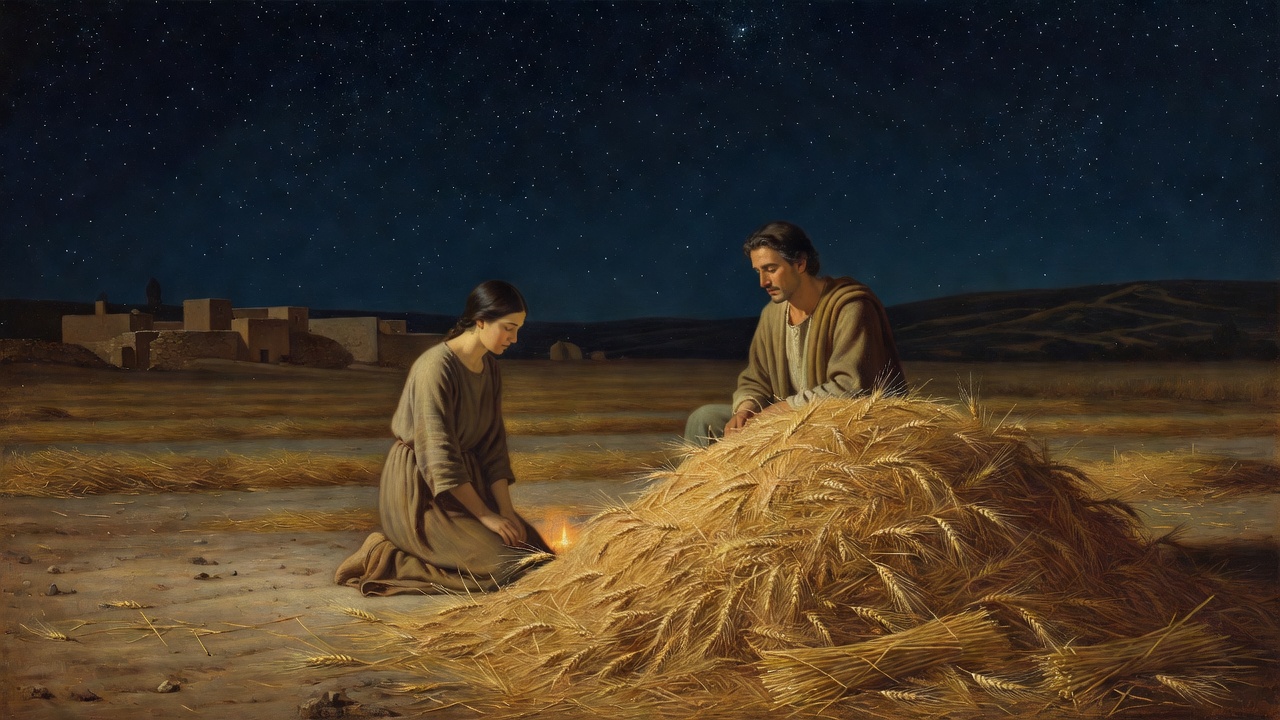
Ruth at the Threshing Floor
- Winnowing barley often took place during the evening when cooling breezes helped separate the grain from the chaff. Landowners like Boaz stayed overnight at the threshing floor to sleep beside their heaps of harvest and protect the grain.Sources: the Bible text itself
- Ruth asked Boaz to spread the corner of his garment over her, an action signifying marriage and protection under the custom of the family redeemer. Boaz praised her loyalty and character, noting her dedication to Naomi rather than pursuing younger suitors.Sources: the Bible text itself · Boaz
- Although Boaz was a wealthy relative of Naomi and her late son Mahlon, he noted that another family member had a closer kinship and therefore held the first legal right to redeem the family property and marry Ruth.Sources: the Bible text itself · Boaz · Ruth
Notes written with AI assistance from open sources (Theographic Bible Metadata, CC BY-SA 4.0; Easton’s Bible Dictionary, public domain) and reviewed before publishing.
Credits and license for this translation
Awara Baibel
Genesis, Ruth, and Jonah in the Awara Language of Papua New Guinea
Buk Stat, Rut, na Jona long tokples Awara long Niugini
copyright © 2011 Wycliffe Bible Translators, Inc.
Language: Awara
Translation by: Wycliffe Bible Translators
This translation is made available to you under the terms of the
Creative Commons Attribution-Noncommercial-No Derivatives license 4.0.
You may share and redistribute this Bible translation or extracts from it in any format, provided that:
You include the above copyright and source information.
You do not sell this work for a profit.
You do not change any of the words or punctuation of the Scriptures.
Pictures included with Scriptures and other documents on this site are licensed just for use with those Scriptures and documents.
For other uses, please contact the respective copyright owners.
2025-04-26
Source: http://png.bible/awx/ · eBible.org