Genesis 45
Awara Baibel · Tap a verse to see its cross-references.
Josepdä inäle yatapgut
1Josewu butayä hikngä natäke, kwänäm titnangäsä hikngä tikin. Tiwän puyä äminä Isip nanä “Ginu undä hikngä yolu anggwenu teke epuxunong,” yang yänikut. Inale puyä äminä une yiwixawä, notnä “Nä Josep,” yang yäniwikge donatäpgut. Tike inäkän yiwixawäyä yäniwikge natäput. 2Ge puyä äminu teke epuxawäyä, Josewu kwänämu bulämbam hikngä yangotixawän, Isip nanä natäxawä, kingge yolune yiwäxaying äminkäyä “Josewu using tik,” yang ku yawä natäpgin.
3Tixawänä Josepdä notnä täkwäxu “Nä Josep. Nana undan ayiwänak?” yang yänikut. Tiwänä notnä täkwäxu anaxälake, yäkwäle wamu doinikin.
4Tiwänä Josepdä notnä using yänikut. “Ane inälängän hikngä apnong,” yawän, apgin. Tiwänä using yänikut. “Nä notsä Josep, tupä gindä Isip nanäle yämä uhikinunin. 5Tiwändeyä äpmanu näle u tahakinde, bänipsäxätanu meyä mawänong. Bä tokngä täkngatu gihäle manatäpnong. Inale Anätutä ämin gatangyämikge natäke tewän, nätä gämäxu apgum. 6Nak takgä yiwixätna, krismasu gwenalä apuxunggak. Tiwän nak puyä dowahake dowäke, krismasu 5-käyä äpme yiwitnim. 7Anätutä kahitnä inätä hikngä täkngatune gatängdamän, gindä yiwike, bapuha mahande sakngälawikge natäke tewän, nätä gämäxu apgum.
8“Nä yolu awomune gindä dolahawä apgum. Tike Anätutä tewän apgum. Tiwänä Anätutä napmämbän, Isipde kingge natändetdet inixäwik, kingge yolune yiwixaying äminunin dayingyiwäxäwik, Isipde kuhiläle yiwixat.
9Ge ginu yupsäng ko, nana using ininong. ‘Nä Josep dika wawakgä wamu aläknga tewa apunggak. Anätutä tahawän Isip kewu awomde bulämbam täpäle yiwixat. Ge mayiwiyo. Tike näle yupsäng hikngä epso. 10Päkepu nina wäkngasim, distrik Gosenu kewu uwomune yiwiläk. Ge wawakga, bapuka, towiyä gämända, sipsipda, hängä täpäka yangu ane päkepu peke yiwiläk. 11Äminbamu undä nakge dapmäxawä, krismasu 5 apixunin. Ge ane epnong. Tiwän nätä dandung yiwit. Tike dondanduyiwa, ginu undä nakge dapnäng,’ yak wawakga Josepdän,’ yang ininong.
12“Nä Josepdä daninggat. Ginu undä nä nandukengu, anatäpnangäsä. Bensamin, gä ulapna hikngä. Gäxäyä näle anatäpnagäsä. 13Ge ko nana ahikngä ininong. ‘Josewu kantili Isipkätanu, umanä bulämbam hikngä,’ yang inike, hängä ane inaka dayiyinggexät inike, yupsäng täkepnong,” yang yänikut.
14Yänikengä Bensaminu täku betake, kwänämu initikut. Tiwän yäkwälexäyä Bensamindä betaxäwik initikut. 15Tiwän Josepdä notnä undä yänitixäwik, kis pahangyämitäke kukut. Tiwänä notnätä wamu une inikin.
16Tiwänä “Josepde notnä aapuying,” yangu kingge yolune yatäke kuwä natäke, king äwä puyä äminäle kuhiläle yiwixaying yanggä täke hikngä natäpgin. 17Tiwänä kinggä Josewu using inikut. “Notda using yäniyo. ‘Wilu donggihäne päko peke, Kenande hipdu kunong. 18Ku nansä, gihäxät nanä yangu undä ane näle päkapnong. Tiwän Isipde kewu nomän hikngä womdu dama, une yiwitning. Yiwike pahawä, naxu nomängän alaxawä päke näning,’ yang yäniyo.”
19“Yänike unetäkänu using tahaningge yäniyo. ‘Engangsä, mängätsä, nansä yang päkapningge, kalbimä bulämbamu Isip nanätäne gwenduyi päke kunong. 20Hängä täpähäle manatäpnong, inale hängä Isip nanä gwälamgwälamu äpme damit,’ yang yäniyo,” yang inikut, kinggän.
21Tiwänä Israelde wawaxu using tahakin. Kinggä yakut using, Josepdä notnäle kal bimä bulämbamu gwenduyi yämike, naxu kahitde näninggexät yämikut. 22Unetäkänu täwik käluxu notnäle kwämbätdu kwämbätdu yämikut. Tikengä Bensaminde täwik käluxu 5 äwä moningu 300 silwa yang imikut. 23Tike nanäle päku iminingge using pekut: Hängä gwälamgwälamu Isip nanä donggi 10-une päko peke, donggixät inäle pengämikut. Tikengä wit, bret, äwä naxu kahitde näpikge yangu donggi mängälä 10-une päko peke, donggixät inäle pengämikut. 24Pengämike notnä yäning yäpiwän kuningge tahaxawä, using yänikut. “Kahit täpäne täkungu, mayanganinong,” yang yänikut.
25Tiwänä notnä täkwäxu Isip teke, nanä Jekopde Kenan kopgin. 26Ko nanä using inikin. “Josewu doxumgut. Ayiwäxak. Tiwän unetäkänu äpmanu Isipde kuhiläle yiwäxak,” yang inikin. Unin yawä, hatnäxäwik, “Hiyäkän yäkaying,” yangu donatäpgut. 27Tiwän wamu Josepdä u yänikulu undä inikin. Tiwänä kalbimä bulämbamu Josepdä yämikut gwengwenunin dayike, nanäle bäniwu tangäne yiwikut.
28Tikengä using yakut. “Hiyäkände hikngä. Wawaknga Josewu ayiwäxak. Ge pukuke kakengä kupit,” yang yakut.
Did you know?
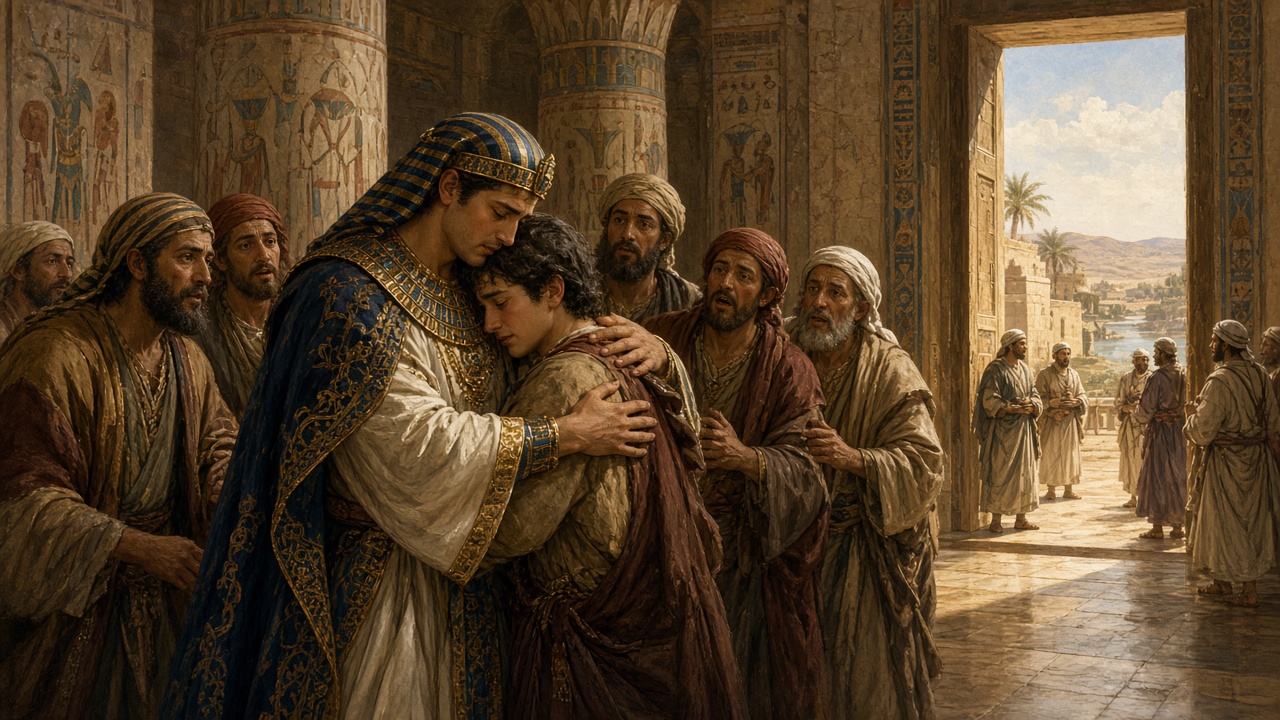
Joseph Reveals Himself to His Brothers
- Goshen, the district where Joseph tells his brothers to settle near him with their children, grandchildren, flocks, and herds, lay east of the Nile and apparently not far from the royal residence. Easton's Bible Dictionary (1897) notes that it is first mentioned in Joseph's message to his father, and that it was also called the land of Rameses, because the towns of Pithom and Rameses lay within its borders.Sources: Goshen · the Bible text itself
- Joseph weeps so loudly that the Egyptians hear him, and Pharaoh's household soon hears of it; Pharaoh and his servants are pleased when they learn the brothers have come, and he offers them the best of the land of Egypt. Easton's Bible Dictionary (1897) says the Pharaoh of Joseph's days was probably Apopi, or Apopis, the last of the Hyksos kings. It adds that Hyksos kings welcomed Asiatic shepherds, whereas older native Egyptians regarded shepherds as an abomination, though some argue that Joseph came to Egypt in the reign of Thothmes III, long after the Hyksos were expelled.Sources: Pharaoh (of Joseph) · the Bible text itself
- Benjamin was the younger son of Jacob by Rachel, and Joseph the elder of her two sons; their mother died giving birth to Benjamin at Ephrath and named him Ben-oni, meaning son of my pain, a name his father changed to Benjamin. At the reunion Joseph embraces Benjamin and weeps, giving him three hundred shekels of silver and five sets of clothes, while each of the other brothers receives a new garment.Sources: Benjamin (patriarch) · Joseph (son of Jacob) · the Bible text itself
Notes written with AI assistance from open sources (Theographic Bible Metadata, CC BY-SA 4.0; Easton’s Bible Dictionary, public domain) and reviewed before publishing.
Places in this chapter
- Egypt · 30.129, 31.308 · verses 4, 8, 9, 13, 18, 19, 20, 23, 25, 26
- Goshen · Today: Goshen 1 · 30.799, 31.834 · verse 10
- Canaan · 32.767, 35.333 · verses 17, 25
Only places identified with high confidence are shown (90% or more according to the scholarly sources compiled by OpenBible). Period map: DARE (Digital Atlas of the Roman Empire), CC BY 4.0; modern map: © OpenStreetMap contributors; places: OpenBible.info (CC BY 4.0).
Credits and license for this translation
Awara Baibel
Genesis, Ruth, and Jonah in the Awara Language of Papua New Guinea
Buk Stat, Rut, na Jona long tokples Awara long Niugini
copyright © 2011 Wycliffe Bible Translators, Inc.
Language: Awara
Translation by: Wycliffe Bible Translators
This translation is made available to you under the terms of the
Creative Commons Attribution-Noncommercial-No Derivatives license 4.0.
You may share and redistribute this Bible translation or extracts from it in any format, provided that:
You include the above copyright and source information.
You do not sell this work for a profit.
You do not change any of the words or punctuation of the Scriptures.
Pictures included with Scriptures and other documents on this site are licensed just for use with those Scriptures and documents.
For other uses, please contact the respective copyright owners.
2025-04-26
Source: http://png.bible/awx/ · eBible.org