Genesis 40
Awara Baibel · Tap a verse to see its cross-references.
Josepdä dambu tikindäne yäpulinä yakut
1Josewu kalabusune yiwixawängän, täpduxu gwendune Isipde kingge wain pahake iminggak täpä äwä bret hängäminggak täpä yangu kingge kayine gutongä pahakumäläk. 2Pahawät, Isipde kingu uläpäyatde tokngä hikngä natäpgut. 3Tikengä kalabus yolu Josepdä yiwixak gwenunekän päku, kalabus daying yiwixaying äminde kuhiläle yolune pekin. 4Tiwän kuhiläle yiwixak täpätä Josepde imän, daying yiwikut.
Kalabusune belakngä womdu yiwihikangä, 5wain pahakakut täpä äwa bret hakakut täpä yangu dambu täpduxu inä unggwenunekän inäinä tikumäläk. Dambu ulikumäläxu yäpulinä inäinä.
6Kwepdätä tembänä Josepdä apungu, anatänatälike yiwixawät dayipgut. 7Dayike “Gilu inale natänatälikamäläk?” yang yänikut.
8Yäniwän, “Nilu dambu inäinä dayimäk. Tiwändeyä dambu ulimäkge yäpuli nininangäsä äminu wenä,” yang inikumäläk.
Tiwän Josepdä “Dambule yäpuli Anätutäkän yäminggaxunin. Ge dambuhä undan yähon,” yang yänikut.
9Tiwän kingge wain pahakakut täpätä Josewu using inikut. “Dambu tängäne wainu täkngatu kat. 10Wainu uläknga kätakngä täkngayalä täkngatu. Tiwän gwäkgwäkngäne salinä yupsänggän alaxäwik galaying. 11Tiwän kingge käwu nätä tätnä, unggalayingunin päke sasapa, kingge käwune pukuwä, inäle imit,” yang inikut.
12Tiwän Josepdä “Dambu uläknga yäpuli using,” yake using inikut. “Katakngä täkngayalä täkngatu dayiläxu täpduxu gwenalä gwendu. 13Täpduxu gwenalä gwendu yiwikengu, gä kalabusde yiwiläxu, kinggä yawän epuxuwiläk. Tiwän puyä yakap pahakakuläk täknga hipdu äpme gamän, wainu pahaxäwik, kingge imiläk.
14“Gäle using tahawän kakengu, gätä näle butayä natäpso. Natäke, kingu ainiyo. Tiwän kalabusunetä napmämbän epuxuwit. 15Nä Hibrule kewunetä ämindäkän nanitäkapgin. Ngä anexäyä gutongä täkngatu dolahakum. Tiwändeyä kalabusde yumdekän täkapu napmambä yiwixat,” yang inikut, Josepdän.
16Wain pahakakut täpäle dambu yawän natäke, Josepdä yäpuli nomän hikngä iniwän kake, bret hakakut täpäxäyä Josewu using inikut. “Näxäyä dambu täkngatu using tit. Baskelu bretnänäxäyä gwenalä gwendu kuhitnane gwäpit. 17Enetängä gwenune brelu inäinä kingge pät. Tiwändeyä anggwäpilune kwäwitdä apu päku naying,” yang yakut.
18Yawänä Josepdä natäke “Dambu uläknga tiläxu yäpuli using. Baskelu gwenalä gwendu dayiläxu täpduxu gwenalä gwendu. 19Täpduxu 3 gwenune kinggä yawän, kalabusunetä epuxuwi, guläkga pahandäkngake, däki täpäne täko mapä wukuwi, kwäwitdä gupda näning,” yang inikut.
20Täpduxu 3 ungggwenu kinggä alakutde täpduk. Ge kinggä naxu puyä äminäle kuhiläle inulung hängyämikut. Tikengä wain pahakakut täpä äwä bret hakakut täpä yangu kalabusunetä pewän epuxuke, puyä äminu uläkwäkge kayine kukumäläk. 21Tiwän wain pahakakut täpä puyä tupä pahakakut using imän, kingge käwu hipdunä täke imikut. 22Tiwänu bret hakakut täpä kinggä yawän, puyä äminätä täku, däki däkäne mapä pukukut. Hängä ulikulu inä dambu tike yawät, Josepdä yänikut using tikut.
23Tiwändeyä wain pahakakut täpä puyänä hipdu täkengu, Josepdä iniwän kakutde bulämnä hikngä natäpgut.
Did you know?
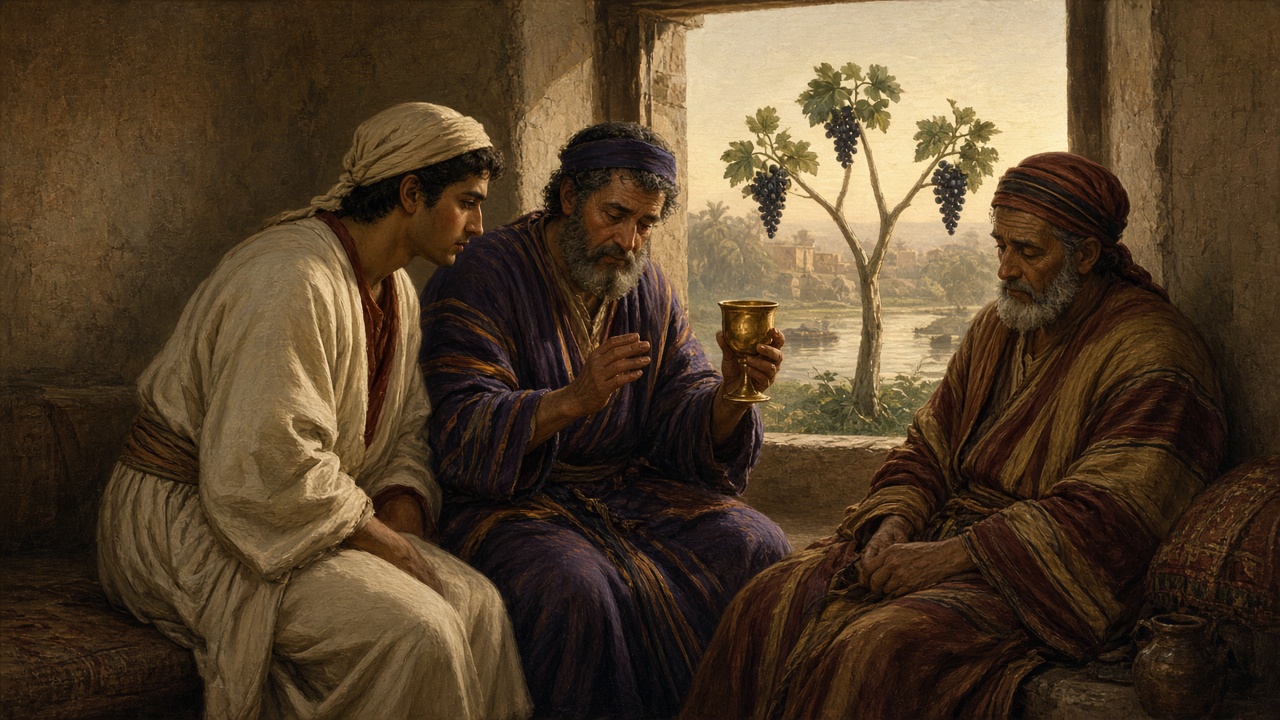
Dreams in Pharaoh's Prison
- Pharaoh was angry with two officers, the chief cupbearer and the chief baker, and put them in the house of the captain of the guard, the same prison where Joseph was confined. The captain assigned them to Joseph, who became their personal attendant.Sources: the Bible text itself
- On the same night the cupbearer and the baker each dreamed, and Joseph said that interpretations belong to God. He took the three branches and the three baskets to mean three days: Pharaoh would lift up the cupbearer's head and restore him, but lift off the baker's head and hang him on a tree. On the third day, Pharaoh's birthday, the king held a feast for his officials, restored the cupbearer, and hanged the baker.Sources: the Bible text itself
- Joseph asked the cupbearer to remember him and mention him to Pharaoh after his restoration. He said he had been kidnapped from the land of the Hebrews and had done nothing for which he should have been put in the dungeon. Easton's Bible Dictionary (1897) identifies the Pharaoh of Joseph's days as probably Apopi, or Apopis, the last of the Hyksos kings; some argue instead that Joseph came to Egypt later, under Thothmes III.Sources: the Bible text itself · Pharaoh (of Joseph)
Notes written with AI assistance from open sources (Theographic Bible Metadata, CC BY-SA 4.0; Easton’s Bible Dictionary, public domain) and reviewed before publishing.
Places in this chapter
Only places identified with high confidence are shown (90% or more according to the scholarly sources compiled by OpenBible). Period map: DARE (Digital Atlas of the Roman Empire), CC BY 4.0; modern map: © OpenStreetMap contributors; places: OpenBible.info (CC BY 4.0).
Credits and license for this translation
Awara Baibel
Genesis, Ruth, and Jonah in the Awara Language of Papua New Guinea
Buk Stat, Rut, na Jona long tokples Awara long Niugini
copyright © 2011 Wycliffe Bible Translators, Inc.
Language: Awara
Translation by: Wycliffe Bible Translators
This translation is made available to you under the terms of the
Creative Commons Attribution-Noncommercial-No Derivatives license 4.0.
You may share and redistribute this Bible translation or extracts from it in any format, provided that:
You include the above copyright and source information.
You do not sell this work for a profit.
You do not change any of the words or punctuation of the Scriptures.
Pictures included with Scriptures and other documents on this site are licensed just for use with those Scriptures and documents.
For other uses, please contact the respective copyright owners.
2025-04-26
Source: http://png.bible/awx/ · eBible.org