Genesis 37
Awara Baibel · Tap a verse to see its cross-references.
Notnä täkwäkgä Josepde mähe natäpgin
1Jekowu kewu nanätä yiwikulune Kenan yiwikut.
2Jekopde wawakge wam. Josewu krismasnä 17 using tixawän, Josepkät notnä täkwäkguxät nanäle sipsip daying yiwikin. Notnä uläkwäxu nanäle mängälu Bilha, Silpa yangge wawak. Tixäwik notnätä gutongä dasingga pahawä dayipgulu, nanä apu inikut.
3Israelu äminälake alikengä, Josewu une towikutde, ile bänip gwaläng hikngä natäxäwik, täwixu gwälam hikngä kwämbätdu tahake imikut. Tike notnäle using hikngä donatäpgut. 4Nanätä Josepdekän bänip gwaläng hikngä natäpän kake, notnätä Josewu mähemähe kaxäwik, wamu kätaxu doinikakin.
5Gwendune Josepdä dambu täkngatu tike enake, notnä yäniwän natäke, mähemähe hikngä une kakin. 6“Dambu täkngatu using tit,” yake using yänikut. 7“Ninu undä puyä tängätune wit matäke wamähikanayä, nätä wamät tupä däm enake yiwän, gindä wamäyinggä apu, nätäne tupä yiwitäpä gwahawän, sopäsopä puke, däme kepkätan päpu yamäying,” yang yänikut.
8Tiwänä payänätä inikin. “Gä ninde yakapde yiwike, nindung yiwiläk?” yake, dambu ulike yänikutde, mähemähe hikngä kakin.
9Josewu dambu täkngatuxäyä hipdu tike, payänä using yänikut. “Äpmanu dambu täkngatu kaxäwa, gusit, yekäp äwä kuminamu täkwäkgu 11 yanggä näle sopäsopä puke, däme kepkätan päpu yamäying,” yang yänikut.
10Tiwänä nanätä natäke, “Ina dambu tiläk?” yake ininggämätake, “Mingga, nä äwä notda yanggä gäle apuke, sopäsopä puke, dämäninu kepkätan päpu yamnim?” yang inikut. 11Tiwän payänä täkwäxu tokngä natäpgin. Tiwändeyä nanä dambu uläknga iwikge natäng yiwikut.
Josewu notnätä äminde yämixäwik, moning päkin
12Josepde payänä taunu Sekem uwomde wäkngäsim päku yiwixäwik, nanäle sipsip daying yiwikin. 13Tixawän Israeldä Josewu using inikut. “Payäka sipsiwu Sekem daying yiwayak. Ge une kuyo,” yawän, Josepdä “Hii, äpme kuwit,” yang inikut.
14Tiwän nanätä “Kuke dayipso. Payäka äwä sipsip yangu nomängänbä yiwayak. Tikengä apu naniwiläk,” yake ining yäpiwän, Hebron Kupi teke Sekem kukut.
15Une ku payänä yäwahikunggawän, äminu täpätutä kake, “Gä ina yäwäxaläk?” yang inikut.
16Iniwän Josepdä “Nä payäna sipsiwu, säneka daying yiwayak yake yäwaxat. Ge gätä andayiläkngä kakengu, täkembä naniwiläk?” yang inikut.
17Iniwän “Dotande kuningge yawäxakumnä, ane yiwikinu aleke, une kukin,” yang inikut. Iniwän Josewu payänä yäwatäke ku, taunu Dotan uwomde wäkngäsim kuke dayipgut.
18Payänätä yiwikinune doxundoxawän, malä kuwän kake, kupsäle tängutningge wepdä wamu using yakin. 19“Dambukän tinggaxu ane täpä aapunggak. 20Ge tänguke, gäpma hopä yanggätä yiwikge kwayikinu däkätune mutna pukuwik. Tiwän ‘Kälaptukgä tänguke nakin,’ yang ku yänim. Tiwänä dambunä tikulu bulä ämbä alawä känim?” yang yakin.
21Unin yawä, payänä Rubendä anggatängämikge natäke, “U! Kupsäle hikngä dolängutnim,” yang yänikut. 22Unetäkänu using yänikut. “Dolängutna kupik. Dolänguke tokngä däkäxäyä doiminim. Tike gäpma kewu moyo womune yiwäxayingu andäkaxätan mutna pukuwik. Tiwän tokngä däkäxäyä doiminim,” yang yänikut. U yänikulu Josep gatängämike, nanäle täke kuwikge natäke yänikut.
23Ge Josewu inälängän apänu, alänggänggänuke, täwikngä gwälam hikngä uxwämbät tahakulu äläpä dopgut. 24Tiwän täke täku gäpma undäkäxätan mumbä pukukut. Gäpma undäkä yanggänä wenä.
25Tikengä päku nakngä nake kaxawä, Ismael nanä äminu täkwäkgu Giliatkätandä apgin. Pa inuxu käpängänä käyä kamelu meyä gwenalune Isip päke kuningge päkapgin.
26Tiwän Judatä notnä täkwäxu using yänikut. “Ina gwaläng pänimde uläpninu tängut täkohopinim? 27Undanä. Ismaelde bapunäle yäna, moning nimixäwik täxut, inale ulapninu uläpä daknotnin, tiwän nan notnin. Ge dolängutnim,” yang yänikut.
28Tixawänu Midian nanä une hikngä apä dayike, Josewu gäpmanetä tuliwä akopgut. Tiwän 20 sekel silwale yawä, Ismaelde bapunätä uhike, Isipde täke kukin.
29Täke kuxawäyä, Rubenu gäpma däkäne apu, Josewu wenä kake, butayä hikngä natäke, inä täwik wehikut. 30Tikengä apu notnä using yänikut. “Josewu wenä xat. Ngä nanu dasing täknganin ku iniwit?” yang yänikut. 31Yawän meme gwendu guläkngä matäwä, daxu apä, Josepde täwixu daxune täpä mahakut.
32Tikengä täwixu täpä mahakulu uxwämbälu nanäle täku imike, using inikin. “Täwixu axwämbät kake tämängu kätak kayo. Wawakgatänembä?” yang inikin.
33Iniwä täwixu uxwämbälunin kake “O, wawakngale täwik tinggak. Kälaptukgä alänguke yahandeke nakin,” yakut. 34Yake Jekowu inä täwik wehike, täwixu butayä täkngatäne pahake, wawakngäle butayä natäxäwik, gwayamu belakngä yiwikut.
35Tinggawän wawak yäpanä undä apu “Wamwambä inina, butayä täknga natäxu bulämdawik,” yake, wamwam inikin.
Tiwändeyä “Dombulämdawit. Tike butayä natähika, ninaxäyä kungäke, axumgin amindä yiwäxayingune wawakngale kuwit,” yaxäwik, Jekowu wawakngäle kwänämu iwikge tikut.
36Tixawänu Midian nanätä Josewu Isip täke kukin. Täke kuwä, Potipatä uhikut. Potipa kingge kulä tahakaying äminde kuhiläle yiwäxakut.
Did you know?
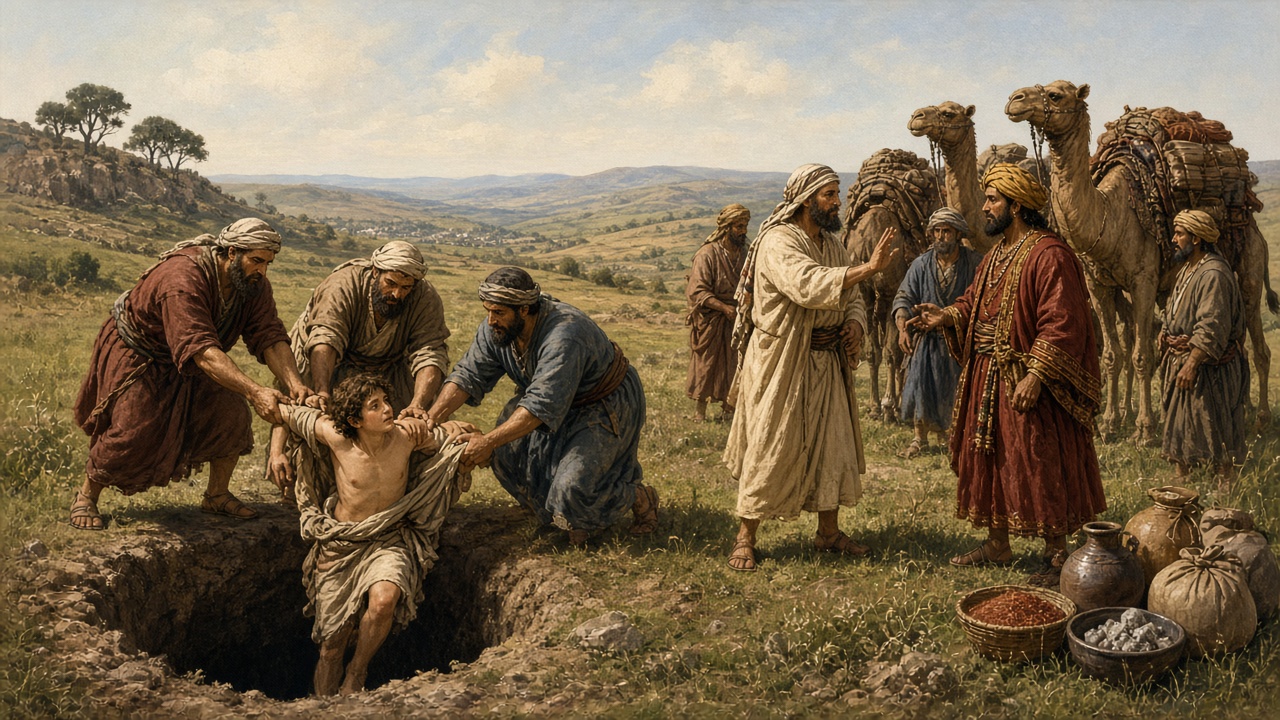
Joseph Sold by His Brothers
- Israel loved Joseph more than his other sons because he was the child of his old age, and he made him a robe of many colors. Easton's Bible Dictionary (1897) reads the Hebrew of Genesis 37:3 as a long, full garment with sleeves, the kind worn by the children of nobles. When the brothers saw that favor, they hated him and could not speak a kind word to him.Sources: Joseph (son of Jacob) · the Bible text itself
- Jacob sent seventeen-year-old Joseph from the Valley of Hebron to see how his brothers and the flocks were faring; they had pastured near Shechem and then gone on to Dothan. Easton's Bible Dictionary (1897) calls Dothan a famous pasture ground with two wells, identified with modern Tell-Dothan about twelve miles north of Samaria among the hills of Gilboa, and says it is mentioned on monuments in 1600 BC. There the brothers saw a caravan of Ishmaelites coming from Gilead, their camels carrying spices, balm, and myrrh on the way down to Egypt.Sources: Dothan · Gilead · the Bible text itself
- Reuben, Jacob's eldest son by Leah, tried to save Joseph from death and planned to return him to their father. Judah then persuaded the brothers to sell Joseph to the Ishmaelites rather than shed his blood. In Egypt the Midianites sold him to Potiphar, an officer of Pharaoh and captain of the guard; Easton's Bible Dictionary (1897) explains that name as 'dedicated to Ra,' the sun-god, and takes the title to mean, probably, chief of the state police, with a margin reading 'chief of the executioners.'Sources: Reuben · Judah (patriarch) · Potiphar · the Bible text itself
Notes written with AI assistance from open sources (Theographic Bible Metadata, CC BY-SA 4.0; Easton’s Bible Dictionary, public domain) and reviewed before publishing.
Places in this chapter
- Canaan · 32.767, 35.333 · verse 1
- Shechem · Today: Tell Balatah · 32.214, 35.282 · verses 12, 13, 14
- Valley of Hebron · 31.525, 35.102 · verse 14
- Egypt · 30.129, 31.308 · verses 25, 28, 36
- Gilead · Today: Gilead 1 · 32.187, 35.692 · verse 25
Only places identified with high confidence are shown (90% or more according to the scholarly sources compiled by OpenBible). Period map: DARE (Digital Atlas of the Roman Empire), CC BY 4.0; modern map: © OpenStreetMap contributors; places: OpenBible.info (CC BY 4.0).
Credits and license for this translation
Awara Baibel
Genesis, Ruth, and Jonah in the Awara Language of Papua New Guinea
Buk Stat, Rut, na Jona long tokples Awara long Niugini
copyright © 2011 Wycliffe Bible Translators, Inc.
Language: Awara
Translation by: Wycliffe Bible Translators
This translation is made available to you under the terms of the
Creative Commons Attribution-Noncommercial-No Derivatives license 4.0.
You may share and redistribute this Bible translation or extracts from it in any format, provided that:
You include the above copyright and source information.
You do not sell this work for a profit.
You do not change any of the words or punctuation of the Scriptures.
Pictures included with Scriptures and other documents on this site are licensed just for use with those Scriptures and documents.
For other uses, please contact the respective copyright owners.
2025-04-26
Source: http://png.bible/awx/ · eBible.org