Genesis 11
Awara Baibel · Tap a verse to see its cross-references.
Yawetä äminu wamu buläkän täknga yakinunin pängginungukut
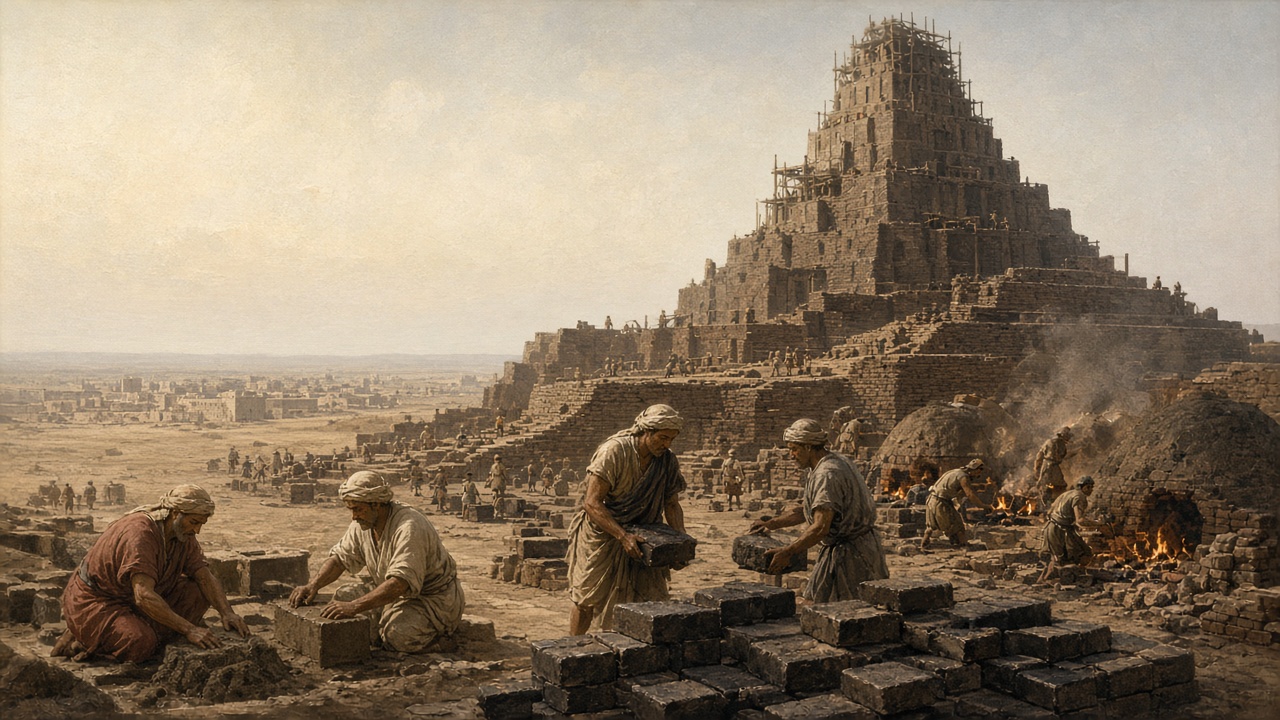
1Ämimbamu kep däkäne yiwikinu wamnä buläkän täknga yakin. 2Tixäwik äminu gusitdä akonggak käwutkätan tihikuke, kewu kupi gwendu Babiloniaxätan kake, uwomune päku yiwikin. 3Päku yiwike, “Kep gämänu päke, däkine häna, yähakitokawä, blik däkngäning,” yang yakin. Yolu hup simen yanggä dowahakin, tike kolta tuliwä, blixu päpä kitokakin. 4Tiwän using yakin. “Inäinä domatäke, womdu womdu dowäku yiwihikunim,” yake, “Yolu gäpanggu tahake, yot bänäkängän yolu belakngä gwendu tahana, yekäwune kopik. Tiwän umaninu käyä tiwik,” yang yake, using pahakin.
5Tixawändeyä Yawe äminu kewune nanätä yot gäpang, yolu belakngä gwen yang pahaxawä, unin dayipikge epgut. 6“A! U äminu inä uninggän, tiwän wamnä buläkän täknga. Yakapde unin pahaying. Ge mahande dasingga pahaningge natäkengu, awahaningunin,” yake, 7“Puku wamnä pängginungutnim. Tiwän wamnä yawä, notnätä donatäpning,” yang yakut.
8Yake, Yawetä äminu womduwomdu petäke kuwän, yolu tahakinu dolahapulukin. 9Ile tiwän yolu unggäpangu umanä Babel yang inikakin. Yolu unggäpangune Yawetä äminbamde wamnä pängginunguke, unetä petäke kuwän, päku kep däkäne womduwomdu yiwihikukin.
Semde bapunämbam apu Tera
10Semde bapunä. Yanggä gwendä yiwikdoke teke pukuwän, krismasu gwenalä apuxukut. Tiwän Semu krismasnä 100 yiwikengä, wawakngä Apasat towikut. 11Ile mahene krismasu 500 yiwixäwixu, wawak yäpanä towikut.
12Tiwän Apasalu krismasnä 35 yiwikengä, wakwakngä Sela towikut. 13Ile mähene krismasu 403 yiwixäwixu, wawak yäpanä towikut.
14Tiwän Sela krismasnä 30 yiwikengä, wawakngä Eber towikut. 15Ile mähene krismasu 403 yiwixäwixu, wawak yäpanä towikut.
16Tiwän Eberu krismasnä 34 yiwikengä, wawakngä Pelek towikut. 17Ile mähene krismasu 430 yiwixäwixu, wawak yäpanä towikut.
18Tiwän Pelexu krismasnä 30 yiwikengä, wawakngä Reu towikut. 19Ile mähene krismasu 209 yiwixäwixu, wawak yäpanä towikut.
20Tiwän Reu krismasnä 32 yiwikengä, wawakngä Seruk towikut. 21Ile mähene krismasu 207 yiwixäwixu, wawak yäpanä towikut.
22Tiwän Seruxu krismasnä 30 yiwikengä, wawakngä Nahor towikut. 23Ile mähene krismasu 200 yiwixäwixu, wawak yäpanä towikut.
24Tiwän Nahor krismasnä 29 yiwikengä, wawakngä Tera towikut. 25Ile mähene krismasu 119 yiwixäwixu, wawak yäpanä towikut.
26Tiwän Tera krismasnä 70 yiwikengä, wawakngä Abram, Nahor, äwä Haran yang towikut.
27Terale bapunä. Tera Abram, Nahor, Haran yangge nanä. Tiwän Haranu Lotde nanä. 28Nanä käluk yiwixawän, Haranu Ur Kaldia alakut womune kumgut. 29Tiwän Abramkät Nahorkät mängätnä päkumäläk. Abramde mängälu umanä Sarai, tiwän Nahorde mängälu umanä Milka, Harande yäpa. Haranu Milka äwä Iska yangge nanä. 30Sarai engang hongge yiwikut.
31Teratä wawakngä Abram, bapunä Lolu Harande wawak, bapunä Sarai Abramde mängät yang päpän, Ur yolu Kaldiaxätanu unggäpangu teke, Kenan kuningge kukindeyä, Haran yolu unggäpangune päku yiwikin. 32Yiwihika, Tera krismasnä 205 yiwixäwixu, une kumgut.
Did you know?
Babel and the Road from Ur
- Travelers in this chapter settle on a plain in Shinar and build with baked brick and tar instead of stone and mortar. A dictionary treats Shinar as probably Babylonia or southern Mesopotamia, extending almost to the Persian Gulf, says the tower of Babel was built there, and describes the land's early inhabitants as people who made bricks and built cities.Sources: the Bible text itself · Shinar
- The unfinished city is named Babel because, the narrative says, there the Lord confused the language of the whole world and scattered its people. A dictionary explains the name as 'confusion' and suggests the tower was probably meant as a rallying-point on the wide plain of Shinar, after a migration from the uplands of Armenia, so the builders would not be scattered.Sources: the Bible text itself · Babel
- The chapter ends with Terah leaving Ur of the Chaldeans for Canaan with Abram, Sarai, and his grandson Lot, then settling in Haran, where he dies at 205; his son Haran had already died in Ur. A dictionary calls Ur that son's birthplace, the largest city of Shinar or northern Chaldea, and a center of trade and political power, and places Haran, now Harran and called Charran in the Greek Old Testament and in Acts, on the Belik, a Euphrates tributary in Upper Mesopotamia, where Abram stayed until Terah died.Sources: the Bible text itself · Terah · Ur of the Chaldees · Haran
Notes written with AI assistance from open sources (Theographic Bible Metadata, CC BY-SA 4.0; Easton’s Bible Dictionary, public domain) and reviewed before publishing.
Places in this chapter
- Shinar · Today: Babylonia · 32.543, 44.422 · verse 2
- Chaldea · 30.962, 46.104 · verses 28, 31
- Canaan · 32.767, 35.333 · verse 31
- Haran · Today: Harran · 36.864, 39.033 · verses 31, 32
Only places identified with high confidence are shown (90% or more according to the scholarly sources compiled by OpenBible). Period map: DARE (Digital Atlas of the Roman Empire), CC BY 4.0; modern map: © OpenStreetMap contributors; places: OpenBible.info (CC BY 4.0).
Credits and license for this translation
Awara Baibel
Genesis, Ruth, and Jonah in the Awara Language of Papua New Guinea
Buk Stat, Rut, na Jona long tokples Awara long Niugini
copyright © 2011 Wycliffe Bible Translators, Inc.
Language: Awara
Translation by: Wycliffe Bible Translators
This translation is made available to you under the terms of the
Creative Commons Attribution-Noncommercial-No Derivatives license 4.0.
You may share and redistribute this Bible translation or extracts from it in any format, provided that:
You include the above copyright and source information.
You do not sell this work for a profit.
You do not change any of the words or punctuation of the Scriptures.
Pictures included with Scriptures and other documents on this site are licensed just for use with those Scriptures and documents.
For other uses, please contact the respective copyright owners.
2025-04-26
Source: http://png.bible/awx/ · eBible.org