Revelation 6
Manikáne O Ehwehne · Tap a verse to see its cross-references.
Sipisípiq Áráhqka púkuraq unkumeh kéhsúéh éhwéhne.
1Íné Sóniga tagogana Sipisípiq Áráhqka matíéh púkúráq abapete téhtaré únkúméh kéhre. Sipisípiq Áráhqka náhmbáh 1 unkúméh kéhsúéhrana peh morá oga míéh kánká anotahtaq puruburu tahnsánue mahraréna, Mahbeq súno ire. 2Mahbeq súno irana taberábe oséráq tútuue míéh ánínká iq matíéhrana tagoge. Tagogana wahnah kené ayahuq wene ayahqnotaq suki atéhrana pokue, Mó ke subipáhraruanieéna pokire.
3Sipisípiq Áráhqka náhmbáh 2 unkúméh kéhsúéhrana mó ogá míéh náneq kanká, Mahbeq súno irana íróge. 4Írógana mó osé tautáúq osé ábóraragire. Manikánka mi oséráq tútuue míéh ání págege atena anotah ebeh poká awena wensabé, Mah marákó márákó pokue kaweq sunúq parabaruo ire. Mibeqté kégá ebehéra we subiq súéhigeheéna págege atena ebeh poká awire.
5Sipisípiq Áráhqka náhmbáh 3 unkúméh kéhsúéhrana mó ogá míéh náneq kanká, Mahbeq súno irana íróge. Irena tagogana mó osé pabusa osé ábóraragire. Mi oséráq tútuue míéh anínká ménsámehnsá agehmare naneq matíéhrana tagoge. 6Itaréitaré oga míáh kámárí iriwe míáhrabeqte wehukenínká tahnsa ehwehnirana íróge. Mi ehwéhnká pabusa oséráq tútuue míéh ánínsábé mahraréna, Arega pokue arene arambehri miraé ehwehráhna tanáhráq sinkehe. Ehwehráhna tanáhráq púana táhutahuqme áhnte moné áwíroneherawoe. Óríwi awanká sónkákáq náhníáq sera sonkákáq pehragáhno. Íre apiaro irana íróge.
7Sipisípiq Áráhqka náhmbáh 4 unkúméh kéhsúéhrana mó oga míéh kánká, Mahbeq súno irana íróge. 8Irena tagogana mó osé wiehq osé ábóraragire. Óseraq tútuue míéh ání wenáwíqmé Puké Anine. Mó aní wenáwíqmé Iraipéqté Áníne. Wega Puké Ani anehe sire. Sega miraóyanka ebehéra áhnte pukowe. Sega miraóyanka ehwehrehrara áhnte mó ke pukowe. Sega miraóyanka wehuke mó naneq awáhré mó naneq awáhréue pukowe. Sega wehuke suboráho naneq kamárí eqmarehyara mi kamárínká áhnte mó ke subiq súáhwara pukowe. Mi anítégá mah kehiná kéhíná itaréitaréráq saraqmarera apahtáró sárásá pehragéra peh morá sárásá moke subiq suehye. Miraóyara áhnte ke pukowe.
9Sipisípiq Áráhqka náhmbáh 5 unkúméh kéhsúéhrana Manikáne tahbe tehnopeq tagoge. Manikáne ehwehnsabé íre ahqáho atasa peh kawerue sehgiera wene ehweh tábúsoqme teri terinuro kewé mó kegá mi kawéq ké subiq sutowara sensiwamarí mitaq míáhwana tagoge. 10Tagogara sensiwamarínká anotahtaq mahraréra, Itene Wahnahno, arega moke wahnah wahnahnóne. Arega ahriahri kaweqtaq mía míaé peh aiq pútaq sansá miraóne. Mah marákóípéq míáh kégá ite iubiq sutonsabé ahkake ehweh arite ayahq maraníbo ewe. 11Ewara íópeqté kégá mó aní mó anínue íre wahto taberábe korósíwárí náriera mahraréra, Pehgáriq tanáhráq ahrenahro. Itene naruoga ite iubiq sutonserah sega itereq arambehrio kereq iteruwahrahreq subiq súéhrataq anehe Manikánka ehweh aritankéhe ewe. Omaq sitéhra ke pukirataq wega ayahq marankéhe.
12Sipisípiq Áráhqka náhmbáh 6 unkúméh kéhsúéhrana anotah maríire. Wéhékáhte ió nahonáh pabusa ambékí únáh tahnsa úkire. Úkirana inokáhpeqte íó tubugonahgoitaq korahbagirana tagoge. 13Tagogana anotah soírírirana awanká ánáh pururuqnaginserah íópeqté wéhyóqmárínká marakóipeq megire. 14Megirara máhti sobuonserah íó moq sobuue tabanagire. Tabanagirana moke sáwéhwari móbeq agire. Moke sóreq waní ákáhpi kéh marákó moq móbeq agire.
15Mi tanáhráq mah marákóípéqté wáhnáhmárínseq anotah wehwárínseq ebeho kené kíápéténiwarínseq áhnte monéákáq kéreq tauntahu wehwárínseq arambehriraq saiqnaríáh kéreq arambehriyabé ápeq meyáh kéreqka pehbeheráh pokue táhmaro kegá íre ambarúnkákáq mátáípéq tabanagowara mó táhmaro kegá sáwéhrapeq ónapipéq tabanagowe. 16Tabanagéra sáwéhakaq ebahnkakáqsábé mahraréra, Ite akariue iubiq suo. Wahnah wahnahnirabeqte síáhráq tútuue míéh ánínseq Sipisípiq Áráhqseqka itensabé anotahtaq abiahnsa aitehyansabé akariue iubiq suo. 17Kamahina tanáhráq aiq si puara inseréhga kaweqtaq míahraho ewe.
Did you know?
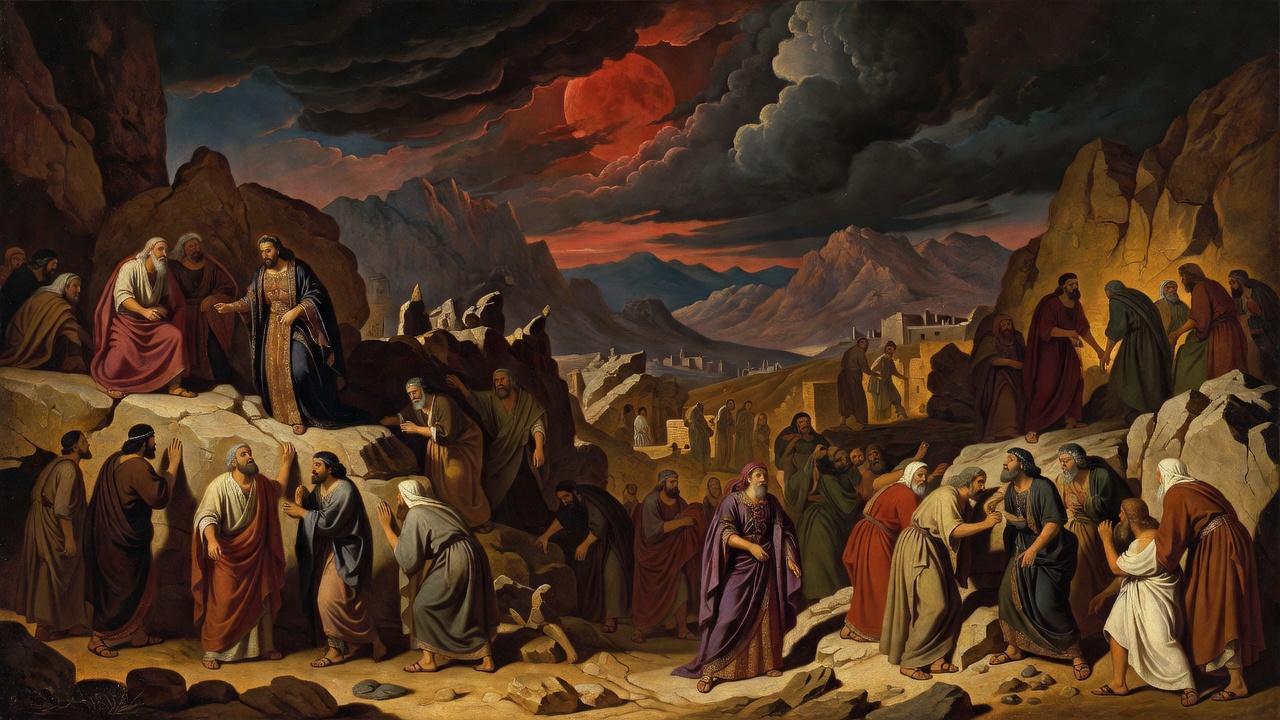
The Opening of the Six Seals
- The first four seals reveal four riders on white, bright red, black, and pale green horses, summoned one by one by the four living creatures. Each horseman brings a distinct affliction across the earth, ranging from conquest and the loss of peace to widespread famine, plague, and death.Sources: the Bible text itself
- The third horseman holds a pair of scales, accompanied by a proclamation setting the price of a quart of wheat or three quarts of barley at a denarius, reflecting severe inflation and food rationing while oil and wine are preserved.Sources: the Bible text itself
- When the fifth and sixth seals are opened, the focus shifts to the souls of slain believers waiting under the altar, followed by immense cosmic and earthly upheavals that lead people of every social station to hide in mountain caves.Sources: the Bible text itself
Notes written with AI assistance from open sources (Theographic Bible Metadata, CC BY-SA 4.0; Easton’s Bible Dictionary, public domain) and reviewed before publishing.
Credits and license for this translation
Manikáne O Ehwehne
God's New Talk: The New Testament in the Awa Language of Papua New Guinea
Nupela Testamen long tokples Awa long Niugini
copyright © 1974, 1997 Wycliffe Bible Translators, Inc.
℗ Faith Comes by Hearing
Language: Awa
Translation by: Wycliffe Bible Translators
This translation is made available to you under the terms of the
Creative Commons Attribution-Noncommercial-No Derivatives license 4.0.
You may share and redistribute this Bible translation or extracts from it in any format, provided that:
You include the above copyright and source information.
You do not sell this work for a profit.
You do not change any of the words or punctuation of the Scriptures.
Pictures included with Scriptures and other documents on this site are licensed just for use with those Scriptures and documents.
For other uses, please contact the respective copyright owners.
2013-12-11
Source: http://png.bible/awb/ · eBible.org