Hebrews 3
Manikáne O Ehwehne · Tap a verse to see its cross-references.
Sísaga miraúnka Mósísine arambehri kiotaikú ehwehne.
1Néne iyahnabo anímáríno, Sísansabé iwíáhue tagahro. Manikánka ite omaq itena íáhraburainsabé itega Sísansabé aiq pútare ateq we tagaríáhwe. Manikáne ehweh mibeq mahbeq aitéh ání míankeheéna Manikánka Sísa eqmarowaq itega we éhweh teri terinúne. 2Wene arambehri mirainkeheéna Manikánka Sísa omaq atena eqmarowe. Mósísiga Ísara ke séhréh aritena Manikáne arambehri kawerue sehgiunserah Sísaga moq Manikáne arambehri tábúsoqme sehgíre.
3Wehukenínká kaweq nah pearéhrara tagah kegá mi nahnsábé ákáhtaq iwíáh íwíáhéra mi nah pearéh ánínsábé anotah iwíáh íwíáhowe. Mina inserah Manikánka Mósísinsabé ákáhtaq iwíáh íwíáhéna Sísansabé anotahtaq iwíáh íwíáhire. 4Nah pehipi íre kéhrara peh wehukega pearáhnserah moke mah marákó márákó kéh náneqme Manikánka mirarowe.
5Mósísi Manikáne arambehri anínéna Ísara ke míótaq moke Manikáne arambehri kawerue sehgiuwe. Naho Manikánka we iwíáh atowana Mósísiga mókake sína naneqsabé irarúwe. 6Minayabe Sísa Karáhéwé Manikáne ahninkáwá ména moke Manikáne animárí kawerue wahnahnire. Itene wahnahnsabé aiq pútare ateq wega mirainie ú ehweh mirainawire íwíáhonaraq we kahnáh míaneheqmúne.
Manikáne ehweh anterúáh kégá ahrenérapeq íre serahowe i ehwéhne.
7Ite Manikáne animárí méq Wenawane ehweh irone. Minayabe Wenawanka Púkuipéq mahraréna,
Iboramé itega íné Manikáne ehweh íréhrataq
8saiyoiyehboq kawerue íráhro.
Naho itene igaqnaréhga abatapi míótaq
sega néne ehweh íre irera peh saiyoéra níwíoqnowe.
Sega mirau serahniyeho.
9Mitaq ínéga itene igaqnaréh 40 opéq séhréh arítáhwara sega néne ótaq sansá tagéra
minayabe íre iwíáhia peh saiyoéra níwíoqnowe.
10Saiyoéra níwíoqno puana
mi keyábé nibiahnsa arítáhwae.
Minayabe ínéga mahraréna,
Mi kegá néne sánsá íre ahtebera
peh ahriahri ahbabáq aruqarurowe ewae.
11Ínéga abiahsanéna sensabé pahsuena,
Ahrenérapeq ínéba íre seneheqmóe ewae ire. (Buk Song 95.7-11)
12Néne iyahnabo anímáríno, itene irupipeq ahbabáq iwiáhéq túbáh agiyeho. Maniká Iteribowe oga mía míai aní míre. Wene sánsá inehepeq súéhboq kawerurero. 13Ahbabáq sansanká ite míáhrabeqte ání saiqnariehnehboq Sísa kawerue kéraneheéq mó wehekáh mó wehekáhnue kaweq ehwéh we teawíéq we séhréh atéhoro.
14Itega Sísansabé téh kawerue aiq pútare atáráúnanserah mókakeakáq pukona tanáhráqkákáq wene sánsá íre túbáh agia peh kawerue ambubu atíáhnaraq Sísa Karáhéreq moráráq mía míaoneheqmúne. 15Métáq sehiranue teiewónserah mónkakáq sehiraninie. Minayabe Manikáne ehwehnka mahraréna,
Iboramé itega íné Manikáne ehweh íréhrataq
saiyoiyehboq kawerue íráhro.
Naho itene igaqnaréhga néne ehweh íre irera
peh saiyoéra níwíoqnowe.
Sega mitaq mirau serahniyeho ire. (Buk Song 95.7-8)
16Manikáne ehweh írótaq íre sehgira peh saiyoue míó kewe inseréhbo? Mósísiga Ísípi marákórápéqté meriqmena mórito kewe moke mi ke saiyó kée. 17Áhnte opéq 40 opéq Manikánka abiahnsa arito kewe inseréhbo? Ahbabáq aruqaruro keyábé abiahnsa aritowara abatapi pukuwe.
18Manikánka abiahnsanéna iwíáhéna, Ahrenérapeq ínéba íre seneheqmóe úmé inseréhyabe irarúwo? Wene ehweh anteruera anetaníbo íwíáho keyábé irarúwe. 19Sega Manikáne ehwehnsabé anetaníbo íwíáho puara sega ahrenérapeq weba íre korahuwe. Minayabe ireq iwíáhue tagarione.
Did you know?
Greater Glory Than Moses
- Hebrews asks its readers to fix their attention on Jesus, the apostle and high priest they confess. He was faithful to the one who appointed him, just as Moses was faithful in all God's house, but Jesus is counted worthy of greater glory than Moses, as the builder of a house has greater honor than the house. Moses was faithful as a servant; Christ is faithful as the Son over God's house.Sources: the Bible text itself
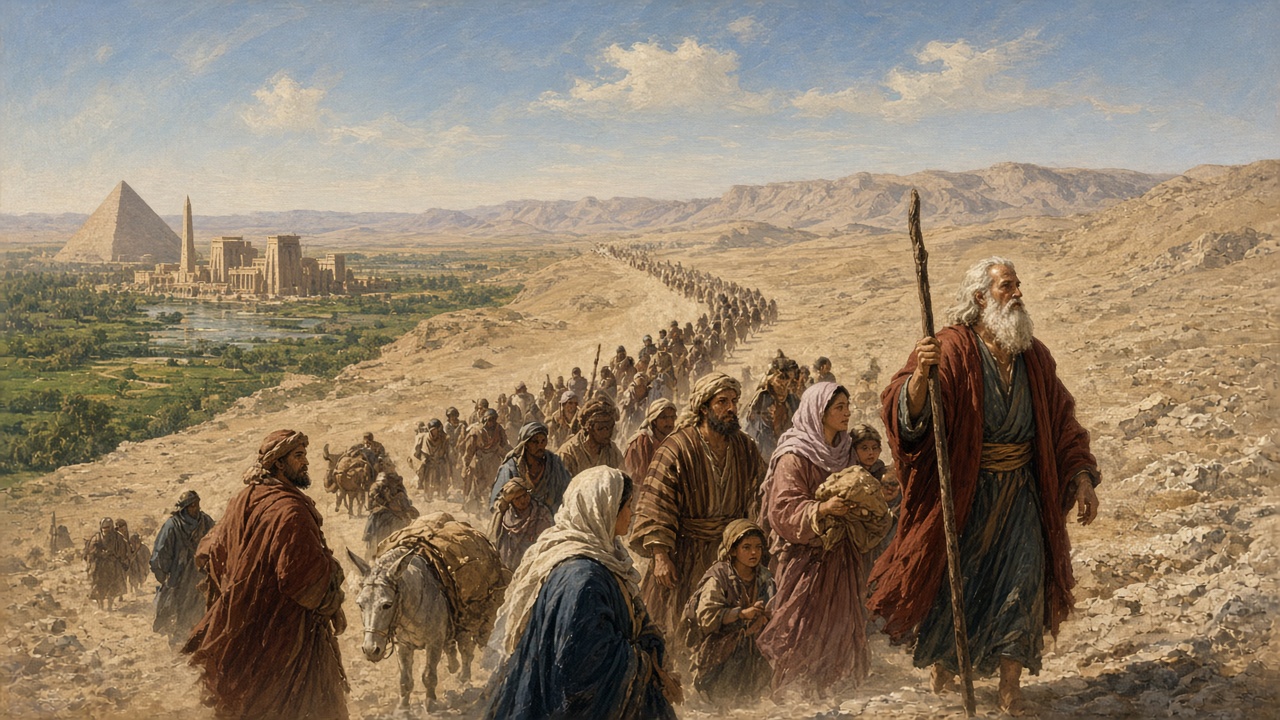
- The warning looks back to the people Moses led out of Egypt. For forty years in the wilderness they tested God, who was angry with that generation and swore they would never enter his rest; their bodies fell in the wilderness. The chapter says that unbelief kept them from entering.Sources: the Bible text itself
- Egypt, the land they left with Moses, is the land of the Nile and the pyramids. Easton's Bible Dictionary (1897) explains the name Moses as Drawn, or links it with the Egyptian word mesu, meaning son.Sources: the Bible text itself · Egypt · Moses
Notes written with AI assistance from open sources (Theographic Bible Metadata, CC BY-SA 4.0; Easton’s Bible Dictionary, public domain) and reviewed before publishing.
Places in this chapter
- Egypt · 30.129, 31.308 · verse 16
Only places identified with high confidence are shown (90% or more according to the scholarly sources compiled by OpenBible). Period map: DARE (Digital Atlas of the Roman Empire), CC BY 4.0; modern map: © OpenStreetMap contributors; places: OpenBible.info (CC BY 4.0).
Credits and license for this translation
Manikáne O Ehwehne
God's New Talk: The New Testament in the Awa Language of Papua New Guinea
Nupela Testamen long tokples Awa long Niugini
copyright © 1974, 1997 Wycliffe Bible Translators, Inc.
℗ Faith Comes by Hearing
Language: Awa
Translation by: Wycliffe Bible Translators
This translation is made available to you under the terms of the
Creative Commons Attribution-Noncommercial-No Derivatives license 4.0.
You may share and redistribute this Bible translation or extracts from it in any format, provided that:
You include the above copyright and source information.
You do not sell this work for a profit.
You do not change any of the words or punctuation of the Scriptures.
Pictures included with Scriptures and other documents on this site are licensed just for use with those Scriptures and documents.
For other uses, please contact the respective copyright owners.
2013-12-11
Source: http://png.bible/awb/ · eBible.org