Matthew 11
Hɨm Yaaim Me God · Tap a verse to see its cross-references.
Jon Baptais keriuwet mɨt disaipel han nen nɨr Jisas
1Jisas katɨp mɨt nɨrak disaipel nar hiswiyen wik (12) epei au, hɨr nɨnaiwɨrek nen nerer wit wit. Hɨr nɨnaiwɨrek te Jisas kɨnaaiwɨr wit kerek hɨrak kewi, hɨrak ken katɨp mɨt kerek nau nɨrapɨt wit kɨrak ik hɨrak ketpor hɨm mɨrak. 2Me wɨ im Jon Baptais kepu kekre wɨnak enuk. Hɨrak kau kekrerek, hɨrak kemtau menmen Jisas kɨrɨakem, te hɨrak keriuwet mɨt disaipel nɨrak nen nɨr Jisas. 3Hɨr nen nepɨtɨr niun Jisas hɨr nitɨwekhi nar ik: “Ti hɨrekes mɨtɨk kerek Jon katɨp ti enen o haiu mamɨmerɨr mɨtɨk keiyak?” 4Jisas kewenhi ketpor, “Menmen yi epei yan yɨrem, o yi yemtewem, yi eino eitɨp Jon em. 5Mɨt miyapɨr nanamɨr enum toto, hi enipi hɨr pɨke nɨr ein ein. Mɨt miyapɨr his hɨt enum, hɨr nɨre yaain nen ein nen ein. Mɨt miyapɨr hɨr lepro mewi, hɨr yɨnk kɨr yaaik. Mɨt miyapɨr hɨr nɨkɨp toto, hɨr nɨre yaain nemtau menmen werek werek. Mɨt miyapɨr epei naa, hi hɨkɨan hɨr pɨke nekrit nau. Hi atɨp mɨt miyapɨr kerek netenen menmen au, hi hetpor menmen im hɨram menmen God katɨp mɨtɨk hɨrak kaknen kakrɨakem. 6Mɨt han kerek hɨr han kiteta hi mɨtɨk kerek God keriuweta hi han, maain hɨr han yaaik nanu.”
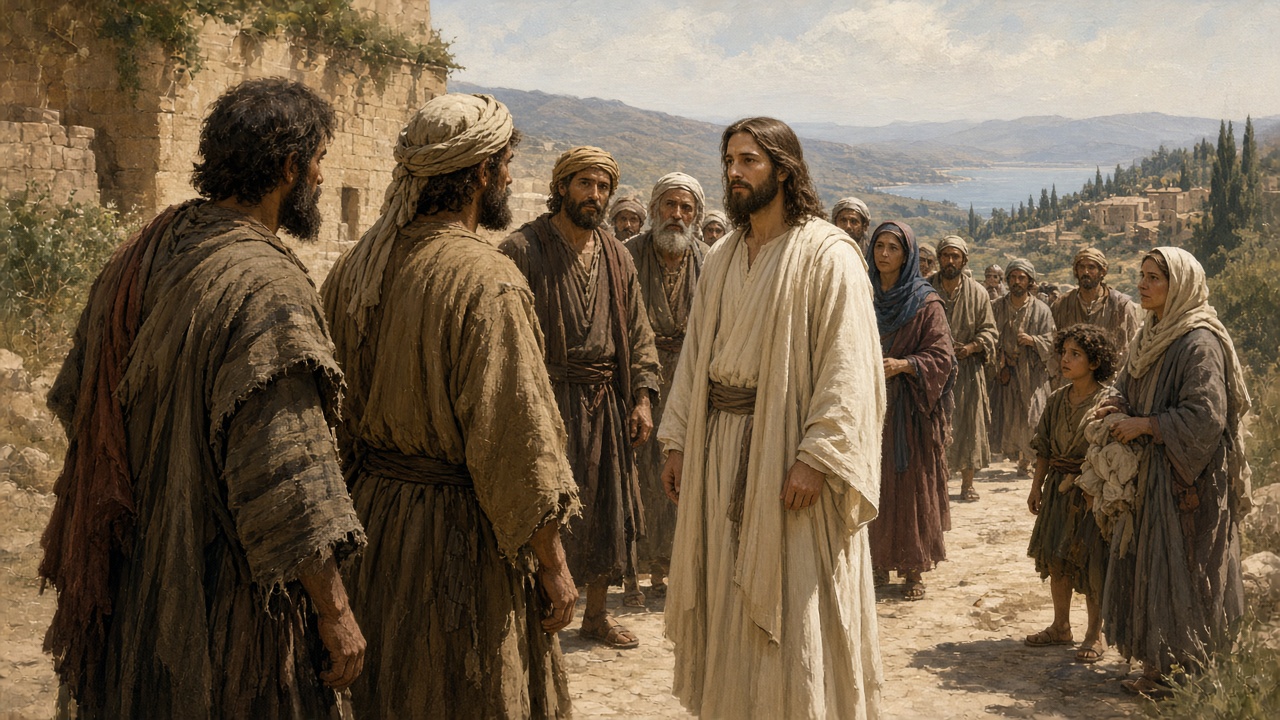
7Hɨrak ketpor epei au, mɨt ne Jon pɨke nen. Hɨr epei nanɨno, Jisas katɨp mɨt menmen me Jon. Hɨrak ketpor, “Nɨpaa yi yen yɨr Jon yi han kitet yi yayɨr mɨtɨk kɨre mekak? Hɨrak mɨtɨk keweikɨn han yapɨrwe kɨre niyen (o tupne) nɨme metɨtɨwem hɨram mɨrirɨr a? Taauye! 8Te yi yen yayɨr mekam? Yi yɨr mɨtɨk keriuwet klos yaaim a? Au, mɨt kerek neriuwet klos yaaim hɨr nau wɨnak ke mɨt iuwe gavman. 9Im em au, te yi yen yayɨr mekam? Yi yen yɨr mɨtɨk profet a! Hɨram werek, te hi hetpi, yi yɨr mɨtɨk hɨrak kinɨn profet. 10Hɨrak mɨtɨk kerek nɨpaa tɨwei me God mɨtɨk kewisɨm matɨp hɨrak kaknen. Hɨm matɨp mar im:
‘Hi ariuwet mɨtɨk kai kakinɨn kaknen kaktɨp hɨm mai. Hɨrak kakɨmani han ke mɨt yapɨrwe te hɨr nanɨmtau hɨm mit.’ 11Hi hetpi werek. Jon Baptais hɨrak kinɨn mɨt miyapɨr yapɨrwe kerek nɨpaa ere in miyerer nɨr ninen. Te neimɨn hɨr mɨt weinɨn hɨr nanises hɨm me God maain hɨr nanu nantike God nanɨt en te hɨr naninɨn Jon kerek wɨ hɨrak kau tɨ ik e.
12Nɨpaa wɨ Jon kinɨn kewepyapɨr hɨrekes katɨp mɨt menmen, nɨpaa ein ere in God kewepyapɨr hɨrak kakinɨn naanmampre mɨt miyapɨr. Te mɨt kerek nenehan nenepan nɨrɨakan enum hɨr neweikɨn sip newet menmen enum hɨr nises hɨm im. 13Menmen im epei man mentar hɨm nɨpaa Moses kewisɨm mau tɨwei metike hɨm mɨt profet newisɨm mau tɨwei hɨram matɨp me Jon kaknen kaktɨp mɨt hɨm im. 14Te yi han kitet hi hatɨp werek, hi etpi Jon hɨrak mɨtɨk ik Ilaija nɨpaa yi yekinaak kau tɨwei hɨrak epei kaknen. 15Neimɨn hɨr nemtau hɨm mai hɨr han ekitetim werek werek. 16Hi ewis mɨt miyapɨr nau tɨ in ek hɨr nɨre mekam? Hɨr nɨre nɨkerek nenɨnehan neit maket nemitetpɨn hɨr natɨp,
17‘Haiu mɨrɨak tukɨn menep wekɨnp, te yi ap yɨrɨre au.
Haiu menep tukɨn mɨtɨk hɨrak kaa te yi ap yan yɨkɨtek au.’ 18Hi hatɨp menmen im hentar Jon kewepyapɨr hɨrekes wɨ ham hɨrak nɨnpɨ maak, hɨrak ap kaam tɨpar si enum au. Mɨt iuwe nɨrek te hɨr natɨp, ‘Herwe kersɨsek hɨrak han enuk.’ Hɨr ap han yaaik neriuwerek nisesik au. 19Hi Mɨtɨk ke wit ke God hi han hewepyapɨr hɨrekes hi etike mɨt haiu maam menmen maam tɨpar. Mɨt iuwe nɨra hɨr natɨp, ‘Eiyɨrek! Hɨrak kaam menmen iuwe yeunɨm, hɨrak kaam tɨpar si enum ere ketaritari. Hɨrak ketike mɨt enun nari pewek me takis netike mɨt han enun hɨr neryeiyan nen.’ Menmen God ketpawɨr hi etike Jon hawɨr wisesim te yi ap han yaaik yeriuwawɨr yisesawɨr au. Menmen hawɨr wɨrɨakem hɨram meteikɨn mɨt God kertei menmen werek werek.”
Jisas han tewenɨn mɨt ne wit ham hɨr ap nises hɨm mɨrak
20Hɨrak ketpor epei au, te Jisas kene mɨt nau nerer wit wit kerek hɨrak nɨpaa kɨrɨak menmen yapɨrwe kɨkaap mɨt keriuwerem. Hɨrak keneri kentar hɨr ap neweikɨn sip newet menmen enum hɨr nises hɨm mɨrak au. 21Hɨrak katɨp kar ik: “Yi mɨt miyapɨr yau wit Korasin yetike mɨt miyapɨr ne wit Betsaida! Maain God kakriwaank! Menmen yi yɨra hi hɨrɨakem heit wit ki, nɨpaa mɨt profet nɨrɨakem neit wit Taia ketike wit Saidon, te hɨr waswas nanweikɨn sip nanwet menmen enum nanwen toni mamɨntar yɨnk kɨr nanteikɨn God hɨr yɨnk enuk. Te yi mɨt yi ap yɨrɨakem au. 22Hi hetpi werek. Maain wɨ kerek God skelim mɨt, hɨrak kaknep mɨt ne Taia netike mɨt ne Saidon kaknɨp kike, te yi mɨt au hɨrak kakiwep iuwe. 23Yi mɨt ne wit Kapaneam. Yi han kitet God kaktɨp yi yaain a? Au, God kaktɨp yi mɨt enun kakwɨri yi eino si. Hi hɨrɨak menmen yaaim heit wit Sodom kerek nɨpaa hɨrak kepu kar ke hi epei hɨrɨakem heit wit ki, te hɨr neweikɨn sip newet menmen enum te God ap kanɨp kaknepi wit weinɨk au. Hɨr wen nepu. 24Hi hetpi werek. Maain wɨ kerek God skelim mɨt, hɨrak kaknep mɨt ne Sodom kaknɨp kike, te yi mɨt miyapɨr au, hɨrak kakiwep iuwe.”
Mɨt kerek nises hɨm me Jisas hɨr nanu werek
25Me wɨ im Jisas katɨp kar ik: “Haai ti kerek Mɨtɨk Iuwe ke nepni metike tɨ, hi han yaaik heriuwit hentar ti hɨsawɨn menmen mit yaaim te mɨt iuwe nepɨtariyem. Ti epei ewepyapɨrem heteikɨn mɨt weinɨn em. 26Hi han yaaik heriuwit hentar ti hanhan hises han kit te ti hɨrɨakem mar im. 27Haai kai ti epei eweto menmen mit yapɨrwe te hi naanmɨprewem. Mɨt ap nertei han ke hi Nɨkan kit. Ti Haai kai kerekek. Mɨt ap nertei han kit au. Hi Nɨkan kit hetike mɨt kerek hi ewepyapɨr han kit eteiknorek.
28“Yi mɨt miyapɨr kerek yi yɨrɨak menmen iuwe yises God, te yi han ki enuk yentar yi yisesik werek werek au. Yi einen eiyises hɨm mai te hi akepi yi eiyisesik werek werek. 29Yi einen eiyises hɨm mai te hi eteikni menmen. Yi eiyisɨsa eiyɨntar hi ap hɨre mɨtɨk atɨp hɨm tokik au. Hi ewenɨn han kai atɨp mɨt hɨm yaaim. Yi eiyisɨsa te yi han yaaik, yi yayu werek werek. 30Menmen hi ahitihi yi eiyisesim eirɨakem, hɨram yaaim. Te yi ap han enuk yayisesim au. Yi han yaaik eiyu.”
Did you know?
John's question and the cities that did not repent
- From prison, John sent his disciples to ask whether Jesus was the one who was to come. Jesus told the crowds that John was more than a prophet—the messenger sent ahead to prepare the way—and, if they were willing to accept it, the Elijah who was to come. A Bible dictionary calls John the forerunner and says his mission was already the subject of prophecy, citing Isaiah 40:3 and Malachi 3:1; it also introduces Elijah as the Elias of the New Testament.Sources: the Bible text itself · John the Baptist · Elijah
- Jesus then denounced Chorazin, Bethsaida, and Capernaum, where most of his miracles had been performed, because they did not repent. A dictionary identifies Chorazin with modern Kerazeh, about two and a half miles up the Wady Kerazeh from Capernaum, and says that Capernaum, absent from the Old Testament, became Jesus' own city after he left Nazareth. It places Bethsaida on the east side of the lake, two miles up the Jordan in Gaulonitis, enlarged by Philip the tetrarch and named Julias after the emperor's daughter, though some have supposed there was only one Bethsaida, near where the Jordan enters the lake.Sources: the Bible text itself · Chorazin · Capernaum · Bethsaida
- He set those cities against Tyre and Sidon, which he said would have repented long ago in sackcloth and ashes, and against Sodom, which he said would have remained to this day. Sidon, on the Mediterranean coast about twenty-five miles north of Tyre, was the oldest Phoenician city there and the mother city of Tyre. A dictionary says the commerce of the whole world was gathered into Tyre's warehouses, and that Sodom, in the vale of Siddim, was destroyed by fire from heaven so completely that no trace of it has been found.Sources: the Bible text itself · Sidon · Tyre · Sodom
Notes written with AI assistance from open sources (Theographic Bible Metadata, CC BY-SA 4.0; Easton’s Bible Dictionary, public domain) and reviewed before publishing.
Places in this chapter
- Galilee · 32.760, 35.527 · verse 1
- Sidon · Today: Sandikli archaeological site in Sidon · 33.561, 35.372 · verses 21, 22
- Tyre · 33.271, 35.196 · verses 21, 22
Only places identified with high confidence are shown (90% or more according to the scholarly sources compiled by OpenBible). Period map: DARE (Digital Atlas of the Roman Empire), CC BY 4.0; modern map: © OpenStreetMap contributors; places: OpenBible.info (CC BY 4.0).
Credits and license for this translation
Hɨm Yaaim Me God
The New Testament in the Au language of Papua New Guinea
Nupela Testamen long tokples Au long Niugini
copyright © 1992 Wycliffe Bible Translators, Inc.
Language: Au
Translation by: Wycliffe Bible Translators
This translation is made available to you under the terms of the
Creative Commons Attribution-Noncommercial-No Derivatives license 4.0.
You may share and redistribute this Bible translation or extracts from it in any format, provided that:
You include the above copyright and source information.
You do not sell this work for a profit.
You do not change any of the words or punctuation of the Scriptures.
Pictures included with Scriptures and other documents on this site are licensed just for use with those Scriptures and documents.
For other uses, please contact the respective copyright owners.
2014-12-03
Source: http://png.bible/avt/ · eBible.org