Acts 24
Hɨm Yaaim Me God · Tap a verse to see its cross-references.
Mɨt iuwe ne Isrel nesiuwe hɨm Pol
1Wɨ hispɨnak (5) epei man men, mɨtɨk iuwe hetpris ke Isrel Ananaias, hɨrak ketike mɨt iuwe ne kaunsil en hɨr netike mɨtɨk niuk mɨrak Tetalas kerek kertei lo me mɨt ne Rom hɨrak kɨkaap mɨt ne Isrel hɨr nisesim te hɨr nesiuwe hɨm mɨt neit ninaan me mɨt iuwe masistret hɨr nan Sisaria. Hɨr nan Sisaria, hɨr nen nɨr mɨtɨk iuwe ke gavman Filiks te hɨr nesiuwe hɨm Pol. 2Mɨtɨk iuwe kari Pol hɨrak kan te mɨtɨk iuwe kenɨne Tetalas. Hɨrak kenɨne Tetalas, hɨrak kesiuwe hɨm Pol kar ik: “Ti mɨtɨk iuwe ke gavman. Ti nɨpaa ere in ti naanmɨprai werek te haiu mekiyan mau meit. Ti hekepai ti henip yaaim mekrehɨr menmen nɨpaa haiu misesim enum merer wit wit. 3Haiu mɨt merer wit wit han yaaik meriuwerem te haiu matɨp ti yaaik. 4Hi hɨnapen erwit iuwe, te hi hituthi ti han tewenɨnai emtau hɨm menmen meiyam yinam haiu mamɨtputem. 5Haiu mertei mɨtɨk ik hɨrak mɨtɨk enuk kari han ke mɨt ne weiwɨk me Isrel nau nerer wit wit te hɨr nenehan nenepan. Hɨrak mɨtɨk iuwe kei ke mɨt kerek nises hɨm me Jisas nɨpaa ke Nasaret. 6Hɨrak kari mɨtɨk ap ke weiwɨk me Isrel ketikerek ten wɨnak ke God iuwe keit Jerusalem, te hɨrak ap kises hɨm me mɨt neriuwesɨs menmen im. Haiu metɨwekhis han kitet mewepyapɨrek kakises lo maiu. [ 7Au, mɨtɨk iuwe ofisa ke ami Lisias keit mɨt ne ami nɨrak hɨrak kewep koknɨnai wɨsenum keithis mɨtɨk ik kerik ken. 8Epei au, Lisias katɨp neimɨn hɨr nansiuwek hɨm hɨr anɨnen in enɨrit.] Ti itehi mɨtɨk ik ti hɨrekes ertei menmen yapɨrwe haiu mesiuwek hɨm.”
9Hɨrak katɨp epei au, mɨt yapɨrwe ne weiwɨk me Isrel neit ein nekepik natɨp nar ik: “Hɨrak katɨp werek, hɨrak ap kemipɨn au.”
Pol katɨp mɨtɨk iuwe Filiks hɨm mɨrak
10Hɨr natɨp epei au, mɨtɨk iuwe kehis kenɨne Pol kaknen kaktɨp. Pol kan kerp katɨp kar ik: “Hi hertei me tito yapɨrwe ti naanmɨprai heriuwe menmen yapɨrwe te hi han yaaik etput menmen eteiknut hi hɨrɨak mekam. 11Ti itehi mɨt in ti hertei menmen hi hetpiyem. Me wɨ hiswiyen wik (12) hi han wit Jerusalem ewenɨpi God. 12Mɨt ne Isrel ap nɨra hi hetike mɨt han mewepnak matɨpan meit wɨnak ke God ein, hi ap hari han ke mɨt te hɨr han kekrit heit wɨnak ke God o heit witeik. 13Hɨr ap neit mɨtɨk kiutɨp kɨra hi hɨrɨak menmen marim hɨr nesiuwau hɨm.
14“Hi etput menmen im. Hi ewenɨpi niuk me Mɨtɨk Iuwe hɨrak God ke maamrer naiu, te hi hises hɨm me menmen me Jisas kerek mɨt natɨp hɨram enum. Hi wen hises menmen yapɨrwe mɨtɨk Moses ketike mɨt profet hɨr newisɨm mau tɨwei. 15Hi hises menmen har ke mɨt in me hɨm me God, maain mɨt yaain nantike mɨt enun pɨke nankrit nanu nanɨt. 16Hekrit hekrit hi hare hɨrɨak menmen te God ketike mɨt miyapɨr yapɨrwe nɨra natɨp hi yaaik.
17“Hi heit wit ham me tito meiyam epei au, hi heit wit Jerusalem ewet mɨt nai ne weiwɨk me Isrel pewek mei, hi are ano ewet God menmen. 18Hi wen heit wɨnak iuwe ke God ein hi hɨrɨak menmen im me hɨm me Moses matɨp hi hɨrɨakem te God kaktɨp hi pɨke yaaik, mɨt han nɨra. Mɨt nau netikewa au, haiu ap mewepnak matɨpan au. 19Mɨt han ne weiwɨk me Isrel hɨr ne provins Esia hɨr nepu wɨnak ke God nɨra netauhis neriya. Mɨt en hɨr hɨras enɨnen in nantɨp menmen mei meit ninaan mit te hɨr nansiuwau hɨm, 20o au en, ti atɨp mɨt in hɨr natɨp newepyapɨr menmen hɨr nɨr hi hɨrɨakem enum me wɨ hi herp ninaan me kaunsil. Menmen au, 21o hɨm miutɨp im. Nɨpaa hi herp ninaan mɨr hi hɨnap hatɨp har ik: ‘Mɨt neriya heit wɨnak ke kaunsil ik nentar hi han kitet mɨt epei naa pɨke nanɨkrit nanu.’”
22Pol katɨp epei au, mɨtɨk Filiks kerek kertei werek menmen me hɨm me Mɨtɨk Iuwe Krais, hɨrak ketpor kar ik: “Yi yemerɨr mɨtɨk iuwe ofisa ke ami kaknen te hi han kakitet menmen hi ehisesim.” 23Hɨrak ketpor epei au, hɨrak katɨp mɨtɨk kepten ke ami kinɨn naanmɨpre 100 mɨt, hɨrak naanmɨpre Pol te ap keriuwesɨs nɨrak yinan nanɨnen nanwetɨwek menmen.
Filiks kewis Pol kekre wɨnak enuk me tito wik
24Maain wɨ ham Filiks keit mɨte pɨrak Drusila kerek pe weiwɨk me Isrel. Hɨrak kesiuwe mɨtɨk keit Pol keiyɨk kan, hɨrak ketikerep nemtau Pol katɨp me mɨt enises hɨm me Krais Jisas. 25Pol wen ketpor menmen me mekam yaaim, menmen me mɨtɨk kewen han kɨrak ke menmen yapɨrwe, katɨp menmen me wɨ maain God skelim mɨt te Filiks kepɨrpɨr kɨnaain ketpɨwek kar ik: “Epei werek. Ti pɨke eno. Maain han kai hi enɨnut ti etpo menmen.” 26Hɨrak wen han kitet Pol kakwetɨwek pewek hɨrak kaksiupanek kakwisɨk kakno witeik. Hɨrak han kitet marik te wɨ ham wɨ ham hɨrak keit Pol ketikerek tewepnak.
27Pol kepu en ere tito wik epei au. Tito wik epei au, Posias Festas kekrehɨr ke mɨtɨk iuwe gavman Filiks. Hɨrak Filiks hanhan kenip mɨt iuwe ne Isrel han yaaik neriuwerek te hɨrak wen kewis Pol kekre wɨnak enuk kepu kepeit.
Did you know?
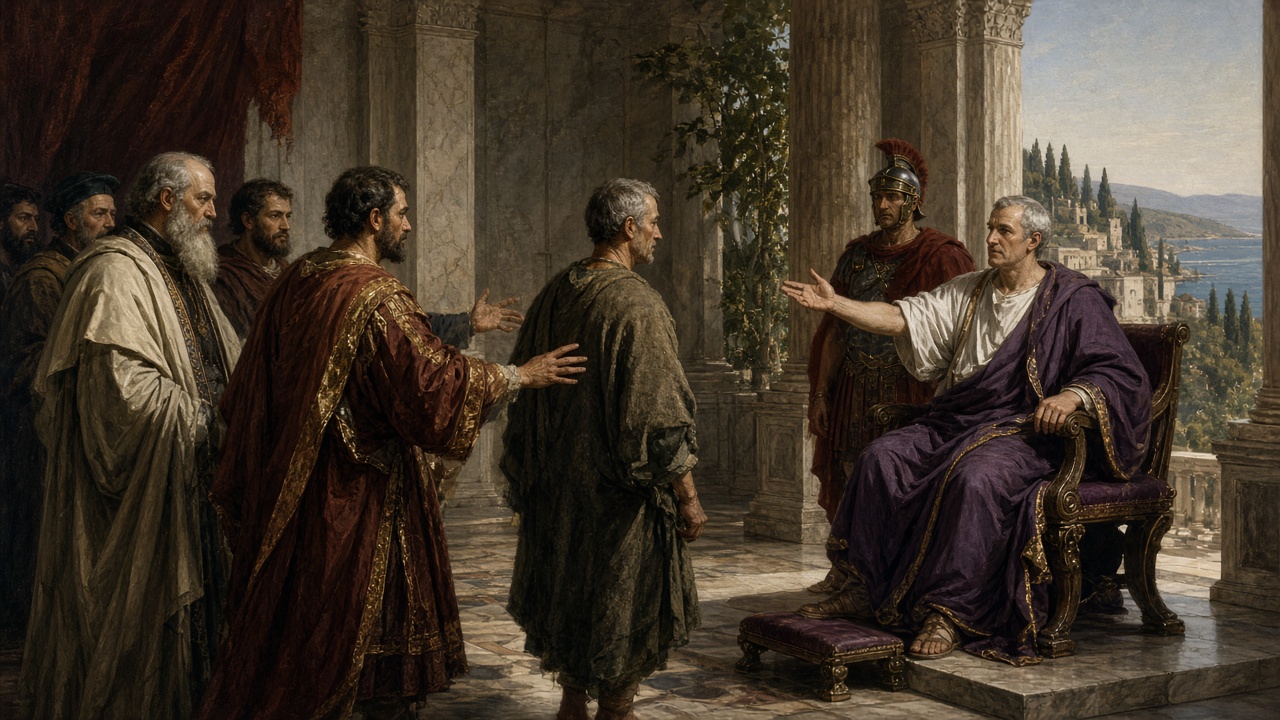
Paul before Felix
- The high priest Ananias came down with some elders and a lawyer named Tertullus, whom Easton's Bible Dictionary describes as a Roman advocate employed by the Jews to state their case against Paul before Felix. Tertullus praised the governor and then called Paul a pestilence who stirred up dissension among the Jews all over the world, a ringleader of the sect of the Nazarenes, and a man who had tried to desecrate the temple. The dictionary links that opening praise with Felix's clearing the country of bandits and impostors.Sources: the Bible text itself · Tertullus · Felix
- Felix, who was well informed about the Way, adjourned the hearing and kept Paul under guard, while allowing him some freedom and letting friends meet his needs. The account says he hoped Paul would offer a bribe and so sent for him often; Easton's Bible Dictionary likewise says he appears to have expected a bribe and therefore held several interviews with him. After two years Porcius Festus succeeded him—Easton's Bible Dictionary (1897) dates that appointment to A.D. 60—and, wishing to do the Jews a favor, Felix left Paul in prison.Sources: the Bible text itself · Felix · Portius Festus
- Several days later Felix returned with his wife Drusilla, who was Jewish, and listened as Paul spoke about faith in Christ Jesus and about righteousness, self-control, and the coming judgment; Felix became frightened and sent him away. Easton's Bible Dictionary (1897) identifies Drusilla as the third and youngest daughter of Herod Agrippa I and says Felix induced her to leave her husband, Azizus, king of Emesa. The same entry says that she and her son perished in the eruption of Mount Vesuvius in A.D. 79.Sources: the Bible text itself · Drusilla
Notes written with AI assistance from open sources (Theographic Bible Metadata, CC BY-SA 4.0; Easton’s Bible Dictionary, public domain) and reviewed before publishing.
Places in this chapter
- Caesarea · Today: Caesarea Maritima · 32.500, 34.892 · verse 1
- Jerusalem · 31.777, 35.234 · verses 11, 17
- Asia · 38.400, 28.300 · verse 18
Only places identified with high confidence are shown (90% or more according to the scholarly sources compiled by OpenBible). Period map: DARE (Digital Atlas of the Roman Empire), CC BY 4.0; modern map: © OpenStreetMap contributors; places: OpenBible.info (CC BY 4.0).
Credits and license for this translation
Hɨm Yaaim Me God
The New Testament in the Au language of Papua New Guinea
Nupela Testamen long tokples Au long Niugini
copyright © 1992 Wycliffe Bible Translators, Inc.
Language: Au
Translation by: Wycliffe Bible Translators
This translation is made available to you under the terms of the
Creative Commons Attribution-Noncommercial-No Derivatives license 4.0.
You may share and redistribute this Bible translation or extracts from it in any format, provided that:
You include the above copyright and source information.
You do not sell this work for a profit.
You do not change any of the words or punctuation of the Scriptures.
Pictures included with Scriptures and other documents on this site are licensed just for use with those Scriptures and documents.
For other uses, please contact the respective copyright owners.
2014-12-03
Source: http://png.bible/avt/ · eBible.org