Acts 24
Aú-aai símai kááísamakain-aai · Tap a verse to see its cross-references.
Yúndaa-waasi Pórombo simánkaraan-aai.
1Káráwiyuwasa séfataase-noꞌwaamba waésa aifaꞌ-ámáán-káwáágón-áwíꞌa Ánánáyasiye óraaꞌ-waasiye Póromba aaimó simánkénesa Sísááríyaa-naopaꞌa Fíríkísimpaꞌo kúmúmba moóráwigo ámáámba kaweꞌ-úmaimo isón-kwaasigon-awiꞌa Tétárasi weséꞌa Fíríkísimpaꞌa kumbésa 2Póromba áántowana túwana Tétárasi aaí simánkena óraakomba símai arumbá faiyaréna séna kentáásí óraakoo kaweꞌ-ímáyááwáráꞌ-wáásí po kaweꞌ-úmai káráwiyonata ayáátáákaꞌa aáno úmaisa méraumne. Ení imáyáafinkemba kaweꞌ-úmai súwaꞌnai ónata maéꞌéúndasaaniye. 3Kesáá naaóꞌ-naoꞌo méraunda-waasisa aasiyaasi-kánáá entáféta aamoisá wéune. 4Ímba ayáátááꞌ-aai sénaumpo embá awesaraí ifáínifo ampáán-ááí sénaumpo usúkáꞌmai isaaó. 5Maankwáásígó aoisaambá wimái seyaafáꞌ-máráfáꞌá wénena Yúndaa-waasi símai tirumbá faiyáráísasa Násaretifakewini aampaꞌá arááíwaesa owaná miyámó on-kwáásítí aifarááwí éna miyá wéiye. 6Miyá éna fíꞌonkaa-waasi áíꞌmaena óraaꞌ-amaan-daumpaꞌa móankaraisana ména sáwíꞌo uráintafeta maankwáásísá taꞌótoketa kentáásí ámáán-oraaꞌ-waasifaꞌa aaí simánkanae únansa 7i-wáásítí óraakon-awiꞌa Rísíya kuména kusínkambaisa siyáámpinkemba Póromba kunáíꞌmaena iména 8simásimenasa séna empáꞌá másénááwe sisatá wégumune. Maankwáásígómbó áísai inanamó éna aaifimbó maénkaraunda-aai wemá sína seyaafáꞌ-ááí isaaó Tétárasi súwasa 9Yúndaa-waasi wembá áwaꞌnai esa minááímó simbá éraiꞌ-aai siyé siyáawe.
Póro Fíríkísimbo mósimamakain-aai.
10Suwaná kámáni-oraako aúwááméꞌa éna Pórontafena e siyó súwana Póro séna emó káráwiyonda ayáátáákaꞌa aatáí maisuꞌmaé iyáanda póꞌa enaúrankaꞌa anondáá ke aaimó sendasáféna sirunkó aamoí wéiye. 11Maníkóntáféꞌa imáyáa éꞌa wenáwíꞌo mósá maráúndasafeꞌa Yérúsaremufa iméꞌa siyáánkai úmai kaeꞌ-nóꞌwáámbá taíꞌáraifo tuwímbaimo tísai inasá éraiꞌa siyé sénááwe. 12Óraaꞌ-amaan-daumpaꞌe káriꞌ-amaan-daumpimpaꞌe máápaꞌe ímba aaisankáámbá séꞌa ímba waási símai tiyáí-ááímó siyáunda Yúndaa-waasi suwánaraawe. 13Kembó simásínkáámba karoꞌá sefó minááígóní áwáu ímba wéraiye. 14Aforaꞌá ke simámenaumne. Ísuni aampaꞌá wéweꞌa kentáá síwáꞌnáti Maníkón-ímáyáá éꞌa áwíꞌa mósá maráúnasa Ísuni aantafésa maankwáásísómbá sésa karoꞌ-ámbán-iye wésewe. Móseseni ámáámba iséꞌa Maníkón-aaimo simátímakowi agaimakáan-aai iséꞌa éraiꞌe súne. 15Miwí sésa Maníkó seyaafáꞌnánká sáwí-waasiye kaweꞌ-wáásíyé pukémpinkemba íyáfasintinkainiye sésamo amuꞌmáráántemba kemá miyá wéune. 16Mindásafeꞌa kesí imáyáafimba sáwíꞌan-ifo séꞌa Maníkón-aúrankaꞌe waási túrankaꞌe kaweꞌ-úmai méraumne.
17Énifo fíꞌo-fiꞌom-barafaꞌa wéneꞌa tuwímbai-aatai maisuwéꞌa Yérúsaremufaꞌa kesí waási ímbo tómbó makáan-kwaasi óntamba timéꞌa Maníkóntáféꞌa ísámai póíꞌo ondasáféꞌa iyáumne. 18Minkísáú wémaeꞌa Yúndaa-waasiti ámáámba ísámai kaweꞌó í-tántááꞌá uwásuweꞌa Maníkóntáféꞌa ísámai póíꞌo ondasáféꞌa óraaꞌ-amaan-daumpaꞌa iméraawanasa kempáꞌá sáwífaꞌ-waasi ímba taméresa aaimó símae kumbá Yúndaa-waasi suwánowasa 19tuwímbai Yúndaa-waasi Ésiyaa-marafaken-kwaasi mésa suwánaraawe. Sáwíꞌo uráanasamo suwánaresa enaúrankaꞌa simásínkáaro. 20Ámáán-oraaꞌ-waasifaꞌo méraawandaraꞌo sáwíꞌo uráanasamo suwánaresaraa moórá-aai aantemba sewisinó. Moórá-aai aantembo senkakaa isáásino. 21Ámáán-oraaꞌ-waasifaꞌo méraawandaraꞌa óraaka séꞌa Maníkó pukén-kwaasimo íyáfasintinkainiyemo siyáunda-aaisafesa káféꞌa aaifimbá maisínkááwe séwánasa kemó siyáunda-aaisafesa simásínkááwe
Póro siyáiye.
22Súwana Fíríkísi Ísuni aampaꞌó kun-ááí éꞌa ísarena séna i-wáásítí óraakon-awiꞌa Rísíya kumínaꞌa maanááí ísámai kaweꞌá ónáífo koró simásuwena 23Póromba káráwiyowintafena séna ándáfaꞌa kaweꞌ-úmai káráwiye ímba aíyayaankaꞌo káráꞌumarenda ímbo wemó makáinda-tantaaꞌa wení waásimo áwaꞌnai ónae síyamo e úwoi ewé sinasá áwaꞌnai oro
Fíríkísi siyáiye.
Póro Fíríkísinte Túrúsíraanteꞌo simátímakain-aai.
24Fíríkísi simásuwena ména tuwímbai-kanaa maisuwéna awaainímbá Yúndaa-ininkon-awiꞌa Túrúsíraamba áíꞌmaena taména Póromba áántowana téna séna Ísu Káráísitin-aaisafesa timankúnkúmbo un-ááígóní áwáu simátimuwasarai ísóyana 25Póro kaweꞌ-ááígóní áwáu séna miwí túraꞌo káráwiyiyan-aai séna Maníkó waásimo méraawini áwáumo tísai índa-aai súwana Fíríkísi ááꞌa úwana séna énifo waaó. Ánaaemba ímbo kísaumo wéraindaraꞌa áántanaiye séna 26imáyáa éna Póro ándáfaꞌa méyán-onaná faúsinkainkwae séna óntamba simínaꞌa faúꞌankanae-imayaa éna mindásafena aasiyaasi-kánáá Póromba áántowana túwasarai aaí símaesarai iyáaye.
27Aaí símae íyúyana kaeꞌ-áátáí maisuwéna moóráwigon-awiꞌa Pósíyasi-Fésítasi Fíríkísin-anondaa kámáni-kisau íyámainda ampáámbá úwana Fíríkísi Yúndaa-waasi tirunkó kaweꞌá ínkwae séna Póromba ímba faúꞌánkaraifo úwoi ándáfaꞌa méraiye.
Did you know?
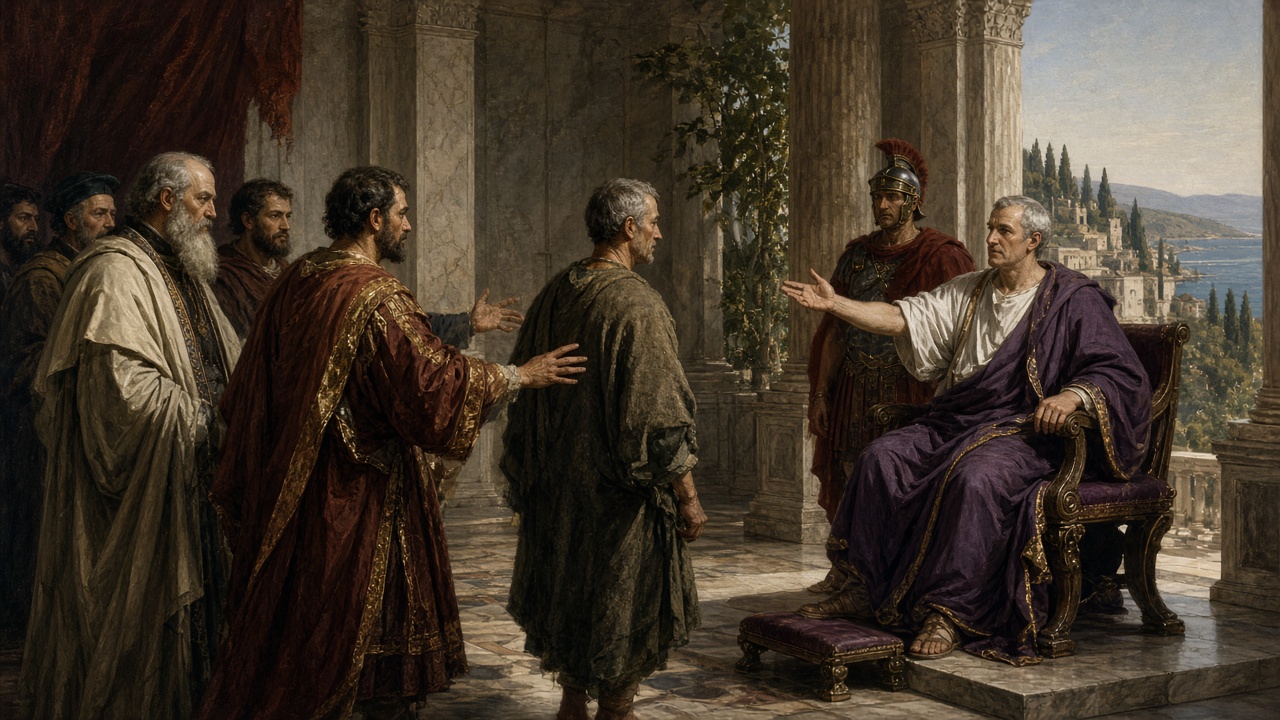
Paul before Felix
- The high priest Ananias came down with some elders and a lawyer named Tertullus, whom Easton's Bible Dictionary describes as a Roman advocate employed by the Jews to state their case against Paul before Felix. Tertullus praised the governor and then called Paul a pestilence who stirred up dissension among the Jews all over the world, a ringleader of the sect of the Nazarenes, and a man who had tried to desecrate the temple. The dictionary links that opening praise with Felix's clearing the country of bandits and impostors.Sources: the Bible text itself · Tertullus · Felix
- Felix, who was well informed about the Way, adjourned the hearing and kept Paul under guard, while allowing him some freedom and letting friends meet his needs. The account says he hoped Paul would offer a bribe and so sent for him often; Easton's Bible Dictionary likewise says he appears to have expected a bribe and therefore held several interviews with him. After two years Porcius Festus succeeded him—Easton's Bible Dictionary (1897) dates that appointment to A.D. 60—and, wishing to do the Jews a favor, Felix left Paul in prison.Sources: the Bible text itself · Felix · Portius Festus
- Several days later Felix returned with his wife Drusilla, who was Jewish, and listened as Paul spoke about faith in Christ Jesus and about righteousness, self-control, and the coming judgment; Felix became frightened and sent him away. Easton's Bible Dictionary (1897) identifies Drusilla as the third and youngest daughter of Herod Agrippa I and says Felix induced her to leave her husband, Azizus, king of Emesa. The same entry says that she and her son perished in the eruption of Mount Vesuvius in A.D. 79.Sources: the Bible text itself · Drusilla
Notes written with AI assistance from open sources (Theographic Bible Metadata, CC BY-SA 4.0; Easton’s Bible Dictionary, public domain) and reviewed before publishing.
Places in this chapter
- Caesarea · Today: Caesarea Maritima · 32.500, 34.892 · verse 1
- Jerusalem · 31.777, 35.234 · verses 11, 17
- Asia · 38.400, 28.300 · verse 18
Only places identified with high confidence are shown (90% or more according to the scholarly sources compiled by OpenBible). Period map: DARE (Digital Atlas of the Roman Empire), CC BY 4.0; modern map: © OpenStreetMap contributors; places: OpenBible.info (CC BY 4.0).
Credits and license for this translation
Aú-aai símai kááísamakain-aai
The New Testament in the Awiyaana language of Papua New Guinea
Nupela Testamen long tokples Awiyaana
copyright © 1984 Wycliffe Bible Translators, Inc.
Language: Awiyaana
Translation by: Wycliffe Bible Translators
This translation is made available to you under the terms of the
Creative Commons Attribution-Noncommercial-No Derivatives license 4.0.
You may share and redistribute this Bible translation or extracts from it in any format, provided that:
You include the above copyright and source information.
You do not sell this work for a profit.
You do not change any of the words or punctuation of the Scriptures.
Pictures included with Scriptures and other documents on this site are licensed just for use with those Scriptures and documents.
For other uses, please contact the respective copyright owners.
2013-08-17
Source: http://png.bible/auy/ · eBible.org