Judges 2
Buk Baibel long Anuki · Tap a verse to see its cross-references.

About this book
About Judges
- The book is called Judges because it contains the history of Israel's deliverance and government by the men who bore that title. Easton's Bible Dictionary (1897) sets their story in repeated times of servitude under neighboring peoples and of deliverance by the judges, and it states that the chronology of the whole period is uncertain.Sources: Easton: Judges, Book of
- Easton's Bible Dictionary (1897) holds that the author was most probably Samuel, and that the book was probably composed during Saul's reign or at the very beginning of David's reign. Easton notes that the words in Judges 18:30–31 imply a date after the Philistines took the ark and after it was set up at Nob, whereas in David's reign the ark was at Gibeon.Sources: Easton: Judges, Book of
- As Easton outlines it, the book has an introduction (1–3:6) linking it with the narrative in Joshua, a history of thirteen judges (3:7–16:31) in four periods, and an appendix (chapters 17–21) with no formal connection to what goes before. If Eli and Samuel are included, Easton counts fifteen judges.Sources: Easton: Judges, Book of
- Easton's outline presents the setting as a succession of servitudes: under Chushan-rishathaim of Mesopotamia, under Eglon of Moab, under Jabin of Hazor in Canaan, under Midian with Amalek and the children of the east, under the Ammonites together with the Philistines, and again under the Philistines. Gideon, also called Jerubbaal, begins what Easton calls the second period; Jephthah, brought from Tob by the elders of Gilead, judged Israel for six years after delivering the people from the Ammonites; Samson, son of Manoah of Zorah, was a Nazirite to God from birth.Sources: Easton: Judges, Book of · Gideon · Jephthah · Samson
- The appendix records the conquest of Laish by a portion of the tribe of Dan, and the near extinction of Benjamin at the hands of the other tribes because Benjamin had assisted the men of Gibeah. Easton places these events only a few years after Joshua's death and says they show the people's religious and moral degeneracy. Easton also notes that Ruth originally formed part of Judges and was separated from it about A.D. 450, then placed in the Hebrew scriptures immediately after the Song of Solomon.Sources: Easton: Judges, Book of · Gibeah
Notes written with AI assistance from open sources (Theographic Bible Metadata, CC BY-SA 4.0; Easton’s Bible Dictionary, public domain) and reviewed before publishing.
Josuwa irabobo murine raghanina metagha
7Josuwa iyamakamake gabudaridiye na Isrel damdi Yawe God siyabigebigeni, bi irabobo murine na bada wawaya, Yawe God sibigena wiikaruveni patana da Isrel kanababada yawayawiidi siyamakamakena, iiyawogha Yawe God yana berabera Isrel damdi kiiravidiye ibera sikitana.
8Yawe God yana wiitamariyana Josuwa, Nun natuna na kanabodu 110 bi irabobo. 9Na yana wawaya, kubura kana waghawagha Timnat Heresne tanawa ivirapenenina name sidogu, dam Ifreim yadi kubure koyae, Gaas Koyane kikiramutumutuba yana nawae.
10Noko kimtana tupana sirabobo murine, na bada kimta tana itubugha na Yawe God gesiyakovina bo Isrel damdi kiiravidiye awaki iberana. 11Na toudi Yawe God matane bera berona sibera da Baal yana tarabiibiisaka siyapeepetedi. 12Toudi tamadinakim yadi God, Yawe God sisinighiiyeni, iiyabo Ijipt kuburama ikabikanibuvedi, bi sidagu wawaya wiibata iiyawogha nama riridiye siyamakamake na yadi god siyapeepetedi, na Yawe God sivinuwapughupughuni 13basuna toudi Yawe God sisinighiiyeni bi Baal da Astoret siyapeepetedi. 14Na Yawe God yana nuwapughu iragata kirakii Isrel damdi biiyadi bi ibera na wiikayotaketowana damdi sigeghomiiri da Isrel damdi tupeyanama siyapiyedi bi aviya damdi nama riridiye iviruveredi da gerubana siyageebodedi. 15Raghanina Isrel damdi sanagho wiiaviya biidi, na Yawe God geiyiwiitedi da kadi aviya sinageeiwayidi. Touna iwonawiikatayidi da metagha ivisuwona na ibera. Na Isrel damdi nuwapoya ghamana sikabi.
16Wasina bi Yawe God babada ikabiwiimiiridi da Isrel damdi siyiyawiidi iiyawogha siyayapiyapiyedi na gwabidima. 17Bi gegha, Isrel damdi babadidi gesiyawaiyanedi da Yawe God kawagha siyapepeteni, bi gegha da bada god wiibata sikirorovedi da sipepetedi. Toudi yaininagha nosidinakim yadi kedama simiiri irana da Yawe God gesiyakabisisireni. 18Raghanina Yawe God, bada tana Isrel damdi yaveredi bi noko badana yana make yawana kamone na God wawaya iyiwiitedi da kadi aviya siyiaviyedina gwabidima yiwiitedi. Basuna Isrel damdi yadi kabikwarakwara da wiikayotaketowana kamodima siyakabikabida kiiravidiye na Yawe God iyinuwanuwaghanedi. 19Bi raghanina noko badana yarabobo na wawaya, Yawe God samiiri kubuteni da saveramagha yadi yawa katamanidiye bi bera bero kirakiidi sabera geware kimta katamanidi naboni, da god mududi sakivikivina bi sabigebigedi da sapeepetedi. Toudi geyadiwiina da bera beroberodi da kotakii beradi sinakabitourana. Yawe God yana wiisuwona wiiwaghasinina Isrel damdi teya bi sivikasigiiyeni, na nuwanuwana ipughu bi ikayoveni da iyaruyaghadi na wiiwiitedi kubura wiibata damdi, Isrel kuburama wiikanibuvedi ikabitore. Kubura wiibata damdi yadi bera beroberodima Isrel siruyaghadi, da memeda Yawe God siyakivini ware tamadinakim sibera bo gegha na naboni.
Did you know?
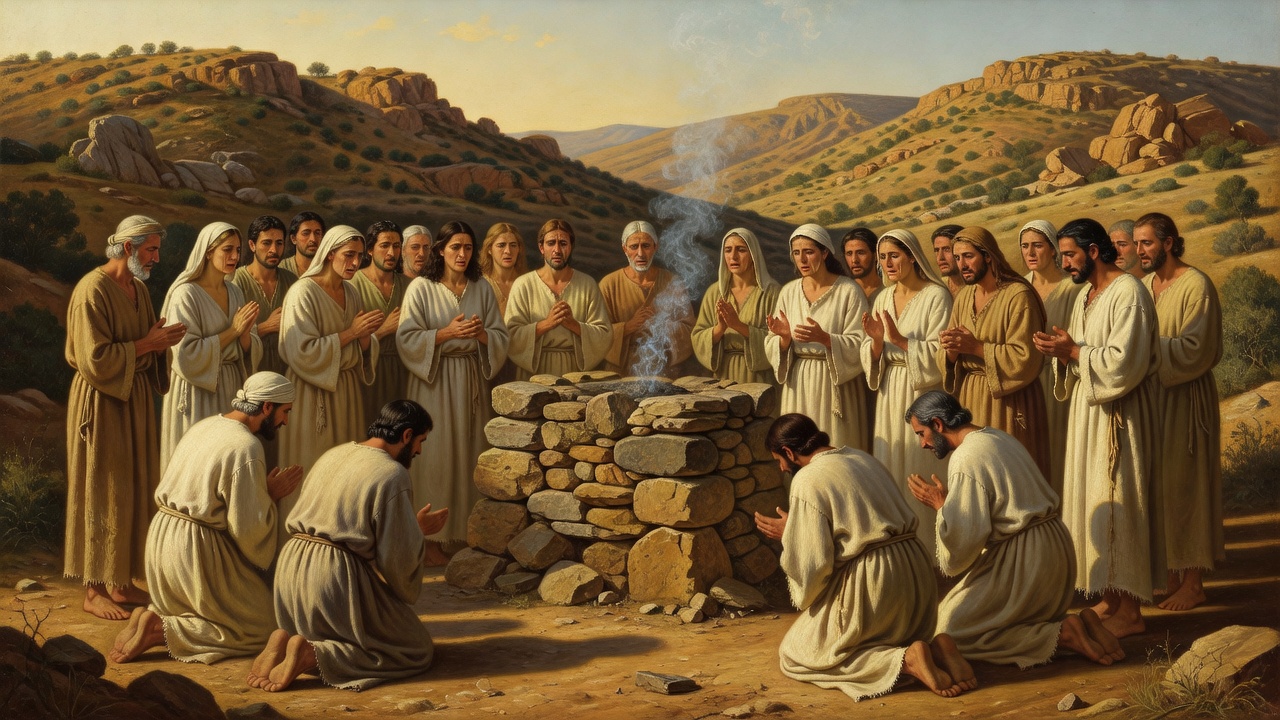
Israel's Cycle of Disobedience and the Judges
- The name Bochim means "weepers." The site, likely situated between Gilgal and Shiloh, received this name after the Israelites wept aloud when the angel of the Lord rebuked them for making compromises with the inhabitants of the land.Sources: Bochim · the Bible text itself
- Joshua was buried at Timnath-heres, which means "portion of the sun," located north of the hill of Gaash in the hill country of Ephraim. He had led the Israelites following the death of Moses and died at the age of 110.Sources: Timnath-heres · Gaash · Joshua · the Bible text itself
- The term Baalim is the plural form referring to local manifestations of Baal, the principal male deity of the Phoenicians. Judges 2 establishes the book's recurring cycle: Israel abandons the Lord for regional gods, suffers under enemies, and is delivered when God raises up a judge.Sources: Baal · the Bible text itself
Notes written with AI assistance from open sources (Theographic Bible Metadata, CC BY-SA 4.0; Easton’s Bible Dictionary, public domain) and reviewed before publishing.
Places in this chapter
Only places identified with high confidence are shown (90% or more according to the scholarly sources compiled by OpenBible). Period map: DARE (Digital Atlas of the Roman Empire), CC BY 4.0; modern map: © OpenStreetMap contributors; places: OpenBible.info (CC BY 4.0).
Credits and license for this translation
Buk Baibel long Anuki
Portions of the Holy Bible in the Anuki language of Papua New Guinea
Buk Baibel long tokples Anuki long Niugini
copyright © 2010-2016 Wycliffe Bible Translators, Inc.
Language: Anuki
Translation by: Wycliffe Bible Translators
This translation is made available to you under the terms of the
Creative Commons Attribution-Noncommercial-No Derivatives license 4.0.
You may share and redistribute this Bible translation or extracts from it in any format, provided that:
You include the above copyright and source information.
You do not sell this work for a profit.
You do not change any of the words or punctuation of the Scriptures.
Pictures included with Scriptures and other documents on this site are licensed just for use with those Scriptures and documents.
For other uses, please contact the respective copyright owners.
2014-06-02
Source: http://png.bible/aui/ · eBible.org