Isaiah 56
Buk Baibel long Anuki · Tap a verse to see its cross-references.
Rupari barena wawaya tupadi kiiravidiye
1Yawe God iwona bo,
“Tagu pinimina bi wiiyawiimi kiiravine na anaveramagha,
bi wawaya tupadi yagu bera rotomanidi aniyevevedi,
na rotomane da wiisuwone wawaya kokoyagha yaporidi
bi bera miisedi kobera.
6Muriye, na kubuna damdi sinaveremayedi Tagu, Yawe God biidi
da yagu kayowana sinabera;
toudi sininuwayuyunegu bi sinakabikuwayegu.
Toudi yagu wiiyawiitaveyana gabudarina sinakabikarawayeni
bi noko gabudarina kana gwara ayavereveredi na
gesinikasigiiyeni da siniberona.
Bi yagu wiiwaghasina maragisina sinakabitawana kikisi.
7Nokodi kubuna damdi anakabidi anapiika
yagu koya kabikabikuwayine, Jerusalem kwanatune,
bi yagu pari barene nuwamiise anaveredi.
Yadi suwara gabugabunidi da puyo mududi Tagu yagu suwara gabugabuna gawarina debane aniwaghasinedi,
basuna wawaya yagu Bare Kabikabikuwayina sinakwatuveni da pari barena dam tupadi kiiravidiye.”
Did you know?
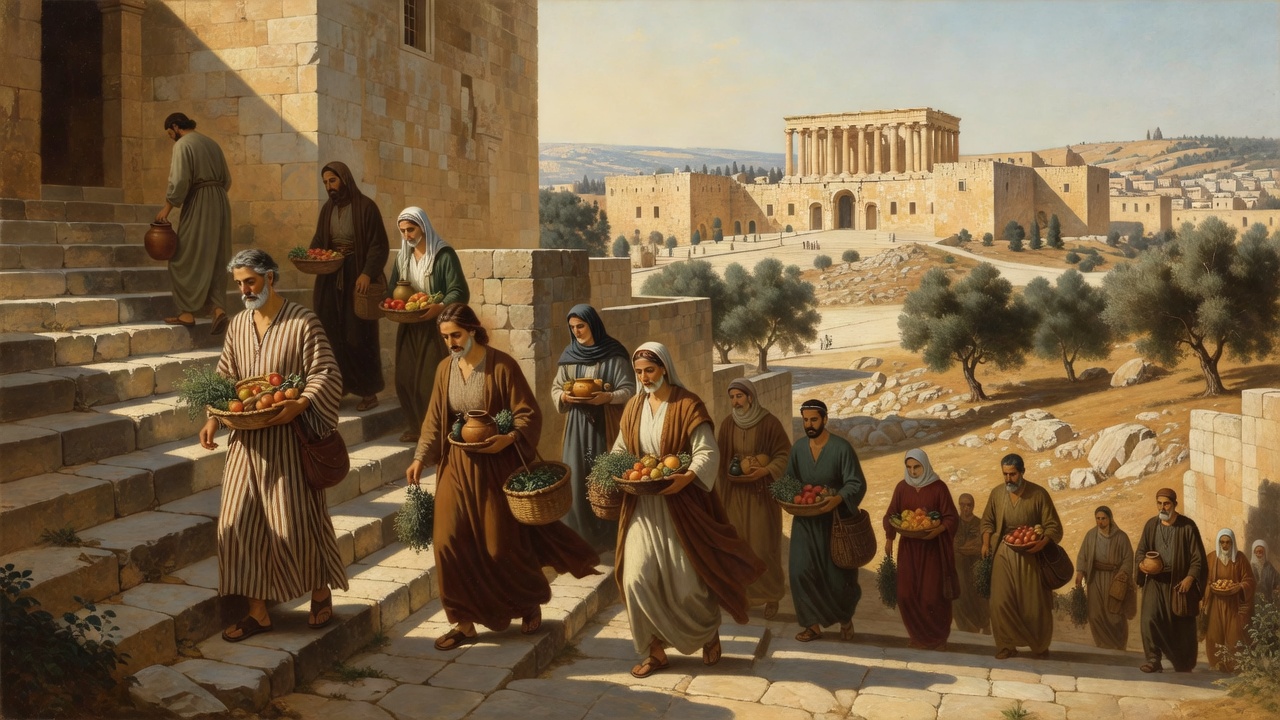
A House of Prayer for All Nations
- Isaiah 56 explicitly welcomes foreigners and eunuchs who honor the Sabbath and keep God's covenant, promising them an everlasting name and declaring that God's house will be called a house of prayer for all nations.Sources: the Bible text itself
- In sharp contrast to the faithful foreigners who join the Lord, the passage reproaches Israel's leaders and watchmen, describing them as blind, mute dogs and self-indulgent shepherds pursuing their own gain and drink.Sources: the Bible text itself
- Historical records of biblical chronology date the start of Isaiah's prophetic activity to around 758 BC, spanning a duration of approximately 62 years.Sources: Prophecies of Isaiah
Notes written with AI assistance from open sources (Theographic Bible Metadata, CC BY-SA 4.0; Easton’s Bible Dictionary, public domain) and reviewed before publishing.
Places in this chapter
- Jerusalem · 31.777, 35.234 · verse 7
Only places identified with high confidence are shown (90% or more according to the scholarly sources compiled by OpenBible). Period map: DARE (Digital Atlas of the Roman Empire), CC BY 4.0; modern map: © OpenStreetMap contributors; places: OpenBible.info (CC BY 4.0).
Credits and license for this translation
Buk Baibel long Anuki
Portions of the Holy Bible in the Anuki language of Papua New Guinea
Buk Baibel long tokples Anuki long Niugini
copyright © 2010-2016 Wycliffe Bible Translators, Inc.
Language: Anuki
Translation by: Wycliffe Bible Translators
This translation is made available to you under the terms of the
Creative Commons Attribution-Noncommercial-No Derivatives license 4.0.
You may share and redistribute this Bible translation or extracts from it in any format, provided that:
You include the above copyright and source information.
You do not sell this work for a profit.
You do not change any of the words or punctuation of the Scriptures.
Pictures included with Scriptures and other documents on this site are licensed just for use with those Scriptures and documents.
For other uses, please contact the respective copyright owners.
2014-06-02
Source: http://png.bible/aui/ · eBible.org