Genesis 4
Buk Baibel long Anuki · Tap a verse to see its cross-references.
Kein da Eibol
1Adam, wavinena Eve teya sivimumurana, da iropeya bi ivituwa da Kein itubugha. Na Eve iwona bo, “Yawe God yana wiiwiita kamone natugu tomogha avitubuyi,” na kana waghawagha ikwatuveni da Kein. 2Bi muriye ivituwa magha da natuna ivibata bi ikwatuveni da Eibol.
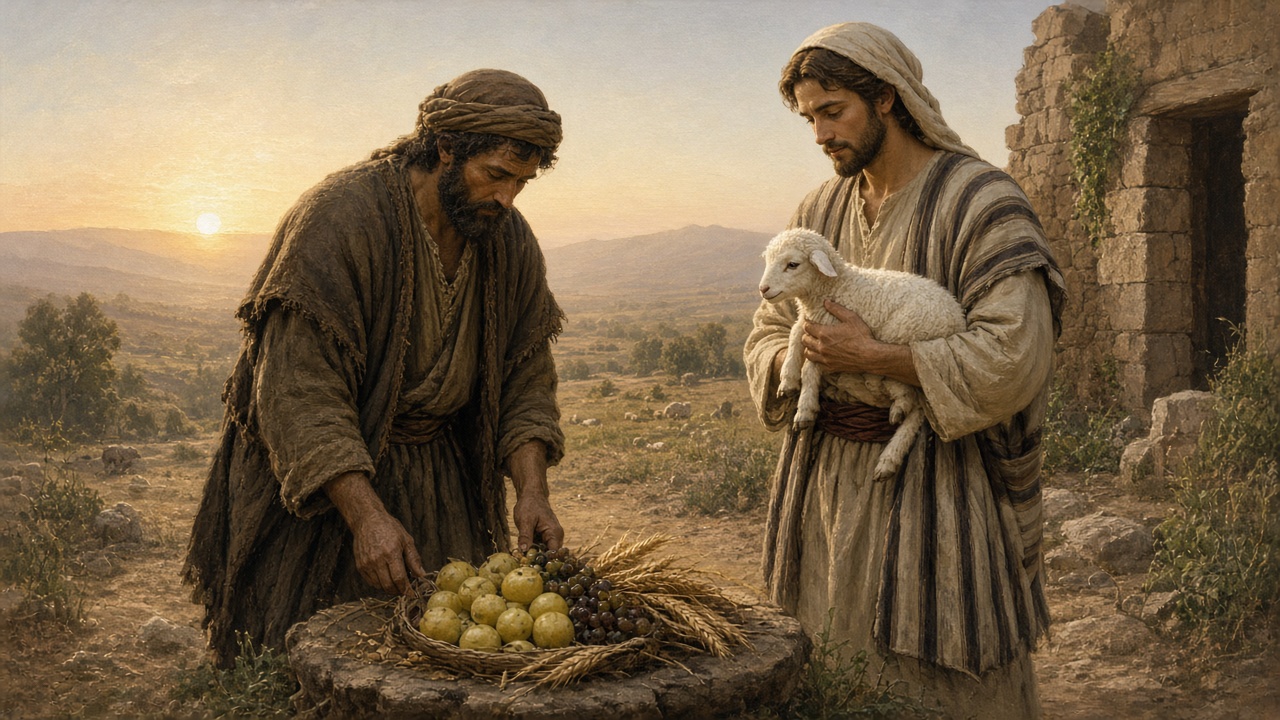
Bi sivimagura murine, Eibol, na ribiribi kadi waghawagha sip iyakoyakoyagha, bi Kein na kiiuwa iyawawawa tarana kamodiye. 3Raghani tana, Kein yana kiiuwa muduna ipiikedi da Yawe God biidi isuwara, 4bi Eibol na yana ribiribi kamodima nigenige mududi iyiyarokodi ivikasunughana bi taridi miisedi ipiikedi da Yawe God biidi isuwara. Yawe God na Eibol yana suwara teya kiiravine iviwaghasineni, 5bi Kein yana suwara teya kiiravine na Yawe God gegha iyiwaghasineni. Na Kein nuwanuwana ipughu kirakii, bi ibera da mayiyina ibero da touna ivinuwapoya.
6Wasina Yawe God, Kein iwoneni bo, “Awaki biidi nuwanuwam ipughu? Awaki biidi mayiyim kanakita ibero? 7Memeda bera miisedi kuyaberabera na ayiwaghasinem. Bi meboda bera beroberodi kwaberabera na, kukita yapori! Basuna berona nama ririmve, ikowogha naboni ware ribiribi dipa yikoyakoyagha da tam inagogonakurim. Yana wiina da inibadem, bi tam kunimaragata da kunagetawani.”
8Wasina muriye na Kein tiinaru Eibol iwoneni bo, “Tana kanibu wareregha tana pepewa.” Raghanina toudi name warereye, na Kein tiinaru igogonakuri da ikasunuyi.
9Noko berana murine Yawe God, Kein ivitarakiiyaneni bo, “Tiiru Eibol meme?”
Na Kein iwona bo, “Gegha ayakovi da meme. Bi tagu gegha touna kanakoyakoyaghana.”
10Bi, Yawe God iwona bo, “Awaki biidi mmko berana bero kirakiina kubera? Tiiru kukasunuyi, bi akitana iikanighughuveni, da ware ganiganina dobodoboma iyakwatukwatu da kanarabobo biwana kabina biidi. 11Bi katana mma naboni animagim. Tiiru kukasunuyi na ibera da dobodobo ganiganina yasususu, na katana gegha rubana mmko tanavine kunawawana. 12Bi katana mmko tanavine kunawawana kate kam gegha miisedi inaveremna. Wasina, kata da nabo inaghona gegha ere yam meyagiina bi tam kedakedagha kunapeepewa wapawapa.”
13Wasina Kein, Yawe God iwoneni bo, “Kagu aro na iragata kirakii da tagu anipiiyeni. 14Tam kata mmko tanavinama kuvikanibuvegu da mayiyimma kwiikowoyigu. Da tagu anikedakeda mmko kuburine, bi wawaya iiyawogha sinabananigu na sinakasunuyigu.”
15Wasina Yawe God iwonena bo, “Gegha tana! Iiyabo inakasunuyimna, wiisuwona da kambiwa kiiravine, na iiyabo inirabobom na vita ghamakirakiina inakawari.” Bi Yawe, Kein debane matakira ivikarapasi, da iiyabo inabanani na gegha inakasunuyina.
25Bi Adam, wavinena teya sivimumurana magha, da tomogha ivitubuyi. Bi ikwatuveni da kana waghawagha Set, basuna Eve iwona bo, “God, wawaya tana iveremayegu da Eibol kana wiitaparara kiiravine, basuna Kein tiinaru ikasunuyi.”
26Wasina bi Set bada ivituwa da natuna tomogha itore, bi ikwatuveni da Inosi. Noko raghanine Inosi iyamakamakena, wawaya sidagu Yawe God siyakabekabepepi.
Did you know?
Cain, Abel, and Life East of Eden
- Abel’s Hebrew name means “breath” or “vanity.” He kept sheep, while his brother Cain tilled the soil: Abel brought the best portions of the firstborn of his flock, and Cain brought fruit of the ground. Easton's Bible Dictionary (1897) reads the phrase “in process of time” (margin, “at the end of days”) as probably referring to the Sabbath.Sources: Abel · Cain · the Bible text itself
- After Abel’s death, Cain settled in the land of Nod, east of Eden, a name meaning exile, wandering, or unrest. There he built a city and named it after his son Enoch. Easton's Bible Dictionary notes that this is the first city mentioned in Scripture.Sources: Nod · Enoch (son of Cain) · the Bible text itself
- Lamech, fifth in descent from Cain, married two women, Adah and Zillah. Easton's Bible Dictionary calls his address to them the only extant example of antediluvian poetry, sometimes known as “Lamech’s sword-song.” Their children are tied to early ways of life: Jabal with tents and livestock, Jubal with the harp and flute, and Tubal-cain with forging bronze and iron.Sources: Lamech (descendant of Cain) · Adah (wife of Lamech) · Zillah · the Bible text itself
Notes written with AI assistance from open sources (Theographic Bible Metadata, CC BY-SA 4.0; Easton’s Bible Dictionary, public domain) and reviewed before publishing.
Credits and license for this translation
Buk Baibel long Anuki
Portions of the Holy Bible in the Anuki language of Papua New Guinea
Buk Baibel long tokples Anuki long Niugini
copyright © 2010-2016 Wycliffe Bible Translators, Inc.
Language: Anuki
Translation by: Wycliffe Bible Translators
This translation is made available to you under the terms of the
Creative Commons Attribution-Noncommercial-No Derivatives license 4.0.
You may share and redistribute this Bible translation or extracts from it in any format, provided that:
You include the above copyright and source information.
You do not sell this work for a profit.
You do not change any of the words or punctuation of the Scriptures.
Pictures included with Scriptures and other documents on this site are licensed just for use with those Scriptures and documents.
For other uses, please contact the respective copyright owners.
2014-06-02
Source: http://png.bible/aui/ · eBible.org