Exodus 21
Buk Baibel long Anuki · Tap a verse to see its cross-references.
Gwara wawaya wiiberodi kiiravine
12Wasina bi Yawe God, Mosis iwonena mayeni bo, “Memeda wawaya tana wawaya turana inarouvi bi inarabobo, na noko wawayina sinakasunuyi.” 13Bi meboda inatubugha wapawapa bi geiyanoghosi da kasunuyina, na Tagu gawara kiiravimiye anavineyi na nabo kasunugha wawayina inavera inanagho da inayawa. 14Bi memeda wawaya tana nuwanuwana yapughu na yanuwagiura yakovi bi wawaya yakasunuyi, na bagune inavera inanagho yagu suwara gabugabuna gawarine yawa kiiravine, bi gegha da sinakabi kanibuveni da sinakasunuyi.
15Memeda wawaya tana tamananaki bo sinananaki inarouvi, na noko wawayina sinakasunuyi.
16Memeda wawaya tana tupeyane kwiinana inakabiyapi bi inigimoneni bo patana inakabikabitawani gwabine, na noko wawayina sinakasunuyi.
17“Bi memeda wawaya tana tamananaki bo sinananaki inawona imimagi na noko wawayina sinakasunuyi.”
Did you know?
Ordinances on Servants and Injuries
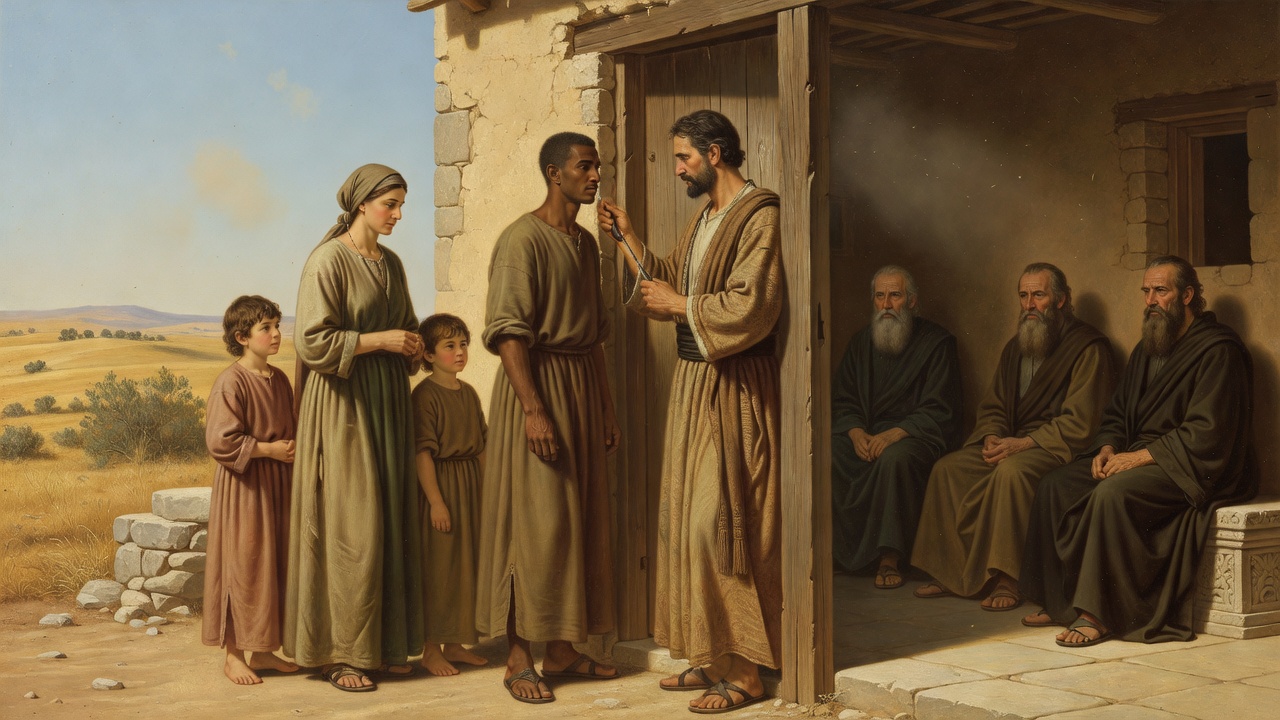
- A bought Hebrew servant served six years and went free in the seventh year without payment. He left alone if he had arrived alone, or with his wife if he had arrived with her, but a wife given by the master and any children she bore remained with the master. If the servant declared that he loved his master, his wife, and his children and did not wish to go free, the master brought him before the judges, pierced his ear with an awl at the door or doorpost, and he served for life.Sources: the Bible text itself
- Whoever struck and killed a man was to be put to death. If he had not lain in wait, but God had allowed it to happen, a place was appointed where he might flee; yet if he schemed and acted willfully to kill his neighbor, he was taken even from the altar to be put to death. Whoever struck or cursed his father or mother, and whoever kidnapped another man whether he sold him or the man was found in his possession, was also to be put to death.Sources: the Bible text itself
- If men quarreled and one struck the other with a stone or a fist so that he was confined to bed but did not die, the striker went unpunished once the injured man could walk outside with his staff, but he had to compensate for lost work and see that he was completely healed. If a serious injury resulted, the requirement was a life for a life, an eye for an eye, a tooth for a tooth, a hand for a hand, a foot for a foot, a burn for a burn, a wound for a wound, and a stripe for a stripe. If a man struck and blinded the eye or knocked out the tooth of his manservant or maidservant, he had to let the servant go free as compensation.Sources: the Bible text itself
Notes written with AI assistance from open sources (Theographic Bible Metadata, CC BY-SA 4.0; Easton’s Bible Dictionary, public domain) and reviewed before publishing.
Credits and license for this translation
Buk Baibel long Anuki
Portions of the Holy Bible in the Anuki language of Papua New Guinea
Buk Baibel long tokples Anuki long Niugini
copyright © 2010-2016 Wycliffe Bible Translators, Inc.
Language: Anuki
Translation by: Wycliffe Bible Translators
This translation is made available to you under the terms of the
Creative Commons Attribution-Noncommercial-No Derivatives license 4.0.
You may share and redistribute this Bible translation or extracts from it in any format, provided that:
You include the above copyright and source information.
You do not sell this work for a profit.
You do not change any of the words or punctuation of the Scriptures.
Pictures included with Scriptures and other documents on this site are licensed just for use with those Scriptures and documents.
For other uses, please contact the respective copyright owners.
2014-06-02
Source: http://png.bible/aui/ · eBible.org