2 Kings 2
Buk Baibel long Anuki · Tap a verse to see its cross-references.

About this book
About 2 Kings
- Easton's Bible Dictionary (1897) states that the authorship of the books of Kings is uncertain. Nearly identical passages shared with Jeremiah, together with events Jeremiah knew personally, give some support to the tradition that he wrote them, yet Easton regards it as more probable that Ezra compiled the books after the Captivity from earlier documents. Easton dates their composition between 561 B.C., when Evil-merodach released Jehoiachin, and 538 B.C., the year of Cyrus's decree of deliverance.Sources: Easton: Kings, The Books of
- The two books of Kings originally formed a single book in the Hebrew Scriptures. The Septuagint first divided them into two, and together with the Vulgate numbers them as the third and fourth books of Kings, counting the books of Samuel as the first and second.Sources: Easton: Kings, The Books of
- These books contain the annals of the Jewish commonwealth from the accession of Solomon until the subjugation of the kingdom by Nebuchadnezzar and the Babylonians, a period Easton describes as apparently about four hundred and fifty-three years. While Chronicles gives greater prominence to the priestly or Levitical office, Kings gives greater prominence to the kingly office, and the narrative refers to sources such as the book of the acts of Solomon and the chronicles of the kings of Judah and of Israel.Sources: Easton: Kings, The Books of
- In the threefold division of the Scriptures by the Jews, the books of Kings are ranked among the Prophets. Easton notes that they are frequently quoted or alluded to by Jesus and the apostles.Sources: Easton: Kings, The Books of
Notes written with AI assistance from open sources (Theographic Bible Metadata, CC BY-SA 4.0; Easton’s Bible Dictionary, public domain) and reviewed before publishing.
Yawe God, Elaija ikabi igae abame
1Raghani tupona bi muriye, da Yawe God yanunu virovirogha kamone Elaija iyakabi iyagae abame, na Elaija da Elaisa Gilgalma sitouya siyanono, 2na Elaija, Elaisa iwoneni bo, “Mma kumakae, Yawe God iwonegu da ananagho Betelma.”
Bi gegha Elaisa iwona bo, “Wiisuwona, Yawe God yamakamake na kana waghawaghae da kate tam yam yawa waghatama awonawona da gemeyani anakuyovemna.” Na siyowogha sinagho Betelma.
3Betel meyagiine na God yana peroperoveta ribana nama siyamakamake na sipiika Elaisa biidi bi siwoneni bo, “Kwakovi bo gegha da Yawe God kata yam bada gwabimma inakabirenataveni?”
Na Elaisa iwona bo, “Akovi, bi gegha noko konisisiyenina.”
4Wasina bi Elaija iwona bo, “Elaisa, mma kumakae, Yawe God iwonegu da ananagho Jeriko kwanatune.”
Elaisa iwona bo, “Wiisuwona, Yawe God yamakamake na kana waghawaghae da kate tam yama yawa waghatama awonawona da gemeyani anakuyovemna.” Na sinagho Jerikoma.
5Bi Jeriko kwanatune na God yana peroperoveta ribana nama siyamakamake na sipiika Elaisa biidi da siwoneni bo, “Kwakovi bo gegha da Yawe God kata yam bada gwabimma inakabirenataveni?”
Na Elaisa iwona bo, “Akovi, bi gegha noko konisisiyenina.”
6Wasina bi Elaija, Elaisa iwonena bo, “Mma kumakae, bi Yawe God iwonegu da ananagho Jodan rarimine.”
Bi gegha Elaisa iwona bo, “Wiisuwona Yawe God yamakamake na kana waghawaghae da kate tam yam yawa waghatama awonawona da gemeyani anakuyovemna.” Na yadi bata sipepewa patapata sinagho. 7Bi peroperoveta ribana kamonama tomotomogha yadi 50 bada yawata sinagho da kadi taraboga sivituramiiriyedi. Bi Elaija da Elaisa, sinagho da Jodan rarimina ririne sivituramiiriyedi bi peroperovetidi na kadi taraboga simiiri bi Elaija da Elaisa siyaruruwiitetedi. 8Wasina bi Elaija kana kwama, ikabitaveni da inoku bi tounama rarima irouvi na ivibogabogae, bi yadi bata tanawa kanakananagha sipepewa sitowawona!
9Raghanina Jodan rarimina nawane sikabigae, na Elaija, Elaisa iwoneni bo, “Yam kayowana awaki na kuwonegu da anabera, muriye da Yawe God gwabimma inakabitavegu.”
Na Elaisa iwona bo, “Rubana da yam wiiperoveta kamonama maragata tupatupawiikapuna kuyaveregu, bi kam gawara ayakabi naboni peroperoveta kadi bada.”
10Na Elaija iwona bo, “Tam sawara ghamana kiiravine kuvibaba. Meboda raghanina kunakita bi Yawe God gwabimma inakabikabitavegu, na wasina yam wiibaba kunakabi, bi meboda gegha kunakitagu na bada gegha.”
11Raghanina yadi bata sivisisiya patapata sipepewa siyanono, na raghani tana hosi da seriyot ere keyama karakarasidi sirumaghatara, na Elaija da Elaisa sivibogabogaedi bi Yawe God, yanunu virovirogha kamone Elaija ikabiigae abame. |alt="1/2 page" src="12_2Ki_02_08_RG.jpg" size="span" loc="2:10-12" ref="2:11" 12Bi Elaisa ikitana irukwatu iwona bo, “Tamagunaki! Tamagunaki! Tagu, Isrel kana seriyot da hosi akitakitadi!” Wasina bi gemuriye Elaija iyakita mayenina. Bi yana nuwapoya matakirina, na kanakwama itayina gosiri da bata situbugha.
13Raghanina Yawe God, Elaija ikabi iyageege, na kana kwama ibeku iyowogha dobodobove, na Elaisa ikabi bi iveramagha inagho Jodan rarimina ririne imiiri. 14Bi Elaija kana kwama meko kiidamoma ibeku, na nokoma rarima irouvi bi iwona bo, “Yawe na meme, Elaija yana God?” Na rarimina itamoyaragha da sivibogabogae bi ipepewa inagho nawane.
15Raghanina God yana peroperoveta ribana, toudi Jeriko kwanatunama sivitukivinidi bi rabarabama sikitarorona da awaki itubugha sikitana na siwona bo, “Elaija yana maragata na kata Elaisa gwabine!” Wasina bi sitouya sinagho da siyikiikiiveni, na naghone sipepeta da mayiyidi siyowogha dobodobove. 16Bi siwona bo, “Toumii yama 50 mma bi tupamii maragasimii bi kiwaghasinemii da kananagho yam bada kaninoyeni. Meboda Yawe God kanumina ikabiinagho da koya tana debane bo anagha tana kamone itoreboni.”
Bi Elaisa iwona bo, “Gegha, gekonanaghona.”
17Bi gegha, toudi siyibaba tupetupeni patana da sinimayagha ikabi na iviwaghasina, iwona bo, “Wasina, tami konagho.” Na tomotomogha yadi 50 sinagho da gabudara aroba sivinoyeni, bi getana da Elaija siyabananina. 18Elaisa na Jeriko kwanatune iyamakamake, bi raghanina siveramagha na iwonedi bo, “Tagu awaki awonemi, awona bo, ‘Gekonanaghona.’”
Did you know?
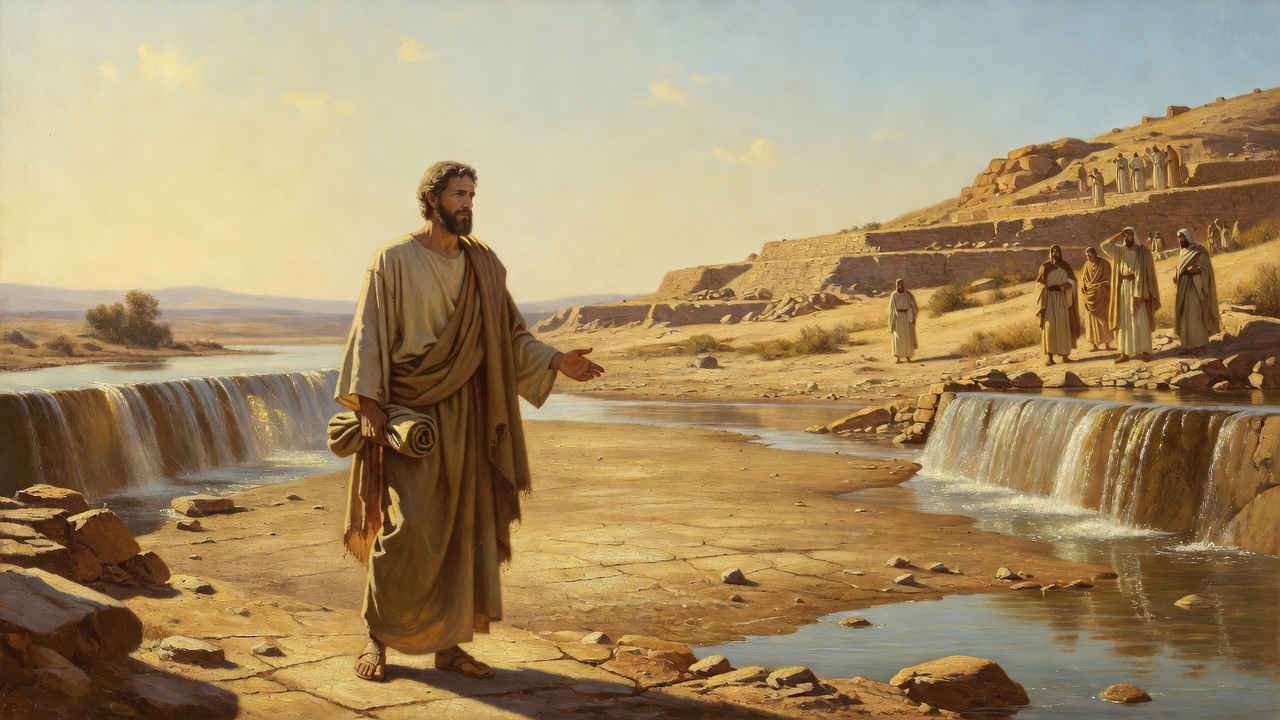
The Departure of Elijah and the Succession of Elisha
- Elijah's rough mantle had first marked Elisha's calling when Elijah threw it over his shoulders in the field. When Elijah was taken into heaven in a whirlwind, Elisha picked up the fallen cloak and struck the Jordan River with it, demonstrating to the watching prophets that he had received Elijah's spirit and succeeded him as prophet.Sources: Elisha · the Bible text itself
- The spring near Jericho, historically identified with Ain es-Sultan or Elisha's Fountain, had unwholesome water that left the surrounding land barren. Elisha purified the water by casting salt from a new bowl directly into the spring.Sources: Jericho · the Bible text itself
- Before crossing the Jordan, Elijah and Elisha visited communities of the sons of the prophets located at Bethel and Jericho. Fifty men from these prophetic groups watched the miraculous crossing from afar and later spent three days searching the surrounding hills and valleys for Elijah.Sources: Bethel (of Palestine) · Jericho · the Bible text itself
Notes written with AI assistance from open sources (Theographic Bible Metadata, CC BY-SA 4.0; Easton’s Bible Dictionary, public domain) and reviewed before publishing.
Places in this chapter
- Jericho · Today: Tell es Sultan · 31.872, 35.445 · verses 4, 5, 15, 18, 19, 23
- Jordan · Today: Jordan River · 31.761, 35.558 · verses 6, 7, 13
- Mount Carmel · 32.672, 35.023 · verse 25
- Samaria · 32.276, 35.195 · verse 25
Only places identified with high confidence are shown (90% or more according to the scholarly sources compiled by OpenBible). Period map: DARE (Digital Atlas of the Roman Empire), CC BY 4.0; modern map: © OpenStreetMap contributors; places: OpenBible.info (CC BY 4.0).
Credits and license for this translation
Buk Baibel long Anuki
Portions of the Holy Bible in the Anuki language of Papua New Guinea
Buk Baibel long tokples Anuki long Niugini
copyright © 2010-2016 Wycliffe Bible Translators, Inc.
Language: Anuki
Translation by: Wycliffe Bible Translators
This translation is made available to you under the terms of the
Creative Commons Attribution-Noncommercial-No Derivatives license 4.0.
You may share and redistribute this Bible translation or extracts from it in any format, provided that:
You include the above copyright and source information.
You do not sell this work for a profit.
You do not change any of the words or punctuation of the Scriptures.
Pictures included with Scriptures and other documents on this site are licensed just for use with those Scriptures and documents.
For other uses, please contact the respective copyright owners.
2014-06-02
Source: http://png.bible/aui/ · eBible.org