Revelation 6
Yù bilin ni Namarò nga meyannung kâ Apu Kesu Kiristu: Yù bagu nga tarátu ni Namarò sù ira nga mangikatalà kâ Apu Kesu Kiristu · Tap a verse to see its cross-references.
Yù Naggapu sù Papel nga Nalukù nga Pitu yù Neparakkà kuna
1Á ta paningak ku, nasingak ku yù Kígaw, nga inirián na yù tádday sù ira pitu nga neparakkà sù papel nga nalukù, ánna naginnâ yù kinagi nayù tádday sù ira appâ nga makkakerumá nga naparò nga matolay, nga kunnay ta alittúgaw yù ngárál na. Á inikátol na nga kinagi, “Umay ka saw!” 2Á iningak ku, á inikáddagâ lâ limittuák yù puraw nga kabáyu, nga ajjan yù nakkabáyu kuna nga manangngal ta butuk. Á neddán ta kuroná na, ta aggina yù makáwayyá nga mangappù. Á nánaw ta umay mangappù má sù ira mangontará kuna.
3Á paningak ku sù Kígaw, á nasingak ku ta inirián na má yù mekaruá sù ira neparakkà, á naginnâ yù ngárál nayù mekaruá nga naparò nga matolay nga nakkatol, á kinagi na, “Umay ka saw!” 4Á limittuák yù tádday nga kabáyu nga ujjojjin. Á neddán yù nakkabáyu ta bayunetá nga dakal, á neyanugù ta umay mamuruburion sù ngámin ira nga tatolay ta dabbuno, tapè awán ta ággimammà da, á makkakápatay ira.
5Á paningak ku paga sù Kígaw, inirián na má yù mekatallu sù ira neparakkà, á naginnâ yù ngárál nayù mekatallu nga naparò nga matolay nga nakkatol, nga kinagi na, “Umay ka saw!” Á iningak ku, á inikáddagâ lâ limittuák yù ngisì nga kabáyu. Á nanangngal yù nakkabáyu ta ákkílo. 6Á naginnâ yù magubobuk nga arák ku ammu yù kuruk nga paggapuán na, nga kunnay ta naggapu sù tangngá nayù ira appâ nga makkakerumá nga naparò nga matolay, á kinagi na, “Duttál yù bisin ta dabbuno, á yáyù nga mediá nga baggâ yù táddán na tolay ta tangággaw. Onu tallu mediá nga mangì yù táddán ta tangággaw. Ngam ari manginá yù pagá na denu onu binaráyáng!”
7Á paningak ku sù Kígaw, inirián na má yù mekáppâ sù ira neparakkà, á naginnâ yù ngárál nayù mekáppâ nga naparò nga matolay, á kinagi na, “Umay ka saw!” 8Á paningak ku, á ikáddagâ lâ limittuák yù kabáyu nga nappulupulásâ. Á si Patay yù ngágan nayù nakkabáyu kuna, á ajjan yù tumuttul kuna, nga mangngágan ta Kades, nga paggianán na námmatay. Á neddán yù ira duá ta pakáwayyá ra nga mamapátay ta pakkáppâ nayù ira tatolay ta dabbuno. Á ajjan nira yù appâ nga ipamapáte ra, yù gerrá, yù bisin, yù tulágan, ánna yù ira simaron nga ayám.
9Á ta pangari nayù Kígaw sù mekalímá sù ira neparakkà, á nasingak ku, á ajjan ta silárung nayù ángngiyátangán yù ira ikararuá nayù ira napapátay, nga natay gapu ta panguruk da ta bilin ni Namarò ánna pangituddu ra sù kuruk nga meyannung kâ Apu Kesu Kiristu. 10Á nakkatol ira ta masikan, á kinagi ra, “Sikaw, Apu, yù mammaguray nga makáwayyá ta ngámin. Sikaw yù mangilin nga pangikatalakán. Á kunnasi yù kabayák mu paga lagem panunnután ánna pággangan yù ira tatolay nga maggián ta dabbuno gapu ta pamapáte ra nikami?” kud da. 11Á neddán ira nga taggitádday ta puraw nga barawási na nga apaddu. Á nakagi nira ta magibannák ira lábbì paga áddè ta pate nayù ira kábulud da nga makiaripan kâ Apu, nga mapapátay gapay ta kunnay nira.
12Á pangari nayù Kígaw sù mekánnam sù ira neparakkà, á nasingak ku, á nallunik ta masikan. Á nangngisì yù bilák ta kun na gámì nga langgústi. Á nagujjin yù bulán nga kun na kulor na dága. 13Á napannâ yù ira bituan ta dabbuno nga kunnay ta kapannâ na bungá na kayu nga busirâ nu mabbaggiu. 14Á limimmà yù lángì nga kunnay ta papel nga malukù. Á neyalì yù ngámin nga puddul ánna pugu sù giád da.
15Á nattálaw laguk yù ira ngámin nga tatolay, yù ira patul ánna yù ira mammaguray, yù ira kotunán na suddálu, yù ira maríku, yù ira makáwayyá, ánna yù ira ngámin nga tatolay, mássiki nu aripan onu ari aripan, minay ira ngámin nattuttù ta kueba ánna silisilárung na batu ta puddupuddul. 16Á nakkatakatol ira, á kinagi ra sù ira puddul ánna batu, “Maddabbâ kayu ta matábbunán kami, tapè arán na kami masingan nayù mammaguray nga nagitubang ta lángì, á melillì kami sù pangukum na nikami nayù Kígaw! 17Ta jimittálin yù makánnanássing nga ággo nayù pore ra, á ukumad da kami, á awán nikami yù makatubáng kuna!” kud da.
Did you know?
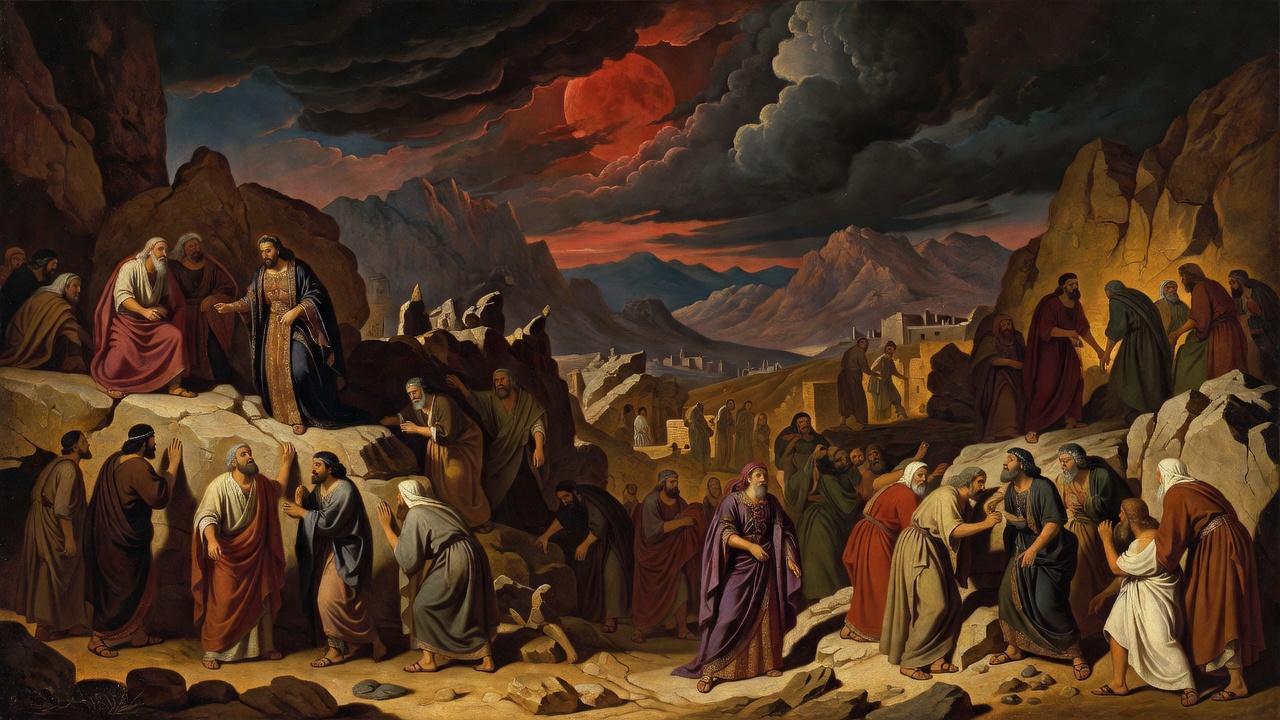
The Opening of the Six Seals
- The first four seals reveal four riders on white, bright red, black, and pale green horses, summoned one by one by the four living creatures. Each horseman brings a distinct affliction across the earth, ranging from conquest and the loss of peace to widespread famine, plague, and death.Sources: the Bible text itself
- The third horseman holds a pair of scales, accompanied by a proclamation setting the price of a quart of wheat or three quarts of barley at a denarius, reflecting severe inflation and food rationing while oil and wine are preserved.Sources: the Bible text itself
- When the fifth and sixth seals are opened, the focus shifts to the souls of slain believers waiting under the altar, followed by immense cosmic and earthly upheavals that lead people of every social station to hide in mountain caves.Sources: the Bible text itself
Notes written with AI assistance from open sources (Theographic Bible Metadata, CC BY-SA 4.0; Easton’s Bible Dictionary, public domain) and reviewed before publishing.
Credits and license for this translation
Yù bilin ni Namarò nga meyannung kâ Apu Kesu Kiristu: Yù bagu nga tarátu ni Namarò sù ira nga mangikatalà kâ Apu Kesu Kiristu
New Testament in Atta, Pamplona
copyright © 1996 Wycliffe Bible Translators, Inc.
Language: Pamplona Atta (Atta, Pamplona)
Translation by: Wycliffe Bible Translators, Inc.
Copyright Information
© 1996, Wycliffe Bible Translators, Inc. All rights reserved.
This translation text is made available to you under the
terms of the Creative Commons License: Attribution-Noncommercial-No Derivative Works.
( http://creativecommons.org/licenses/by-nc-nd/3.0/ )
In addition, you have permission to port the text to different file formats, as long as you
do not change any of the text or punctuation of the Bible.
You may share, copy, distribute, transmit, and extract portions
or quotations from this work, provided that you include the above copyright
information:
You must give Attribution to the work.
You do not sell this work for a profit.
You do not make any derivative works that change any of the actual words or punctuation of the Scriptures.
Permissions beyond the scope of this license may be
available if you contact
us with your request.
The New Testament
in Atta, Pamplona
© 1996, Wycliffe Bible Translators, Inc. All rights reserved.
This translation is made available to you under the terms of the
Creative Commons Attribution-Noncommercial-No Derivatives license 4.0.
You may share and redistribute this Bible translation or extracts from it in any format, provided that:
You include the above copyright and source information.
You do not sell this work for a profit.
You do not change any of the words or punctuation of the Scriptures.
Pictures included with Scriptures and other documents on this site are licensed just for use with those Scriptures and documents.
For other uses, please contact the respective copyright owners.
2014-08-06
Source: http://ebible.org/att/ · eBible.org