Hebrews 3
Yù bilin ni Namarò nga meyannung kâ Apu Kesu Kiristu: Yù bagu nga tarátu ni Namarò sù ira nga mangikatalà kâ Apu Kesu Kiristu · Tap a verse to see its cross-references.
Makáwayyá si Apu Kesu ánnè kâ Moyses
1Wáwwagì nga mangikatalà kâ Apu Kesu, mangilin kayu nga mesipà gapay sù pangapà ni Namarò sù ira nga pabbalinan na ta tatole na. Á nonotan naw laguk si Apu Kesu. Aggina yù jinok ni Namarò ta umay ta dabbuno, tapè ipakánnámmu na si Namarò nittam. Á aggina yù sinullà ni Namarò nga kátannangán nga pári, nga ikatalà tam ta mamakkápiá nittam kâ Namarò. 2Á pinalurò ni Apu Kesu yù ngámin nga inipakuá nayù nanullà kuna, ta kunnay sù ngaw Kákay Moyses nga nangikatalakán ta passerbi na sù ira tatole ni Namarò. Ta si Kákay Moyses yù sinullà na ngaw ni Namarò nga nanaron sù ira tatole na, nga nebiláng ta pamiliá na. Á pinalurò ni Kákay Moyses gapay yù ngámin nga inipakuá ni Namarò kuna. 3Á maráyaw si Kákay Moyses, ngam más maráyaw si Apu Kesu ánnè kuna, nga kunnay ta maráyaw yù nabbalay ánnè sù balay nga pidde na. 4Á ta meyannung ta ngámin nga katággitádday nga balay, ammu tam ta ajjan yù tolay nga nabbalay kuna. Á si Namarò galâ yù namarò ta ngámin nga egga.
5Á nangikatalakán si Moyses, nga napiá yù passerbi na kâ Namarò, ta pinalurò na yù ngámin nga inipakuá ni Namarò kuna, megapu sù panaron na sù ira kábulun na nga nebiláng nga pamiliá ni Namarò. Á inipakánnámmu na nira yù meyannung sù ipalappâ ni Namarò noka. 6Ngam si Apu Kesu Kiristu yù Anâ ni Namarò nga pangikatalakán na nga mammaguray sù ira tatole na nga mebiláng ta ánâ na. Á sittam yù ira ánâ na, nu napasigaggà yù ángngikatalà tam kâ Apu Kesu ánna magayáyâ ittam megapu sù pagiddanáma tam ta mesipà ittam kâ Namarò.
Pappalánan na ittam ni Namarò
7Á gapu ta tatole na ittam ni Namarò nu napasigaggà yù ángngikatalà tam, nonopat tam laguk yù inipetúrâ nayù Mangilin nga Ikararuá. Ta kinagi na,
“Á nu ággawo yù pakaginná naw sù bilin ni Namarò,
8arán naw laguk ikikkítulán yù ipakánnámmu na nikayu.
Arán naw potuán si Namarò nga kunnay sù ira ngaw naggaká nikayu,
nga namotu kâ Namarò sù keggá ra ta kalállammatán.”
9Á kinagi ni Namarò,
“Mássiki nu nasingad da yù pinagaddátù ta appátapulu nga dagun sù keggá ra ta kalállammatán,
á pinotuád dangà áddè ta arák ku ira kinalurâ megapu sù akka-akkuád da.
10Á yáyù nga napporayà ngaw nira, á kinagì,
‘Manakì yawe ira tatolay nga tumututtul nikán, á ari ira matudduán.’
11Á gapu ta papporè nira, yáyù nga sinistíguák ku ta kuruk yù kinagì nira:
‘Arát takayu bulubugá patallungan sù pamagibannagák ku nakuan nikayu,’ ” kun ni Namarò.
12Á wáwwagì ta ángnguruk tam, magimuguk kayu laguk nga katággitádday, ta pasikkálan na yù nonò na, marakè ajjan yù narákè nga nonò na, nga manakì nga manguruk ánna mekáttuay kâ Namarò nga matotolay. 13Á makkakátabarang kayu laguk ta kággággaw nga kagian naw ta “ággawo,” nga keggá na paga nayù awayyá naw nga manguruk, tapè mapasigaggà yù ángngikatalà naw, á awán nikayu yù melogò, nga mataggâ yù ulu na megapu sù liwiliwâ na. 14Ta mesipà ittam kâ Apu Kesu Kiristu nu mapasigaggà yù ángngikatalà tam kuna ta áddè ta áddè, nga kunnay sù kapámmegapu tam nga mangikatalà kuna. 15Á yáyù kebalinán nayù dán nga netúrâ nga kunniaw,
“Á nu ággawo yù pakaginná naw sù bilin ni Namarò,
arán naw ikikkítulán yù ipakánnámmu na nikayu.
Arán naw potuán si Namarò nga kunnay sù ira ngaw naggaká nikayu,
nga namotu kâ Namarò sù keggá ra ta kalállammatán.”
16Á asinni panò yù ira ngaw nga namotu kâ Namarò, mássiki nu naginná ra yù bilin na? Ari panò yù ira galâ nga inipáno na ngaw ni Kákay Moyses ta Egipto? Aggira gemma! 17Aggira yù napporayán ni Namarò ta appátapulu nga dagun megapu sù liwiliwâ da, á natay ira ta kalállammatán. 18Á asinni yù ira nga nakkagián ni Namarò ta arán na ira bulubugá patallungan sù napiá nga lugár nga iyawâ na nakuan nira, nga pagibannagád da, nu ari galâ yù ira namotu kuna? 19Á yáyù nga kánnámmuát tam laguk ta arán na ira inisipà ni Namarò sù napiá nga lugár nga pinarán na nga pagibannagád da nakuan, gapu ta ari ira nanguruk kuna.
Did you know?
Greater Glory Than Moses
- Hebrews asks its readers to fix their attention on Jesus, the apostle and high priest they confess. He was faithful to the one who appointed him, just as Moses was faithful in all God's house, but Jesus is counted worthy of greater glory than Moses, as the builder of a house has greater honor than the house. Moses was faithful as a servant; Christ is faithful as the Son over God's house.Sources: the Bible text itself
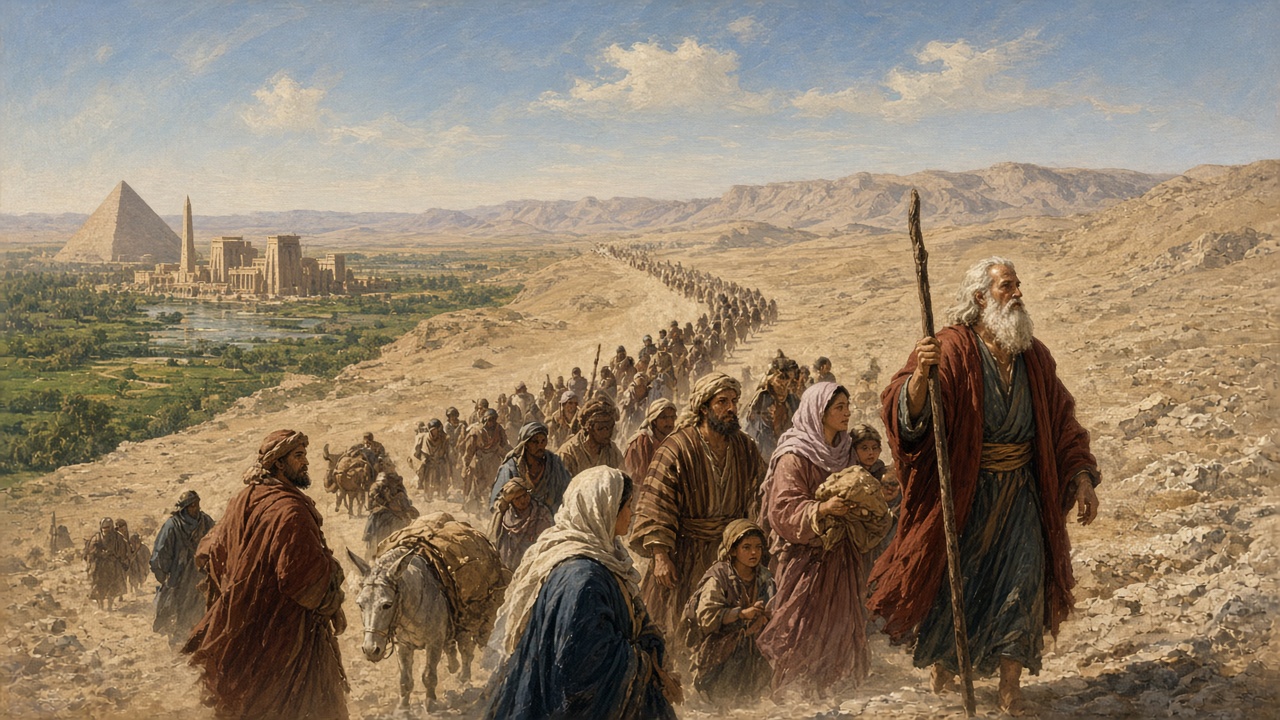
- The warning looks back to the people Moses led out of Egypt. For forty years in the wilderness they tested God, who was angry with that generation and swore they would never enter his rest; their bodies fell in the wilderness. The chapter says that unbelief kept them from entering.Sources: the Bible text itself
- Egypt, the land they left with Moses, is the land of the Nile and the pyramids. Easton's Bible Dictionary (1897) explains the name Moses as Drawn, or links it with the Egyptian word mesu, meaning son.Sources: the Bible text itself · Egypt · Moses
Notes written with AI assistance from open sources (Theographic Bible Metadata, CC BY-SA 4.0; Easton’s Bible Dictionary, public domain) and reviewed before publishing.
Places in this chapter
- Egypt · 30.129, 31.308 · verse 16
Only places identified with high confidence are shown (90% or more according to the scholarly sources compiled by OpenBible). Period map: DARE (Digital Atlas of the Roman Empire), CC BY 4.0; modern map: © OpenStreetMap contributors; places: OpenBible.info (CC BY 4.0).
Credits and license for this translation
Yù bilin ni Namarò nga meyannung kâ Apu Kesu Kiristu: Yù bagu nga tarátu ni Namarò sù ira nga mangikatalà kâ Apu Kesu Kiristu
New Testament in Atta, Pamplona
copyright © 1996 Wycliffe Bible Translators, Inc.
Language: Pamplona Atta (Atta, Pamplona)
Translation by: Wycliffe Bible Translators, Inc.
Copyright Information
© 1996, Wycliffe Bible Translators, Inc. All rights reserved.
This translation text is made available to you under the
terms of the Creative Commons License: Attribution-Noncommercial-No Derivative Works.
( http://creativecommons.org/licenses/by-nc-nd/3.0/ )
In addition, you have permission to port the text to different file formats, as long as you
do not change any of the text or punctuation of the Bible.
You may share, copy, distribute, transmit, and extract portions
or quotations from this work, provided that you include the above copyright
information:
You must give Attribution to the work.
You do not sell this work for a profit.
You do not make any derivative works that change any of the actual words or punctuation of the Scriptures.
Permissions beyond the scope of this license may be
available if you contact
us with your request.
The New Testament
in Atta, Pamplona
© 1996, Wycliffe Bible Translators, Inc. All rights reserved.
This translation is made available to you under the terms of the
Creative Commons Attribution-Noncommercial-No Derivatives license 4.0.
You may share and redistribute this Bible translation or extracts from it in any format, provided that:
You include the above copyright and source information.
You do not sell this work for a profit.
You do not change any of the words or punctuation of the Scriptures.
Pictures included with Scriptures and other documents on this site are licensed just for use with those Scriptures and documents.
For other uses, please contact the respective copyright owners.
2014-08-06
Source: http://ebible.org/att/ · eBible.org