Acts 24
Yù bilin ni Namarò nga meyannung kâ Apu Kesu Kiristu: Yù bagu nga tarátu ni Namarò sù ira nga mangikatalà kâ Apu Kesu Kiristu · Tap a verse to see its cross-references.
Pangikeká nayù ira Kudio kâ Pablo
1Á paggián ni Pablo ta Sesaria ta límá nga ággaw, á limibbè di Ananiâ nga kotunán na pári ánna yù ira káruán nga giriámán, ánna yù abugádu nga mangngágan ta Tertulo. Á minay ira sù Gubinador, ta ikeká ra si Pablo. 2Á inipeyarubáng da laguk kâ gubinador si Pablo, á si Tertulo nga abugádu yù magubobuk.
Á namegapu si Tertulo nga mangiránuk sù ipangikeká ra kâ Pablo. Á kinagi ni Tertulo, “Maráyaw nga Apu Gubinador Pelik, magimammà kami nga maggián sawe purubinsia megapu sù napiá nga pammagurem nikami. Á aru yù ira tunung nga inulim ta napiá megapu nikami, tapè mammapiá yù ágga-ággiám mi. 3Á sikami ngámin, tákkilalám mi ta napiá yù ángngabbák mu nikami ta ngámin nga lugár, á nepallà yù pabbalabálà mi nikaw ta kággággaw.
4“Á arám mi ikáyâ ta mataláttán ka, á ikomâ lâ nikaw ta pasensián kami bì, tapè ginnám mu yù pangikeká mi sawe tolay. 5Ta ammu mi ta aggina yù mamappatapátu sù ira Kudio ta ngámin nga lugár, tapè maddaráma ira. Á aggina yù maddok sù ira tatolay nga tumuttul sù inituddu nayù tolay nga taga Nasaret. 6Á dapingan na nakuan yù mangilin nga kapilliá, ta akkuán na nakuan yù ari mepángngà. Ngam ginápù mi, á gapu ta nalliwâ sù kustombare mi, panunnutám mi nakuan ta kunnay sù ituddu nayù tunung mi. 7Ngam minay si Kapitán Lisias, á ginubâ na nikami. 8Á sinaddánán na kami ta umay kami mangikeká ta arubáng mu. Á nu bestigám mu lápay, mánnámmuám mu lággapay yù ngámin nga liwâ na nga ipangikeká mi kuna,” kun nayù abugádu sù Gubinador. 9A yù ira ngámin nga Kudio nga kábulun nayù abugádu, nakiuwan ira ta kuruk ngámin yù kinagi na.
Yù Panabbák ni Pablo ta Arubáng ni Gubinador Pelik
10Á pinayápayán na laguk nayù Gubinador si Pablo ta magubobuk nga tubbák nira. Á kinagi ni Pablo, “Apu Gubinador, ammù ta sikaw yù mamanunnù sawe purubinsia mi nga Kudio ta nabayágin nga dagun, á yáyù nga magayáyákà nga tubbák sù pangikeká ra nikán ta arubáng mu. 11Á nu damágam mu nira, ari gemma natturù ta mapulu duá nga ággaw ngaw yù ángè ta Jerusalem, tapè makimorayà kâ Namarò ta mangilin nga kapilliá. 12Á arád dangà gemma naratang nga makiriri sù ira tatolay, á arák ku ira gapay pappatapatuan ta ili onu sù mangilin nga kapilliá onu sù ira ngámin nga káruán nga ággagammungád da. 13Á awán gapay ta mepasingad da, tapè pasikkálam mu nu kuruk yù ipangikeká ra nikán.
14“Ngam yaw lâ ipalappâ ku nikaw, ta kuruk nga makimorayà kâ Namarò nga pakimorayán nayù ira naggaká nikami. Á kurugak ku yù inituddu ni Apu Kesu, nga kagiad da ta ari kuruk. Á kurugak ku gapay yù ngámin nga tunung ni Moyses ánna yù initúrâ nayù ngaw ira ábbilinán ni Namarò. 15Á ajjan yù iddanamák ku nga kunnay sù iddanamád da gapay nayù ira mangikeká nikán, nga paginnanolayan ni Namarò yù ira ngámin nga námmatay, mássiki yù ira napiá ánna yù ira narákè gapay. 16Á yáyù nga magimugugà, tapè napiá lâ yù akkuák ku megapu sù ira tatolay, á aringà mappasirán ta arubáng ni Namarò ánna yù ira tatolay.
17“Á nabayágin nga aringà minay ta Jerusalem. Á yáyù nga minayà, tapè ituluk ku yù ilimù mi sù ira ikáttole mi nga pobare ánna mangiyátángà kâ Namarò. 18Á keggâ sù mangilin nga kapilliá, narángnganád dangà nga napakarenuánin, ta namalurokakin sù kustombare mi. Á awán ta magaru nga tatolay nga namulupulù nikán, á awán ta pinappatapátù.
19“Ngam ajjan tán yù ira Kudio nga taga Asia, á nu egga nakuan yù liwâ ku nga ikáyâ da nga ipangikeká nikán, aggira nakuan yù minay ta arubáng mu. Ngam awán nira nga minay saw ta mangikeká nikán. 20Á yáyù nga ipobobuk mu sù ira minay, ta ammu ra gapay ta awán ta nálek da nga liwâ ku ta keyarubáng ku sù ira minámmanunnù ta Jerusalem. 21Ta yawe lâ ipangikeká ra nikán, yù inikátol ku ta arubáng da ta pamestigá ra nikán. Ta inikátol ku nga kinagì nira, ‘Mangurugà gapay ta paginnanolayan ni Namarò yù ira námmatay.’ ” Yáyù áddè nayù initabbák ni Pablo kâ Gubinador Pelik.
22Ngam aru yù nánnámmuán ni Gubinador Pelik nga meyannung sù inituddu ni Apu Kesu Kiristu, á yáyù nga inipappánná na yù ira mangikeká. Á kinagi na nira, “Sangaw nu lubbè si Kapitán Lisias, balinak ku yù pamestigâ kâ Pablo.” Á pinapáno na ira. 23Á kinagi na laguk sù kapitán ta ipaguárdiá na si Pablo, ngam kunnay lâ ta álliuk, nga arán na pukutan. Á kinagi na gapay ta arán na ipugik yù ira kákkopun na nga umay mangituluk sù awágan na.
Yù Keyarubáng ni Pablo kári Pelik kâ Durusila
24Á ari nabayák, á minay si Gubinador Pelik nga nepulù kâ Durusila nga atáwa na. Á Kudio si Durusila. Á inipágál da si Pablo, tapè ginnád da yù kagian na nga meyannung sù ángnguruk na kâ Apu Kesu Kiristu. 25Á nagubobuk si Pablo gapay ta meyannung sù napiá nga ipakuá ni Namarò ta tolay ánna yù máwák na tolay nga gaggarán yù baggi na, nga ari tumulù sù karagâ na nga narákè, á kinagi na gapay yù meyannung sù ággaw nga duttál sangaw nga pamanunnù ni Namarò ta ngámin nga tatolay. Á pakaginná ni Pelik, naganássing ánna naburung, á kinagi na kâ Pablo, “Kustungin. Awayyám nga mánaw laguk. Agálát taka má sangaw nu matángngák ku.” 26Ta ikáyâ ni Pelik gapay nu iddán na nakuan ni Pablo ta kuártu, á yáyù nga sigídá inipágál na si Pablo ta makiubobuk kuna.
27Á ta pappasá na duá ragun, napatalián si Pelik nga gubinador, á si Porsio Pesto yù táli na. Á gapu ta inikáyâ ni Pelik nga pagayáyatan yù ira Kudio, yáyù nga inibattáng na si Pablo sù ábbalurán.
Did you know?
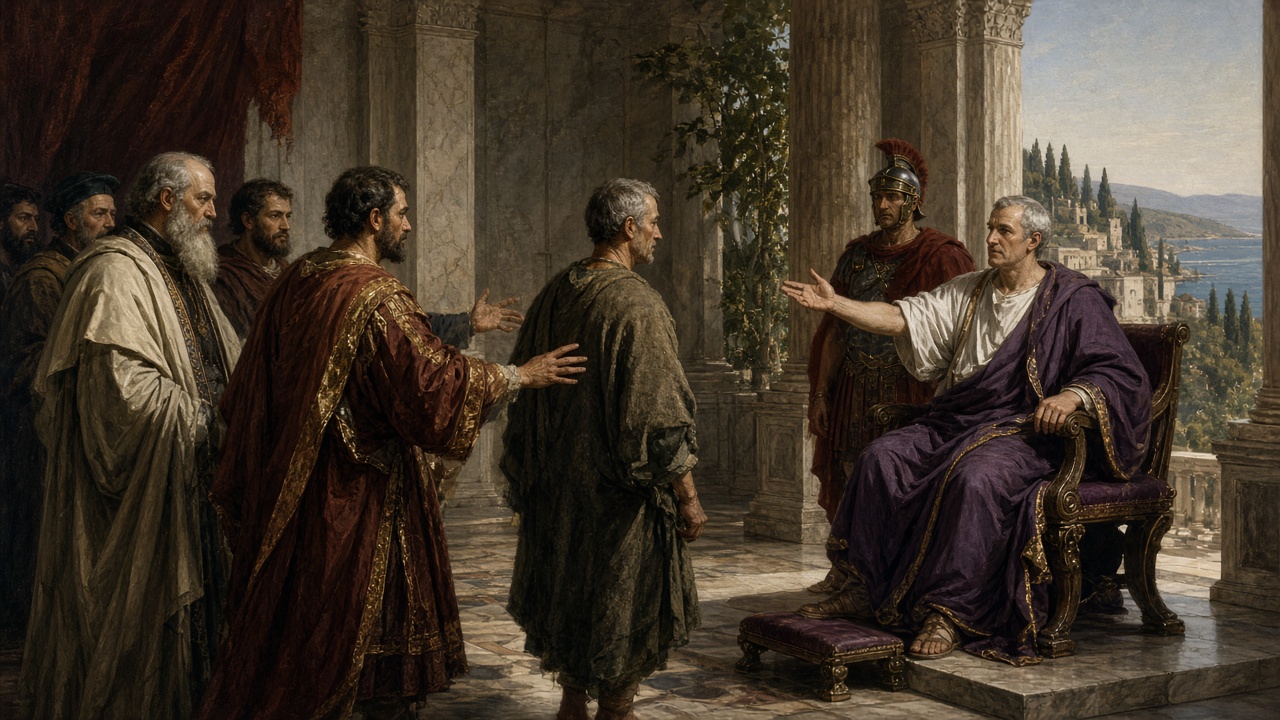
Paul before Felix
- The high priest Ananias came down with some elders and a lawyer named Tertullus, whom Easton's Bible Dictionary describes as a Roman advocate employed by the Jews to state their case against Paul before Felix. Tertullus praised the governor and then called Paul a pestilence who stirred up dissension among the Jews all over the world, a ringleader of the sect of the Nazarenes, and a man who had tried to desecrate the temple. The dictionary links that opening praise with Felix's clearing the country of bandits and impostors.Sources: the Bible text itself · Tertullus · Felix
- Felix, who was well informed about the Way, adjourned the hearing and kept Paul under guard, while allowing him some freedom and letting friends meet his needs. The account says he hoped Paul would offer a bribe and so sent for him often; Easton's Bible Dictionary likewise says he appears to have expected a bribe and therefore held several interviews with him. After two years Porcius Festus succeeded him—Easton's Bible Dictionary (1897) dates that appointment to A.D. 60—and, wishing to do the Jews a favor, Felix left Paul in prison.Sources: the Bible text itself · Felix · Portius Festus
- Several days later Felix returned with his wife Drusilla, who was Jewish, and listened as Paul spoke about faith in Christ Jesus and about righteousness, self-control, and the coming judgment; Felix became frightened and sent him away. Easton's Bible Dictionary (1897) identifies Drusilla as the third and youngest daughter of Herod Agrippa I and says Felix induced her to leave her husband, Azizus, king of Emesa. The same entry says that she and her son perished in the eruption of Mount Vesuvius in A.D. 79.Sources: the Bible text itself · Drusilla
Notes written with AI assistance from open sources (Theographic Bible Metadata, CC BY-SA 4.0; Easton’s Bible Dictionary, public domain) and reviewed before publishing.
Places in this chapter
- Caesarea · Today: Caesarea Maritima · 32.500, 34.892 · verse 1
- Jerusalem · 31.777, 35.234 · verses 11, 17
- Asia · 38.400, 28.300 · verse 18
Only places identified with high confidence are shown (90% or more according to the scholarly sources compiled by OpenBible). Period map: DARE (Digital Atlas of the Roman Empire), CC BY 4.0; modern map: © OpenStreetMap contributors; places: OpenBible.info (CC BY 4.0).
Credits and license for this translation
Yù bilin ni Namarò nga meyannung kâ Apu Kesu Kiristu: Yù bagu nga tarátu ni Namarò sù ira nga mangikatalà kâ Apu Kesu Kiristu
New Testament in Atta, Pamplona
copyright © 1996 Wycliffe Bible Translators, Inc.
Language: Pamplona Atta (Atta, Pamplona)
Translation by: Wycliffe Bible Translators, Inc.
Copyright Information
© 1996, Wycliffe Bible Translators, Inc. All rights reserved.
This translation text is made available to you under the
terms of the Creative Commons License: Attribution-Noncommercial-No Derivative Works.
( http://creativecommons.org/licenses/by-nc-nd/3.0/ )
In addition, you have permission to port the text to different file formats, as long as you
do not change any of the text or punctuation of the Bible.
You may share, copy, distribute, transmit, and extract portions
or quotations from this work, provided that you include the above copyright
information:
You must give Attribution to the work.
You do not sell this work for a profit.
You do not make any derivative works that change any of the actual words or punctuation of the Scriptures.
Permissions beyond the scope of this license may be
available if you contact
us with your request.
The New Testament
in Atta, Pamplona
© 1996, Wycliffe Bible Translators, Inc. All rights reserved.
This translation is made available to you under the terms of the
Creative Commons Attribution-Noncommercial-No Derivatives license 4.0.
You may share and redistribute this Bible translation or extracts from it in any format, provided that:
You include the above copyright and source information.
You do not sell this work for a profit.
You do not change any of the words or punctuation of the Scriptures.
Pictures included with Scriptures and other documents on this site are licensed just for use with those Scriptures and documents.
For other uses, please contact the respective copyright owners.
2014-08-06
Source: http://ebible.org/att/ · eBible.org