Acts 27
Ebe-No-Pfuasẹ Ishobọ Onogbọ · Tap a verse to see its cross-references.
A rue iPọlu je iRomu
1Abi e rọ lama shi ọ, anye lo ọkọ-okẹ oniẹmhi je Itili, e rue iPọlu ali ighumha ni e kpọle mhọli obọ oyi ọga ekhọli-okhuẹ ni a lu iJuliọsi, ni ọ khi ọghuo ọyi ekhọli-okhuẹ eyi Oghie iRomu nya, ni a zẹ ọda kẹ. 2Anye lo ọkọ-okẹ oniẹmhi rọte Adiramitiọmu, ikhi ọkọ-okẹ ni o ya kia migha ikpe eghuo ni ọkọ-okẹ ẹẹ migha, ni e la epfepfẹ okẹ ni e la ekẹ Esha. Arisitakusi ni ọ khi ọngi iMasidonia ọ nu anye kia.
3Ogbeakọlọ anye migha iSidọni. IJuliọsi ọ mhọli isomhelemhi na iPọlu, ọ zẹ ọli obọ ya mẹ emọle ọli, ni e ri emini ọọ nono na li. 4Anye ke gbo rọte aghọ mu oni ọkọ nga, anye rọte odane ukiẹkiẹ ekẹ ni okẹ oniẹmhi o khi shi ni a lu iSapurọsi irari khi akpekpeli oo nasẹ anye. 5Abi anye rọ gua ọkọ ọ da je ọdada iSilisha ali iPafilia, anye migha ẹoli iMara na ekẹ iLisia. 6Aghọ ọni ọga ekhọli-okhuẹ ọ te mẹ ọkọ-okẹ oniẹmhi oyi ẹoli Alẹzadira ni oo je Itili, ọ ri anye lo ọ. 7Anye e kia fiẹ, ogbẹlẹ ebubu, anye mhọli ọmunu neni anye ramhi iKinidusi. Abi akpekpeli ọa rọ zẹ anye rọte ashini anye kha rọte, anye gua ọkọ-okẹ je ukiẹkiẹ ekẹ ni okẹ oniẹmhi o khi shi iKirẹti ni o sọ alo ghue ẹoli iSalimọ. 8Anye mhọli ọmunu rọte oni okẹ oniẹmhi. Ikpukhokho, anye bhale ashini ọkọ-okẹ ẹẹ migha ni a lui ọpfọmhẹgbe ni o ti mama ẹoli iLasia.
9Ẹghẹghẹ o she pfu anye-a. Oni okiali o de shi ẹghẹghẹ ni a rọ lẹsẹ pfi azumhi se, ni o khi ẹghẹghẹ ni okhẹna o la la okiali na ukhomhi okẹ oniẹmhi. Ighọ iPọlu ọ tse agua ye wẹ, ọọ wẹ, 10“Emọse, mhi she mẹ khi okiali oyawa o ya khi okhẹna ali khi o ya ri ukpokpomhi opfu ghi oni ọkọ ali itsua ni o tsua ali agbọ oyawa.” 11Ama, ocho ni ọni ọga ekhọli-okhuẹ ọ kha rọ ri esọ shi emini iPọlu ọ ngme, ọ deba abi ọni ọ gua oni ọkọ ọ ngme ali emini ọni ọ mhọli oni ọkọ ọ ngme. 12Aborọkhia khi ashini anye migha ọa ya ti egbe ẹghẹghẹ oruẹ; ebubu ẹgbọ e yemhẹ anye gua ke lẹ, e dabi khi anye ya ramhi ẹoli iFonisi, ni anye la aghọ ẹghẹghẹ oruẹ. Aghọ ọkọ okẹ eniẹmhi nya ẹẹ migha yẹmhẹ-a. Ekẹ ni okẹ oniẹmhi o khishi ni a lu iKirẹti ni ọ sọ alo ghue obini ovọ o te ẹ lo eko o khi. Abi iPọlu ọ li ye iRomu|src="ATG Paul4-BW.ai" size="span" loc="ACT 27.1--28.14" ref="27.1--28.14"
Akpekpeli oniẹmhi
13Abi akpekpeli okẹ o rọ ri ọfiẹ rọte ukiẹkiẹ ọgobọ ọ pfiolo, eni emọse e dabi khi okiali o ya zẹ wẹ kia ke je odalo, ighọ e leli uli ali akhuli ni a rọ gba ọkọ ọọ zu. Ee kia esesọ oni okẹ oniẹmhi na iKirẹti. 14Ama o li dẹnẹ, akpekpeli oniẹmhi, o li rọte ukiẹkiẹ obita ini a sọ alo ghue obini ovọ o te ẹ tiemhi eko pfiolo rọte oni ekẹ ni o la iteva okẹ oniẹmhi i dọsẹ. 15Oni akpekpeli o tsua rughu ọkọ-okẹ oyanye, ọa dobẹ ke kia je obini akpekpeli o te pfiolo o bhale. O lọsẹ anye. Anye bie zẹ ọli obọ na akpekpeli lọlighuo oo tsua. 16Anye kia rọte ukiẹkiẹ ukuku ekẹ ni o la iteva okẹ oniẹmhi ni a lu iKauda, ikhi ukiẹkiẹ obini oni akpekpeli ọa ri egbe ramhi. Irọshẹka anye rọ dobẹ tialọ ọkọ onikeke ni a rọ ọ tsumhi ẹgbọ lo elemhi oni ọkọ-okẹ oniẹmhi. 17Abi eni emọse e rọ tialọ li lo se, e ri ili gẹ oni ọkọ-okẹ oniẹmhi gasẹ, ini eni ili e dobẹ mu ọli mhuẹ toto. Irari khi ee na ulishi ini oni ọkọ o ya gbe aye shi ugbe ekẹ, ni o la egele ekẹ iLibiya, ni o sọ alo ghue wẹ. Ighọ e gbaghiẹ ode na kpishi oyi oni ọkọ-a, irari khi ẹa bie ke mhuẹ abi e ya li ọ. Isheghọ ni oni akpekpeli o bie tsua wẹ ke le. 18Oni akpekpeli o kie ri itoto tsua oni ọkọ-okẹ ramhi ogbeakọlọ, ramhi ni, eni emọse e rọ tino itsua ni e tsua shi oni ọkọ ọ pfino kulo oni okẹ. 19Ogbeakọlọ e pfino ikhuli ni oni ọkọ o rọ ọ gbe akanya kulo oni okẹ. 20Aborọkhia khi ogbẹlẹ ebubu ni e dọsẹ khi anye a ri ẹloe ti ovọ wẹkhi ukpẹtata, ni oni akpekpeli o kiele rọ ri itoto o pfiolo, anye a ke ri udu shi ọ khi anye mẹ odẹ ni anye te ya pfue ọ.
21Abi eni emọse ẹa rọ le eminale ogbẹlẹ ebubu, iPọlu ọ vule, ọ wẹ, “Emọse a kha suọ ude ni mhi ye ẹ lọ, a kha migha iKirẹti, Ẹghẹghẹ aghọ, a kha tsumhi egbe ẹ oyese onana ali opfu. 22Ama mena mhi gueyẹ ẹ a mhọli udu, itobọ khi ọngẹẹ ọkhọghuo ọa ya pfua sẹ ni oni ọkọ. 23Ooyọsẹ agẹni ọyi Ẹshinẹgba ni ọ mhọli mhẹ ali ni mhi a ga ọ migha mama mhẹ, 24ọọ mhẹ, ‘Khi zẹ ni ulishi o muẹ, iPọlu. U mema ya migha ẹzọ odalo oyi iSiza ali khi Ẹshinẹgba ọ she rọte ilẹlemhi ri agbọ oyi eni a ga kia mhọli ẹ obọ.’ 25Irarighọ, a mu igbedu oyẹ mhọli, emọse, irari khi mhi mhuẹ irudunga khi Ẹshinẹgba ọ ya riẹlẹ ọli abi ọ gueyẹ mhẹ. 26Ama ọkọ oyawa o mema ya gbe aye shi ugbe ekẹ okhọghuo ni o la iteva okẹ oniẹmhi, o tigbe migha.”
Oni ọkọ o de ya khẹrẹ-a
27Ẹliyọsẹ ẹlẹnuzi-igbẹne, akpekpeli o kie tsua anye e kiakia okẹ oniẹmhi Adiriatiki. Itsotso ogbiẹ, o li eni ẹẹ gbe akanya oni ọkọ ẹloe abinẹ khi e she ti ẹ mama ekẹ. 28E mhẹsẹ oni okẹ bino, e mẹ khi ilimhi oyọli o khi ẹtẹ-awẹ egbhuẹsesa. O gbo li dẹnẹ, e gbo mhẹsẹ ọli, o ke khi ẹtẹ-awẹ egbhuẹne ali igbe. 29Ulishi o mu wẹ khi oni ọkọ o ya gbe aye shi echẹ, e rọte ukhokho pfi ikhuli ene ni a rọ a mu ọkọ ọ gbashi lo oni okẹ oniẹmhi, ee sọ iromhi ogbe o gbe a.
30Eni e la oni ọkọ ọ gbe akanya e dua abi e li mẹ asha a na kua. Ee tiese ukuku ọkọ ni e tialọ lole eghọ nga okẹ oniẹmhi, abinẹ khi eri e nono ni e rọte odalo ya pfi ikhuli lo okẹ oniẹmhi. 31Ama iPọlu ọọ ọni ọga ekhọli-okhuẹ ali eni ekhọli-okhuẹ, “Ini emọse enana ẹa li la elemhi oni ọkọ, ọngẹẹ, ọa ya pfue ọ.” 32Ighọ eni ekhọli-okhuẹ e pfa uli ni o mu oni ọkọ onikeke mhuẹ-a. E zẹ ọli de tiemhi elemhi okẹ.
33Neni ogbe o maghiẹ-a, iPọlu ọ lema wẹ nya e le eminale. Ọọ wẹ, “O she ramhi ogbẹlẹ igbẹne ni udu ọa ke te sheshe ẹ, ni a le eminale kpẹ. 34Mena mhia lema ẹ, a le eminale. A lemhi ini a nono ni a kie dobẹ la agbọ, A lemhi khi emhikhọghuo ọa ya li ọngẹẹ.” 35Abi ọ rọ ngme na se, ọ rue ibulẹdi lasele, o kphẹmhi na Ẹshinẹgba ukpẹloe wẹ nya, ọ khi ọli-a, ọọ le. 36Wẹwẹ nya e mhọli udu, e le eminale. 37Anye nya ni anye la oni ọkọ, ẹgbọ egbhuẹgbẹsẹ ali ogbasasa 276 anye khi. 38Abi e rọ ga le eminale se abi e nono, e tino ikpulu ikpamhi emhi ni e tsua kulo okẹ oniẹmhi, ini oni ọkọ o kpẹ li fuẹ.
Oni ọkọ okẹ oniẹmhi ọ kuluẹ
39Abi ogbe o rọ gbe-a se, eni ẹẹ gua oni ọkọ ẹa ke lẹsẹ egele okẹ oniẹmhi bie, ama e mẹ ashini ekhashẹ e kpi gbili shi. Aghọ e ke bie rọli shi udu khi wẹwẹ e ya gua oni ọkọ ya migha ini o zẹ wẹ ẹ riẹlẹ. 40Ighọ e pfanọ eni ili ni e mu ukpokpomhi akhuli ni o mu ọkọ-okẹ oniẹmhi ẹ gbashi kulo udi okẹ oniẹmhi. Ẹghẹghẹ aghọ e taghiẹ uli ni a rọ mu emini a rọ mu oni ọkọ ukhomhi ẹ nyenẹ-a. E taghiẹ ugbakpi oyi oni ọkọ-a nga idane, ni e dobẹ ramhi ashini e nono. 41Ama oni ọkọ-okẹ o ya tọ aye sọ ugbe ekẹ ni o la elemhi okẹ oniẹmhi, o migha, akpekpeli o kie ri itoto o li, o tsẹkẹ udi oni ọkọ-a.
42Eni ekhọli-okhuẹ ee gba abi e li ya gbolo eni ighumha nya a, ini e ya gua okẹ ramhi egele ni e na vu. 43Ama ọni ọga ekhọli-okhuẹ, ọọ nono abi lọli li ya tsumhi iPọlu, ọa zẹ wẹ riẹlẹ emini e gba. Ochoghọ ọ gueyẹ eni e guẹ ẹ gua okẹ e kpẹ danọ kulo okẹ ni e ramhi egele. 44Eni e kpọle nya e mu ikiẹkiẹ ẹẹra mhuẹ okekhi izaga oyi oni ọkọ-okẹ. Ighọ wẹwẹ nya e ramhi ekẹkhẹ emhikhọghuo ọa li wẹ.
Did you know?
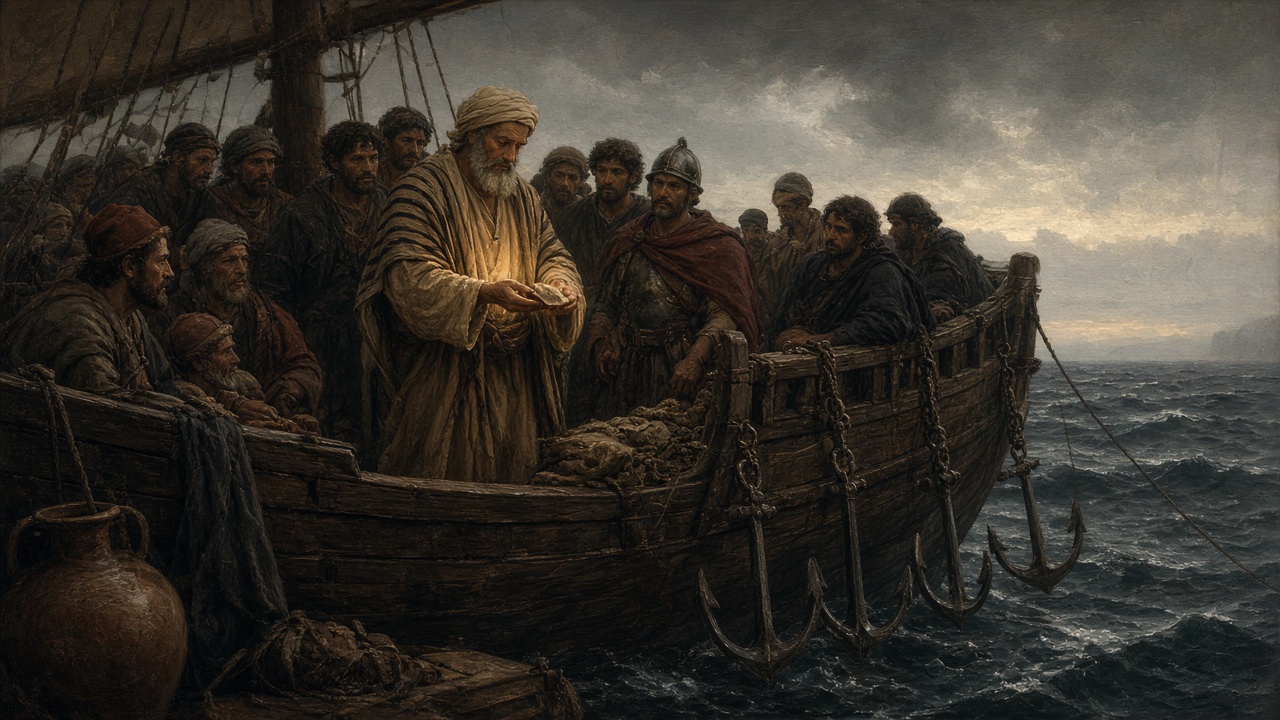
Storm and Shipwreck on the Way to Rome
- Paul and the other prisoners did not sail straight to Italy. At Caesarea they boarded a ship of Adramyttium, a city on the coast of Mysia in Asia Minor, bound for ports along the coast of Asia, a name Easton's Bible Dictionary takes in this verse as probably Asia Minor, and that ship carried them only as far as Myra in Lycia. There the centurion put them aboard an Alexandrian ship sailing for Italy; the dictionary notes that it was rare for a ship to sail from any port of Palestine direct to Italy.Sources: Adramyttium · Asia · the Bible text itself
- The prisoners were handed over to Julius, a centurion of the Imperial Regiment. Easton's Bible Dictionary identifies him as centurion of the Augustan cohort, or the emperor's body-guard, and describes his courteous regard for Paul. At Sidon, about twenty-five miles north of Tyre, he let Paul visit friends and receive care; later he blocked the soldiers' plan to kill the prisoners so that Paul's life would be spared.Sources: Julius · Sidon · the Bible text itself
- After Cnidus the ship worked along Crete, one of the largest islands in the Mediterranean, about 140 miles long and 35 broad, which Paul visited on this voyage to Rome. The account says the voyage had already become dangerous because it was after the Fast, and Fair Havens was unsuitable for wintering. One chronology dates the start of the journey to Rome to AD 56 and the shipwreck in the storm to AD 57.Sources: Crete · Journey to Rome begins · Paul is shipwrecked by a storm · the Bible text itself
Notes written with AI assistance from open sources (Theographic Bible Metadata, CC BY-SA 4.0; Easton’s Bible Dictionary, public domain) and reviewed before publishing.
Places in this chapter
- Italy · 41.892, 12.485 · verses 1, 6
- Adramyttium · Today: Oren · 39.501, 26.933 · verse 2
- Asia · 38.400, 28.300 · verse 2
- Thessalonica · Today: Thessaloniki · 40.638, 22.946 · verse 2
- Sidon · Today: Sandikli archaeological site in Sidon · 33.561, 35.372 · verse 3
- Cyprus · 35.000, 33.000 · verse 4
- Cilicia · 36.913, 34.892 · verse 5
- Lycia · 36.733, 29.900 · verse 5
- Myra · 36.259, 29.985 · verse 5
- Pamphylia · 37.000, 31.000 · verse 5
- Alexandria · 31.183, 29.896 · verse 6
- Cnidus · 36.686, 27.375 · verse 7
- Crete · 35.310, 24.893 · verses 7, 8, 12, 13, 14, 21
- Salmone · Today: Cape Sideros · 35.316, 26.312 · verse 7
- Fair Havens · Today: Kaloi Limenes · 34.930, 24.800 · verses 8, 12
- Lasea · Today: Lasaea · 34.941, 24.811 · verse 8
- Cauda · Today: Gavdos · 34.833, 24.083 · verse 16
- Syrtis · Today: Sidra · 31.500, 18.000 · verse 17
- Adriatic Sea · Today: Adriatic and Ionian Seas · 38.000, 19.000 · verse 27
Only places identified with high confidence are shown (90% or more according to the scholarly sources compiled by OpenBible). Period map: DARE (Digital Atlas of the Roman Empire), CC BY 4.0; modern map: © OpenStreetMap contributors; places: OpenBible.info (CC BY 4.0).
Credits and license for this translation
Ebe-No-Pfuasẹ Ishobọ Onogbọ
New Testament in Ivbie North-Okpela-Arhe (NI:atg:Ivbie North-Okpela-Arhe)
copyright © 2012 Wycliffe Bible Translators, Inc.
Language: Ivbie North-Okpela-Arhe
Translation by: Wycliffe Bible Translators, Inc.
Copyright Information
© 2012, Wycliffe Bible Translators, Inc. All rights reserved.
This translation text is made available to you under the
terms of the Creative Commons License: Attribution-Noncommercial-No Derivative Works.
( http://creativecommons.org/licenses/by-nc-nd/3.0/ )
In addition, you have permission to port the text to different file formats, as long as you
do not change any of the text or punctuation of the Bible.
You may share, copy, distribute, transmit, and extract portions
or quotations from this work, provided that you include the above copyright
information:
You must give Attribution to the work.
You do not sell this work for a profit.
You do not make any derivative works that change any of the actual words or punctuation of the Scriptures.
Permissions beyond the scope of this license may be
available if you contact
us with your request.
Printed book ISBN 9789789194797
The New Testament
in Ivbie North-Okpela-Arhe
© 2012, Wycliffe Bible Translators, Inc. All rights reserved.
This translation is made available to you under the terms of the
Creative Commons Attribution-Noncommercial-No Derivatives license 4.0.
You may share and redistribute this Bible translation or extracts from it in any format, provided that:
You include the above copyright and source information.
You do not sell this work for a profit.
You do not change any of the words or punctuation of the Scriptures.
Pictures included with Scriptures and other documents on this site are licensed just for use with those Scriptures and documents.
For other uses, please contact the respective copyright owners.
2019-08-09
Source: http://ebible.org/atgNT/ · eBible.org