Zephaniah 1
Cishingini Agwara Kambari [asg] · Tap a verse to see its cross-references.
About this book
About Zephaniah
- Easton's Bible Dictionary (1897) presents Zephaniah, whose name it explains as "Jehovah has concealed" or "Jehovah of darkness," as the son of Cushi and great-grandson of Hezekiah, and as the ninth of the minor prophets. It dates his prophecy to the reign of Josiah, king of Judah (641–610 B.C.), and says he was contemporary with Jeremiah, with whom he had much in common.Sources: Easton: Zephaniah · Zephaniah · Cushi
- Amon, Josiah's father, restored idolatry in Judah, and Easton reads Zephaniah 1:4 and 3:4, 11 as referring to that reign. The same dictionary links Zephaniah 1:4–6 with the worship of Baal and Zephaniah 1:5 with Malcham, described as the national idol of the Ammonites. Josiah, who came to the throne at eight, is presented as later acting against the idolatry that prevailed.Sources: Amon · Josiah · Baal · Malcham
- Easton's Bible Dictionary outlines the book as an introduction announcing judgment on the world and on Israel because of their transgressions (1:1–6), a description of the judgment (1:7–18), an exhortation to seek God while there is still time (2:1–3), judgment on other peoples (2:4–15), what it calls the hopeless misery of Jerusalem (3:1–7), and a promise of salvation (3:8–20).Sources: Easton: Zephaniah
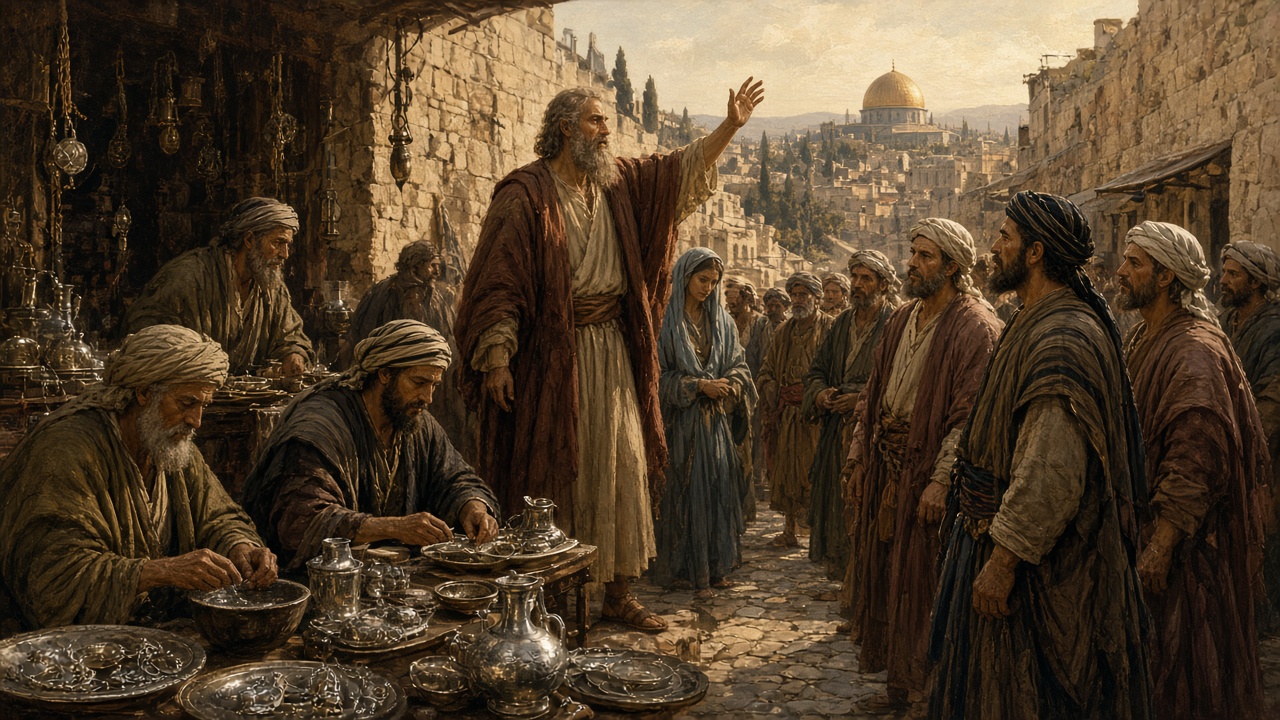
- Zephaniah 1:11 names the Mortar, a place in or near Jerusalem inhabited by silver merchants. It has been conjectured that this was the Phoenician quarter of the city, where traders of that nation lived.Sources: Mortar
Notes written with AI assistance from open sources (Theographic Bible Metadata, CC BY-SA 4.0; Easton’s Bible Dictionary, public domain) and reviewed before publishing.
Kanna ka afada a Vuzavaguɗu wa aza a Yahuda
1Vuzavaguɗu u yaꞋin kadanshi n Zafaniya kolobo ka̱ Kushi, matsukaya ma Gedaliya, vuza na esheku a̱ ni Amariya, maku ma Hezekaya, a ayin a na Josaya kolobo ka Amon wi o tsugono tsu Yahuda. 2Vuzavaguɗu u danai,
<<Mi ta̱ a ku una ili ra̱ka̱,
a aduniyan.>>
3<<Mi ta̱ a ku una uma nu nnama dem,
Mi ta̱ a̱ ku una nnu n gaɗi,
n adan a mala,
mi ta̱ kpamu a̱ ku una aza a gbani-gbani n a̱ma̱li e le,
ka̱ta̱ m pura̱ngu vuma vu lima̱ aduniyan.>>
4<<Mi ta̱ a̱ kuba̱rukpa̱ kukiye ku va̱ n yaꞋan tsurala n Yahuda,
n aza a na i a̱ ida̱shi a Urushelima dem.
A̱ ubuta̱ u nanlo ɗa mi a ku una aza a na a buwai a kucikpa ka̱ma̱li ka Balu,
n ula a anan ganu va̱ a̱ma̱li a nanlo.
5Mi ta̱ a ku una aza a na a tsu kumba gaɗi vu kukpa̱,
a cikpa kanna n wotoi n azangata.
Mi ta̱ a ku una aza a na a̱ tsu kuɗa̱ngu a kucina n Vuzavaguɗu,
i kpamu a kucina n ka̱ma̱li ka Moleka.
6Mi ta̱ a ku una aza a na o bonoi n ka̱ca̱pa̱,
a̱ ka̱sukpa̱i kutono Vuzavaguɗu,
n aza a na a̱ kpa̱ɗa̱i kula̱nsa̱ ili u Vuzavaguɗu,
kpamu a̱ la̱nsa̱ kusheshe ku ni ba.>>
7Paɗa bini e kelime ka Vuzavaguɗu Ka̱shile,
adama a na kanna ka Vuzavaguɗu ka yawa ta̱ ɗevu,
Vuzavaguɗu wi ta̱ kufoɓuso kanna ka afada,
kpamu u zagba ta̱ aza a na a kuyaꞋan a ɗa,
8A kanna ka nanlo, mpa Vuzavaguɗu,
<<Mi ta̱ a kutakacika aza e kelime n aza o tsugono,
n aza a na i o kutono kuyongo ki iɗika yi uduma.
9A kanna ka nanlo mi ta̱ a kutakacika,
aza a na a banai a̱ ubuta̱ u ka̱ɗiva̱ ka̱ a̱ma̱li,
n ele na a shatangi iꞋuwa yi nva̱li ma̱ a̱ma̱li n le,
n ukuna u modoruko n kalyaꞋa.
10Vuzavaguɗu u danai, <<A kanna ka nanlo,
i ta̱ a kupana ma̱shi na ɗe a̱ Utsutsu u Kadan,
a pana yoroli ɗe a kakambu ke ire,
n izumgbi yi ili o kuɓososo a gaɗi vu nsasan.
11Shika̱i, a̱ɗa̱ na yi ida̱shi a uɓon u kuden ku Morota,
adama a na i ta̱ a ku una aza a tsulaga ra̱ka̱,
n edengi azanariya n azurufa ra̱ka̱ i ta̱ a ku una le.
12A ayin a nanlo mi ta̱ a̱ kula̱nsa̱ Urushelima nu nkuni,
mi ta̱ a kutakacika aza a na a tsu zuwaka nu ukuna ba,
aza a na a tsu dana a̱ɗu e le,
<Vuzavaguɗu wi a kuyaꞋanka tsu kasingai ba,
ko u yaꞋanka tsu i gbani-gbani ba.>
13I ta̱ a̱ kupura̱ uciyi u le,
ka̱ta̱ o ɓoso iꞋuwa i le,
ko a na wo okpoi a maꞋa ta̱ iꞋuwa,
ama a̱ kuda̱sa̱ngu punu ba,
i ta̱ a kucimba ashina a itacishi,
ama o kusoꞋo ma̱kya̱n ma ba.>>
Kanna ka gbayin ka Vuzavaguɗu
14Kanna ka gbayin ka Vuzavaguɗu ka yawa ta̱ ɗevu,
ka yawa ta̱ ɗevu ɗa kpamu ki a̱ kuta̱wa̱ gogoꞋo.
Izumgbi i kanna ka Vuzavaguɗu yi ta̱ n okono,
a kanna ka nanlo keyevi ko kuvon ki ta̱ a̱ kushika̱ ka̱u.
15Kanna ka nanlo ki ta̱ o ko okpo kanna ka wupa,
kanna ku una̱mgbuka̱tsuma̱ n atakaci,
kanna ka̱ munuka n kula̱nga̱su,
kanna ka̱ ka̱yimbi ka kpaɓam,
kanna ke eleshu n ka̱yimbi ka gbayin,
16kanna ka̱ ku uvula̱ avana n isali i kuvon,
adama a̱ likuci yi ukanji n nshilya mu ugaɗi.
17Mi ta̱ a̱ ku tuka̱ n atakaci a̱ ubuta̱ u uma,
ali a wala tsa̱ a̱yimba̱,
adama a na a nusaka ta̱ Vuzavaguɗu,
i ta̱ a̱ kutsuwa̱n mpasa tsu mini,
inyama yi ikyamba i le an tsuta̱.
18A kanna ka wupa ka Vuzavaguɗu,
azanariya ko azurufa e le,
a kufuɗa ku isa le ba.
A̱ ka̱tsuma̱ ka̱ usuɗukpi u cisheꞋe u ni,
aduniyan dem i ta̱ a kuyaꞋan wu uni,
wi ta̱ a̱ kutuka̱ n uteku wa aduniyan gogoꞋo lo.
Did you know?
The Day of the LORD and Judgment on Idolatry
- Zephaniah traces his lineage back four generations to Hezekiah, dating his prophetic ministry to the reign of King Josiah of Judah. Josiah came to power after his father, King Amon, had restored idolatry across Judah before being assassinated by his own servants.Sources: the Bible text itself · Josiah · Amon · Hizkiah
- The chapter denounces religious syncretism in Jerusalem, where people bowed on rooftops to the host of heaven and combined their devotion to the LORD with oaths to Baal and Malcham, the national idol of the Ammonites.Sources: the Bible text itself · Baal · Malcham
- The prophecy specifies landmarks in Jerusalem that would experience turmoil, including the Fish Gate and the Mortar (or Hollow), a district inhabited by merchants who weighed out silver.Sources: the Bible text itself · Fish Gate · Mortar
Notes written with AI assistance from open sources (Theographic Bible Metadata, CC BY-SA 4.0; Easton’s Bible Dictionary, public domain) and reviewed before publishing.
Places in this chapter
- Jerusalem · 31.777, 35.234 · verses 4, 12
- Fish Gate · Today: in Jerusalem · 31.777, 35.234 · verse 10
- Second Quarter · Today: in Jerusalem · 31.777, 35.234 · verse 10
- Canaan · 32.767, 35.333 · verse 11
- Mortar · Today: in Jerusalem · 31.777, 35.234 · verse 11
Only places identified with high confidence are shown (90% or more according to the scholarly sources compiled by OpenBible). Period map: DARE (Digital Atlas of the Roman Empire), CC BY 4.0; modern map: © OpenStreetMap contributors; places: OpenBible.info (CC BY 4.0).
Credits and license for this translation
Cishingini Agwara Kambari [asg]
Cishingini: Cishingini Agwara Kambari [asg] (Bible)
copyright © 2025 Language Development and Translation Initiative (LDTI)
Language: (Cishingini)
Contributor: The Seed Company
This translation is made available to you under the terms of the
Creative Commons Attribution Share-Alike license 4.0.
You have permission to share and redistribute this Bible translation in any format and to make reasonable revisions and adaptations of this translation, provided that:
You include the above copyright and source information.
If you make any changes to the text, you must indicate that you did so in a way that makes it clear that the original licensor is not necessarily endorsing your changes.
If you redistribute this text, you must distribute your contributions under the same license as the original.
Pictures included with Scriptures and other documents on this site are licensed just for use with those Scriptures and documents.
For other uses, please contact the respective copyright owners.
Note that in addition to the rules above, revising and adapting God's Word involves a great responsibility to be true to God's Word. See Revelation 22:18-19.
2025-07-09
Source: http://ebible.org/asg/ · eBible.org