Song of Songs 4
Cishingini Agwara Kambari [asg] · Tap a verse to see its cross-references.
1Macigi ma̱ va̱ vi ta̱ n tsuloboi,
a̱shi a̱ nu i ta̱ tsu a̱shi o moɗoi punu upali.
ka̱nji ka̱ nu ki ta̱ tsu ushiga wu nraɗika
u na wi a̱ kugida̱la̱ a kusan ku Giliyadu.
2Anga a̱ nu i ta̱ wa̱ri buga̱-buga̱
tsu ushiga wu nkyon n na a̱ sumba̱i,
a takpai sararai ra̱ka̱ vu le i ta̱ ugeri,
yaba dem m gbaɓi vi ni,
ko vuza wi endeꞋin ba.
3Nla̱ba̱ mu una̱ u nu ushili pa̱za̱za̱
adanshi vu sura ta̱ ili i shili,
una̱ u nu ili i maluwa i ɗa,
o yotsongi nla̱ba̱ mu una̱ u nu,
nguji n nu a kutasa
tsu kucina̱ ku umaci u ruman.
4Kuɗeku ku nu ki ta̱ an kumaꞋa
ku ugaɗi ku Dawuda,
ku na a maꞋi n tsuloboi,
idolu yi ta̱ ugeri uka̱ra̱Ꞌi
e kuɗeku ku nu,
tsu n nra̱ga̱ ka̱kpa̱n,
ra̱ka̱ vi le nra̱ga̱ mo ovonshi a ɗa.
5Mani ma̱ nu mi ta̱ a na nreꞋe n re
a na mpeshe mu nreꞋe,
a kalina punu apulufa.
6Ali kayin ka asa
ubuta̱ dem wu akana,
mi ta a kubana a kusan ka̱ Muru
n kaginda ki ili i ma̱gula̱ni.
7Vu gaꞋan ta̱ macigi ma̱ va̱,
ili i gusa̱ wu a ikyamba i nu ba.
8Ta̱wa̱ nu mpa a Lebano, vuka vu savu vu va̱,
tsu waluka koɓolo a Lebano.
Gida̱la̱ a̱ kuta̱wa̱ ɗe a kaginda ka Amana,
ɗe a gaɗi vu Seru, n gaɗi vu Hamonu,
ɗe e kpenle ki ikawu
n kaginda ka na a̱kunzu o ci yongo.
9Vu uwa ta̱ a̱ ka̱ɗu ka̱ va̱,
vutaku vu va̱, vuka vu savu vu va̱,
n kindi ku a̱shi a̱ nu
vu uwa ta̱ a̱ ka̱ɗu ka̱ va̱,
n vudolu vu te vu kuɗeku ku nu.
10N yiɗa̱i n kugisanku n ucigi u nu,
macigi ma̱ va̱ vuka vu savu vu va̱,
n yiɗa̱i a kugisanku uyoꞋo wu ucigi u nu
u na u laꞋi ma̱kya̱n uyoꞋo,
n yiɗa̱i a kugisanku ili ma̱gula̱ni i nu
i na i laꞋi ili i ma̱gula̱ni ra̱ka̱ ma̱gula̱ni.
11Nla̱ba̱ mu una̱ u nu n uyoꞋo ci ishigi,
vuka vu savu vu va̱,
mani n ishigi yi ta̱ e kelentsu ka̱ nu.
ma̱gula̱ni mo ntogu n nu
a na ili ma̱gula̱ni i Lebano.
12Avu kashina kaꞋa ka na a kanzai adama a̱ va̱,
macigi ma̱ va̱ vuka vu savu vu va̱,
a̱shi a̱ mini a na a kanzai,
a̱shi a̱ mini a na a̱ sa̱nka̱i yaba dem.
13Mere ma̱ nkuta̱ n nu kashina ki ta̱ punu,
tsu kashina ka Adini
n umaci wu nɗanga u singai,
ka umaci u ruman mu uyoꞋo
n ili i ma̱gula̱ni mu uyoꞋo tsa ma̱jigi n nardi,
14Nardi n safaron,
kalamusu n sinamon,
n icuꞋu yi nɗanga i na i ci neke ma̱gula̱ni dem,
m Muru n alosu,
n ili i ma̱gula̱ni i na i laꞋi m ma̱gula̱ni.
15Avu a̱shi a̱ mini a ɗa a na i e kuneke mini a kashina ka,
kuɗolu ku na ku ci neke mini ma wuma,
mana mi e kuyene a Lebano.
16Ɗa̱nga̱, wunla̱i wu uɓongaɗi,
ta̱wa̱ wunla̱i wu uɓonɗakai
vu uvula̱ kashina ka̱ va̱,
tsu na ma̱gula̱ni ma̱ kimba̱i a̱ ubuta̱ dem.
yaꞋan macigi ma̱ va̱ ma̱ ta̱wa̱ a kashina ka̱ ni,
u lyaꞋa umaci wu nɗanga u na u laꞋi n uyoꞋo.
Did you know?
The Bride's Beauty and the Garden of Spices
- The poem calls the bride down from the dramatic northern mountain ranges of Lebanon, including Amana, Senir, and Mount Hermon. Mount Hermon is the highest peak in the Anti-Lebanon range, and biblical sources note that Senir was the Amorite name for Hermon.Sources: the Bible text itself · Hermon · Senir · Lebanon
- The beloved's hair is compared to a flock of goats descending Mount Gilead, a fertile and mountainous region located east of the Jordan River.Sources: the Bible text itself · Gilead
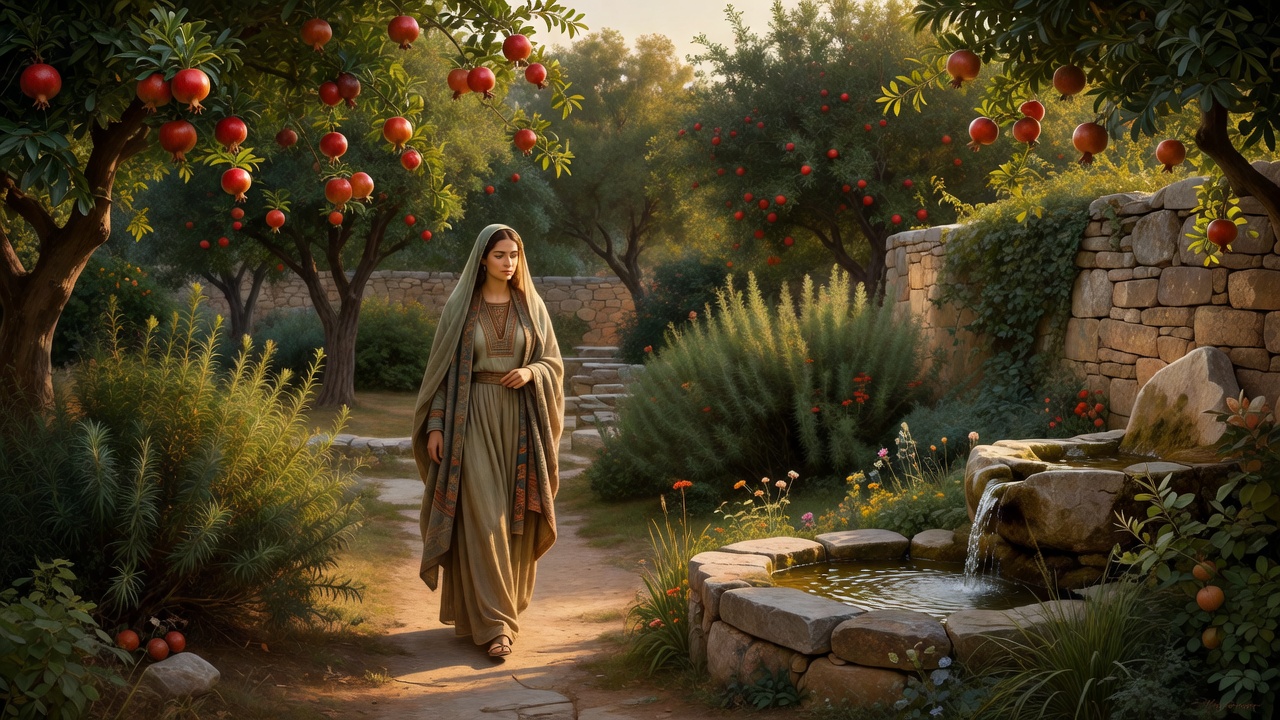
- The bride is portrayed as an enclosed garden, a sealed fountain, and an orchard laden with precious spices such as nard, saffron, cinnamon, and frankincense, evoking exclusivity, refreshment, and fragrance.Sources: the Bible text itself
Notes written with AI assistance from open sources (Theographic Bible Metadata, CC BY-SA 4.0; Easton’s Bible Dictionary, public domain) and reviewed before publishing.
Places in this chapter
- Gilead · Today: Gilead 1 · 32.187, 35.692 · verse 1
- Lebanon · 33.540, 35.584 · verses 8, 11, 15
- Mount Hermon · 33.400, 35.850 · verse 8
- Senir · Today: Mount Hermon · 33.400, 35.850 · verse 8
Only places identified with high confidence are shown (90% or more according to the scholarly sources compiled by OpenBible). Period map: DARE (Digital Atlas of the Roman Empire), CC BY 4.0; modern map: © OpenStreetMap contributors; places: OpenBible.info (CC BY 4.0).
Credits and license for this translation
Cishingini Agwara Kambari [asg]
Cishingini: Cishingini Agwara Kambari [asg] (Bible)
copyright © 2025 Language Development and Translation Initiative (LDTI)
Language: (Cishingini)
Contributor: The Seed Company
This translation is made available to you under the terms of the
Creative Commons Attribution Share-Alike license 4.0.
You have permission to share and redistribute this Bible translation in any format and to make reasonable revisions and adaptations of this translation, provided that:
You include the above copyright and source information.
If you make any changes to the text, you must indicate that you did so in a way that makes it clear that the original licensor is not necessarily endorsing your changes.
If you redistribute this text, you must distribute your contributions under the same license as the original.
Pictures included with Scriptures and other documents on this site are licensed just for use with those Scriptures and documents.
For other uses, please contact the respective copyright owners.
Note that in addition to the rules above, revising and adapting God's Word involves a great responsibility to be true to God's Word. See Revelation 22:18-19.
2025-07-09
Source: http://ebible.org/asg/ · eBible.org