Proverbs 30
Cishingini Agwara Kambari [asg] · Tap a verse to see its cross-references.
Akaka a Agu
1Akaka a Agu kolobo ka Yake.
Vuma va u danai, Vuzavaguɗu Ka̱shile moꞋuta̱
Mpa moꞋuta̱, Vuzavaguɗu, utsura u va̱ u kotso ta̱.
2Mayun mpa n lata̱ ya ba dem tsulau.
mi n kuyeve tsu uma.
3Mpa n la̱nsa̱ kuyeve ku ugboji ba,
mpa kpamu n yeve vuza ciɗa vu nanlo ba.
4Ya yi u sawai ku kumba gaɗi ɗa u cipa̱i?
Ya yi u sawai kureme wunla̱ a kataka ka kukiye ka ni?
Ya yi u sawai ku ka̱ta̱la̱ mini a kuminya ku ni?
Ya yi kpamu u shikpa̱i uteku wu uduniya?
Ya yi a ci ɗeke kula ku ni, kpamu ya yi a ci ɗeke kula ku maku ma̱ ni?
Dana mu, vu yeve ba ci.
5Kadanshi ka Ka̱shile ra̱ka̱ mayun ɗa,
ma̱ra̱ga̱ ma a, wa aza na a̱ la̱nsa̱i kusheɗeku wa̱ a̱ ni.
6Ka̱ta̱ vu doku kadanshi ka̱ ni ba,
ta lo wa ku dansuka wu ka̱ta̱ vokpo kayan ka uwa.
7Vuzavaguɗu i li ire i ɗa n la̱nsa̱i wa̱ nu,
yaꞋan ka mu i ɗa kafu n kuwa̱.
8Takpa ukuna wa uwa u bana dangi n mpa,
ka̱ta̱ vu neke mu uciyi ko unambi ba,
ama neke mu ilikulya derere n ucigi u va̱,
9ta lo ma cuwa̱ ka̱ta̱ n cinukpa n a̱vu,
ka̱ta̱ n dana <<Ya yi Vuzavaguɗu>>
ko kpamu n namba ka̱ta̱ n boko,
ka̱ta̱ n la̱nga̱sa̱ kula ku ka Ka̱shile ka̱ va̱.
10Ka̱ta̱ vu la̱nga̱sa̱ kagbashi kula ubuta̱ u vuzagbayin vu ni ba,
ta lo va yaꞋan unushi u na a kila̱kpa̱ wu.
11N kukece ta̱ ili gbaniꞋgbani i na̱shi i na uma a ci yaꞋan,
aza yoku a ci shika ta̱ ishekpu i le
ka̱ta̱ a̱ kpa̱ɗa̱ ku cikpa ina̱kpu i le.
12Aza yoku a ce ene ta̱ ka̱cika̱le i ta̱ ciɗa,
ashe tana i ta̱ nu unata.
13Aza yoku i ta̱ na a̱ra̱ɗi,
a ci ɗika ta̱ ka̱cika̱le e le va ili yoku i ɗa.
14Aza yoku anga e le otokobi a ɗa,
atakpamkpatsu e le kpamu mawun ɗa,
adama na okotsotongu aza unambi uduniya ra̱ka̱,
n ofoloni ra̱ka̱ a ka̱tsuma̱ ka uma.
15Kutsa̱n ki ta̱ n nkere nre. A ci ɗeke le ta̱.
Nemu koɓolo n Nemu.
Ili tatsu yi ta̱ lo i na i ci cuwa̱ ba,
Ali i na̱shi i na i ci dana <<U yawa mu ta̱ ba.>>
16E le ɗa, asaun, n ka̱tsa̱ma̱ ka madari ma na ma maci ba,
n iɗika i na ka̱ta̱ i cuwa̱i n mini ba,
n akina a na a sawai ku dana, <<U yawa mu ta̱ ba,>>
17A̱shi a na o goyoi dada
ɗa a iwain kucikpa mma
agawun a kuyene i ta̱ a kuta̱sa̱ a ɗa
ka̱ta̱ asakali a takuma le.
18I li itatsu ɗa yi a ku neke mu mereve,
a li i na̱shi i na n yeve ba
19u teku tsu na kajimba ka tsu wala gaɗi,
u teku tsu na koko ka tsu wala a katali,
u teku tsu na kpantsu ku tsu wala a mini,
n uteku tsu na mavali ma tsu yaꞋan n mekere.
20Na ɗa u teku tsu na kashakanlai ki
u lyaꞋa ba ci ka̱ta̱ u gboro una̱
ka̱ta̱ u dana, <<Mpa n yaꞋan u nushi ba.>>
21I li yi ta̱ lo i na̱shi
i na vuza u duniya u ku fuɗa ku yaꞋan ahankuri i ɗa ba,
22kagbashi ɗa baci kokpoi mogono,
n kalau a yaꞋan na baci ka̱cuwa̱i n ilikulya,
23ɗa baci vuka vu unambi u mapasa u ciya̱i vali,
n kagbashi ka na ka gadai a̱na̱ku a̱ ni.
24I li i kenu i na̱shi feu yi ta̱ lo u duniya,
ama i ta̱ n ugboji ka̱u,
25Ojuno i nu utsura ba,
ama a tsu la̱nsa̱ ta̱ ilikulya i le n lyushi
26Rema nnama n ɗa n na mi babu utsura,
ama dem n nanai a ci maꞋa ta̱ i uwa i le a tali,
27Akyun i n mogono ba,
ama dem n nanai a tsu wala ta̱ magaba,
28Karagba, vi ta̱ a kufuɗa vu ka̱na̱i n ekiye,
dem n nanai a tsu uwa ta̱ a kefeku ka mogono.
29Ili i tatsu yi ta̱ lo,
ali i na̱shi i na i tsu wala n atankama.
30E le ɗa kawu, a̱ yi na ulai ya ba dem mgbayin a ka̱tsuma̱ ka nnama,
a̱ yi na u tsu kpatala adama a vu toku ba,
31n kepen ki isali n ma̱ga̱ji,
koɓolo n mogono ma na mi koɓolo n osoji a̱ ni.
32Ɗa baci vi ɗe a tsulau, a ku yaꞋanka ka̱cika̱ nu a̱ra̱ɗi
ko kpamu a fama an foɓo adama kagbani-gbani,
to pala una̱ u nu n kukiye.
33tsu na kukuciwa ku mani ku tsu tuka̱ n maniꞋin,
u pinda̱ri u vunu kpamu u zuwa mpasa mu uta̱ a vunu,
ta feu wupa u tsu tuka̱ n vishili nanai.
Did you know?
The Sayings of Agur
- Proverbs 30 is attributed to Agur son of Jakeh, who addressed his sayings to Ithiel and Ucal. Beyond what is recorded in this chapter, nothing further is known about Agur or his father.Sources: Agur · Jakeh · Ucal · the Bible text itself
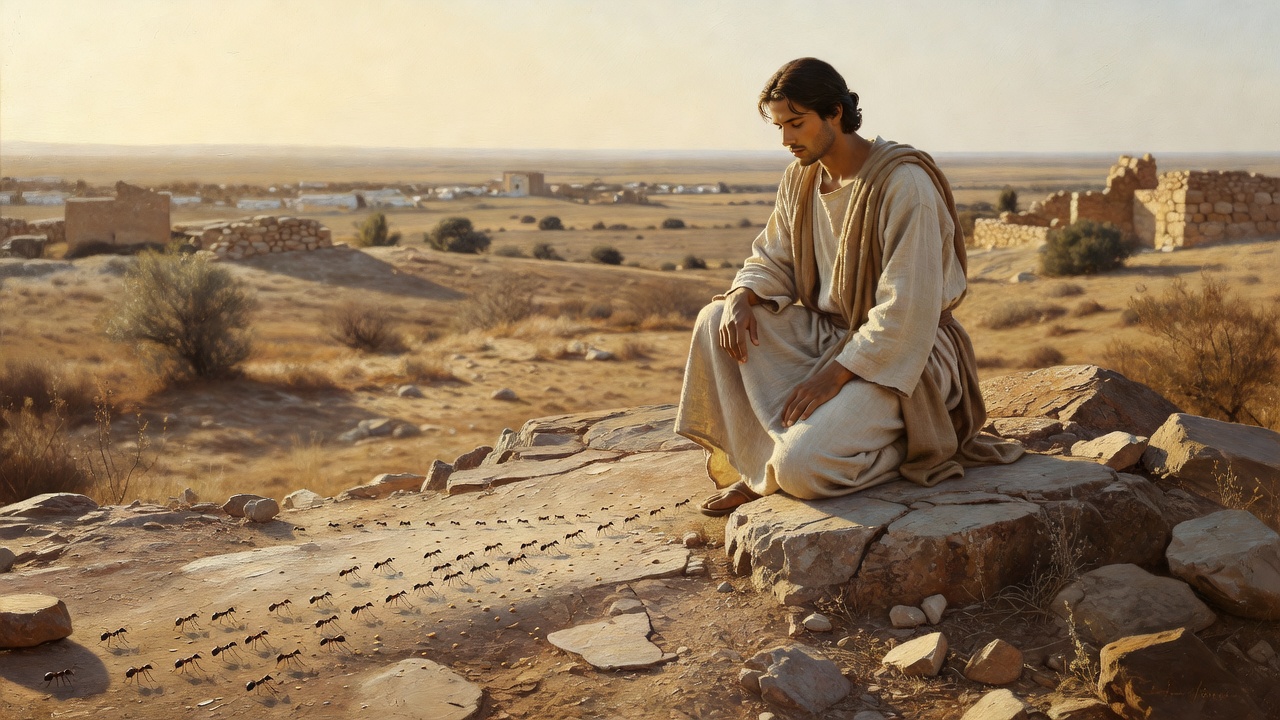
- The chapter frequently uses a graded numerical pattern ('three things... four that...') to group observations about nature and human behavior. Agur applies this structure to marvels of creation, social disruptions, stately walkers, and four small creatures that display remarkable wisdom: ants, rock badgers, locusts, and lizards.Sources: the Bible text itself
- Agur makes a specific two-part request, asking to be granted neither poverty nor riches, but only his daily portion of food. He explains that having too much might lead someone to disown the Lord, while falling into poverty might tempt a person to steal.Sources: the Bible text itself
Notes written with AI assistance from open sources (Theographic Bible Metadata, CC BY-SA 4.0; Easton’s Bible Dictionary, public domain) and reviewed before publishing.
Credits and license for this translation
Cishingini Agwara Kambari [asg]
Cishingini: Cishingini Agwara Kambari [asg] (Bible)
copyright © 2025 Language Development and Translation Initiative (LDTI)
Language: (Cishingini)
Contributor: The Seed Company
This translation is made available to you under the terms of the
Creative Commons Attribution Share-Alike license 4.0.
You have permission to share and redistribute this Bible translation in any format and to make reasonable revisions and adaptations of this translation, provided that:
You include the above copyright and source information.
If you make any changes to the text, you must indicate that you did so in a way that makes it clear that the original licensor is not necessarily endorsing your changes.
If you redistribute this text, you must distribute your contributions under the same license as the original.
Pictures included with Scriptures and other documents on this site are licensed just for use with those Scriptures and documents.
For other uses, please contact the respective copyright owners.
Note that in addition to the rules above, revising and adapting God's Word involves a great responsibility to be true to God's Word. See Revelation 22:18-19.
2025-07-09
Source: http://ebible.org/asg/ · eBible.org