Proverbs 24
Cishingini Agwara Kambari [asg] · Tap a verse to see its cross-references.
1Ka̱ta̱ vu yaꞋanka uma a kavama tsurala ba,
ko vu yaꞋan mali ma kuyongo n a̱ le ba,
2adama na ka̱ɗu ke le, ka ci sheshe i yoku ba, sai vishili,
una̱u u le kpamu sai kavama.
3N ugboji u ɗa a maꞋin kpaꞋa,
n ubuta̱ u kuyeve u ɗa kpamu ɗa kushamgba yi,
4n ubuta̱ u kuyeve u ɗa a shatangi unu
n ucanuku u singai ra̱ka̱ n uciyi.
5Vuza vu ugboji u tsu yaꞋan ta̱ n utsura,
keyevi kpamu ka tsu lyaꞋa ta̱ kelime n kudoku n utsura,
6adama na ubuta̱ wu ugboji u uma u ɗa a tsuyaꞋan kuvon,
kpamu ubuta̱ wa odoki u uma u ɗa a ci ciya̱ u lyaꞋi.
7Ugboji wi ta̱ n atakaci a kuyeve ubuta̱ u kalau,
a u ubuta̱ u kadanshi uma a tsu fuɗa a dansa u kuna u ma̱riki ba.
8Ya ba dem na u tsu sheshe kuyaꞋan ka gbani-gbani,
a ku ɗekei ta̱, mogono ma vishili.
9Kusheshe kuyaꞋan ka gbani-gbani, u nushi u ɗa,
vuza kugoyi kpamu ili yu unata i ɗa ubuta̱ u uma.
10Ɗa baci vu oꞋoi a kanna ka atakaci,
mayun ɗa an vi nu utsura ba.
11Isa aza na i a kurono a ku banka ubuta̱ u munuka,
Geshe aza na i a katambalusa a ku bana u kpiꞋisa̱.
12Ɗa baci vu danai, <<Mpa n yeve ili nampa ya ba,
adama nanai mpa, ili i bura mu ba.>> Ciɓai an Ka̱shile ka yevei i na ci yaꞋan, kpamu u yeve ta̱ i na ci a kusheshe,
ashe wa ku tsupa ka tsu derere vi na tsuyaꞋan va ba?
13Maku ma̱va̱, lyaꞋa ishigi, adama i ɗa yi ta̱ n ugain.
kpamu kuɗa̱kpa̱ ku kabashi ki ishigi ko tsu yokpo ta̱ una̱.
14Yeve an ta ugboji wi a̱ ka̱ɗu ka̱ nu nanai,
ɗa ba ci vu ciya̱i u ɗa, vi ta̱ a kuyongo n a̱pa̱ kelime,
kpamu a̱pa̱ a̱ nu i a ku puwa̱nka̱ ba.
15Ka̱ta̱ vu vaꞋanku a kavaꞋawan tsu vuma gbanigbani, a kpaꞋa ku vuza vu usuɓi,
ka̱ta̱ vu la̱nga̱sa̱ kpaꞋa ku vuza vu usuɓi ba,
16adama na vuza vu usuɓi u su yikpa̱ ta̱ ku cindere ka̱ta̱ u ɗa̱nga̱ kpamu,
ama u na̱mgbi u te u tsuna ta̱ aza gbanigbani.
17Ka̱ta̱ vu yaꞋan ma̱za̱nga̱, adama ili gbanigbani i na i ciya̱i vu rala nu ba,
kpamu ka̱ta̱ vu yaꞋan ma̱za̱nga̱ a ayin ana u fa̱ta̱tsa̱i u yikpa̱i ba,
18talo, Vuzavaguɗu wa kene, ka̱ta̱ u na̱mgba̱ ka̱tsuma̱,
ka̱ta̱ kucikpa u vadalukpa wupa u ni.
19Ka̱ta̱ vu takacika ka̱cika̱nu adama vuza gbanigbani ba,
kpamu ka̱ta̱ vu yaꞋan tsura tsa aza gbanigbani ba,
20adama na vuma gbanigbani wi n a̱pa̱m kelime ba,
kutashi ku vuza gbanigbani ki ta̱ a ku kima̱.
21Maku ma̱ va̱ pana wovon u Ka̱shile n mogono,
kpamu ka̱ta̱ vu gbaɓa ka̱cika̱nu n a̱ka̱ra̱shi ba,
22adama ana kawuya ki ta̱ a̱ ku ɗa̱nga̱ n moloko we le,
ya yi u yevei uteku u munuka ma na dem vu le a ku tuka̱?
Kadanshi ka a̱bunda̱i ka aza ugboji
23Nava feu kadanshi ka aza ugboji ka.
24Ya ba dem vu na baci de dem u danai vuza gbanigbani, <<Avu vu nusa ba,>>
uma i ta̱ a kuyaꞋan kai una̱, ka̱ta̱ uduniya kpamu e ne unata u ni,
25Ama aza na de dem u tsu dansuka vuma gbanigbani wita̱ a kuciya̱ una̱u usingai,
una̱u usingai wa a̱bunda̱i wi ta̱ a ku cipa̱ wa̱ le.
26Vuza dem u danshi kamayun
u yotsongu ta̱ cija̱Ꞌa̱ ci singai.
27Lapula biꞋi ulinga u nu ra̱ka̱ pulai,
kotso ku lapula ili ya ashina i nu ra̱ka̱,
ka̱ta̱ yeve a ukocishi vu maꞋa kpaꞋa ku nu.
28Ka̱ta̱ vu neke ngaꞋan adama vu toku nu babu ili ba,
ka̱ta̱ vu dansa a uwa ba.
29Ka̱ta̱ vu dana <<Mpa sai n tsupa u teku tsu na u yaꞋan kai mu ba,
n ku tsupa ta̱ i na u yaꞋankai mu.>>
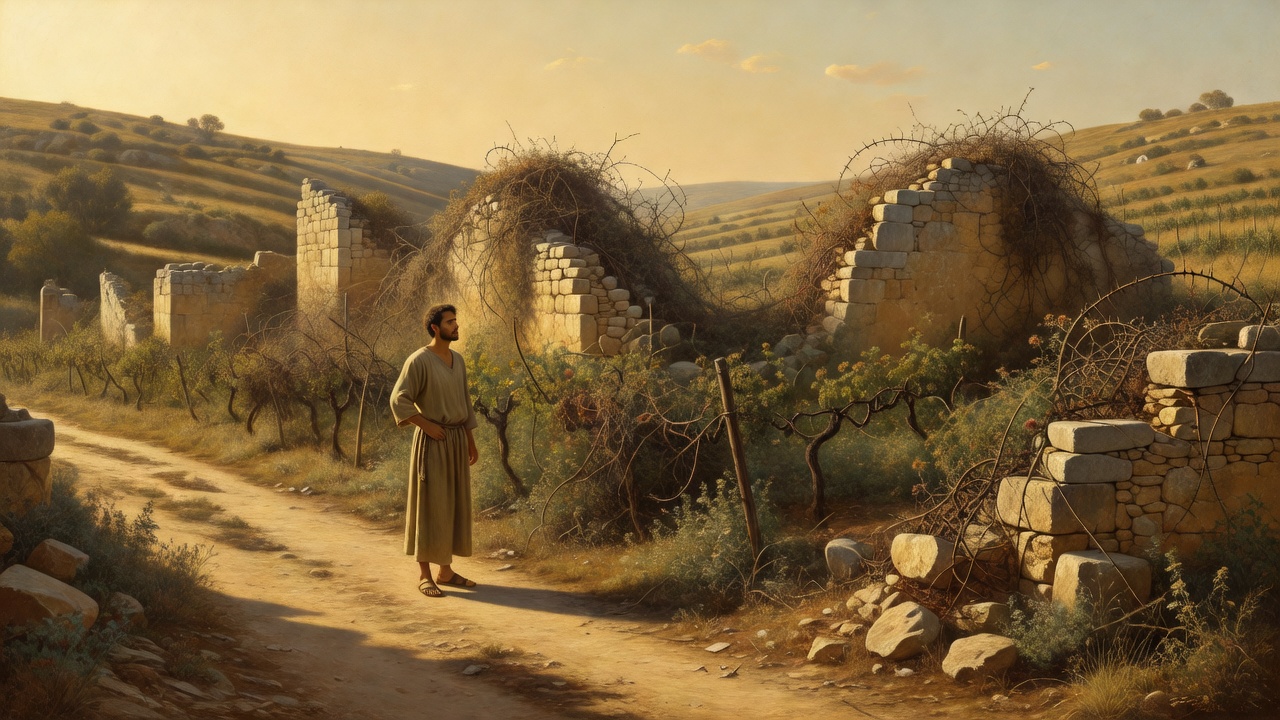
30N wala ta̱ n kashina ka korogo,
n kashina ka vuza vu babu ugboji,
31ɗa menei ka ka shana ta̱ na a wana,
i ɗika ya kpamu i shanai n mita̱,
kpamu nshilya n ni n ɓosoi a li iɗika.
32A na menei, ɗa n sheshei u kuna wa,
ɗa n ciya̱i odoki a nampa.
33Ɗa baci alavu n agbaɗiki a laꞋi nu gan,
ayin kenu, vo oɓongu ekiye nu adama na vu vuka,
34nanai ɗa unambi wa kufa̱ba̱na̱ wu i li, an vuza ma̱ga̱la̱ka̱,
ka̱ta̱ kpamu u ɗa u ka̱na̱ wu an koboki.
Did you know?
Wisdom for Daily Life, Justice, and Diligence
- Proverbs 24:27 reflects the priorities of ancient agrarian life by advising that one should first prepare fields and secure an agricultural livelihood before building a house. Securing reliable food production had to take precedence over investing resources into domestic shelter.Sources: the Bible text itself
- The chapter challenges passive bystander apathy, asserting that claiming ignorance will not excuse failing to rescue those facing unjust peril or death. It similarly warns against judicial partiality in civic assemblies, strongly condemning those who exonerate the guilty.Sources: the Bible text itself
- The vivid portrait of a slacker's vineyard highlights the rapid physical decay of untended land, marked by overgrown thistles and broken stone walls. In the hill country of ancient Israel, maintaining stone terrace walls was essential for preventing soil erosion and protecting crops.Sources: the Bible text itself
Notes written with AI assistance from open sources (Theographic Bible Metadata, CC BY-SA 4.0; Easton’s Bible Dictionary, public domain) and reviewed before publishing.
Credits and license for this translation
Cishingini Agwara Kambari [asg]
Cishingini: Cishingini Agwara Kambari [asg] (Bible)
copyright © 2025 Language Development and Translation Initiative (LDTI)
Language: (Cishingini)
Contributor: The Seed Company
This translation is made available to you under the terms of the
Creative Commons Attribution Share-Alike license 4.0.
You have permission to share and redistribute this Bible translation in any format and to make reasonable revisions and adaptations of this translation, provided that:
You include the above copyright and source information.
If you make any changes to the text, you must indicate that you did so in a way that makes it clear that the original licensor is not necessarily endorsing your changes.
If you redistribute this text, you must distribute your contributions under the same license as the original.
Pictures included with Scriptures and other documents on this site are licensed just for use with those Scriptures and documents.
For other uses, please contact the respective copyright owners.
Note that in addition to the rules above, revising and adapting God's Word involves a great responsibility to be true to God's Word. See Revelation 22:18-19.
2025-07-09
Source: http://ebible.org/asg/ · eBible.org