Leviticus 5
Cishingini Agwara Kambari [asg] · Tap a verse to see its cross-references.
1<<Vuza u kpa̱ɗa̱ baci kudansa a̱ ubuta̱ wa afada ukuna wu ili i na we enei, ko i na u yevei ɗa u kpa̱ɗa̱i kudansa, wo okpo ta̱ vuza vu unushi adama a ili i na u yevei, 2ko kpamu ɗa baci vuza yoku u saꞋwai ili i na yi m ma̱shinda̱ babu na u yevei, ko manama ma kakamba ma na mi ni nshinda̱ ɗa ma̱ kuwa̱i, ko ilikuzuwa ko ili i wuma i na yi o kurono a̱tsuma̱ a iɗika ɗa yi ni nshinda̱ feu. A̱yi feu u ka̱na̱ ta̱ nshinda̱ ɗa kpamu u yaꞋin unushi. 3Ko vu saꞋwa baci ili i na i tsu zuwa vuma wo okpo ni nshinda̱ babu na vi yevei. Ɗa vu ta̱wa̱i vu zukai ili i na vi yaꞋin va i gaꞋan ba, vo okpo ta̱ vuza vu unushi. 4Ko kpamu vuma u yaꞋan baci akucina a na u kuyaꞋan ili i yoku babu na u sheshei mayin, ko i singai ko i gbani-gbani. Ɗa u ta̱wa̱i u zukai nannai va u gaꞋan ba, wo okpo ta̱ vuza vu unushi. 5Ɗa baci vuza u zukai a na u yaꞋin unushi a̱ ka̱tsuma̱ ki ili i nampa, mayun ɗa u dansa e keteshe unushi u na u yaꞋin. 6Ugana u na a kiɗakai ni adama a̱ unushi u na u yaꞋin u ɗaɗa, wi ta̱ a̱ kutuka̱ m mashan mo mokyon ko maraɗika a̱ ka̱tsuma̱ ku ushiga ka̱ta̱ u neke Vuzavaguɗu. Na ɗaɗa kuneꞋe ku unushi ku na ganu u kutakpaka yi unushi adama a̱ ni.
7<<Vi baci a̱ kuciya̱ ma̱giri ba, vi ta̱ a kufuɗa va̱ tuka̱ nu ntapambara n re ko moɗoi n re u Vuzavaguɗu a agisana a ugana a̱ unushi u nu. Manu me te ma ɗaɗa adama e kuneꞋe ku unushi, me te tamkpamu adama e kuneꞋe ku kusongu. 8Vi ta̱ a̱ kutuka̱ n ele a̱ ubuta̱ u ganu, a̱yi ɗa vuza na u kuneke manu ma iyain adama e kuneꞋe ku unushi. Ka̱ta̱ u pinda̱ra̱ kuɗeku, ama ka̱ta̱ u taɓa ku ɗa ba. 9Ka̱ta̱ u vishangu mpasa n yoku n kuneꞋe ku unushi a akambu a katalikalyuka. Mpasa n na m buwai wi ta̱ a̱ kutsungu n ɗa a̱ kumiꞋi ku katalikalyuka ka. Na va ɗaɗa kuneꞋe ku unushi. 10Manu me ire wi ta̱ kuneke maꞋa kuneꞋe ku kusongu, uteku tsu na a ci yaꞋansa. Ta ganu u kutono nannai ka̱ta̱ u takpaka yi unushi u ni, ka̱ta̱ a cinukpaka yi n u ɗa.
11<<Wi baci an wa̱ kuciya̱ moɗoi n re ko ntapambara n re n na we kuneke ba, u tuka̱ n kiya ku na ku yawai ifa vi te u neke ku ɗa tsu kuneꞋe adama a̱ unushi u ni. Wi a̱ kutsungu maniꞋin ko ili i ma̱gula̱ni ba, adama a na kuneꞋe ku unushi ku ɗa. 12U banka n kiya ka a̱ ubuta̱ u ganu, ka̱ta̱ a̱yi tamkpamu u kenuku ka̱kun ku te ka na ko kokpo ili i kuciɓasa. Ka̱ta̱ u songu ɗe a katalikalyuka tsu kuneꞋe ki ilikulya u Vuzavaguɗu. Ɗaɗa kuneꞋe ku unushi. 13Nannai ɗa ganu u kufolonoko yi a takpaka yi unushi u na u yaꞋin dem. Ka̱ta̱ a cinukpaka yi u ɗa. Kagimi ke kuneꞋe ka na ko okpoi ka ganu kaꞋa, uteku u na a ci yaꞋan n kuneꞋe ki ishina.>>
KuneꞋe adama a kuna ku unushi
14Ɗaɗa Vuzavaguɗu u danai Musa, 15<<Vuza u pasa baci wila̱ ɗa u yaꞋin unushi babu na u yevei, u na u la̱nga̱sa̱i ili i ciɗa i Vuzavaguɗu, mayun ɗa u tuka̱ n ka̱giri ka na u kuɗika a ushiga u ni tsa alyuka e kuneꞋe u Vuzavaguɗu. Ka̱giri ka nanlo ka yaꞋan babu uꞋiwin u Ka̱shile, ka̱ta̱ a kiɗaka kaꞋa ikebe i ni yu uta̱ derere n azurufa i na a tsu yaꞋanka ulinga a̱ kunu ka avasa. Na va ɗaɗa kuneꞋe ku kuna unushi. 16Mayun ɗa u tsupa ili i na u la̱nga̱sa̱i a̱ ka̱tsuma̱ ku ucanuku u ciɗa u nanlo. Ka̱ta̱ kpamu u doku ili i te a̱ ka̱tsuma̱ ki ili i tawun u neke ganu. Ka̱ta̱ ganu tamkpamu u folonoko yi a takpaka yi unushi u ni n ka̱giri ke kuneꞋe adama a kutakpa ku unushi, ka̱ta̱ Vuzavaguɗu u cinukpaka yi unushi u ni.
17<<Vuza u yaꞋan baci unushi u na u pasai wila̱ u Vuzavaguɗu. Ko n uyevi u ni u ɗa baci u yaꞋin u ɗa ba, u nusa ta̱, wo okpo ta̱ kpamu vuza vu unushi. Wi ta na a kutakacika adama a̱ unushi u ni. 18Wi ta̱ a̱ kutuka̱ ganu n ka̱giri ka na wu utuka̱i a ushiga ka na ki babu uꞋiwin u Ka̱shile, ko i na yu untsai derere n kuneꞋe adama a katsupu ku unushi. Ka̱ta̱ ganu u folonoko yi a takpaka yi unushi u na u yaꞋin n ucikali u ni ba, ka̱ta̱ a cinukpaka yi n u ɗa. 19Na va ɗaɗa kuneꞋe adama a̱ unushi, adama a na mayun ɗa vu nusakai Vuzavaguɗu.>>
Did you know?
Guilt Offerings and Restitution
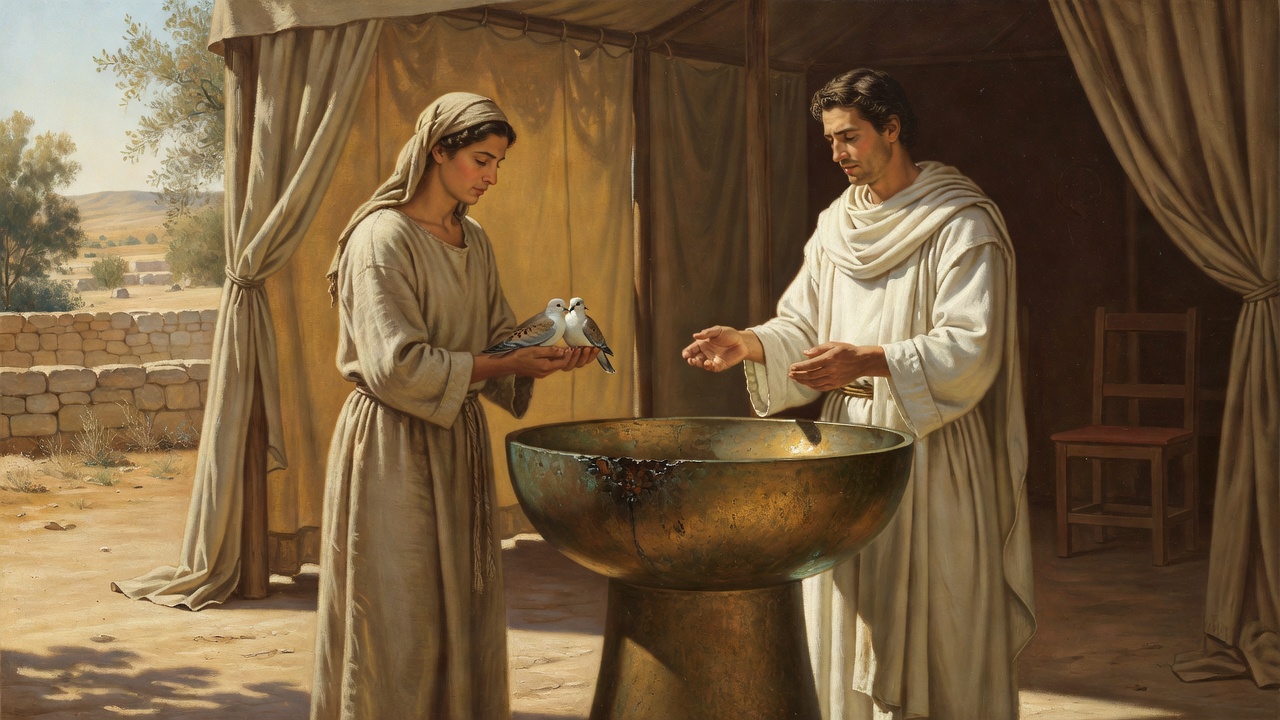
- Leviticus 5 accommodates worshippers of varying economic means by offering a sliding scale for sin offerings. A person who could not afford a lamb or goat was permitted to bring two turtledoves or young pigeons, and someone who could not afford birds could bring a tenth of an ephah of fine flour without oil or incense.Sources: the Bible text itself
- For unintentional offenses involving the Lord's holy things, the offender was required to bring an unblemished ram assessed in sanctuary shekels as a guilt offering. In addition, the person had to make full restitution for what was harmed and add a twenty percent penalty (one-fifth) paid to the priest.Sources: the Bible text itself
- The chapter highlights communal responsibility and speech, identifying specific offenses such as refusing to testify after hearing a public charge to give evidence and making thoughtless or rash oaths.Sources: the Bible text itself
Notes written with AI assistance from open sources (Theographic Bible Metadata, CC BY-SA 4.0; Easton’s Bible Dictionary, public domain) and reviewed before publishing.
Credits and license for this translation
Cishingini Agwara Kambari [asg]
Cishingini: Cishingini Agwara Kambari [asg] (Bible)
copyright © 2025 Language Development and Translation Initiative (LDTI)
Language: (Cishingini)
Contributor: The Seed Company
This translation is made available to you under the terms of the
Creative Commons Attribution Share-Alike license 4.0.
You have permission to share and redistribute this Bible translation in any format and to make reasonable revisions and adaptations of this translation, provided that:
You include the above copyright and source information.
If you make any changes to the text, you must indicate that you did so in a way that makes it clear that the original licensor is not necessarily endorsing your changes.
If you redistribute this text, you must distribute your contributions under the same license as the original.
Pictures included with Scriptures and other documents on this site are licensed just for use with those Scriptures and documents.
For other uses, please contact the respective copyright owners.
Note that in addition to the rules above, revising and adapting God's Word involves a great responsibility to be true to God's Word. See Revelation 22:18-19.
2025-07-09
Source: http://ebible.org/asg/ · eBible.org