Leviticus 17
Cishingini Agwara Kambari [asg] · Tap a verse to see its cross-references.
A̱ sa̱nka̱ ta̱ kutakuma mpasa n na a laluki
1Vuzavaguɗu u danai Musa, 2<<YaꞋan kadanshi n Haruna n olobo a̱ ni n uma a Isaraila dem ka̱ta̱ vu dana le. Na ɗa ili i na Vuzavaguɗu u danai. 3Vuma vi Isaraila na baci dem u nekei alyuka a kanaka, ko ka̱giri ko ma̱ga̱ji punu a asuvu a̱ ka̱tsura̱ ka uma ko pulai, 4a na wa̱ tuka̱i a̱ utsutsu u Ma̱va̱li mo Oɓolo tsu kuneꞋe a kubana u Vuzavaguɗu. Vuma vu nanlo wo okpo ta̱ ka uni ka uma, vuza na u tsu lolotongu mpasa. U gaꞋan ta̱ feu e pece yi n uma. 5I na i zuwai wila̱ u nampa i ɗaɗa, adama a na uma a Isaraila a̱ ka̱sukpa̱ kuyaꞋan alyuka a nnama pulai. U kuzuwa ta̱ uma a̱ tuka̱ n alyuka e le a̱ ubuta̱ u ganu a̱ utsutsu u Ma̱va̱li mo Oɓolo, adama na u neke a ɗa a̱ ubuta̱ u Vuzavaguɗu tsu kuneꞋe ku ma̱ta̱na̱. 6Ganu wi ta̱ a kuvishangu mpasa a katalikalyuka ka Vuzavaguɗu a̱ utsutsu u Ma̱va̱li mo Oɓolo, ka̱ta̱ kpamu u songu ushuma wo okpo ma̱gula̱ni mu uyoꞋo a̱ ubuta̱ u Vuzavaguɗu. 7Uma o kudoku e kuneke alyuka a̱ ubuta̱ wa̱ a̱ma̱li a na a yaꞋin tsu malala ba, ele na uma a ci yaꞋan tsugbani a̱ ubuta̱ u kutono le. Wila̱ u nampa mayun ɗa, u ɗaɗa u na o kutono ali a kubana a tsukaya tsu na tsa̱ kuta̱wa̱.
8<<Dana le, vuma vi Isaraila dem ko komoci ka na ki ida̱shi n ele, ɗa baci u yaꞋin kuneꞋe ku kusongu ko alyuka, 9ɗa u kpamu u kpa̱ɗa̱i kutuka̱ a ɗa a̱ utsutsu u Ma̱va̱li mo Oɓolo adama a na u lyuka u Vuzavaguɗu. Vuma nanlo u gaꞋan ta̱ e pece yi n uma a̱ ni.
10<<Ɗa baci vuma vi Isaraila dem ko komoci ka na ki punu ida̱shi n ele u takumai mpasa n na a laluki, mpa Vuzavaguɗu mi ta̱ a kuyaꞋan tsurala n a̱yi, ka̱ta̱ kpamu m pece yi n uma a̱ ni. 11Adama a na wuma wi ili ra̱ka̱ wi ta̱ a mpasa, ɗa kpamu n nekei n ɗa wa̱ ɗa̱ adama a na n ɗa m bonoko ɗa̱ ciɗa a̱ ubuta̱ u Vuzavaguɗu a katalikalyuka, adama a na mpasa n ɗaɗa n kutuka̱ n wuma. 12I ɗaɗa i zuwai ɗa n danai uma a Isaraila, Ka̱ta̱ i takuma mpasa n na a laluki ba, ko a̱ɗa̱ ko komoci ka na ki ida̱shi n a̱ɗa̱.
13<<Ɗa baci kpamu vuza vi Isaraila ko komoci kana ki ida̱shi punu wa̱ ɗa̱ u banai kutambu ɗa wu unai manama ko manunu ma kutakuma, sai u kiɗa maꞋa u va̱ma̱ mpasa ma ka̱ta̱ u ciɗa̱ngu n ɗa n kayala, 14adama a na wuma wi ili dem ta punu wi a mpasa. I ɗaɗa i zuwai ɗa n danai uma a Isaraila, Ka̱ta̱ i takuma mpasa ba, adama a na wuma wi ili i wuma ra̱ka̱ ta punu wi a mpasa. vuza na baci de dem u yaꞋin nannai i ta̱ e kupece yi n uma a̱ ni. 15Yaba dem vu na wi vuza va aza a Isaraila ko komoci ka na baci dem ka takumai ili na i kuwa̱i, ko manama ma na toku wu unai. Mayun ɗa u za̱Ꞌa̱ aminya a̱ ni ka̱ta̱ u sumba̱ m mini. Ko n nannai wi ta̱ o kokpo n unata ali a kubana kulivi, kafu wo okpo vuza ciɗa. 16Ama ɗa baci u iwain kuza̱Ꞌa̱ aminya a̱ ni, ko kpamu u iwain kusumba̱, wi ta̱ a kutakacika adama a̱ unushi u ni.>>
Did you know?
Sacrificial Slaughter and the Sacredness of Blood
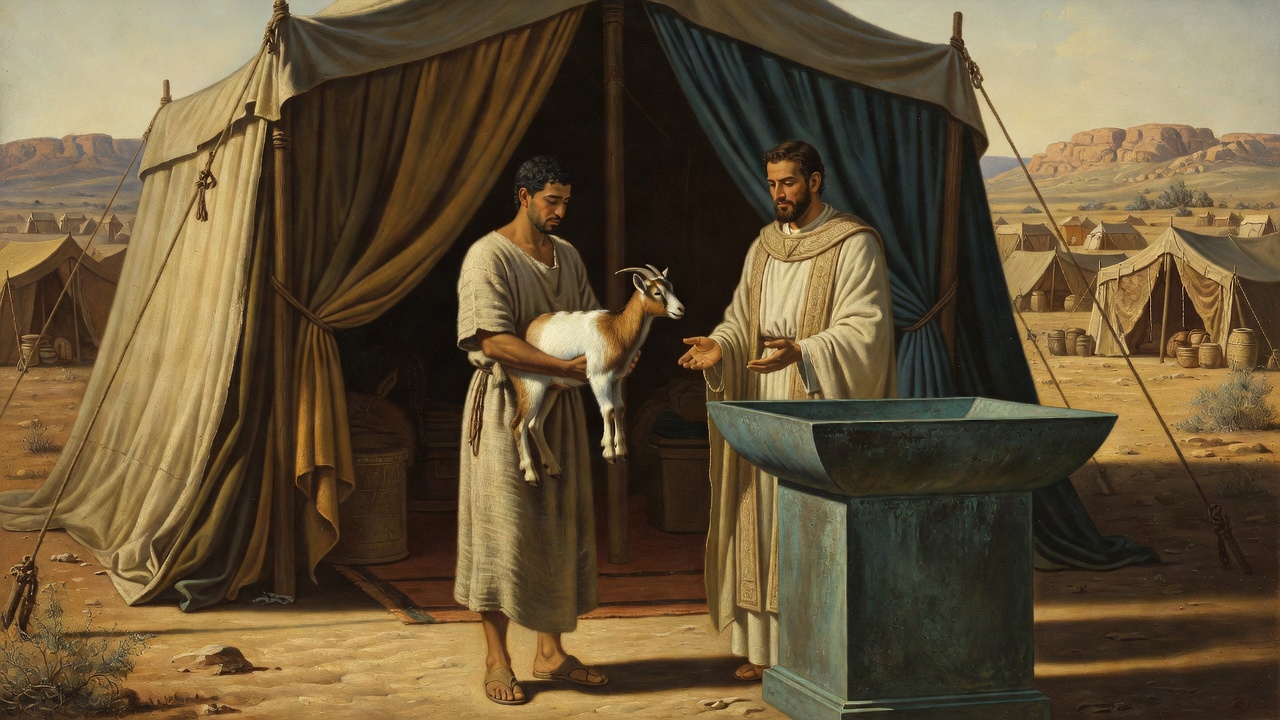
- Leviticus mandates that domestic animals such as oxen, lambs, and goats be brought directly to the entrance of the Tent of Meeting rather than slaughtered in open fields. This rule ensured sacrifices were presented exclusively as peace offerings to the LORD and halted illicit sacrifices to goat demons.Sources: the Bible text itself
- Both native Israelites and resident foreigners were strictly prohibited from eating blood, on penalty of being cut off from the community. The text grounds this law in the theological principle that the life of the flesh is in the blood, which God appointed specifically for making atonement upon the altar.Sources: the Bible text itself
- When Israelites or resident aliens hunted wild animals or birds that were clean for food, they were commanded to drain the blood upon the ground and cover it with dirt. This instruction reinforced that life belongs to God and preserved the sanctity of blood outside the sacrificial sanctuary.Sources: the Bible text itself
Notes written with AI assistance from open sources (Theographic Bible Metadata, CC BY-SA 4.0; Easton’s Bible Dictionary, public domain) and reviewed before publishing.
Credits and license for this translation
Cishingini Agwara Kambari [asg]
Cishingini: Cishingini Agwara Kambari [asg] (Bible)
copyright © 2025 Language Development and Translation Initiative (LDTI)
Language: (Cishingini)
Contributor: The Seed Company
This translation is made available to you under the terms of the
Creative Commons Attribution Share-Alike license 4.0.
You have permission to share and redistribute this Bible translation in any format and to make reasonable revisions and adaptations of this translation, provided that:
You include the above copyright and source information.
If you make any changes to the text, you must indicate that you did so in a way that makes it clear that the original licensor is not necessarily endorsing your changes.
If you redistribute this text, you must distribute your contributions under the same license as the original.
Pictures included with Scriptures and other documents on this site are licensed just for use with those Scriptures and documents.
For other uses, please contact the respective copyright owners.
Note that in addition to the rules above, revising and adapting God's Word involves a great responsibility to be true to God's Word. See Revelation 22:18-19.
2025-07-09
Source: http://ebible.org/asg/ · eBible.org