Jeremiah 8
Cishingini Agwara Kambari [asg] · Tap a verse to see its cross-references.
1<<A ayin a nanlo, Vuzavaguɗu u dana ta̱, kanna ki ta̱ lo a ku ta̱wa̱, ka na a̱ kutuka̱ n etele o ngono ma Yahuda, n etele aza a̱ gba̱ra̱-gba̱ra̱ a̱ ni, n etele a anan ganu a̱ ni, n etele e eneki a̱ ni koɓolo n etele aza a na i punu ida̱shi a Urushelima asaun e le. 2@@@@@@@Ka̱ta̱ ecikpe a ɗa a kanna, n wotoi, n e keteshe ki ili gaɗi ra̱ka̱, i na i a kuciga ɗa kpamu a yaꞋin kai a̱ ga̱nda̱, i na o tonoi, ni i na kpamu a̱ la̱nsa̱i ɗa kpamu o tonoi. I a ku ɓolongu a ɗa ba bele a ciɗa̱ngu a ɗa. Ama i ta̱ a̱ ku ka̱sukpa̱ le okpo tsa a̱ wuya̱n. 3Aza na a buwai n wuma a ka̱tsuma̱ ka aza gbani-gbani a nam pa i ta̱ a kudana u lata̱ tsu kuwa̱ a ubuta̱ dem u na n lokoi le, mpa Vuzavaguɗu MalaꞋimili mpa ɗa n dansai.
Unushi n afada
4<<Ka̱ta̱ vu dana le, Vuzavaguɗu u dana ta̱
Ɗa baci vuma u yikpa̱i, u tsu ɗa̱nga̱ kpamu ba?
Ɗa baci vuza u ɗa̱skpa̱i uye, u tsu bono kpamu ba?
5Yiɗa̱i i zuwai ɗa uma a na mpa a ɗa̱skpa̱i uye
o bonoi n ka̱ca̱pa̱ ra̱kura̱ka̱?
Ushuki n ka uwa,
ɗa a̱ kpa̱ɗa̱i ku bono.
6N mpa ɗa ta̱ bini ɗa n zuwai atsuvu n pana,
ama babu vuza na u dansai kamayun,
babu vuza na wushuki n unushi u ni,
u dana, <Yiɗa̱i n yaꞋin?>
Yaba dem wi ta̱ a ma̱la̱ki ma ka̱ci ka̱ ni,
an kodoku kana ka sapai kaci a ku uwa ubuta̱ u kuvon.
7Ko koborou a ci imkpi gaɗi ke yeve ta̱
ayin a̱ ni,
n moɗoi, n mashangi koɓolo n matapambara,
ma tsu yeve ta̱ ayin o kubono e le,
Ama uma a̱ va̱ e yeve ba.
e yeve wila̱ u Vuzavaguɗu ba.
8<<Nini ɗa i kudana,<Ya kudana tsu ɗa̱nga̱,
kpamu wila̱ u Vuzavaguɗu u ɗana koɓolo n a̱ tsu>?
Wa ɗe tana macaka mi iɗani ma aza uwa
mo bonoko ka ukuna wa a uwa.
9A za ugboji wono i ta̱ okokpo n wono,
I ta̱ a kudagaza, ka̱ta̱ a laza n a̱ le,
Adama na a iwan ta̱ kadanshi ka Vuzavaguɗu,
nannai va ugboji we ene u ɗa i nu ɗa?
10Adama nannai, n ku ɗika ta̱ amaci e le n neke aza yoku,
ka̱ ashina e le kpamu n neke a ɗa i rala i le,
adama na i na i ɗikai a vuza kenu ali a kubana a vuzagbayin vu le,
yaba dem vuza kalya a ɗa,
i na i ɗikai a eneki ali a kubana i ganu i le,
yaba dem ka yaꞋin ka uwa kaꞋa.
11O potsotongu ta̱ untsu a uma a̱ va̱ gaɗi,
ka̱ta̱ a̱ ka̱na̱ kudana <Ma̱ta̱na̱, ma̱ta̱na̱,>
Ashe tana ma̱ta̱na̱ mi lo ba.
12A pana ta̱ wono an a yaꞋin ka gbani-gbani ka?
A̱ a̱, ko kenu a pana wono ba,
e yeve ma uteku tsuna a tsu za̱lika̱ aci adama o wono ba.
Adama nannai i ta̱ a kuyikpa̱ koɓolo n aza na a yikpa̱i,
ayin a na baci n tecengu i le, ka̱ta̱ a vakangu le,
Vuzavaguɗu ɗa u danai.
13Ɗa Vuzavaguɗu u danai, ka̱ta̱ ayin a na baci ma kuɓolongu le,
ka̱ta̱ m kpa̱ɗa̱ kuciya̱ u maci u mambulu a nɗanga mi itacishi ba,
ka̱ta̱ m kpa̱ɗa̱ kuciya̱ umaci u ma̱biri a maɗanga ma̱ ma̱biri ba,
a̱vuku feu e ɗekpe ɗe,
i na n neke i le i puwa̱nka̱ ɗe ekiye e le.>>
14Yiɗa̱i i zuwai ɗa ci ida̱shi na?
Ɓolongi ubuta̱ ute, ka̱ta̱ tsu bana a likuci yu ukanji,
adama na tsu kuwa̱ ɗe,
adama na Vuzaguɗu u ɗa̱skpa̱ tsu ta̱ adama a na tsu kuwa̱
ɗa u nekei tsu mini ma yaza tsu soꞋo,
adama na tsu yaꞋin kai ta̱ Vuzavaguɗu u nushi.
15Tsu la̱nsa̱ ta̱ an ci ciya̱ ma̱ta̱na̱, ama ci ciya̱ ba,
tsu la̱nsa̱i ta̱ upoci, ama ɗa ce enei vishili.
16<<A pana ta̱ ilama ya odoku i rala a Dan,
n upani u kacaꞋa ka nwalu ka ene ko odoku e le
ɗa iɗika ra̱ka̱ i dagazai.
A̱ ta̱wa̱i ɗa una iɗika n i na yi punu ra̱ka̱,
likuci ya koɓolo n aza na i punu ida̱shi i ɗa.
17La̱na̱, n kusuꞋuku ɗa̱ ta̱ n oko,
agbaji a na i n a̱guma̱ ba,
ka̱ta̱ a luma ɗa̱,>>
mpa Vuzavaguɗu n dansa ta̱.
Irimiya u Shika̱i adama Uma a̱ ni
18Ma̱za̱nga̱ ma̱ a̱ va̱ mo kotso ta̱, una̱mgbi u ka̱tsuma̱ u ɗa wa kuna mu,
ka̱ɗu ka̱va̱ ka kuwa̱ ta̱.
19Pana ma̱shi ma uma a̱ va̱
ɗe a likuci ya n daꞋin.
<<Vuzavaguɗu wi ɗe a Sihiyona ba?
Mogono ma ni ma ba ɗe ba?>>
<<Yiɗa̱i zuwai ɗa a zuwai mu wupa n nlulu n le,
koɓolo n a̱ma̱li a kavama e le?>>
20<<Makapa mo kotso ɗe, lyushi i kotso ta̱,
dem n nannai tsu laꞋaka ba.>>
21Adama na uma a̱ va̱ a yaꞋan kai muna, mpa ɗa n yaꞋankai muna,
Mi ta̱ a kpalu, ɗa wovon kpamu u ka̱ ni mu.
22a̱guma̱ a ba ɗe a Giliyadu ba?
Vuza va a̱guma̱ feu wi ɗe ba?
Yiɗa̱i i zuwai ɗa a kpa̱ɗa̱i ku potsotongu
uma a̱ va̱?
Did you know?
Judgment, Deception, and the Balm of Gilead
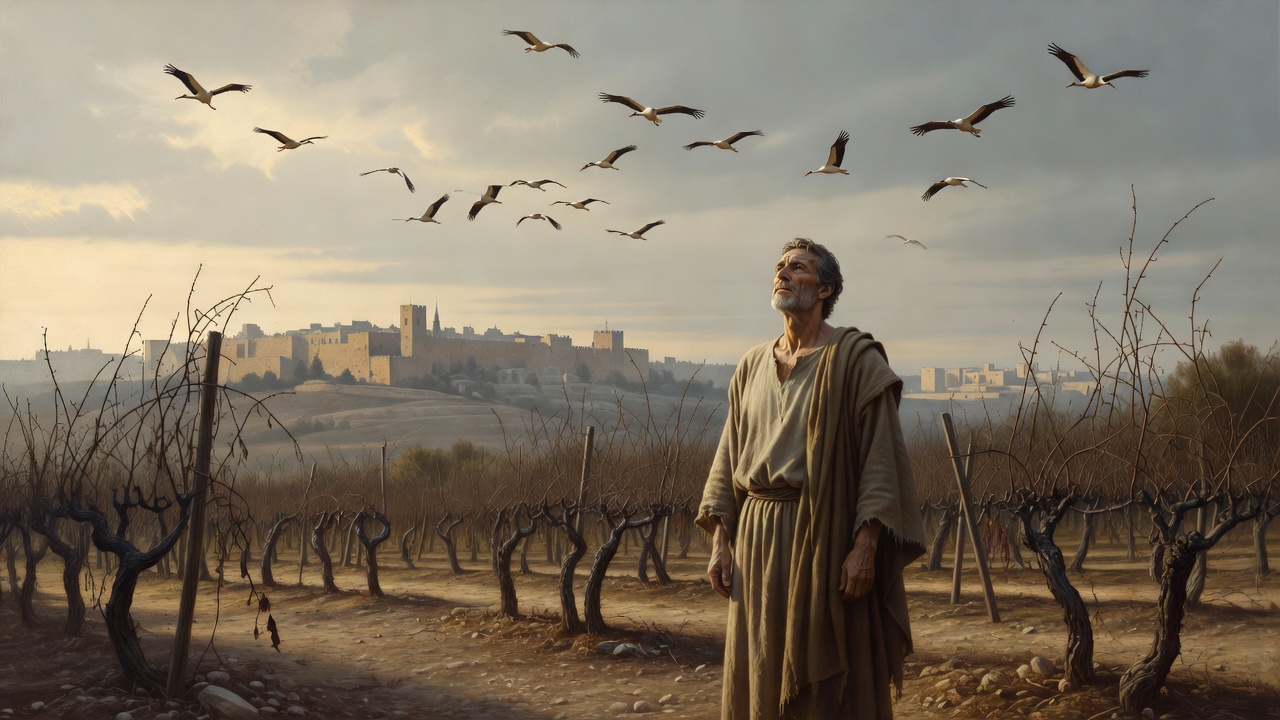
- Jeremiah contrasts the natural instincts of migrating birds, such as storks, turtledoves, swifts, and thrushes, with the behavior of the people of Jerusalem. While birds instinctively know their appointed seasons and migration times, the people stubbornly refuse to turn back to God.Sources: the Bible text itself · Jerusalem
- The warning that the snorting of enemy warhorses is heard from Dan points to an invasion entering from the far north. Dan was located in the northernmost territory of the land, indicating that the destructive foreign army was already sweeping inward.Sources: the Bible text itself · Dan
- The prophet's cry, 'Is there no balm in Gilead?', evokes Gilead, a mountainous region situated east of the Jordan River. Jeremiah uses imagery of physicians and medicinal remedies from this region to lament the untreated moral and physical collapse of his nation.Sources: the Bible text itself · Gilead
Notes written with AI assistance from open sources (Theographic Bible Metadata, CC BY-SA 4.0; Easton’s Bible Dictionary, public domain) and reviewed before publishing.
Places in this chapter
- Jerusalem · 31.777, 35.234 · verses 1, 5
- Dan · Today: Tel Dan · 33.249, 35.652 · verse 16
- Zion · Today: Jerusalem · 31.777, 35.234 · verse 19
- Gilead · Today: Gilead 1 · 32.187, 35.692 · verse 22
Only places identified with high confidence are shown (90% or more according to the scholarly sources compiled by OpenBible). Period map: DARE (Digital Atlas of the Roman Empire), CC BY 4.0; modern map: © OpenStreetMap contributors; places: OpenBible.info (CC BY 4.0).
Credits and license for this translation
Cishingini Agwara Kambari [asg]
Cishingini: Cishingini Agwara Kambari [asg] (Bible)
copyright © 2025 Language Development and Translation Initiative (LDTI)
Language: (Cishingini)
Contributor: The Seed Company
This translation is made available to you under the terms of the
Creative Commons Attribution Share-Alike license 4.0.
You have permission to share and redistribute this Bible translation in any format and to make reasonable revisions and adaptations of this translation, provided that:
You include the above copyright and source information.
If you make any changes to the text, you must indicate that you did so in a way that makes it clear that the original licensor is not necessarily endorsing your changes.
If you redistribute this text, you must distribute your contributions under the same license as the original.
Pictures included with Scriptures and other documents on this site are licensed just for use with those Scriptures and documents.
For other uses, please contact the respective copyright owners.
Note that in addition to the rules above, revising and adapting God's Word involves a great responsibility to be true to God's Word. See Revelation 22:18-19.
2025-07-09
Source: http://ebible.org/asg/ · eBible.org