Jeremiah 3
Cishingini Agwara Kambari [asg] · Tap a verse to see its cross-references.
1<<Ɗa baci vuza u lokoi vuka vi ni,
ɗa vuka va vu ka̱sukpa̱i ni
ɗa vu banai vo oloi vali vi yoku,
wi ta̱ kpamu a kufuɗa kudoku kubonoko yi?
Nannai va wa kuzuwa iɗika yo okpo n unata ba?
Vi yaꞋan ta̱ cishakanlai n ncigi n a̱bunda̱i,
niniɗai kpamu gogo na vi a kuciga kubono wa̱ va̱?
Mpa Vuzavaguɗu mpa ɗa n dansai,
2Ɗengusa̱ a̱shi a̱ nu gaɗi avu Isaraila, vu la̱na̱ aginda a na i babu mita̱ vu ene.
Te ɗai vu kpa̱ɗa̱i kuvaku kuyaꞋin cishakanlai?
A uye wu nwalu, ta ɗe vi ci shamgba a kuvana ncigi nu,
an vuza va aza a Araba a kakamba.
Vu la̱nga̱sa̱ ta̱ iɗika ya
n tsugbani tsu nu.
3Adama a nannai i ɗaɗa i zuwai ɗa a̱ kpa̱ɗa̱i kuyoꞋo mini ma̱ Ka̱shile,
kpamu o doku o yoꞋo mini ma̱ lyushi ba.
Ama n nannai dem ɗa vu lyaꞋi kelime n cishakanlai,
vu kpa̱ɗa̱i kupana wono.
4Gogo na ɗa vi a kudana,
<Avu ɗa esheku a̱ va̱, vu ciga mu ta̱ ali mpa biꞋi maku,
5mayun, va kulyaꞋa kelime n kuyaꞋan wupa a makyan dem ba?>
Mayun wupa u nu wi ta̱ a kuzuwaka uteku
Ta vi yaꞋin kadanshi nannai,
Ama vi yaꞋan ta̱ ɗe kagbanigbani ka na va kuyaꞋan dem.>>
A ɗeke ta̱ aza Isaraila n aza Yahuda o bono
6A ayin a na mogono Josiya wi o tsugono ɗa Vuzavaguɗu u danai mu, <<Vu ene ta̱ ili i wasasa i na Isaraila u yaꞋin? Tsu na u kumbai gaɗi vu nsansa n nlulu a nɗanga ra̱ka̱ a kuyaꞋan tsugbani? 7Mpa nsheshe ta̱, <Ayin a na baci de dem u kotsoi iyaꞋanshi i nampa ra̱ka̱ wi ta̱ o kubono,> ama ɗa u kpa̱ɗa̱i kubono, kpamu toku ni Yahuda n unambi wu usuɓi u ni we ene ta̱. 8Yahuda ta na we ene ta̱ tsugbani tsu na Isaraila u yaꞋin, ɗa n lokoi ni, n nekei ni katagarda ku uloki. Ama dem n nannai, a̱yi toku ni nanlo Yahuda u pana wovon ba, ɗa u lyaꞋi kelime n kuyaꞋan tsugbani ci ni. 9Adama a na we ene ta̱ tsugbani a̱ ubuta̱ u ni ili i gbani i ɗa, ɗa u la̱nga̱sa̱i iɗika ya. U ka̱na̱i kuyaꞋan tsugbani n atali nu nɗanga. 10Ko n nanai dem toku ni Yahuda u bono wa̱ va̱ n ka̱ɗu kete ba, ama n kagbanigbani, mpa Vuzavaguɗu mpa ɗa n dansai.>>
11Ɗa Vuzavaguɗu u danai mu, <<Ko a na wo okpoi Isaraila u ka̱sukpa̱ ta̱ kutono mu, dem n nannai u ɗika ta̱ unushi u ni, u yawa u Yahuda ba. 12Bana vu dansa akaka a nampa a uɓon wa aza a gaɗi, vu dana le,
<< <Bono avu Isaraila vu babu usuɓi, mpa Vuzavaguɗu n dansa ta̱,
Mpa n doku n yaꞋan wupa n a̱vu kpamu ba,
adama a na mpa vuza va asuvayali ɗa, mpa Vuzavaguɗu n dansa ta̱,
Mpa n kulyaꞋa kelime n kuyaꞋan wupa n a̱vu ali babu uteku ba.
13Ili ite koci i ɗaɗa, a̱ɗa̱ de ushuki n unushi u ɗa̱,
I yeve a na i nusakai Vuzavaguɗu Ka̱shile ka̱ ɗa̱,
i vakangi tsugbayin tsu ɗa̱ a̱ ubuta̱ wo omoci n ululu a nɗanga dem,
ɗa i iwain kutono kadanshi ka̱ va̱, mpa Vuzavaguɗu mpa ɗa n dansai,
14Bonoi, a̱ɗa̱ uma a babu usuɓi,
adama a na mpa ɗa Ka̱shile ka̱ ɗa̱,
N kuɗika ta̱ vuma vu te a ka̱tsuma̱ ka̱ likuci, n uma e re a̱ ka̱tsuma̱ ka kpaꞋa dem,
Ka̱ta̱ n tuka̱ na a Sihiyona.
15<< <Ka̱ta̱ n neke ɗa̱ nguɓi, n na n kuneke ɗa̱ kuyeve n ugboji. 16Ka̱ta̱ ayin a na baci i yimkpai n ka̱bunda̱i a iɗika ya, ka̱ta̱ i kpa̱ɗa̱ kudoku kuyaꞋan kadanshi ka <<Akpati vu uzuwakpani vu Vuzavaguɗu.>> Yi o kudoku kuciɓa n vu ɗa ba, ko tana i cikala kudoku kuyaꞋan vi yoku ba. 17A ayin a nanlo a ɗa e kuɗeke Urushelima kakuba ko tsugono ka Vuzavaguɗu, Ka̱ta̱ uduniyan ra̱ka̱ u ɓolongu e kelime ka Vuzavaguɗu a Urushelima adama a kula ku va̱, ka̱ta̱ a̱ kpa̱ɗa̱ kudoku kutono ucigi u gbani-gbani wa̱ a̱ɗu e le. 18A ayin a nanlo ka̱ta̱ kpaꞋa ku Yahuda ku ɓolongu ka̱ci ke le m kpaꞋa ki Isaraila, ka̱ta̱ a̱ uta̱ a iɗika yi uɓon ugaɗi koɓolo, ka̱ta̱ a bana a iɗika yi uka̱ni i na n nekei ikaya i le.
19<< <Ɗa n danai,
Nini ɗai mpa n kuɗika ɗa̱ yo okpo a̱ ka̱tsuma̱ ka̱ muku n va̱,
adama a na n neke ɗa̱ iɗika i singai,
ili yi uka̱ni i singai i na i laꞋi a aduniyan ra̱ka̱.
N sheshe ta̱ ya kuɗeke mu ta̱, Dada vu va,
kpamu yi a kukpatala i ka̱sukpa̱ kutono mu kpamu ba.
20Mayun, uteku tsu na vuka vu gbani-gbani vu tsu ka̱sukpa̱ vali ni,
ta feu vu ka̱sukpa̱i mu nannai avu Isaraila, mpa Vuzavaguɗu mpa ɗa n dansai.> >>
21A pana ta̱ a̱la̱ka̱tsu a̱ ma̱shi a nsansa,
a̱ ma̱shi n o folonoi aza a Isaraila,
adama a na a ka̱sukpa̱ ta̱ uye u le,
a cinukpa ta̱ n Vuzavaguɗu n Ka̱shile ke le.
22<<Bonoi a̱ɗa̱ muku m gbani-gbani,
mpa n kupotsotongu ta̱ unambi wu usuɓi u ɗa̱,>>
<<La̱na̱, ci ta̱ a̱ kuta̱wa̱ wa̱ nu,
adama a na avu ɗa Vuzavaguɗu Ka̱shile ka̱ tsu.
23Mayun, kutono ka̱ a̱ma̱li a gaɗi vu nsasan ili i gbani i ɗa,
kucikpa ku na ci a kuyaꞋan a aginda modoruko maꞋa.
Mayun, u Vuzavaguɗu Ka̱shile ka̱ tsu kaꞋa koci,
aza Isaraila a̱ kuciya̱ wishi.
24<<Adama a na kutono ka̱ a̱ma̱li BaꞋalu kukotso tsu ta̱ ili i na ikaya i tsu i takacikai adama a̱ tsu, ali a̱ tsu muku, kukotso tsu ta̱ ushiga wu nlala n wu nraɗika n wa anaka m muku n tsu nkere n olobo.
25Ka̱sukpa̱ tsu vaku n wono u tsu, ka̱ta̱ unambi wu usuɓi u tsu u pala tsu. Adama na tsu nusaka ta̱ Vuzavaguɗu Ka̱shile ka̱ tsu, a̱tsu n ikaya i tsu, ali a̱tsu muku a̱ kuta̱wa̱ anana, tsu tono kadanshi ka Vuzavaguɗu Ka̱shile ka̱ tsu ba.>>
Did you know?
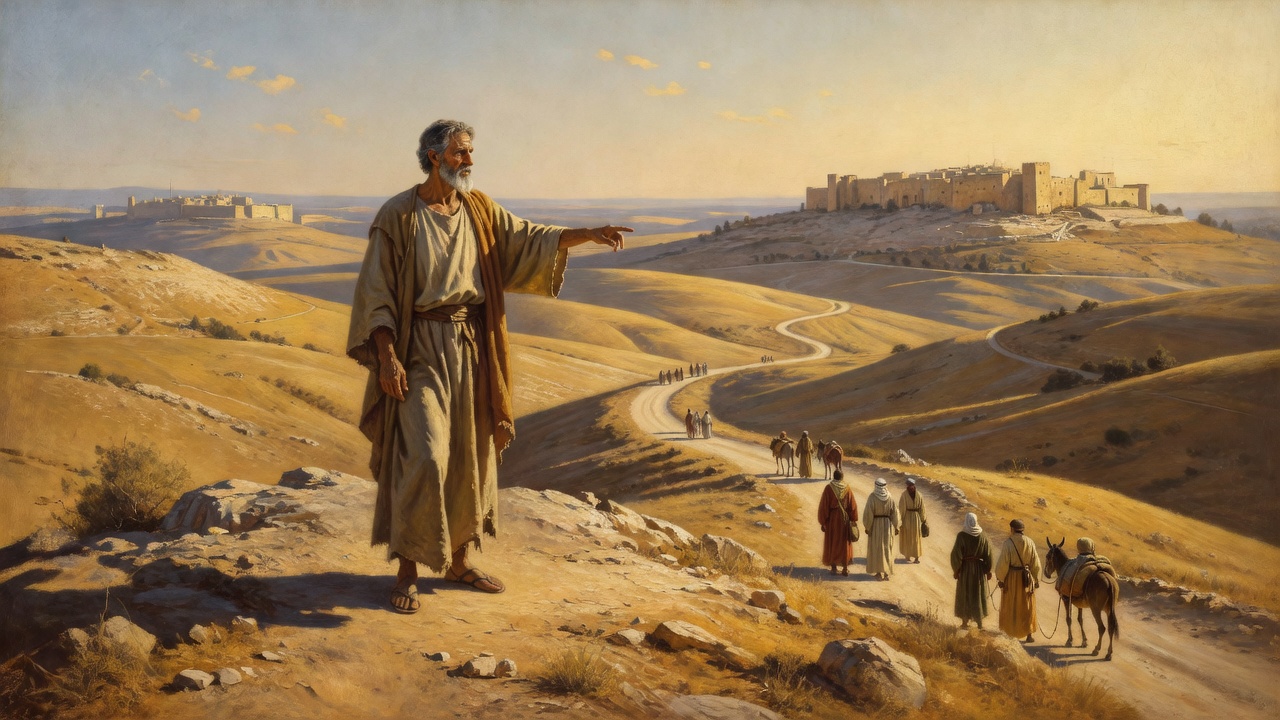
A Call to Faithless Sisters to Return
- During the reign of King Josiah of Judah, Jeremiah received prophecies comparing the northern kingdom of Israel and the southern kingdom of Judah to two sisters. Although the northern kingdom had already been sent away for its idolatry, Judah failed to learn from her sister's fate and turned back only in pretense.Sources: the Bible text itself · Josiah
- The prophet foretells a future restoration where the scattered people are brought back to Zion, the historic hill of Jerusalem. In that day, Jerusalem itself would be recognized as the Throne of the LORD, and the ark of the covenant would no longer be remembered or rebuilt.Sources: the Bible text itself · Zion · Jerusalem
- Drawing upon ancient marriage and divorce concepts, the text describes worshiping foreign gods on hills and under green trees as marital unfaithfulness. Despite this betrayal, the LORD repeatedly calls upon His faithless children to acknowledge their guilt and return to Him.Sources: the Bible text itself
Notes written with AI assistance from open sources (Theographic Bible Metadata, CC BY-SA 4.0; Easton’s Bible Dictionary, public domain) and reviewed before publishing.
Places in this chapter
Only places identified with high confidence are shown (90% or more according to the scholarly sources compiled by OpenBible). Period map: DARE (Digital Atlas of the Roman Empire), CC BY 4.0; modern map: © OpenStreetMap contributors; places: OpenBible.info (CC BY 4.0).
Credits and license for this translation
Cishingini Agwara Kambari [asg]
Cishingini: Cishingini Agwara Kambari [asg] (Bible)
copyright © 2025 Language Development and Translation Initiative (LDTI)
Language: (Cishingini)
Contributor: The Seed Company
This translation is made available to you under the terms of the
Creative Commons Attribution Share-Alike license 4.0.
You have permission to share and redistribute this Bible translation in any format and to make reasonable revisions and adaptations of this translation, provided that:
You include the above copyright and source information.
If you make any changes to the text, you must indicate that you did so in a way that makes it clear that the original licensor is not necessarily endorsing your changes.
If you redistribute this text, you must distribute your contributions under the same license as the original.
Pictures included with Scriptures and other documents on this site are licensed just for use with those Scriptures and documents.
For other uses, please contact the respective copyright owners.
Note that in addition to the rules above, revising and adapting God's Word involves a great responsibility to be true to God's Word. See Revelation 22:18-19.
2025-07-09
Source: http://ebible.org/asg/ · eBible.org