Jeremiah 12
Cishingini Agwara Kambari [asg] · Tap a verse to see its cross-references.
Irimiya u Dansai
1Vuzavaguɗu, a vu vuza singai ɗa,
ayin a na baci de dem n tuka̱i nu n kadanshi.
Dem n nanai ka̱sukpa̱ mu n doku mece wu i li te.
Yi ɗa̱i i zuwai ɗa vuma gbani-gbani u tsu yongo n uciyi?
Yi ɗa̱i i zuwai ɗa uma a gbani-gbani a tsu laꞋa yaba dem ku yongo n ma̱ta̱na̱?
Ka̱ta̱ kpamu a ka̱na̱ ku lyaꞋa kelime n ku ciya̱ u ciyi?
2A vu ɗa vu shikpa̱i le, ɗa a zuwai aralu,
ɗa o gbonguroi ɗa tana a matsai umaci,
o tsu yongo ta̱ n kula kunu una̱u le,
ama a̱ɗu e le i ta̱ dangi n avu.
3Ama a vu, Vuzavaguɗu, vu yeve mu ta̱,
vene mu ta̱, ɗa kpamu vu kondoi ka̱ɗu ka̱ va̱,
vu yeve ta̱ an ka ki ɗevu n avu.
Adama nannai, rono mu an mokyon ma na o foɓusoi adama a ku kiɗa,
ka̱ta̱ vu zuwa ma kau adama a kanna ka ku kiɗa.
4Ali wannai ɗa uduniya u ku ka̱sukpa̱ kuyaꞋan kpalu?
Ka̱ta̱ mita̱ ma ashina ma ka̱sukpa̱ ku ɗekpe?
Adama a kagbanigbani ka aza na i punu ida̱shi i ɗa
n nnu n inyama n kakamba n kotsoi,
adama a na a dana ta̱, <<Wi a kuna tsu ra̱ku ra̱ka̱ ba.>>
Vuzavaguɗu wu ushuki Irimiya
5<<Ɗa baci a vu n uma i yaꞋin malamanai mi ilaɗi i e ene ɗa o otongi nu,
nini ɗa va ku fuɗa malamanai n odoku?
Kpamu ɗa baci vu yikpa̱i a iɗika i singai,
nini ɗa va ku yaꞋin iɗika ya a wana i Urdu?
6Adama na, ko aza nu, n aza kpaꞋa ku dada nu,
e le feu a yaꞋin ka wu ta̱ ka gbani-gbani,
o ku tono wu n a lapakai nu una̱,
ka̱ta̱ vu ushuku n a̱ le ba.
ko nini ɗa baci de vu panai a dansai kasingai a dama nu.>>
7<<N ka̱sukpa̱ ta̱ kpaꞋa ku va̱,
n varuku ta̱ ili yu uka̱ni i va̱,
N neke ta̱ macigi ma̱ va̱
e kiye a vurala vu ni.
8I li yi uka̱ni i va̱,
yokpo ta̱ an kawu a kakamba,
u ɗengusa̱ ta̱ ka̱la̱ka̱tsu ka tsurala n m mpa,
adama nanai ɗa n iwain ni.
9Ili yu uka̱ni i va̱, yokpo mu ta̱ an kura̱ ku a̱kunzu?
Ɗa̱skpa̱ asakali a na tsu takuma i nyama uta̱ a ka̱ra̱i.
Bana, vu ɗeke n nyama n kakamba ra̱ka̱,
tuka̱ n a̱ le a takuma.
10Nguɓi n a̱bunda̱i a la̱nga̱sa̱ ta̱ kashina ki itacishi ka̱ va̱,
a dasa ta̱ ugboku va̱,
ɗa o bonokoi kashina ka singai ka̱ va̱
ka̱pula̱ka̱ ka gbani-gbani
11O bonoko ta̱ ka kagali,
kagali, wita̱ a kuyaꞋin ka mu kpalu.
Ɗa iɗika ra̱ka̱ yokpoi agali,
kpamu babu vuza na u keɓecei.
12A gaɗi vu nsansa n na mpa ra̱ka̱,
aza munuka uta̱ ta̱,
adama na kotokobi ka Vuzavaguɗu ka ka̱na̱ ta̱ munuka
daga uteku wu iɗika u na mpa a kubana u na n ɗe,
a ka̱tsa̱ma̱ ki ili ya mpasa ra̱ka̱ babu vuza na wi m ma̱ta̱na̱.
13A ca̱Ꞌa̱ ta̱ alkama, ama ɗa a kyaꞋi awana,
a takacika ta̱ ka̱ci ka̱le gbani.
I ta̱ a kupana wono wi i na a cimbai,
adama wupa ugbain u Ka̱shile.>>
14I na Vuzavaguɗu u dansai adama itoku i gbani-gbani ra̱ka̱ i na i sawai ili yu uka̱ni i na u nekei uma a̱ ni aza Isaraila i ɗa na.<<La̱na̱, mpa n ku utuka̱ le ta̱ a ka̱tsa̱ma̱ ki iɗika i le, ka̱ta̱ kpamu mu uta̱ka̱ aza Yahuda a ka̱tsa̱ma̱ ke le. 15Kpamu ayin a na baci mu utuka̱i le, ka̱ta̱ n kucikpa m pana asuvu ayali e le, ka̱ta̱ n bonoko le, yaba dem a ubuta̱ wu uka̱ni u ni, n iɗika i ni. 16Ka̱ta̱ wokpo, a li ɗa baci o bonoi ɗa o tonoi kuyotsongu ku uma a̱ va̱, tsu na a kuyaꞋin a kucina n kula ku va̱, <N kucina ta̱ n Ka̱shile ka wuma,> e le feu i ta̱ a ku ciya̱ upeci u le a ka̱tsuma̱ ka uma a̱ va̱. 17Ama ɗa baci likuci a ka̱tsuma̱ ka aduniyan a iwain kupana, ka̱ta̱ mu utuka̱ a i ɗa muna ra̱ku ra̱ka̱.>>
Did you know?
Jeremiah's Complaint and the Nations
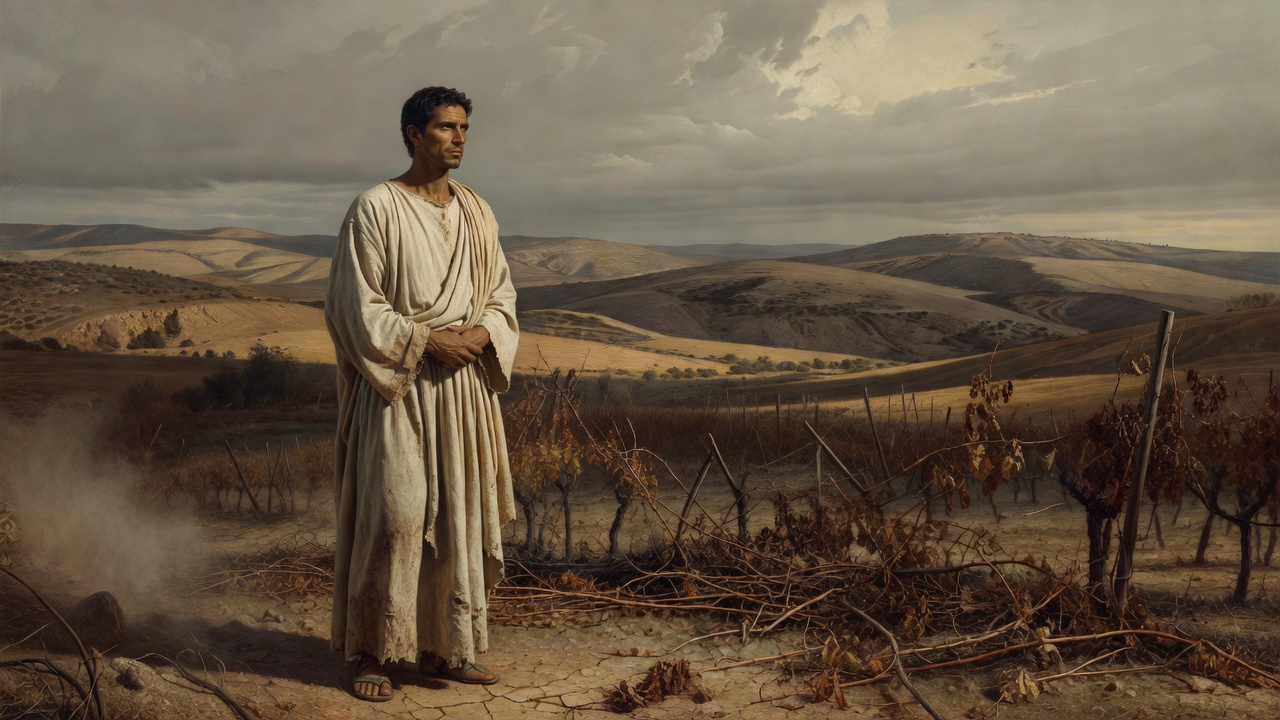
- Jeremiah wrestles with the difficult question of why the wicked prosper and live at ease while speaking of God with their lips but keeping him far from their hearts. The prophet's distress is deeply personal, as even the members of his own father's household had betrayed him and spoken against him.Sources: the Bible text itself
- God responds to Jeremiah's complaint by asking how he will compete with horses if racing with footmen tires him, and how he will manage in the thickets of the Jordan if he stumbles in a peaceful land. The Jordan River cuts through low valleys and dense, difficult terrain along its banks.Sources: the Bible text itself · Jordan
- The chapter extends hope even to hostile neighboring nations that had once taught Judah to swear by Baal, the principal male deity of the Phoenicians. If these nations turn and learn to swear by the name of the Lord, God promises to build them up among his people.Sources: the Bible text itself · Baal
Notes written with AI assistance from open sources (Theographic Bible Metadata, CC BY-SA 4.0; Easton’s Bible Dictionary, public domain) and reviewed before publishing.
Places in this chapter
- Jordan · Today: Jordan River · 31.761, 35.558 · verse 5
Only places identified with high confidence are shown (90% or more according to the scholarly sources compiled by OpenBible). Period map: DARE (Digital Atlas of the Roman Empire), CC BY 4.0; modern map: © OpenStreetMap contributors; places: OpenBible.info (CC BY 4.0).
Credits and license for this translation
Cishingini Agwara Kambari [asg]
Cishingini: Cishingini Agwara Kambari [asg] (Bible)
copyright © 2025 Language Development and Translation Initiative (LDTI)
Language: (Cishingini)
Contributor: The Seed Company
This translation is made available to you under the terms of the
Creative Commons Attribution Share-Alike license 4.0.
You have permission to share and redistribute this Bible translation in any format and to make reasonable revisions and adaptations of this translation, provided that:
You include the above copyright and source information.
If you make any changes to the text, you must indicate that you did so in a way that makes it clear that the original licensor is not necessarily endorsing your changes.
If you redistribute this text, you must distribute your contributions under the same license as the original.
Pictures included with Scriptures and other documents on this site are licensed just for use with those Scriptures and documents.
For other uses, please contact the respective copyright owners.
Note that in addition to the rules above, revising and adapting God's Word involves a great responsibility to be true to God's Word. See Revelation 22:18-19.
2025-07-09
Source: http://ebible.org/asg/ · eBible.org