Isaiah 63
Cishingini Agwara Kambari [asg] · Tap a verse to see its cross-references.
Kanna ka kutsupa ka̱ Ka̱shile n kushiba̱
1Yayi a̱yi na wu uta̱i a Edom,
wu uta̱i a Bozura n kuminya ku ni utaɗanki m mini ma shili?
Yayi tamkpamu nannai n aminya o tsugono,
a kudasa n utsura ka̱u?
<<Mpa ɗa Vuzavaguɗu a kusala ukuna wu wishi u ɗa̱.
Mpa ɗa Vuzavaguɗu vu na mi n utsura u na mi isa vuma.>>
2Yiɗa̱i i zuwai ɗa aminya a̱ nu i ushili,
tsu uma a na e ci kpete umaci wu nɗanga n kuyaꞋanka ma̱kya̱n?
3<<M kpete ta̱ umaci wu nɗanga wa mpa endeꞋen,
a iɗika kakau babu vuza na wi koɓolo nu mpa.
N dasasai le n wupa u va̱
ɗa kpamu m kpetei le n wupa wa,
mpasa n le n taɗanki
aminya a̱ va̱ ɗa a̱ la̱nga̱sa̱i mu ntogu.
4Adama a na kanna ka kutsupa ki ishi ta̱ a̱ ka̱ɗu ka̱ va̱,
ɗa kpamu ka̱ya̱ ka na n kisa uma ka yawai ɗe.
5Mi indanai, ama babu vuza na n kuɓa̱nka̱,
o goyoi mu ama babu vuza na u ɓa̱nka̱i mu,
ɗa kubolu ku va̱ ku la̱nsa̱ka̱i mu wishi,
wupa u va̱ u ɓa̱na̱i mu.
6N dasasai iɗika kakau
n wupa u va̱ n zuwai le o soꞋi ali ma makai le adama a wupa u va̱,
ɗa n tsuwa̱in mpasa n le a iɗika.>>
Ucikpi n Avasa
7Mi ta̱ a kudansa ukuna wu ugaꞋin u Vuzavaguɗu,
ili i na u yaꞋin i na u yawai a cikpa yi,
a̱ ka̱tsuma̱ ki ili i na u yaꞋankai tsu dem,
mayu, ili i singai-singai n a̱bunda̱i i na u yaꞋankai
kpaꞋa ka aza a Isaraila,
adama a̱ ma̱ta̱na̱ ma̱ ni n kasingai ka̱ ni.
8U danai, <<Mayun ele uma a̱ va̱ a ɗa,
muku n na n kudoro mu ba,>>
Nannai ɗa wo okpoi Kishi ke le.
9N atakaci a na o soꞋi dem a̱yi feu u soꞋo ta̱ a ɗa,
ɗa kalingata ka na ki a kinda yi kisai le.
N ucigi u ni n kasingai ka̱ ni ɗa u tsulai le,
u ɗengusa̱i le gaɗi ɗa u ɗikai le
ali n a̱ya̱ a na a lazai ɗe.
10Ama n nannai dem
a yaꞋin ugbamukaci ɗa a nusakai Ayinviki a Ciɗa.
Ɗaɗa kucukpa Ka̱shile ka zuwakai le kucina̱,
ɗa u bonoi wo okpoi vurala vi le ɗa u shilika̱i n ele.
11Uma a̱ ni a ciɓai n ayin a cau,
a ayin a Musa n uma a̱ ni,
te ɗai vuza na wu uta̱i n ele n kalangu ka kaguɓa ka̱ ni ali ɗa a walai m mala,
m maguɓi mu ushiga wa?
Te ɗai vuza na u zuwai vuza
na u nekei le Ayinviki a Ciɗa a,
12a̱yi na u suki utsura u gbayin u kubolu u ni
u yongo e kukiye ku usingai ku Musa,
vuza na u pecei mini ele lo e kene
adama a na u ciya̱ka̱ ka̱ci ka̱ ni kula ku singai ku na ko kukotso ba,
13vuza na u walai n ele a̱ mini mu uga̱vi?
An kodoku ka na ka tsu suma a̱ likuci i na yi babu keteri,
ko kenu a̱ ta̱ɗa̱tsa̱ ba,
14tsu kanaka ka na ka tsu bana a̱ ka̱ra̱Ꞌa̱ ka na ki n ijanu adama a na wu uvuka ɗe,
Ayinviki a Vuzavaguɗu e nekei le kuvuka.
Tsu nampa tsu ɗa vu tonoi n uma a̱ nu
ciya̱ vi ciya̱ka̱ ka̱ci ka̱ nu kula ku tsugbayin.
15Indana a iɗika avu na ɗe zuva ka̱ta̱ ve ene,
a̱ ubuta̱ u ciɗa u nu n ubuta̱ u singai wi ida̱shi i nu.
Te ɗai kataci ka̱ nu n utsura u nu wi?
Ili i na i tsu ɗengusa̱ wu asuvu koɓolo n kuneke wu asuvayali vu takpa ta̱ i ɗa wa̱ tsu.
16Ama avu ɗa Esheku a̱ tsu,
n nannai ta na Ibirahi u yeve tsu ba
ko Isaraila u zuka n a̱ tsu ba, avu Vuzavaguɗu,
avu ɗa Esheku a̱ tsu, kula ku nu ku ɗa
Kishi ka̱ tsu ali n ayin a cau a ɗe.
17Vuzavaguɗu yiɗa̱i i zuwai ɗa vu ka̱sukpa̱i tsu a̱ ka̱ka̱ra̱sa̱ tsu ka̱sukpa̱i uye u nu
ɗa vu zuwai a̱ɗu a̱ tsu a gbamai ali ɗa tsu kpa̱ɗa̱i kupanaka wu?
Bono adama a agbashi a̱ nu,
kumaci ku nu ele ɗa aza na a kulyaꞋa agadu a̱ nu.
18A̱ ka̱tsuma̱ ka ayin kenu uma a̱ nu e remei ubuta̱ u ciɗa u nu,
ama gogo na irala i tsu i kpete ta̱ ubuta̱ u ciɗa u nu.
19A̱ tsu uma a̱ nu a ɗa ali n ayin a ɗe,
ama vu lyaꞋaka le tsugono ba,
a saꞋwa kuɗeke le n kula ku nu ba.
Did you know?
Judgment on Edom and a Prayer of Remembrance
- The chapter opens with a dramatic vision of a conqueror arriving from Bozrah, an ancient capital of the rugged, mountainous region of Edom. The imagery plays on the name Edom, which means red, picturing the figure dressed in crimson garments stained like those of a worker treading grapes in a winepress.Sources: Bozrah · Edom · Esau (Edom) · the Bible text itself
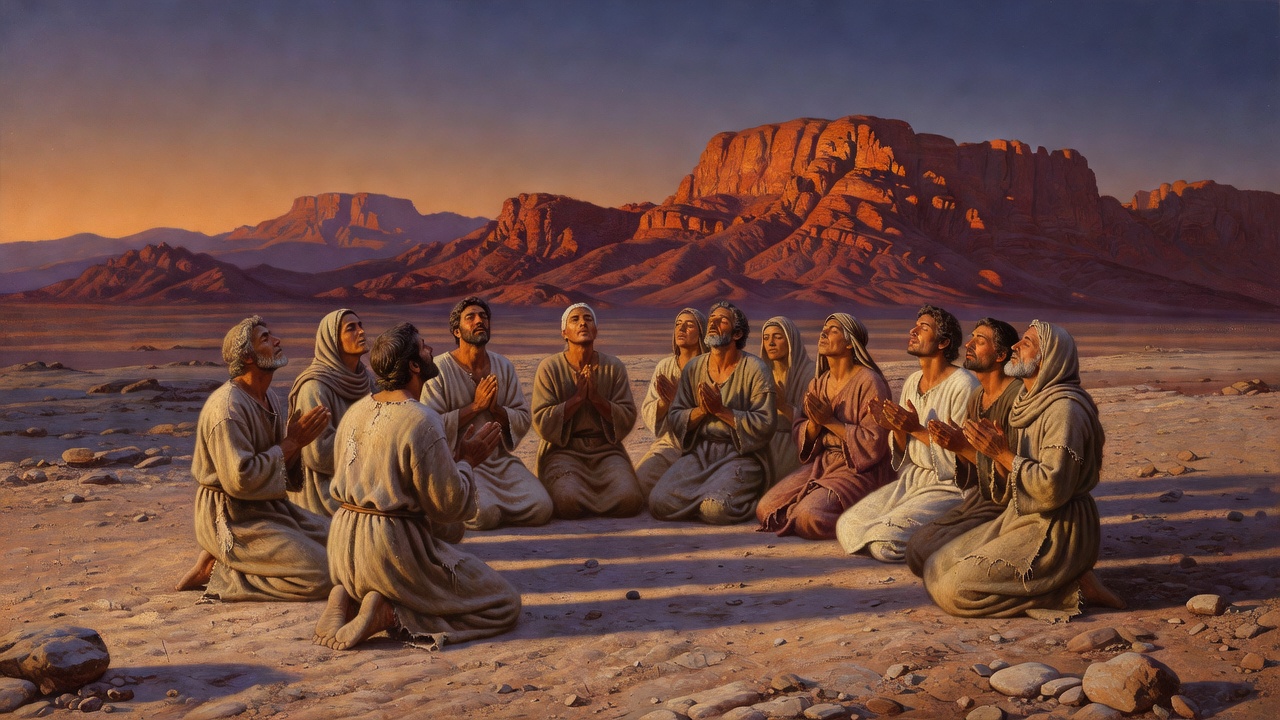
- The middle section of the chapter reflects on Israel's past, explicitly recalling the days of Moses when God divided the waters of the sea and guided the people through the depths by His Holy Spirit.Sources: Moses · the Bible text itself
- In their heartfelt plea, the people address God as their Father and Redeemer, confessing that even if their ancestral patriarchs Abraham and Israel were unable to acknowledge them, God remains their true protector.Sources: Abraham · the Bible text itself
Notes written with AI assistance from open sources (Theographic Bible Metadata, CC BY-SA 4.0; Easton’s Bible Dictionary, public domain) and reviewed before publishing.
Places in this chapter
Only places identified with high confidence are shown (90% or more according to the scholarly sources compiled by OpenBible). Period map: DARE (Digital Atlas of the Roman Empire), CC BY 4.0; modern map: © OpenStreetMap contributors; places: OpenBible.info (CC BY 4.0).
Credits and license for this translation
Cishingini Agwara Kambari [asg]
Cishingini: Cishingini Agwara Kambari [asg] (Bible)
copyright © 2025 Language Development and Translation Initiative (LDTI)
Language: (Cishingini)
Contributor: The Seed Company
This translation is made available to you under the terms of the
Creative Commons Attribution Share-Alike license 4.0.
You have permission to share and redistribute this Bible translation in any format and to make reasonable revisions and adaptations of this translation, provided that:
You include the above copyright and source information.
If you make any changes to the text, you must indicate that you did so in a way that makes it clear that the original licensor is not necessarily endorsing your changes.
If you redistribute this text, you must distribute your contributions under the same license as the original.
Pictures included with Scriptures and other documents on this site are licensed just for use with those Scriptures and documents.
For other uses, please contact the respective copyright owners.
Note that in addition to the rules above, revising and adapting God's Word involves a great responsibility to be true to God's Word. See Revelation 22:18-19.
2025-07-09
Source: http://ebible.org/asg/ · eBible.org