Isaiah 54
Cishingini Agwara Kambari [asg] · Tap a verse to see its cross-references.
Tsugbayin tsu Urushelima tsu na ci kelime
1Vuzavaguɗu u danai, <<YaꞋan ishipa avu madari ma vuka,
avu na ka̱ta̱ vu saꞋwai kumatsa maku ba,
ɓosongu vishipa ka̱ta̱ vu orukpo adama a̱ ma̱za̱nga̱,
avu na vu saꞋwai a̱ga̱nda̱ a limata ba,
adama a na ka̱bunda̱i ka̱ muku n vuka vu na vi madari
ki ta̱ a kulaꞋa ka vuka vu na vi n vali.>>
2<<Doku ka̱ba̱nga̱ ka̱ ma̱va̱li ka̱ nu,
ba̱rukpa̱ akashi a̱ utsutsu o doku a yaꞋan wanshi.
Ka̱ta̱ vu shikpa̱ aguta a a yaꞋan utsura mayin,
vu dokusu awin a yaꞋan ugaɗi,
vu dokusu le utsura.
3Adama a na vi ta̱ a̱ kuka̱ra̱Ꞌa̱ a̱ ubuta̱ dem usingai n ugula̱ feu,
ka̱ta̱ ntsukaya n nu n ka̱na̱ iɗika kakau
ali a̱ da̱sa̱ngu punu a̱ likuci i na yo okpoi ɗe agali.
4<<Ka̱ta̱ vu pana wovon ba, vi a kuyaꞋan feu wono ba.
Ka̱ta̱ vu pana wovon ba, babu ili i wono i na i kuta̱wa̱ wu kpamu.
Vo kudoku va ciɓa n ili i wono i na vi yaꞋansai a ayin a na vi ka̱ɗa̱nga̱ni ba,
koɓolo n una̱mgbuka̱tsuma̱ u na kpamu vi ishi n u ɗa a ayin a na vi ishi babu vali.
5Adama a na Vuza na u yaꞋin nu a̱yi ɗa vali nu,
kula ku ni ku ɗa Vuzavaguɗu MalaꞋimili.
Vuza Ciɗa vi Isaraila a̱yi ɗa u shiba̱i nu,
a̱yi ɗa e ci ɗeke Ka̱shile ka aduniyan ra̱ka̱.
6Vuzavaguɗu wi ta̱ e kuɗeke wu u bonoko,
tsu vuka vu na o lokoi ɗa a̱ ka̱sukpa̱i ni n una̱mgbuka̱tsuma̱
tsu vuka vu na vali vi ni vu lokoi,
a ayin o yolo i savu i ni,>>
7<<M megeshe kenu n loko wu ta̱,
ama n asuvayali a gbayin mi ta̱ o kubonoko wu.
8Vuzavaguɗu Ka̱shibi ka̱ ɗa̱ u danai,
a̱ ka̱tsuma̱ ka wupa wa̱ a̱bunda̱i ɗa m paɗai bini ali megeshe kenu,
ama n ucigi u babu kukotso
mi ta̱ a kupana asuvayali a̱ nu.>> Vuzavaguɗu ɗa u dansai vuza na u shiba̱i ɗa̱.
9<<N tsu va̱ na wi ta̱ derere n tsu ayin a̱ Nufu,
ana n kucinai n danai, mini ma ayin a̱ Nufu mi o kudoku kupala aduniyan ba.
Adama a nannai gogo na n kucina ta̱ mi o kudoku kuyaꞋan wupa n avu ba,
mi kpamu o kudoku kudansaka wu ba.
10Ko nsansa m puwa̱nka̱
ka̱ta̱ kpamu aginda a̱ muɗa̱,
ama ucigi u gbangam u va̱ wi o kukotso wa̱ nu ba,
uzuwakpani u ma̱ta̱na̱ u va̱ vuza wa kutakpa u ɗa ba,>>
Vuzavaguɗu vu na wi a kupana asuvayali a̱ nu u danai.
11Vuzavaguɗu u danai, <<Avu Urushelima, likuci i na yi o kusoꞋo atakaci n wunla̱i u mini ma atali, babu vuza na u kuyaꞋanka wu kadanshi ku uremi u ka̱ɗu,
mi ta̱ a kuvarasaka kumaꞋa ku nu n atali a singai.
12Mi ta̱ a kumaꞋa nshilya n nu n atali a langu-langu,
utsutsu u nu kpamu n atali a na i tsa̱ a̱ta̱mba̱,
nshilya m kpaꞋa kpamu n atali a na o yotsoi yaza.
13Vuzavaguɗu wi ta̱ a kuyaꞋanka muku n nu ra̱ka̱ kuyotsongusu,
ma̱ta̱na̱ ma gbayin mi ta̱ a̱ kuta̱wa̱ u muku n nu.
14N kasingai koɓolo n ka mayun ɗa vo ku yonko,
ka̱ta̱ kpamu kawuya ka yaꞋan daꞋangi n avu,
vi a kupana wovon wi ili ba,
i ta̱ a kutakpa ka kagbanigbani a banka daꞋangi,
ki a kuyawa ɗevu n avu ba.
15Vuza na baci u kumbai nu n vishili, na lo kusheshe ku va̱ ku ɗa ba,
vuza na baci u kumbai nu wi ta̱ o kubono wo kokpo n wono.
16<<La̱na̱, Mpa ɗa vuza na n yaꞋin kawakana
ka na ka̱ tsu fa̱la̱ akina ali a tasa,
ka̱ta̱ u yuma ucanuku u munuka adama a ulinga u le.
Mpa ɗa kpamu vuza na u yaꞋin ka̱la̱nga̱shi adama a na u la̱nga̱sa̱,
17Vuzavaguɗu u danai, babu ucanuku u munuka u na a kuyaꞋan adama a̱ ɗa̱ ka̱ta̱ u ɗa u lyaꞋa ɗa̱,
ka̱ta̱ kpamu i ɓa̱ya̱ngu kelentsu dem ka na ka kubanka ɗa̱ nu nsata.
Na va ɗaɗa agadu a kagbashi ka Vuzavaguɗu,
ɗaɗa kpamu wishi u na wu uta̱i wa̱ va̱.>>
Did you know?
The Covenant of Peace and Restoration
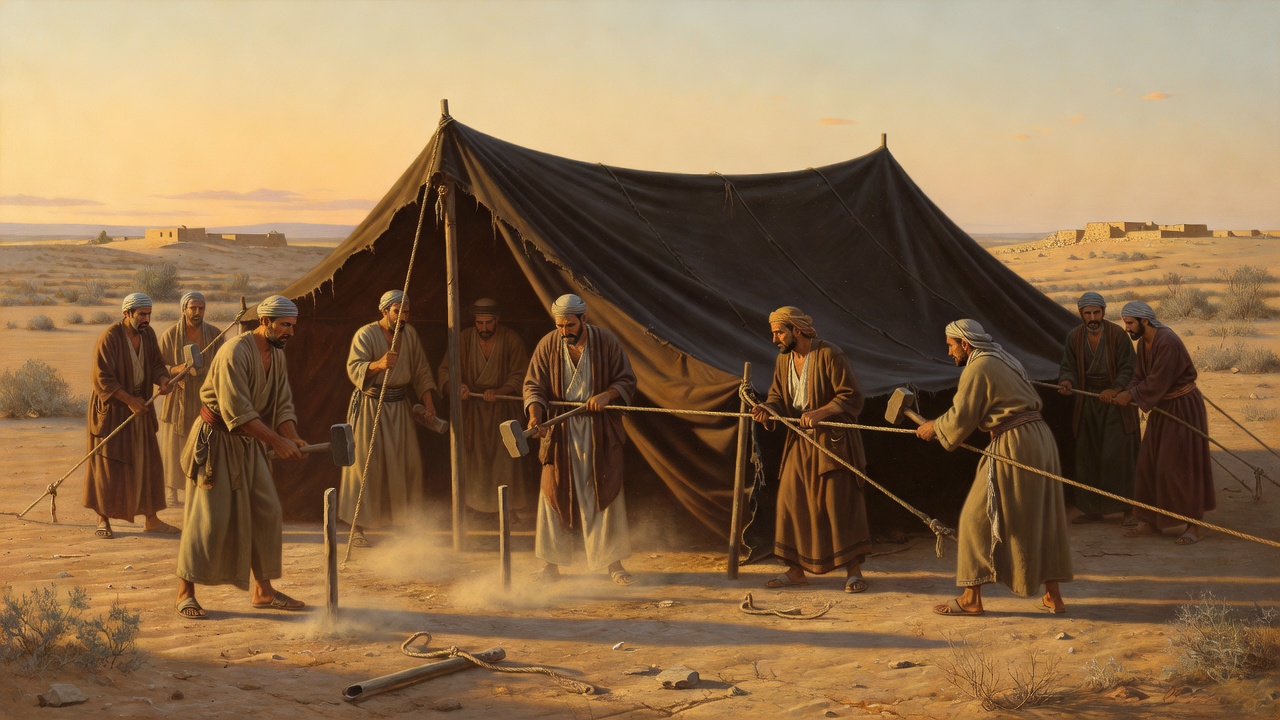
- Isaiah uses the imagery of enlarging a tent—lengthening ropes and driving stakes deep—to portray a barren and desolate woman making room for an unexpected multitude of descendants.Sources: the Bible text itself
- The text links God's enduring kindness to the days of Noah, recalling the oath that floodwaters would never again submerge the earth to assure that this covenant of peace will never be removed.Sources: the Bible text itself · Noah
- The chapter describes an afflicted, storm-tossed city being rebuilt with rare beauty, picturing its stones set in antimony, its foundations laid with sapphires, and its pinnacles made of rubies.Sources: the Bible text itself
Notes written with AI assistance from open sources (Theographic Bible Metadata, CC BY-SA 4.0; Easton’s Bible Dictionary, public domain) and reviewed before publishing.
Places in this chapter
Only places identified with high confidence are shown (90% or more according to the scholarly sources compiled by OpenBible). Period map: DARE (Digital Atlas of the Roman Empire), CC BY 4.0; modern map: © OpenStreetMap contributors; places: OpenBible.info (CC BY 4.0).
Credits and license for this translation
Cishingini Agwara Kambari [asg]
Cishingini: Cishingini Agwara Kambari [asg] (Bible)
copyright © 2025 Language Development and Translation Initiative (LDTI)
Language: (Cishingini)
Contributor: The Seed Company
This translation is made available to you under the terms of the
Creative Commons Attribution Share-Alike license 4.0.
You have permission to share and redistribute this Bible translation in any format and to make reasonable revisions and adaptations of this translation, provided that:
You include the above copyright and source information.
If you make any changes to the text, you must indicate that you did so in a way that makes it clear that the original licensor is not necessarily endorsing your changes.
If you redistribute this text, you must distribute your contributions under the same license as the original.
Pictures included with Scriptures and other documents on this site are licensed just for use with those Scriptures and documents.
For other uses, please contact the respective copyright owners.
Note that in addition to the rules above, revising and adapting God's Word involves a great responsibility to be true to God's Word. See Revelation 22:18-19.
2025-07-09
Source: http://ebible.org/asg/ · eBible.org