Isaiah 47
Cishingini Agwara Kambari [asg] · Tap a verse to see its cross-references.
Uyikpi u Babila
1<<Cipa̱ ka̱ta̱ vu da̱sa̱ngu a iɗika
avu Babila,
da̱sa̱ngu a kayala babu kakuba,
avu Babila.
O kudoku e ɗeke wu
meleshushe ko vuza babu utsura ba.
2Ɗika kutalikukiya ka̱ta̱ vi yaꞋan kiya,
foɗo ka̱ka̱la̱bi ka̱ nu.
Va̱ga̱lukpa̱ fatari vu nu, vu ka̱sukpa̱ ene pulai,
ka̱ta̱ vu wala vu pasamgbanai o nɗolu.
3Ciyanpu tsu nu ci ta̱ a̱ kuta̱ pulai,
ka̱ta̱ wono u nu wo okpo e keteshe.
Mpa n kutsupa ta̱,
mi kpamu a kubuwaka vuza n wuma ba.>>
4Ka̱shibi ka̱ tsu, Vuzavaguɗu MalaꞋimili ɗa kula ku ni,
a̱yi ɗa vuza ciɗa vi Isaraila.
5<<Desa̱ngu ɗe n ka̱bini a̱ ka̱yimbi,
avu Babila,
a buwa e kuɗeke wu
mogono ma vuka mo tsugono ba.
6N yaꞋan ta̱ wupa n uma a̱ va̱ aza a Isaraila,
m bonokoi le ukuna u gbani,
n nekei le e ekiye a̱ nu,
ɗa vu kpa̱ɗa̱i kupana asuvayali e le.
Ko a tsukutsa ci le,
ɗa vu ka̱na̱i kuneke le atakaci.
7Ɗa vu danai, <Mpa mi ta̱ a kulyaꞋa kelime
n kulyaꞋa tsugono tsa̱ a̱ma̱ci ali a kubana uteku n uteku.
Ama vu kpa̱ɗa̱i kindana ili i nampa ya,
ko vi ciɓa n ili i na i ɗa i kutuka̱.
8<<Gogo na, pana kakuna ka nampa,
avu na vi ci ciga kupana ku uyoꞋo, avu na vu tsu yongo ukanji mayin,
avu na vu tsu dana n ka̱ci ka̱ nu,
<Mpa ɗa biꞋi, babu kpamu vuza yoku sai mpa.
Mpa mo kokpo kagapa ba
ko n namba maku a̱ ka̱tsuma̱ ka̱ muku n va̱ ba.>
9Ukuna u re u nampa dem wi ta̱ a kucina wu babu megeshe,
a kanna ke te,
unambi u muku n tsugapa
ci ta̱ a̱ kuta̱wa̱ wa̱ nu m makara,
ko n ukuna u ka̱bunda̱i
ko oboci a̱ nu koɓolo n tsuboci le dem.
10Vi neke ta̱ katsura n kawuya ka̱ nu
ali ɗa vu danai, <Babu vuza na we enei mu.>
Ugboji u nu n kuyeve ku nu ku nu ku vakangi nu
ana vu danai ka̱ci ka̱ nu,
<Mpa ɗa, babu kpamu vuza yoku tsu va̱.>
11Mayu atakaci a̱ kuta̱wa̱ ta̱ wa̱ nu,
va kufuɗa kutere a ɗa n alaꞋwin ta na ba.
Kawuya ki ta̱ a̱ kuta̱wa̱ wa̱ nu,
vi ta na a kufuɗa kisa ka̱ci ka̱ nu ba,
ili i wuya i na vi uyevi n i ɗa ba,
yi ta̱ a kucinaka wu.
12<<Gogo na yaꞋan ulinga n alaꞋwin o tsuboci a̱ nu,
yaꞋan ulinga n uye u na vu tonoi ali n ayin a ɗe.
U gaꞋan ba u ɗa wi ta̱ a kuyaꞋanka wu kasingai,
ko u ɗa u zuwa vuza yoku kupana wovon u nu.
13Kadanshi ko odoki ka na vi isai dem ko oꞋuso wu ta̱
Te ɗai aza a tsusaki ku ukuna a̱ nu i ra̱ka̱,
eyevi a azangata a ele na a tsu dana i na yi lo a̱ kuta̱wa̱ o wotoi dem,
yaꞋan a isa wu a̱ ubuta̱ wi ili i na yi lo a̱ kuta̱wa̱ wu.
14Mayu i ta̱ tsu mita̱ ma̱ ciꞋiwa̱, ma na mi a kukula̱ akina.
A kina i ta̱ o kusongu le ra̱ka̱. A kufuɗa ki isa ka̱ci ke le, a̱ ubuta̱ wu utsura wa akina ba.
Cikina ci lo tsu na vuza u kunyashika ba,
babu kpamu akina a na vuza u kutasuku.
15I nampa i ɗa koci a kufuɗa kuyaꞋanka ɗa̱
ele vu na vu soꞋi atakaci adama e le, ele vu na i yongoi koɓolo ali n ayin a na yi muku.
Yaba dem u tsu tono ta̱ uye u ni,
babu vuza te vu na wa kisa wu.
Did you know?
The Fall of Babylon
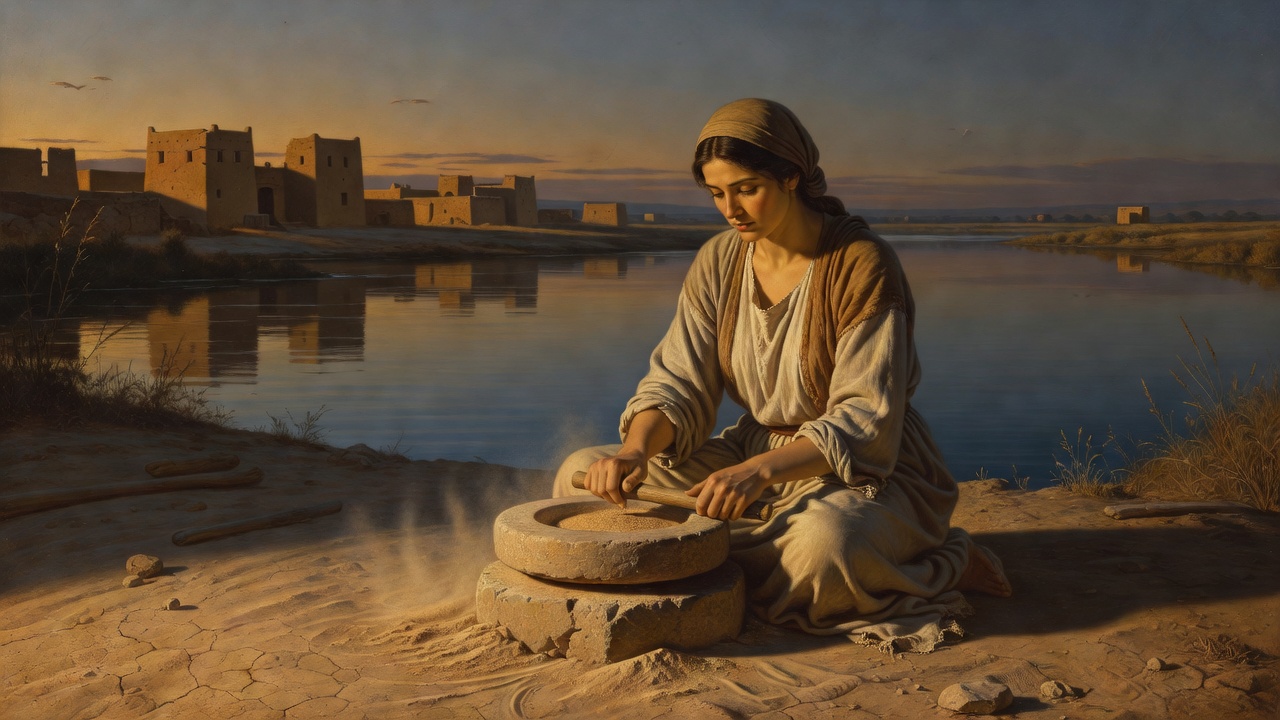
- Babylon is personified as a pampered queen and royal daughter who is abruptly humiliated. Instead of sitting securely on a throne in luxury, she is commanded to sit in the dust and perform the menial labor of an enslaved worker, grinding flour with millstones.Sources: the Bible text itself
- The chapter highlights Babylon's reliance on occult practices and stargazing. The prophet challenges the city's astrologers, sorcerers, and monthly omen-casters to step forward, declaring that their arts will be completely burned up like stubble and unable to prevent sudden ruin.Sources: the Bible text itself
- Babylon, situated along the Euphrates River in Chaldea, had been allowed to rule over God's people as an instrument of judgment. However, the text rebukes the empire for showing no mercy, noting that it placed heavy yokes even upon the elderly.Sources: Babylon · the Bible text itself
Notes written with AI assistance from open sources (Theographic Bible Metadata, CC BY-SA 4.0; Easton’s Bible Dictionary, public domain) and reviewed before publishing.
Places in this chapter
Only places identified with high confidence are shown (90% or more according to the scholarly sources compiled by OpenBible). Period map: DARE (Digital Atlas of the Roman Empire), CC BY 4.0; modern map: © OpenStreetMap contributors; places: OpenBible.info (CC BY 4.0).
Credits and license for this translation
Cishingini Agwara Kambari [asg]
Cishingini: Cishingini Agwara Kambari [asg] (Bible)
copyright © 2025 Language Development and Translation Initiative (LDTI)
Language: (Cishingini)
Contributor: The Seed Company
This translation is made available to you under the terms of the
Creative Commons Attribution Share-Alike license 4.0.
You have permission to share and redistribute this Bible translation in any format and to make reasonable revisions and adaptations of this translation, provided that:
You include the above copyright and source information.
If you make any changes to the text, you must indicate that you did so in a way that makes it clear that the original licensor is not necessarily endorsing your changes.
If you redistribute this text, you must distribute your contributions under the same license as the original.
Pictures included with Scriptures and other documents on this site are licensed just for use with those Scriptures and documents.
For other uses, please contact the respective copyright owners.
Note that in addition to the rules above, revising and adapting God's Word involves a great responsibility to be true to God's Word. See Revelation 22:18-19.
2025-07-09
Source: http://ebible.org/asg/ · eBible.org