Genesis 29
Cishingini Agwara Kambari [asg] · Tap a verse to see its cross-references.
Yakubu u yawai a pada-aram
1Ɗa Yakubu u lyaꞋi kelime nu nwalu n ni a iɗika ya aza a kasana. 2Ɗa we enei kayinva e keteshe n ushiga u tatsu wu nlala ivaꞋin lo, adama a na ta punu o tsu soꞋo a kayinva ka. Katali ka na a̱ ɓa̱ya̱ngi ki kayinva ka, ka ki ta̱ ka gbangam. 3Ayin a na baci ushiga wa kakau u gasai a̱ ubuta̱ wa, nguɓi ma a̱ tsu gida̱la̱kpa̱ ta̱ katali ka a̱ una̱ u kayinva wa, adama a na e neꞋe ushiga u le mini. O kotso baci, ka̱ta̱ o bonoko katali ka punu a̱ una̱ u kayinva wa.
4Ɗa Yakubu we ecei nguɓi ma, <<Aza a̱ va̱, te ɗai i yu uta̱i?>> Ɗa a̱ ushuki, <<A̱ tsu tsu uta̱ ta̱ a Haran.>> 5Ɗa we ecei le, <<I yeve ta̱ Laban, matsukaya ma Nahoru?>>
Ɗa a̱ ushuki, <<Eyeu, ci yeve yi ta̱.>>
6Ɗa Yakubu u doku we ecei le, <<Wi ta̱ ɗe m ma̱ta̱na̱?>> Ɗa a danai, <<Eyeu, wi ɗe n kadanshi ba. Mekere ma̱ ni ma na Rahila a̱ kuta̱wa̱ n ushiga wu nlala u ni.>>
7Ɗa Yakubu u danai, <<Kanna de ka buwa ta̱ biꞋi, ayin o kubonoko nlala a kpaꞋa ka̱ta̱ a yawa ba, neꞋi le mini ka̱ta̱ i lyaꞋa kelime n kalina.>>
8A̱ ushuki a danai, <<Tsa kuyaꞋan nannai ba, sai ayin a na ushiga wa u gasai na ra̱ka̱ ɗa a̱ gida̱la̱kpa̱i katali ka kpamu; ka̱ta̱ yeve ci neꞋe nlala ma mini.>>
9A̱yi lo a kadanshi n ele ɗa Rahila u yawai nu nlala me esheku, adama a na a̱yi maguɓi maꞋa. 10Ana Yakubu we enei Rahila mekere ma Laban, taku va̱ a̱na̱ku, nlala kpamu n ni, ɗa u banai ɗa u gida̱la̱kpa̱i katali a̱ una̱ u kayinva wa. Ɗa u neꞋi nlala me esheku a mashani a mini. 11Ɗa Yakubu wo oɓongi Rahila ɗa u shika̱i n ka̱la̱ka̱tsu ka̱u. 12Adama a na u dana ta̱ Rahila a̱yi vashi ve esheku ɗa, Rebeka ɗa kpamu a̱na̱ku. Ɗa Rahila u sumai ɗa u banai u danai esheku.
13Ana a danai Laban, Yakubu ɗa maku ma taku, ɗa u yaꞋin moloko adama a na u cina yi. Ɗa wo oɓongi ni. Ɗa u ɗikai ni a kubana a kpaꞋa ku ni. Ana Yakubu u tonukoi Laban ili dem, 14ɗa Laban u danai ni, <<Mayun avu kujini ku te ku ɗa tsu nu mpasa n te kpamu!>> Ɗa u da̱sa̱ngi n Laban va ali wotoi u te. 15Ɗa Laban u danai ni, <<Adama a na vi vuza va̱ ɗa va kuyaꞋanka mu tsugbashi gbani? Dana mu ko yaꞋin ɗai n kutsupa wu.>>
16Laban ta na wi ta̱ nu nkere n re, vuzagbayin vu ɗa Liyatu, vuza kenu kpamu Rahila. 17Liyatu wi ta̱ n ugaꞋin u a̱shi koci, ama Rahila a̱shi a gaꞋan yi ta̱ koɓolo n ikyamba i tsuloboi dem. 18A̱yi Yakubu wi ta̱ a kuciga Rahila, ɗa u danai, <<Mpa mi ta̱ a kuyaꞋanka wu ulinga ali a̱ya̱ e cindere, adama a na vi neke mu Rahila.>>
19Laban wu ushuki u danai, <<U laꞋa ta̱ n kugaꞋan n neke wu a̱yi a na me neke vuza yoku kau. Adama a nannai, da̱sa̱ngu nu mpa.>> 20Ɗa Yakubu u yaꞋankai ni ulinga ali a̱ya̱ e cindere adama a na e neke yi Rahila. Ama a̱yi we ene ayin a nanlo ka̱u ba, adama a na wi ta̱ a kuciga Rahila n a̱bunda̱i.
21Ɗa Yakubu u danai Laban, <<Neke mu vuka vu va̱, ayin a na vi nekei mu a shana ta̱. Mi ta̱ a kuciga ma ɗika yi yolo.>>
22Ɗa Laban u ɗekei uma a̱ ubuta̱ wa n a̱bunda̱i, ɗa u yaꞋin ka̱ɗiva̱. 23Ama ana kulivi ku yawai, ɗa u ɗikai Liyatu. Ɗa u nekei Yakubu, ɗa Yakubu u vaki n a̱yi. 24Laban u neke ta̱ Liyatu maku mu usuki, kula ku ni Zilifa, adama a na u ciya̱ vuza na u kuɓa̱nka̱ yi.
25Ana kayin ka asai, ɗa Yakubu u yaꞋin mereve ana we enei Liyatu. Ɗa we ecei Laban, <<Yiɗa̱i i zuwai ɗa vi yaꞋankai mu nannai, ɗa vi nekei mu Liyatu? N yaꞋanka wu tsugbashi adama a Rahila ba? Yiɗa̱i i zuwai ɗa vu doroi mu?>>
26Ɗa Laban u danai ni, <<A̱ tsu tsa̱ kugita̱ kuta̱ka̱ mekere vuza kenu a cau n vuza gbayin ba. 27Kotso biꞋi n ayin e cindere o yolo a nampa a, ka̱ta̱ n yeve n neke wu vangu vi ni. Ama sai vu doku vi yaꞋanka mu ulinga ali a̱ya̱ e cindere.>>
28Ɗa ta na Yakubu u yaꞋin nannai. Ana kuden ku te ku kotsoi, ɗa Laban u nekei ni Rahila yolo, adama a na wo okpo vuka vi ni. 29Laban u doku ta̱ u neke yi kabara ke mekere ko yoku kula ku ni Biliha, adama a Rahila. 30Ɗa Yakubu u vaki n Rahila. U laꞋa ta̱ n kuciga Rahila a na wa ciga Liyatu. U doku u yaꞋankai Laban tsugbashi ali a̱ya̱ e cindere.
31Ana Vuzavaguɗu we enei Yakubu u ciga Liyatu ka̱u ba, ɗa u ɓa̱yuwa̱i kamatsatsu ka̱ ni, u bonoi u ɓa̱ya̱ngi ka Rahila, wo okpoi madari. 32Liyatu ta na u ka̱na̱i ka̱tsuma̱ ɗa u matsai maku mo kolobo ali ɗa u neꞋi ni kula Ruben. Ɗa u danai, <<Ili i na i zuwai i ɗaɗa Vuzavaguɗu u pana ta̱ asuvayali a̱ va̱ ɗa u nekei mu maku. Mayun gogo na vali vu va̱ u kuciga mu ta̱ ka̱u.>>
33U doku u ciya̱i ka̱tsuma̱ ɗa u matsai maku mo kolobo kpamu. Ɗa u danai, <<Adama a na Vuzavaguɗu u yeve ta̱ a na a iwain mu, i ɗaɗa i zuwai ɗa u doku u nekei mu maku.>> U neꞋi maku ma kula Simiyon.
34U doku u yaꞋin ka̱tsuma̱ kpamu ɗa u matsai maku mo kolobo. Ɗa u danai, <<Gogo na vali u kuciga mu ta̱ mayin, adama a na m matsaka yi ta̱ olobo a tatsu.>> Ɗa u neꞋi maku ma kula Levi.
35Ali n gogo na u doku u ka̱na̱i ka̱tsuma̱ ɗa u matsai maku mo kolobo. Ɗa u danai, <<Ayin a nampa n kucikpa ta̱ Vuzavaguɗu.>> Adama a nannai ɗa u neꞋi maku ma kula feu Yahuza. Ɗa ta na wu uvukai n limata.
Did you know?
Jacob’s Marriages in Haran
- Jacob fled to Haran, where his uncle Laban lived, in the land of the people of the east. The city, also called the city of Nahor and identified with Harran, stood on the Belik, a tributary of the Euphrates, about seventy miles above the Belik’s junction with that river, in Upper Mesopotamia. Laban was the son of Bethuel and the grandson of Nahor, Abraham’s brother; Laban’s sister Rebekah was Isaac’s wife.Sources: Haran · Laban · Nahor (brother of Abraham) · the Bible text itself
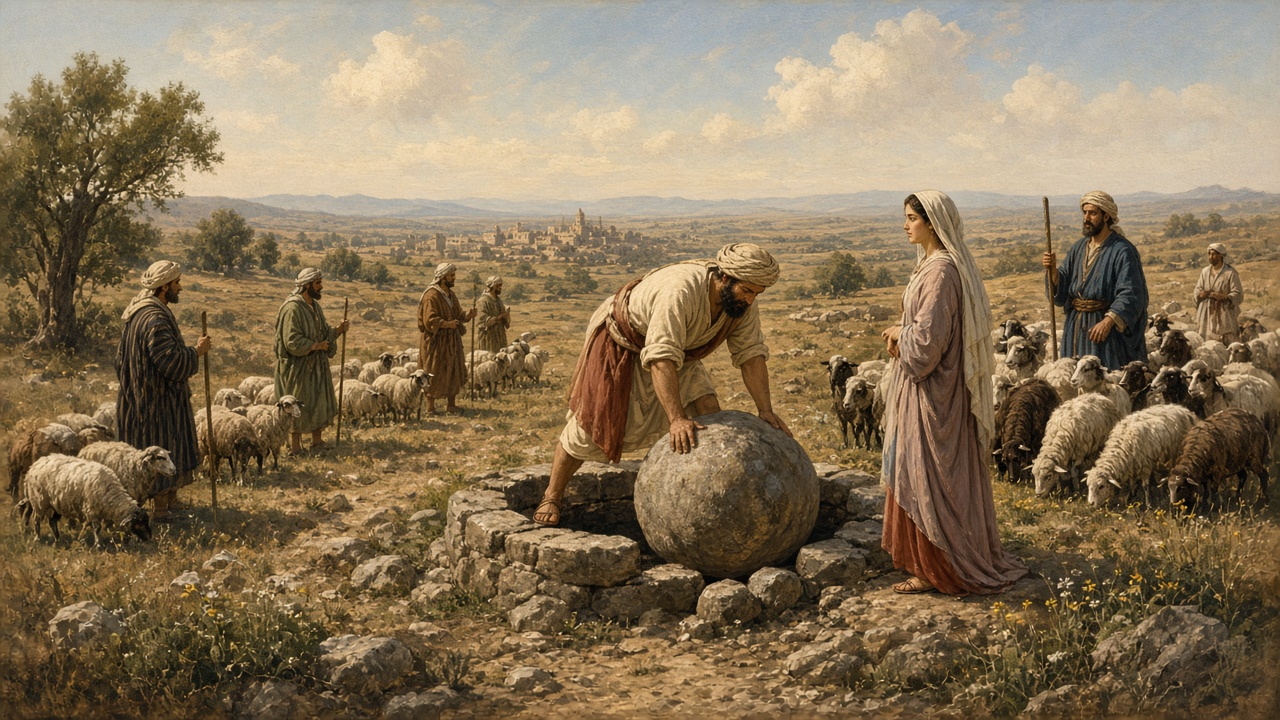
- The well was closed by a large stone that the shepherds rolled away only after all the flocks had gathered, then put back in place. Rachel, whose name is given as “ewe,” was a shepherdess bringing her father’s sheep, and Jacob, who had himself lived as a shepherd, moved the stone and watered his uncle’s flock.Sources: Rachel · Jacob (Israel) · the Bible text itself
- Leah, the elder sister, is called “weary,” and she is described as weak-eyed, or tender-eyed; Rachel, the younger, was shapely and beautiful. Jacob served seven years for Rachel, but at the evening feast Laban gave him Leah, saying it was not the custom there to give the younger daughter in marriage before the older, and then gave him Rachel for another seven years—fourteen in all. Leah’s first sons were Reuben, whose name is given as “Behold a son,” and then Simeon, Levi, and Judah; in naming them she spoke of the LORD seeing her affliction, hearing that she was unloved, her husband becoming attached to her, and her praise of the LORD.Sources: Leah · Rachel · Reuben · the Bible text itself
Notes written with AI assistance from open sources (Theographic Bible Metadata, CC BY-SA 4.0; Easton’s Bible Dictionary, public domain) and reviewed before publishing.
Places in this chapter
- East · Today: region around Amman · 31.955, 35.934 · verse 1
- Haran · Today: Harran · 36.864, 39.033 · verse 4
Only places identified with high confidence are shown (90% or more according to the scholarly sources compiled by OpenBible). Period map: DARE (Digital Atlas of the Roman Empire), CC BY 4.0; modern map: © OpenStreetMap contributors; places: OpenBible.info (CC BY 4.0).
Credits and license for this translation
Cishingini Agwara Kambari [asg]
Cishingini: Cishingini Agwara Kambari [asg] (Bible)
copyright © 2025 Language Development and Translation Initiative (LDTI)
Language: (Cishingini)
Contributor: The Seed Company
This translation is made available to you under the terms of the
Creative Commons Attribution Share-Alike license 4.0.
You have permission to share and redistribute this Bible translation in any format and to make reasonable revisions and adaptations of this translation, provided that:
You include the above copyright and source information.
If you make any changes to the text, you must indicate that you did so in a way that makes it clear that the original licensor is not necessarily endorsing your changes.
If you redistribute this text, you must distribute your contributions under the same license as the original.
Pictures included with Scriptures and other documents on this site are licensed just for use with those Scriptures and documents.
For other uses, please contact the respective copyright owners.
Note that in addition to the rules above, revising and adapting God's Word involves a great responsibility to be true to God's Word. See Revelation 22:18-19.
2025-07-09
Source: http://ebible.org/asg/ · eBible.org