Genesis 18
Cishingini Agwara Kambari [asg] · Tap a verse to see its cross-references.
A yaꞋankai Saratu uzuwakpani u maku
1Vuzavaguɗu u yotsongi ka̱ci ka̱ ni kpamu wi Ibirahi ɗevu nu nɗanga m gbagbaꞋin m Mamure ayin a na wi ida̱shi a̱ utsutsu u ka̱pa̱m ka̱ ni n kanna usuɗukpi. 2Ana u ɗengusa̱i a̱shi a̱ ni ɗa we enei uma a tatsu kashani ɗevu n a̱yi. Ana we enei le ɗa wu uta̱i a̱ utsutsu u ka̱pa̱m ka̱ ni n kafura adama a na u gasa n ele. Ɗa u kuɗa̱ngi ali kuca̱n ku ni a kusaꞋwa iɗika. 3U danai, <<Aza a gbagbaꞋin, mi baci a̱ kuciya̱ mapasa ma singai wa̱ ɗa̱, mi a kuciga i laza kpaꞋa ku kagbashi ku ɗa̱ ba. 4YaꞋan a̱ tuka̱ m mini i saꞋa ene a̱ ɗa̱ ka̱ta̱ yu uvuka a̱ kulu ku maɗanga ku nampa. 5Mpa yaꞋan kpamu m bana n tuka̱ ɗa̱ n ilikulyaꞋa, ka̱ta̱ i ciya̱ utsura wu nwalu, adama a na i ta̱wa̱ ta̱ a kpaꞋa ku kagbashi ku ɗa̱.>>
Ɗa ta na a̱ ushuki, <<YaꞋan tsu na vu danai.>>
6Ɗa Ibirahi u yaꞋin moloko, ɗa u uwai a̱ ka̱pa̱m ka̱ ni ɗa u danai Saratu. <<Saratu yaꞋan gogoꞋo, ɗika kiya ku singai adama a na vi yaꞋanka uma a nanlo emeshe.>>
7Ɗa Ibirahi u sumai ɗa u uwai ushiga u ni ɗa u ɗikai medendem ma singai, ɗa u nekei kagbashi ka̱ ni ka kiɗaka uma a. 8Ɗa u tuka̱i m maniꞋin, m mani n inyama i na u suꞋwain va, ɗa u nekei omoci a̱ ni. A̱yi a̱ ka̱ci ka̱ ni ɗa u nekei le ilikulyaꞋa ya ɗa u shamgbai lo a̱ kulu ku yoku e le tamkpamu a kulyaꞋa.
9Ɗa we ecei ni, <<Te ɗai tamkpamu Saratu vuka vu nu?>>
Ɗa wu ushuki <<Wi ta̱ ɗe a̱ ka̱pa̱m.>>
10A̱ ka̱tsuma̱ ke le vuza te u danai, <<Mayun na a kubana ka̱ya̱ vuka vu nu Saratu wi ta̱ a̱ kuciya̱ maku mo kolobo.>> Saratu lo ta na a̱ kucina̱ ki Ibirahi a kupana a ayin a na u shamgbai lo a̱ utsutsu u ka̱pa̱m. 11A ayin a nanlo ta na Ibirahi n Saratu a kutsa ta̱, a̱yi Saratu kpamu u buwa o kudoku kene kusumbu ba. 12Ɗa Saratu u zosoi ma̱ɗuku ɗa u danai, <<Mpa ɗa na n kutsa ta̱, mi ta̱ o kudoku ma pana uyoꞋo u vali kpamu? Ko n nannai ba vali vu va̱ vu kutsa ta̱.>>
13Ɗa Vuzavaguɗu u danai Ibirahi, <<Yiɗa̱i i zuwai ɗa Saratu u zosoi ɗa u danai. Nini ɗai n kuciya̱ maku n tsukutsa tsu va̱>>? 14<<Ili yi ta̱ lo i na i laꞋi Vuzavaguɗu utsura? Tsu na n danai na wotoi kuci Saratu wi ta̱ a̱ kuciya̱ maku.>>
15Adama a na Saratu wi a kupana wovon ɗa u nannai kaꞋa u danai, <<N zoso ba>> ama u danai, <<Vu zoso ta̱.>>
16Ana uma a a̱ ɗa̱nga̱i kulaza ɗa a indanai a kubana ɗaka a uɓon u Sodom. Ɗa ta na Ibirahi u soki le adama a na a̱ ka̱na̱ uye. 17Ɗa Vuzavaguɗu u danai, <<Mi o kusokonku Ibirahi i na mi a kuciga kuyaꞋan ba, 18Ibirahi wi ta̱ o kokpo iɗika i gbayin n iɗika yu utsura kpamu, ka̱ta̱ iɗika kakau i na yi a̱ kucina̱ ku ni i ciya̱ una̱singai a̱ ubuta̱ u ni. 19N zagba yi ta̱ adama a na u zuwa muku m kpaꞋa n ni nu ntsukaya n ni o tono uye u Vuzavaguɗu a̱ ubuta̱ u kuyaꞋan kasingai m ma̱riki, nannai ɗa Vuzavaguɗu u kuneke Ibirahi ili i na u yaꞋankai ni uzuwakpani dem.>>
20Ɗa Vuzavaguɗu u danai Ibirahi, <<M pana ta̱ ili i gbani-gbani i na a dansai adama aza o Sodom n Gomora. Unushi u le u wuyana ta̱ ka̱u. 21Mi ta̱ a̱ kucipa̱ n ka̱ci ka̱ va̱ me ene ko ili i na i a kudansa adama a uma a mayun ɗa.>>
22Ɗa uma a a kpatalai a lazai o kubono Sodom, ama ɗa Ibirahi wo okpoi lo kashani e kelime ka Vuzavaguɗu. 23Ɗa Ibirahi u yawai ɗevu ɗa we ecei Vuzavaguɗu va, <<Vi ta̱ a kuna aza a ciɗa koɓolo n aza a unushi dem>>? 24Uma amangerenkupa i baci ciɗa punu a̱ likuci ya vi ta̱ a kuna likuci ya dem? Va̱ kuka̱sukpa̱ likuci ya adama a na vi isa uma amangerenkupa ba? 25U jebeshe vu yaꞋan ili tsu nanlo, va kuna uma a singai adama aza a unushi ba, aza a singai a kutakacika n aza a unushi ba. Avu ɗa vuza va afada va aduniyan. U jebeshe va kuna uma ra̱ka̱ ba.
26Ɗa Vuzavaguɗu u danai, <<N ciya̱ baci uma amangerenkupa a singai o Sodom, mi ta̱ a̱ kuka̱sukpa̱ likuci ya adama e le.>>
27Ɗa Ibirahi u danai, <<Ka̱sukpa̱ n doku n yaꞋan kadanshi n avu Vuzavaguɗu, ko a na wo okpoi mpa vuma ɗa mi koci vu na a yaꞋin n kayala. 28Uma amangere n a tawun i baci ta na punu uma a singai vi ta̱ a̱ kuka̱sukpa̱ likuci ya? Vi ta̱ a kuna likuci ya adama a na vu namba ta̱ uma tawun a ciɗa?>>
Ɗa Vuzavaguɗu u danai, <<N cina baci uma amangere n tawun aza a singai mi ta̱ a̱ kuka̱sukpa̱ likuci ya.>>
29Ɗa u doku u danai, <<A̱ ciya̱ baci ta na uma amangere punu a̱ likuci ya>>?
Ɗa Vuzavaguɗu wu ushuki, <<Adama a uma amangere a nanlo ma kuna likuci ya ba.>>
30Ɗa u danai, <<Ka̱ta̱ avu Vuzavaguɗu vi yaꞋan wupa nu mpa ba, ama yaꞋan n doku n dansa. Vi ciya̱ baci ta na uma kamangankupa koci, vi ta̱ a kuna likuci ya?>>
Ɗa wu ushuki, <<N ciya̱ baci punu uma kamangankupa aza a singai, ma kuna likuci ya ba.>>
31Ɗa u danai, <<Ka̱ta̱ avu Vuzavaguɗu vi yaꞋan wupa nu mpa ba, ama yaꞋan n doku n dansa, a̱ ciya̱ baci uma kamanga punu a̱ likuci ya ta na?>>
U danai, <<Adama a uma kamanga a nanlo, ma kuna likuci ya ba.>>
32Ɗa Ibirahi u doku u danai, <<Ka̱ta̱ avu Vuzavaguɗu vi yaꞋan wupa nu mpa ba, ama yaꞋan n doku n dansa ku te. A̱ ciya̱ baci punu uma kupa ta na?>>
Ɗa Vuzavaguɗu wu ushuki, <<Ma a kuna likuci ya ba n ciya̱ baci aza a singai kupa punu.>>
33Ayin a na u kotsoi kadanshi n Ibirahi, ɗa Vuzavaguɗu u lazai ɗa Ibirahi u lazai o kubono a kpaꞋa.
Did you know?
Visitors at Mamre and a Plea for Sodom
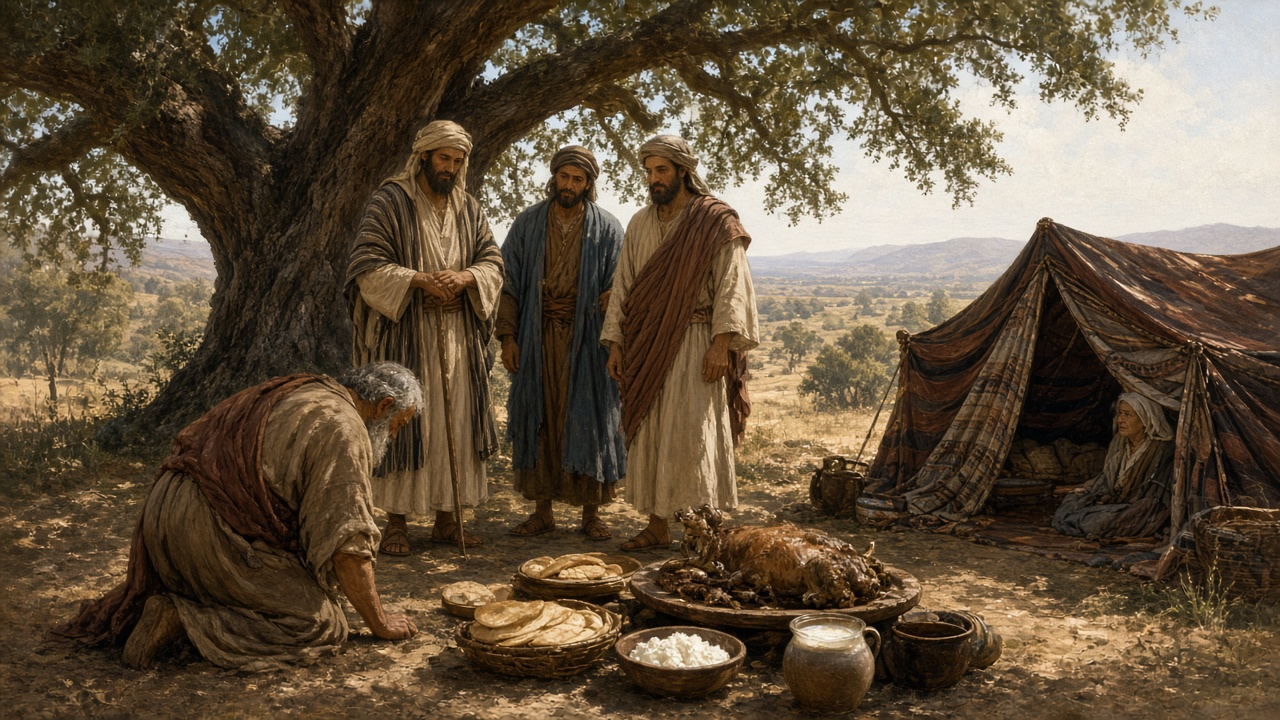
- In Genesis 18, the LORD appeared to Abraham by the Oaks of Mamre in the heat of the day, while Abraham sat at the entrance of his tent. Mamre was an Amorite chief in alliance with Abraham. Abraham ran to meet three men, bowed to the ground, offered them water for their feet and rest under the tree, and then set before them bread, a tender and choice calf, curds, and milk.Sources: the Bible text itself · Mamre
- Sarah, Abraham’s wife, is given the sense “Princess” in Easton's Bible Dictionary (1897), which says the name was given when it was announced that she would be the mother of the promised child. In Genesis 18 the LORD said he would return in about a year and Sarah would have a son, though both were already old and she had passed the age of childbearing. She laughed to herself and, because she was afraid, denied that she had laughed.Sources: Sarah · the Bible text itself
- Sodom, a city in the vale of Siddim, and Gomorrah, one of the five cities of that plain, are named together in Genesis 18 because of the great outcry against their grievous sin. Easton's Bible Dictionary (1897) says the cities of that plain probably stood close together near the northern end of what is now the Dead Sea, and explains Sodom and Gomorrah as “Burning; the walled” and “Submersion.” Two of the men went toward Sodom, while Abraham stayed and asked the LORD to spare the city for the sake of the righteous, lowering the number from fifty to ten.Sources: Sodom · Gomorrah · the Bible text itself
Notes written with AI assistance from open sources (Theographic Bible Metadata, CC BY-SA 4.0; Easton’s Bible Dictionary, public domain) and reviewed before publishing.
Credits and license for this translation
Cishingini Agwara Kambari [asg]
Cishingini: Cishingini Agwara Kambari [asg] (Bible)
copyright © 2025 Language Development and Translation Initiative (LDTI)
Language: (Cishingini)
Contributor: The Seed Company
This translation is made available to you under the terms of the
Creative Commons Attribution Share-Alike license 4.0.
You have permission to share and redistribute this Bible translation in any format and to make reasonable revisions and adaptations of this translation, provided that:
You include the above copyright and source information.
If you make any changes to the text, you must indicate that you did so in a way that makes it clear that the original licensor is not necessarily endorsing your changes.
If you redistribute this text, you must distribute your contributions under the same license as the original.
Pictures included with Scriptures and other documents on this site are licensed just for use with those Scriptures and documents.
For other uses, please contact the respective copyright owners.
Note that in addition to the rules above, revising and adapting God's Word involves a great responsibility to be true to God's Word. See Revelation 22:18-19.
2025-07-09
Source: http://ebible.org/asg/ · eBible.org