Exodus 18
Cishingini Agwara Kambari [asg] · Tap a verse to see its cross-references.
Jeturo u banai we enei Musa
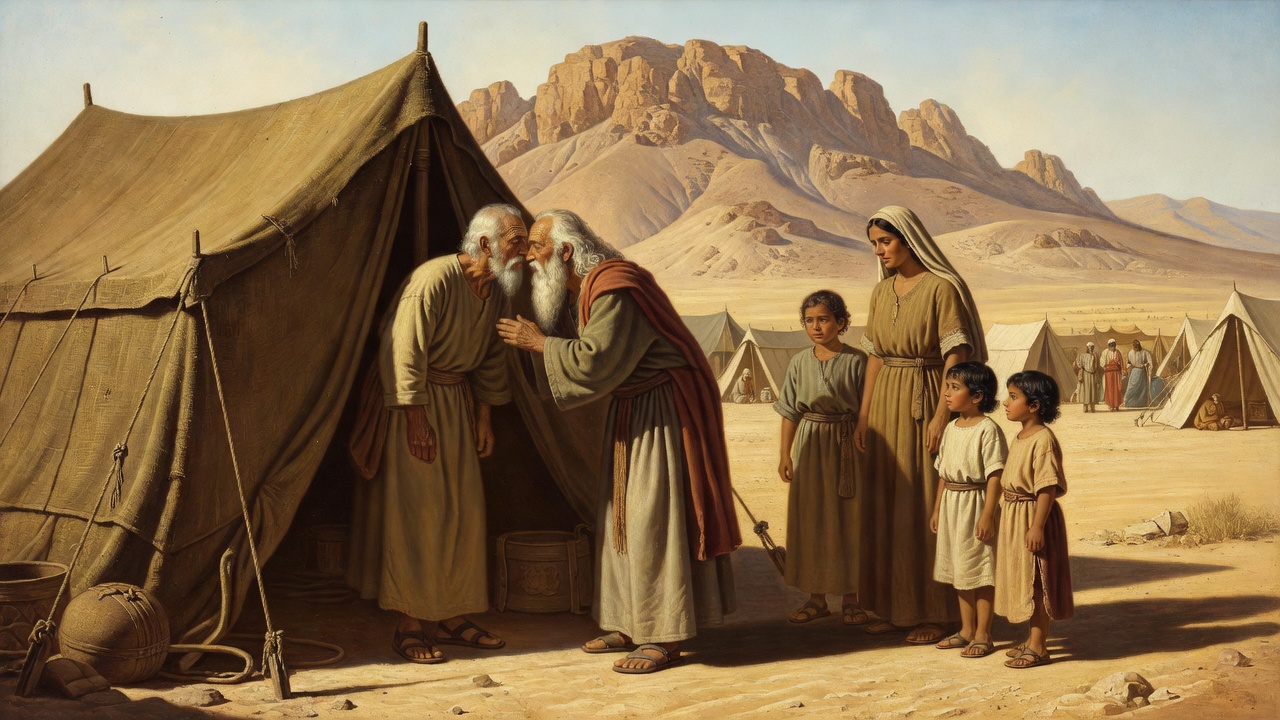
1A̱yi Jeturo ganu va aza a Midiya akaya a Musa, u pana ta̱ ili i na Ka̱shile ka yaꞋankai Musa n aza Isaraila, tsu na wu uta̱ka̱i le a iɗika i Masar.
2Ana Musa u danai vuka vi ni Zipura u bana we ene esheku, ɗa Jeturo akaya a̱ ni a rabasai ni, 3m muku n ni n re. Maku me te kula ku ni ku ɗa Goshum adama a na Musa u dana ta̱, <<Mo okpo ta̱ komoci a iɗika i na yi i va̱ ba.>> 4Ɗa u neꞋi maku me te ma feu kula Eliyaza, ɗa u danai adama a na, <<Ka̱shile ke esheku a̱ va̱ a̱yi ɗa ka̱ɓa̱nki ka̱ va̱ wi isa mu ta̱ a̱ ubuta̱ u kotokobi ka FiriꞋauna.>>
5Ayin a nanlo, a̱yi Jeturo akaya a Musa n vuka vu Musa va m muku dem a̱ ta̱wa̱i kene yi e meremune a̱ ubuta̱ u na u vaki ɗevu n kusan ku Ka̱shile. 6Jeturo u suku ta̱ akaka u Musa u danai, <<Mpa, akavu mi ta̱ lo a̱ kuta̱wa̱ n vuka vu nu m muku n re n nu feu.>>
7Ana a yawai ɗa Musa u banai e kelime ka akaya a̱ ni, ɗa u kuɗa̱ngi ɗa wo oɓongi ni. Ana o kotsoi ikya̱shi ɗa a lazai a uwai a̱ ka̱pa̱m ka̱ ni. 8Ɗaɗa u danai akaya a ra̱ka̱ ili i na Vuzavaguɗu u yaꞋin n FiriꞋauna koɓolo n aza a Masar ra̱ka̱ adama a aza a Isaraila, n atakaci a na e enei a uye, n tsu na Ka̱shile ki isai le.
9A̱yi Jeturo u yaꞋan ta̱ ma̱za̱nga̱ ka̱u a na u panai ili i singai i na Vuzavaguɗu u yaꞋankai aza a Isaraila, a na wi isai le e ekiye a aza a Masar. 10Ɗa u danai, <<Cikpai Vuzavaguɗu, vuza na wi isai nu e ekiye aza a Masar koɓolo n ekiye a FiriꞋauna. Koɓolo n vuza na wi isai aza a Isaraila e ekiye aza a Masar. 11Gogo na n yeve ta̱ Vuzavaguɗu u laꞋa ta̱ a̱ma̱li a na a buwai dem, adama a na wi isa le ta̱ e ekiye a aza a na a takacikai le n tsugoyi.>> 12Ɗa Jeturo, akaya a Musa u tuka̱i n alyuka o kusongu koɓolo n kuneꞋe u Ka̱shile. Ɗa Haruna nu nkoshi m gba̱ra̱-gba̱ra̱ ma aza a Isaraila a banai adama a na a lyaꞋa ilikulya ɗe n Jeturo akaya a Musa, e kelime ka̱ Ka̱shile.
13Kanna ke ire, ɗa Musa wo okpoi vuza va afada vu uma, ɗa uma a shamgbai n usana sai kulivi dem adama a afada. 14Ana akaya a Musa e enei ili i na Musa wi a kuyaꞋanka uma, ɗa u danai, <<Yiɗa̱i va kuyaꞋan n uma a nampa? Nini ɗai avu endeꞋen va̱ kuda̱sa̱ngu a kuyaꞋanka uma a nampa afada, uma a na i kashani ili i na i ɗikai usana ali a kubana kulivi?>>
15Ɗa Musa wu ushuki, <<A̱ ta̱wa̱ ta̱ wa̱ va̱ adama a na e yeve ili i na Ka̱shile ki a kuciga a yaꞋan. 16Ayin a na baci de dem a yaꞋin mawansa ɗa a̱ ta̱wa̱i wa̱ va̱, n tsu uwa ta̱ e mere me le ka̱ta̱ n tonuko le ili i na wila̱ u Ka̱shile u dansai.>>
17Ɗa akaya a Musa a danai ni, ili i na vi a kuyaꞋan i ɗa i gaꞋan ba. 18Avu n uma a na i a̱ kuta̱wa̱ a̱ nu gbani ɗa yi o koꞋwuso ka̱ci ka̱ ɗa̱. Avu ulinga u laꞋa wu ta̱ a̱bunda̱i, vi a kufuɗa u ɗa avu endeꞋen nu ba. 19Panaka mu gogo na, n kuneke wu ta̱ odoki ka̱ta̱ kpamu Ka̱shile ka̱ ɓa̱nka̱ wu. Vi ta̱ o kokpo ka̱suki ka uma a̱ ubuta̱ u Ka̱shile, ka̱ta̱ vu dana yi ma̱shi me le, 20ka̱ta̱ avu vi yotsongu le wila̱ u Ka̱shile, ka̱ta̱ vi yaꞋanka le kuyotsongusu adama a uteku u na a kuwala, n ili i na i gaꞋin a yaꞋan. 21Ama zagba uma a̱ usuɓi punu a̱ ka̱tsuma̱ ka uma ka. Ali a na i a kupana n wovon u Ka̱shile, i kpamu a kuyaꞋan ukuna u mayun, a ci ciga kulyaꞋa uma ba. Ka̱ta̱ vu zuwa le o okpo aza e kelime a ugboku uma ka̱kpa̱n ke te ke te (1,000), n uma amangatawun a tawun (100), n uma amangerenkupa n kupa koɓolo n uma ugboku kupa-kupa kpamu. 22Vu zuwa le o okpo aza a afada a uma ayin tutu, ama kadanshi ka na baci ka laꞋi le dem a̱ tuka̱ wu n kaꞋa. Kadanshi ka na ka laꞋi utsura u le ba a yaꞋan kaꞋa, na lo va ɗaɗa u kuzuwa ulinga u nu u jebe adama a na i ta̱ a̱ kuɓa̱nka̱ wu. 23Vu tono baci ukuna u nampa, ɗa Ka̱shile ka zuwai nu kpamu vi yaꞋin nannai, a̱ɗa̱ yo koꞋo ba, uma a nampa dem i ta̱ o kubono a kpaꞋa n kadama ke le ukoci.
24Ɗa Musa va u panakai akaya a̱ ni, ɗa u yaꞋin ili i na u danai ni ra̱ka̱. 25Ɗa u zagbai uma a usuɓi a̱ ka̱tsuma̱ ka umaci wa aza Isaraila dem ɗa u zuwai le aza e kelime. U zuwai le o okpo aza o kutono n ugboku uma ka̱kpa̱n ke te ke te (1,000), n uma amangatawun a tawun (100), n uma amangerenkupa n kupa koɓolo n uma ugboku kupa-kupa kpamu. 26Ɗa o okpoi tsa a aza a afada a kubana ubuta̱ u uma ayin dem, ili i na baci i laꞋi le a banka Musa ama kadanshi ka wawaꞋa a dansa kaꞋa we le.
27Ana Musa n akaya a̱ ni Jeturo e pecemgbenei ɗa Jeturo va u ka̱na̱i uye o kubono a kpaꞋa.
Did you know?
Jethro's Visit and Advice
- On the way toward Egypt, after the events of Exodus 4:24–26, Moses sent Zipporah and their sons Gershom and Eliezer back to her Midianite relatives. Jethro received them, and they stayed with him until he brought them to Moses in the desert, where Moses was camped at the mountain of God.Sources: Zipporah · Eliezer · the Bible text itself
- Jethro is called the priest of Midian and Moses' father-in-law. Easton's Bible Dictionary (1897) identifies him with Raguel and, in the entry on Zipporah, calls her Reuel's daughter; it suggests that Raguel may have been his personal name, and Jether or Jethro—meaning "excellency"—an official title. The Midianites, descended from Midian, Abraham's son by Keturah, were a nomadic Arabian people, and the Sinai peninsula was pasture-ground for their flocks.Sources: Jethro · Zipporah · Midian · Midian
- The sons' names preserve memories of Moses' stay in Midian. Gershom, the elder, is linked to Moses' words, "I have been a foreigner in a foreign land," and Eliezer to his saying, "The God of my father was my helper and delivered me from the sword of Pharaoh." Easton's Bible Dictionary gives Zipporah's name as meaning "a female bird."Sources: the Bible text itself · Gershom · Eliezer · Zipporah
Notes written with AI assistance from open sources (Theographic Bible Metadata, CC BY-SA 4.0; Easton’s Bible Dictionary, public domain) and reviewed before publishing.
Places in this chapter
Only places identified with high confidence are shown (90% or more according to the scholarly sources compiled by OpenBible). Period map: DARE (Digital Atlas of the Roman Empire), CC BY 4.0; modern map: © OpenStreetMap contributors; places: OpenBible.info (CC BY 4.0).
Credits and license for this translation
Cishingini Agwara Kambari [asg]
Cishingini: Cishingini Agwara Kambari [asg] (Bible)
copyright © 2025 Language Development and Translation Initiative (LDTI)
Language: (Cishingini)
Contributor: The Seed Company
This translation is made available to you under the terms of the
Creative Commons Attribution Share-Alike license 4.0.
You have permission to share and redistribute this Bible translation in any format and to make reasonable revisions and adaptations of this translation, provided that:
You include the above copyright and source information.
If you make any changes to the text, you must indicate that you did so in a way that makes it clear that the original licensor is not necessarily endorsing your changes.
If you redistribute this text, you must distribute your contributions under the same license as the original.
Pictures included with Scriptures and other documents on this site are licensed just for use with those Scriptures and documents.
For other uses, please contact the respective copyright owners.
Note that in addition to the rules above, revising and adapting God's Word involves a great responsibility to be true to God's Word. See Revelation 22:18-19.
2025-07-09
Source: http://ebible.org/asg/ · eBible.org