Exodus 10
Cishingini Agwara Kambari [asg] · Tap a verse to see its cross-references.
Ma̱dukpa̱ ma akyuꞋun
1Ɗa Vuzavaguɗu u danai Musa, <<Bana u FiriꞋauna adama a na mpa m kpanduku ta̱ ka̱ɗu ka̱ ni n aza a̱ gba̱ra̱-gba̱ra̱ a̱ ni, adama a na n yaꞋan ili i mereve i nampa e mere me le, 2adama a ili i nampa, yi ta̱ a kufuɗa ya dana muku n ɗa̱ nu ntsukaya n ɗa̱ nu n tsu na n yaꞋin wuya-wuya n aza a Masar n tsu na n yaꞋin ili i mereve i va̱. A̱ɗa̱ kpamu ta i kuyeve nannai a na mpa ɗa Vuzavaguɗu.>>
3Ɗa Musa n Haruna a banai u FiriꞋauna ɗa a danai ni, <<Ili i na Vuzavaguɗu Ka̱shile ka aza Ibirahi ka danai i ɗaɗa na, <Ali wannai ɗai va̱ kuka̱sukpa̱ kuyaꞋan a̱ra̱ɗi a kubana a̱ va̱? Ka̱sukpa̱ uma a̱ va̱ a laza, adama a na a bana a cikpa mu. 4Vi iwan baci kuka̱sukpa̱ uma a̱ va̱ a laza, mkpaꞋa mi ta̱ a̱ kutuka̱ n akyuꞋun a iɗika i nu. 5I ta̱ a kuyimkpa ali a pala iɗika dem ali babu vuza na u kufuɗa we kene iɗika ya, ka̱ta̱ a takuma ilikulyaꞋa i na yi ishi lo i na mini ma atali ma nusai, nu nɗanga n na mi o kugbomguro a ashina a̱ ɗa̱. 6I ta̱ a kushana a iꞋuwa i nu n iꞋuwa ya aza a gba̱ra̱-gba̱ra̱ koɓolo n iꞋuwa ya aza a Masar dem. Ili i nampa ko ikaya i nu ko anan dada a̱ nu n ayin a na a̱ ta̱wa̱i a iɗika i nampa ali a̱ kuta̱wa̱ anana, ka̱ta̱ a saꞋwa kene i ɗa ba.> >> Ɗa Musa u lazai u ka̱sukpa̱i FiriꞋauna.
7Ɗa nkoshi m gba̱ra̱-gba̱ra̱ n FiriꞋauna a danai ni, <<Wana ɗai vuma vu nampa u kuka̱sukpa̱ kuzuwaka tsu maza? Ka̱sukpa̱i aza Isaraila a bana a cikpa Ka̱shile Vuzavaguɗu vi le. Gogo na i yeve a na iɗika i Masar i na̱mgba̱i ba?>>
8Ɗa o bonokoi Musa n Haruna u FiriꞋauna, ɗa u danai le, <<Yi ta̱ a ku fuɗa ya bana ya cikpa Ka̱shile Vuzavaguɗu vu ɗa̱.>> Ama danai mu, anan yayi a kubana n a̱ɗa̱?
9Ɗa Musa wu ushuki, <<Ci ta̱ a kubana ra̱ka̱ vu tsu mma̱ci nu nkoshi m muku mo olobo ni nkere n tsu dem. Ci ta̱ a kuɗika nkyon n tsu nu nraɗika, n anaka adama a na ci ta̱ a kuyaꞋan ka̱ɗiva̱ ka na tsa kucikpa Vuzavaguɗu.>>
10Ɗa FiriꞋauna u danai, <<Vuzavaguɗu ɗa koci u kuɓa̱nka̱ ɗa̱ n ka̱sukpa̱ ɗa̱ baci i bana n a̱ma̱ci a̱ ɗa̱ koɓolo m muku dem, wi ta̱ a kuyaꞋan yi ta̱ n kusheshe ku gbani-gbani. 11A̱Ꞌa̱ ta nannai ba. Ali a ɗa koci a kubana a yaꞋanka Vuzavaguɗu a̱ga̱nda̱, adama a na ɗaɗa ili i na i folonoi.>> Ɗa o lokoi Musa n Haruna punu a̱ ubuta̱ u FiriꞋauna.
12Ɗa Vuzavaguɗu u danai Musa, <<Ɗengusa̱ kukiye ku nu vu sapangu iɗika i Masar adama a na ka̱kuma̱ ka akyuꞋun ka ka pala iɗika ya dem, ka̱ta̱ kpamu a takuma ili i na yi punu a iɗika i Masar dem i na mini ma atali ma nusai.>>
13Ɗa Musa u ɗengusa̱i kalangu ka̱ ni a uɓon wi iɗika i Masar, ɗa Ka̱shile ka̱ suki wunla̱i a kasana u ta̱wa̱i punu a iɗika ya n kanna ka nanlo ka n kayin ka̱ ni dem. A kubana usana ɗa wunla̱i u kasana wa u tuka̱i n akyuꞋun. 14Ɗaɗa a̱ ka̱ra̱Ꞌi a iɗika i Masar dem a shatangi iɗika ya palili. Ka̱ta̱ a saꞋwa kene icuꞋu i ma̱dukpa̱ i nanlo ba, ili i nanlo kpamu yo kudoku ya̱ ta̱wa̱ a iɗika i nanlo ba. 15Ɗa akyuꞋun a a palai ubuta̱ dem ali iɗika i lima̱na̱i adama akyuꞋun. A takumai ica̱Ꞌa̱shi dem n umaci wu nɗanga n na mini ma atali ma nusai. Babu ka̱vuku ka̱ ta̱ku ka̱ mita̱ ko ka maɗanga ka na ka buwai punu a iɗika i Masar.
16Ɗa FiriꞋauna u yaꞋin gogoꞋo u ɗekei Musa n Haruna ɗa u danai le, <<N nusaka ta̱ Ka̱shile Vuzavaguɗu vu ɗa̱ n a̱ɗa̱ dem. 17Gogo na cinukpakai mu unushi u nampa, ka̱ta̱ i vasa a kubana u Ka̱shile Vuzavaguɗu vu ɗa̱ u takpa atakaci a̱ ukpa̱ a nampa.>>
18Ɗa Musa u ka̱sukpa̱i kefeku ka FiriꞋauna ɗa u banai u vasai u Vuzavaguɗu. 19Ɗa Vuzavaguɗu u sabaꞋi wunla̱i wa u bonokoi u ɗa wunla̱i u ka̱livi wu utsura, u na u pura̱ngi akyuꞋun a a kubana a Mala ma Shili. Ko kakyuꞋun ke te ka buwa a iɗika i Masar ba. 20Ama ɗa Vuzavaguɗu u kpandusuki ka̱ɗu ka FiriꞋauna ka kpamu, ali ɗa u sa̱nka̱i aza a Isaraila a kulaza.
Ma̱dukpa̱ ma̱ ka̱yimbi
21Ɗa Vuzavaguɗu u doku u danai Musa, <<Ɗengusa̱ kukiye vu sapangu gaɗi adama a na ka̱yimbi ka kpaɓam ka pala iɗika i Masar dem, ka̱yimbi ka na kpamu ka̱ mikina̱i ali adanshi uma i ta̱ a kufuɗa a saꞋwa kaꞋa.>> 22Ɗa ta na Musa u ɗengusa̱i kukiye ku ni u sapangi gaɗi, ɗa ka̱yimbi ka palai Masar kpaɓam, ali ayin a tatsu. 23A̱ ka̱tsuma̱ ka ayin a nanlo babu vuza na u kene toku ko u bana ubuta̱ u yoku. Ama aza a Isaraila i ta̱ ɗe n kutashi a̱ ubuta̱ u na i dem.
24Ɗaɗa FiriꞋauna u suki e ɗekeke yi Musa, ɗa u danai ni, <<Banai i cikpa Vuzavaguɗu. Ko a̱ma̱ci a̱ ɗa̱ m muku n ɗa̱ i ta̱ a kufuɗa a bana n a̱ɗa̱, kuzuwa ku ɗa̱ ku ɗa koci i kuka̱sukpa̱.>>
25Ama ɗa Musa u danai, <<Mayun ɗa vu ka̱sukpa̱ tsu tsu bana ci yaꞋan alyuka koɓolo n kuneꞋe ku kusongu u Vuzavaguɗu Ka̱shile ka̱ tsu. 26Kuzuwa ku tsu dem ki ta̱ a kubana n a̱ tsu. Babu winja u na u kokpo. Tsa kuyaꞋan ta̱ ulinga n ku yoku a̱ ubuta̱ u kucikpa Vuzavaguɗu Ka̱shile ka̱ tsu. Sai ayin a na ci yawai ɗe, ɗa ce kuyeve ili i na tsa ku cikpaka Vuzavaguɗu.>>
27Ama ɗa Vuzavaguɗu u doku u zuwai FiriꞋauna u yaꞋin ugbamukaci kpamu, ɗa u sa̱nka̱i le ku laza. 28Ɗaɗa FiriꞋauna u danai Musa, <<Ɗenga̱ mu lo! Ka̱ta̱ vu doku vi yawa ɗevu nu mpa kpamu ba! Kanna ka na baci n gasai muku n a̱shi n avu, vi ta̱ a̱ kukuwa̱.>>
29Ɗa Musa wu ushuki ɗa u danai, <<Tsu na vu danai dem derere ɗa, mpa ma o kudoku ma yawa ɗevu n avu ba.>>
Did you know?
Locusts and Darkness in Egypt
- The conversations in this chapter are among the interviews that one reference places at Zoan, the residence of the Pharaoh of the Exodus. That reference identifies him as probably Menephtah I, the fourteenth and eldest surviving son of Rameses II, while noting that it is still a question whether Seti II or his father Menephtah was that Pharaoh.Sources: Pharaoh (of the Exodus) · the Bible text itself
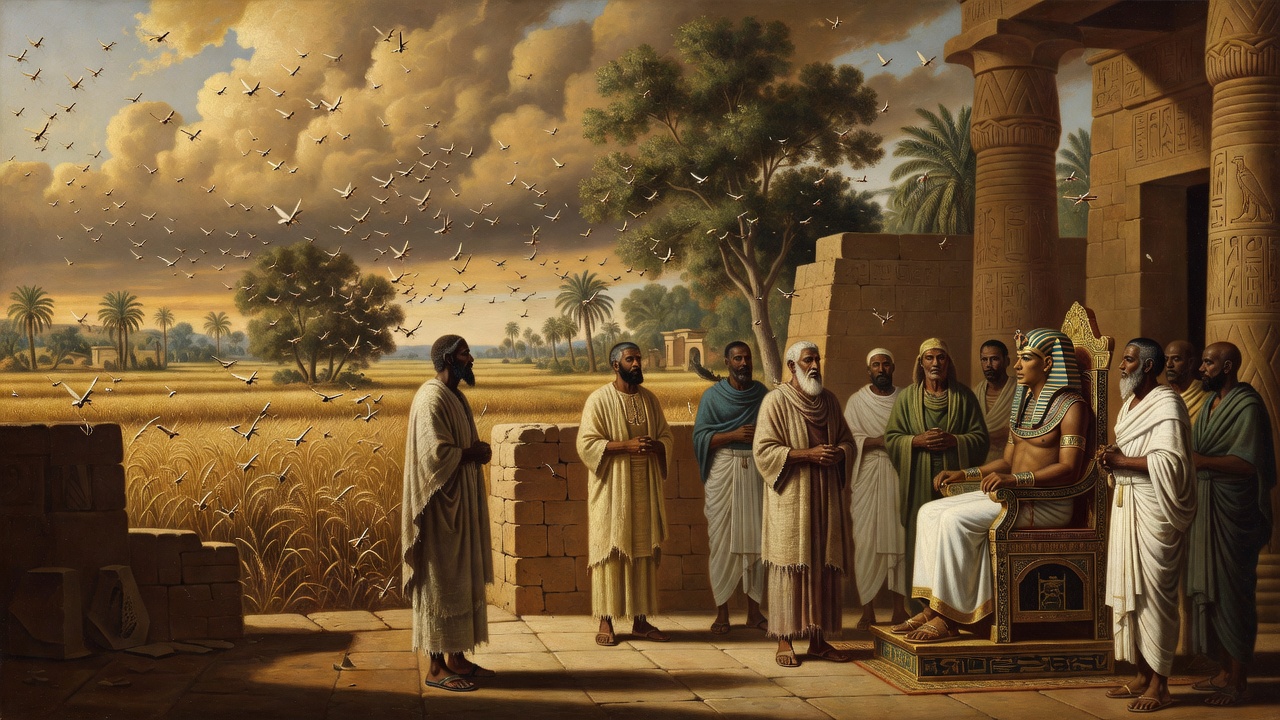
- When Pharaoh asked that the locusts be removed, a very strong west wind carried them into the Red Sea, and not a single locust remained in Egypt. That sea extends about 1,400 miles along the west coast of Arabia and separates Asia from Africa; at Ras Mohammed, about 200 miles from its northern end, it divides into the Gulf of Suez on the west and the Aelanitic Gulf, now the Bahr el-Akabah, on the east.Sources: Red Sea · the Bible text itself
- Aaron went with Moses whenever the two stood before Pharaoh. He was the eldest son of Amram and Jochebed, born in Egypt three years before Moses, and he had been sent to meet his brother and cooperate with him in bringing about the Exodus.Sources: Aaron · the Bible text itself
Notes written with AI assistance from open sources (Theographic Bible Metadata, CC BY-SA 4.0; Easton’s Bible Dictionary, public domain) and reviewed before publishing.
Places in this chapter
Only places identified with high confidence are shown (90% or more according to the scholarly sources compiled by OpenBible). Period map: DARE (Digital Atlas of the Roman Empire), CC BY 4.0; modern map: © OpenStreetMap contributors; places: OpenBible.info (CC BY 4.0).
Credits and license for this translation
Cishingini Agwara Kambari [asg]
Cishingini: Cishingini Agwara Kambari [asg] (Bible)
copyright © 2025 Language Development and Translation Initiative (LDTI)
Language: (Cishingini)
Contributor: The Seed Company
This translation is made available to you under the terms of the
Creative Commons Attribution Share-Alike license 4.0.
You have permission to share and redistribute this Bible translation in any format and to make reasonable revisions and adaptations of this translation, provided that:
You include the above copyright and source information.
If you make any changes to the text, you must indicate that you did so in a way that makes it clear that the original licensor is not necessarily endorsing your changes.
If you redistribute this text, you must distribute your contributions under the same license as the original.
Pictures included with Scriptures and other documents on this site are licensed just for use with those Scriptures and documents.
For other uses, please contact the respective copyright owners.
Note that in addition to the rules above, revising and adapting God's Word involves a great responsibility to be true to God's Word. See Revelation 22:18-19.
2025-07-09
Source: http://ebible.org/asg/ · eBible.org