2 Kings 2
Cishingini Agwara Kambari [asg] · Tap a verse to see its cross-references.
A ɗikai Iliya a kubana zuva
1Ayin a na Vuzavaguɗu u sheshei kuɗika Iliya a kubana zuva a kabatalikpau, Iliya ele n Ilisha ele uye cina a̱ uta̱ a Giliga. 2Ɗa Iliya u danai Ilisha, <<Shamgba na, Vuzavaguɗu u dana mu ta̱ m bana e Betelu.>>
Ɗa Ilisha u danai, <<Vuzavaguɗu wi baci m wuma ɗa kpamu vi n wuma mi a̱ kuka̱sukpa̱ wu ba.>> Ɗa a lazai koɓolo.
3Ɗa ka̱kuma̱ ka eneki ka na ki e Betelu a̱ ta̱wa̱i ubuta̱ u Ilisha a danai, <<Vu yeve ta̱ ko anana ɗa Vuzavaguɗu wi a kuɗika vuzagbayin nu wa̱ nu?>> Ilisha wu ushuki, <<E n yeve ta̱,>> Ama paɗai bini.
4Ɗa Iliya u danai Ilisha, <<Shamgba na, Vuzavaguɗu u dana mu ta̱ m bana e Jeriko.>>
Ɗa Ilisha wu ushuki u danai, <<Vuzavaguɗu wi baci n wuma, ɗa mpa feu mi n wuma u nu mi a̱ ku ka̱sukpa̱ wu ba.>>Ɗa a lazai koɓolo a kubana e Jeriko.
5Ɗa ka̱kuma̱ ka eneki o yoku a na i e Jeriko a banai wu Ilisha ɗa e ecei ni a danai, <<Vu yeve ta̱ a na Vuzavaguɗu wi a kuɗika vuzagbayin vu nu wa̱ nu anana?>>
Ɗa wu ushuki, <<E n yeve ta̱, ama paɗai bini.>>
6Ɗa kpamu Iliya u doku u danai Ilisha,<<Shamgba na, Vuzavaguɗu u dana mu ta̱ m bana e Kuyene ku Urudu.>>
Ɗa kpamu wu ushuki u danai, <<Vuzavaguɗu wi baci n wuma, ɗa mpa feu mi n wuma u nu mi a̱ ku ka̱sukpa̱ wu ba.>>Ɗa a lazai aza e re le koɓolo.
7Ɗa uma amangerenkupa a̱ ka̱tsuma̱ ka̱kuma̱ ka Eneki ka, o tonoi le a banai a shamgbai daꞋangi n ubuta̱ u na Iliya n Ilisha a shamgbai e Kuyene ku Urudu. 8Iliya u foɗoi motogu ma gbanyin ma̱ ni u ka̱ta̱la̱i maꞋa, ɗa u lapai mini m motogu ma. Ɗa mini me pecei kure, a̱yi n Ilisha a pasai a iɗika i ɗekpu.
9Ana a pasai kuyene ka, ɗa Iliya u danai Ilisha,<<Dana mu ili i na vu cigai n yaꞋanka wu babu a ɗika mu wu a̱ nu.>>Ilisha wu ushuki u danai, <<Neke mu ugboku u re wu utsura wa ayinviki a̱ nu.>>
10Iliya u danai vu ece ta̱ ili i na ya kuyaꞋan ba, ɗa baci ve enei makyan ma na a ku ɗika mu, vi ta̱ a ki isa ayinviki a. Ɗa ba tana ve enei makyan ma ba, vi a̱ kuciya̱ ili i na vu folonoi ba.
11Ana i nwalu a kadanshi, ko arabali ɗa keke vu odoku akina uta̱i e peci le. Ɗa kabatalikpau ka ɗikai Iliya a kubana zuva. 12Ana Ilisha we enei nannai, ɗa uɓoshi ka̱da̱uri u danai, <<Esheku a̱ va̱, esheku a̱ va̱, avu na vu tsu keɗe aza a Isaraila u laꞋa e keke odoku n akumbi odoku,>> Ana u nambai ni.
Ɗa u karai motogu ma̱ ni kure. 13Ɗa u ɗikai motogu magbayi ma Iliya ma na ma̱ yikpa̱i ikyamba ni, ɗa u bonoi u shamgbai a̱ ka̱kina̱ ke Kuyene ku Urudu. 14Ɗa u ɗikai motogu magbayi ma u lapai mini me Kuyene ku Urudu ka, ɗa u danai, <<Teɗai Vuzavaguɗu Ka̱shile ka Iliya?>> Ɗa kuyene ka ku pecei kure, ɗa Ilisha u pasai a kubana a̱ ka̱ga̱Ꞌin ka nan ɗe.
15Ana ka̱ kunma̱i ke eneki a na i e Jeriko enei nannai ɗa a danai, utsura wa ayinviki a Iliya i ta̱ wu Ilisha, ɗa a banai wa̱ ni a̱ kuɗa̱ngi a̱ kya̱sa̱ ni. 16A danai ni, <<Ci ta̱ n ali utsura amangerenkupa punu agbashi a̱ nu. Vu ka̱sukpa̱ le a bana a̱ la̱nsa̱ vuzagbayin nu. Yoku ba ayinviki a Vuzavaguɗu a bankai ta̱ a kagaɗi ko yoku, ko a̱ ka̱ɗa̱ka̱i ko yoku.>>
Ɗa Ilisha wu ushuki u danai, <<Ka̱ta̱ i suku le ba.>>
17Ana a kpakalakai ni n kadanshi ali u nambai ili i kudansa. Ɗa u danai, <<Suki le.>>Ɗa a̱ suki uma amangere n kupa ɗa a̱ ka̱na̱i kula̱nsa̱ yi ali ayin a tatsu, ama ene yi ba. 18Ana obonoi e Jeriko, a̱ ubuta̱ u na Ilisha u shamgbai. Ɗa u danai le, <<N dana ɗa̱, <Ka̱ta̱ i bana ba?> >>
Ilisha u gita̱i kuyaꞋan ili mereve
19Uma a̱ likuci i Jeriko a banai wu Ilisha a danai ni, <<Vuzagbayin, vu yeve ta̱ likuci i nampa ya yi ta̱ a̱ ubuta̱ usingai. Ama mini ma̱ likuci ma magaꞋan ba, ma tsu zuwa ta̱ iɗika yo okpo babu tsuta̱.>>
20Ɗa Ilisha u danai, <<Tukai mu n masasu ma savu nu mkpaɗi punu.>> Ɗa a̱ tuka̱i ni.
21Ɗa u banai a̱ ubuta̱ u na a̱shi a̱ mini a i ɗa u tsungi punu mkpaɗi ma, ɗa u danai, <<Vuzavaguɗu u danai, ili i na i ɗikai anana m lapula ta̱ mini ma ra̱ka̱. Mini ma mi o kudoku ma̱ tuka̱ n ukpa̱ ko ukpa̱ɗi u kumatsa ili a iɗika ya ba.>> 22Ɗa mini ma mo okpoi ugaꞋin a ayin a nanlo ali a̱ kuta̱wa̱ anana. Tsu na Ilisha u dansai. 23Ana Ilisha u ka̱sukpa̱i Jeriko a kubana e Betelu, a̱yi uye ɗa u gasai m muku molobo n yoku aza a na uta̱i a̱ likuci. Ɗa muku ma n gita̱i ku zoꞋoso yi <<Wala, vuza kukpani.>>
24Ilisha u vadalukpai wu indai le ɗa u yaꞋankai le una n kula ku Vuzavaguɗu. Ɗa a̱kunzu e re uta̱i a̱ kuntsu a karasai muku molobo amangere n e re. 25Ɗa Ilisha u banai a kusan ku Kamelu ali u bonoi Samariya.
Did you know?
The Departure of Elijah and the Succession of Elisha
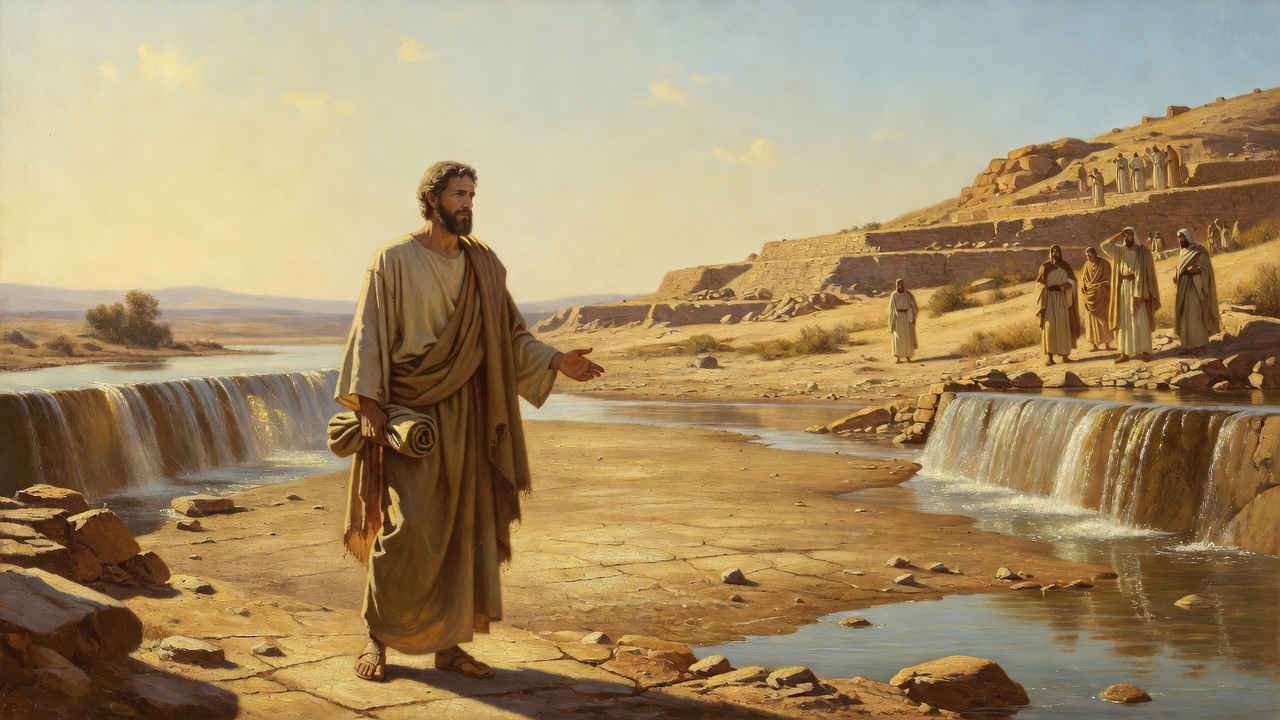
- Elijah's rough mantle had first marked Elisha's calling when Elijah threw it over his shoulders in the field. When Elijah was taken into heaven in a whirlwind, Elisha picked up the fallen cloak and struck the Jordan River with it, demonstrating to the watching prophets that he had received Elijah's spirit and succeeded him as prophet.Sources: Elisha · the Bible text itself
- The spring near Jericho, historically identified with Ain es-Sultan or Elisha's Fountain, had unwholesome water that left the surrounding land barren. Elisha purified the water by casting salt from a new bowl directly into the spring.Sources: Jericho · the Bible text itself
- Before crossing the Jordan, Elijah and Elisha visited communities of the sons of the prophets located at Bethel and Jericho. Fifty men from these prophetic groups watched the miraculous crossing from afar and later spent three days searching the surrounding hills and valleys for Elijah.Sources: Bethel (of Palestine) · Jericho · the Bible text itself
Notes written with AI assistance from open sources (Theographic Bible Metadata, CC BY-SA 4.0; Easton’s Bible Dictionary, public domain) and reviewed before publishing.
Places in this chapter
- Jericho · Today: Tell es Sultan · 31.872, 35.445 · verses 4, 5, 15, 18, 19, 23
- Jordan · Today: Jordan River · 31.761, 35.558 · verses 6, 7, 13
- Mount Carmel · 32.672, 35.023 · verse 25
- Samaria · 32.276, 35.195 · verse 25
Only places identified with high confidence are shown (90% or more according to the scholarly sources compiled by OpenBible). Period map: DARE (Digital Atlas of the Roman Empire), CC BY 4.0; modern map: © OpenStreetMap contributors; places: OpenBible.info (CC BY 4.0).
Credits and license for this translation
Cishingini Agwara Kambari [asg]
Cishingini: Cishingini Agwara Kambari [asg] (Bible)
copyright © 2025 Language Development and Translation Initiative (LDTI)
Language: (Cishingini)
Contributor: The Seed Company
This translation is made available to you under the terms of the
Creative Commons Attribution Share-Alike license 4.0.
You have permission to share and redistribute this Bible translation in any format and to make reasonable revisions and adaptations of this translation, provided that:
You include the above copyright and source information.
If you make any changes to the text, you must indicate that you did so in a way that makes it clear that the original licensor is not necessarily endorsing your changes.
If you redistribute this text, you must distribute your contributions under the same license as the original.
Pictures included with Scriptures and other documents on this site are licensed just for use with those Scriptures and documents.
For other uses, please contact the respective copyright owners.
Note that in addition to the rules above, revising and adapting God's Word involves a great responsibility to be true to God's Word. See Revelation 22:18-19.
2025-07-09
Source: http://ebible.org/asg/ · eBible.org