Haggai 2
الكتاب المقدس باللغة العربية، فان دايك · Tap a verse to see its cross-references.
الوعد بحلول مجد الرب على البيت الجديد
1فِي ٱلشَّهْرِ ٱلسَّابِعِ فِي ٱلْحَادِي وَٱلْعِشْرِينَ مِنَ ٱلشَّهْرِ، كَانَتْ كَلِمَةُ ٱلرَّبِّ عَنْ يَدِ حَجَّي ٱلنَّبِيِّ قَائِلًا: 2«كَلِّمْ زَرُبَّابِلَ بْنَ شَأَلْتِيئِيلَ وَالِيَ يَهُوذَا، وَيَهُوشَعَ بْنِ يَهُوصَادِقَ ٱلْكَاهِنِ ٱلْعَظِيمِ وَبَقِيَّةِ ٱلشَّعْبِ قَائِلًا: 3مَنِ ٱلْبَاقِي فِيكُمُ ٱلَّذِي رَأَى هَذَا ٱلْبَيْتَ فِي مَجْدِهِ ٱلْأَوَّلِ؟ وَكَيْفَ تَنْظُرُونَهُ ٱلْآنَ؟ أَمَا هُوَ فِي أَعْيُنِكُمْ كَلَا شَيْءٍ! 4فَٱلْآنَ تَشَدَّدْ يَا زَرُبَّابِلُ، يَقُولُ ٱلرَّبُّ. وَتَشَدَّدْ يَا يَهُوشَعُ بْنُ يَهُوصَادِقَ ٱلْكَاهِنُ ٱلْعَظِيمُ، وَتَشَدَّدُوا يَا جَمِيعَ شَعْبِ ٱلْأَرْضِ، يَقُولُ ٱلرَّبُّ. وَٱعْمَلُوا فَإِنِّي مَعَكُمْ، يَقُولُ رَبُّ ٱلْجُنُودِ. 5حَسَبَ ٱلْكَلَامِ ٱلَّذِي عَاهَدْتُكُمْ بِهِ عِنْدَ خُرُوجِكُمْ مِنْ مِصْرَ، وَرُوحِي قَائِمٌ فِي وَسَطِكُمْ. لَا تَخَافُوا. 6لِأَنَّهُ هَكَذَا قَالَ رَبُّ ٱلْجُنُودِ: هِيَ مَرَّةٌ، بَعْدَ قَلِيلٍ، فَأُزَلْزِلُ ٱلسَّمَاوَاتِ وَٱلْأَرْضَ وَٱلْبَحْرَ وَٱلْيَابِسَةَ، 7وَأُزَلْزِلُ كُلَّ ٱلْأُمَمِ. وَيَأْتِي مُشْتَهَى كُلِّ ٱلْأُمَمِ، فَأَمْلَأُ هَذَا ٱلْبَيْتَ مَجْدًا، قَالَ رَبُّ ٱلْجُنُودِ. 8لِي ٱلْفِضَّةُ وَلِي ٱلذَّهَبُ، يَقُولُ رَبُّ ٱلْجُنُودِ. 9مَجْدُ هَذَا ٱلْبَيْتِ ٱلْأَخِيرِ يَكُونُ أَعْظَمَ مِنْ مَجْدِ ٱلْأَوَّلِ، قَالَ رَبُّ ٱلْجُنُودِ. وَفِي هَذَا ٱلْمَكَانِ أُعْطِي ٱلسَّلَامَ، يَقُولُ رَبُّ ٱلْجُنُودِ».
بركات لشعب نجس
10فِي ٱلرَّابِعِ وَٱلْعِشْرِينَ مِنَ ٱلشَّهْرِ ٱلتَّاسِعِ، فِي ٱلسَّنَةِ ٱلثَّانِيَةِ لِدَارِيُوسَ، كَانَتْ كَلِمَةُ ٱلرَّبِّ عَنْ يَدِ حَجَّي ٱلنَّبِيِّ قَائِلًا: 11«هَكَذَا قَالَ رَبُّ ٱلْجُنُودِ: اِسْأَلِ ٱلْكَهَنَةَ عَنِ ٱلشَّرِيعَةِ قَائِلًا: 12إِنْ حَمَلَ إِنْسَانٌ لَحْمًا مُقَدَّسًا فِي طَرَفِ ثَوْبِهِ وَمَسَّ بِطَرَفِهِ خُبْزًا أَوْ طَبِيخًا أَوْ خَمْرًا أَوْ زَيْتًا أَوْ طَعَامًا مَّا، فَهَلْ يَتَقَدَّسُ؟» فَأَجَابَ ٱلْكَهَنَةُ وَقَالُوا: «لَا». 13فَقَالَ حَجَّي: «إِنْ كَانَ ٱلْمُنَجَّسُ بِمَيْتٍ يَمَسُّ شَيْئًا مِنْ هَذِهِ، فَهَلْ يَتَنَجَّسُ؟» فَأَجَابَ ٱلْكَهَنَةُ وَقَالُوا: «يَتَنَجَّسُ». 14فَأَجَابَ حَجَّي وَقَالَ: «هَكَذَا هَذَا ٱلشَّعْبُ، وَهَكَذَا هَذِهِ ٱلْأُمَّةُ قُدَّامِي، يَقُولُ ٱلرَّبُّ، وَهَكَذَا كُلُّ عَمَلِ أَيْدِيهِمْ وَمَا يُقَرِّبُونَهُ هُنَاكَ. هُوَ نَجِسٌ. 15وَٱلْآنَ فَٱجْعَلُوا قَلْبَكُمْ مِنْ هَذَا ٱلْيَوْمِ فَرَاجِعًا، قَبْلَ وَضْعِ حَجَرٍ عَلَى حَجَرٍ فِي هَيْكَلِ ٱلرَّبِّ. 16مُذْ تِلْكَ ٱلْأَيَّامِ كَانَ أَحَدُكُمْ يَأْتِي إِلَى عَرَمَةِ عِشْرِينَ فَكَانَتْ عَشَرَةً. أَتَى إِلَى حَوْضِ ٱلْمِعْصَرَةِ لِيَغْرُفَ خَمْسِينَ فُورَةً فَكَانَتْ عِشْرِينَ. 17قَدْ ضَرَبْتُكُمْ بِٱللَّفْحِ وَبِالْيَرَقَانِ وَبِالْبَرَدِ فِي كُلِّ عَمَلِ أَيْدِيكُمْ، وَمَا رَجَعْتُمْ إِلَيَّ، يَقُولُ ٱلرَّبُّ. 18فَٱجْعَلُوا قَلْبَكُمْ مِنْ هَذَا ٱلْيَوْمِ فَصَاعِدًا، مِنَ ٱلْيَوْمِ ٱلرَّابِعِ وَٱلْعِشْرِينَ مِنَ ٱلشَّهْرِ ٱلتَّاسِعِ، مِنَ ٱلْيَوْمِ ٱلَّذِي فِيهِ تَأَسَّسَ هَيْكَلُ ٱلرَّبِّ، ٱجْعَلُوا قَلْبَكُمْ. 19هَلِ ٱلْبَذْرُ فِي ٱلْأَهْرَاءِ بَعْدُ؟ وَٱلْكَرْمُ وَٱلتِّينُ وَٱلرُّمَّانُ وَٱلزَّيْتُونُ لَمْ يَحْمِلْ بَعْدُ. فَمِنْ هَذَا ٱلْيَوْمِ أُبَارِكُ».
زربابل خاتم في أصبع الرب
20وَصَارَتْ كَلِمَةُ ٱلرَّبِّ ثَانِيَةً إِلَى حَجَّي، فِي ٱلرَّابِعِ وَٱلْعِشْرِينَ مِنَ ٱلشَّهْرِ قَائِلًا: 21«كَلِّمْ زَرُبَّابِلَ وَالِيَ يَهُوذَا قَائِلًا: إِنِّي أُزَلْزِلُ ٱلسَّمَاوَاتِ وَٱلْأَرْضَ، 22وَأَقْلِبُ كُرْسِيَّ ٱلْمَمَالِكِ، وَأُبِيدُ قُوَّةَ مَمَالِكِ ٱلْأُمَمِ، وَأَقْلِبُ ٱلْمَرْكَبَاتِ وَٱلرَّاكِبِينَ فِيهَا، وَيَنْحَطُّ ٱلْخَيْلُ وَرَاكِبُوهَا، كُلٌّ مِنْهَا بِسَيْفِ أَخِيهِ. 23فِي ذَلِكَ ٱلْيَوْمِ، يَقُولُ رَبُّ ٱلْجُنُودِ، آخُذُكَ يَا زَرُبَّابِلُ عَبْدِي ٱبْنُ شَأَلْتِيئِيلَ، يَقُولُ ٱلرَّبُّ، وَأَجْعَلُكَ كَخَاتِمٍ، لِأَنِّي قَدِ ٱخْتَرْتُكَ، يَقُولُ رَبُّ ٱلْجُنُودِ».
Did you know?
The Promise of Future Glory
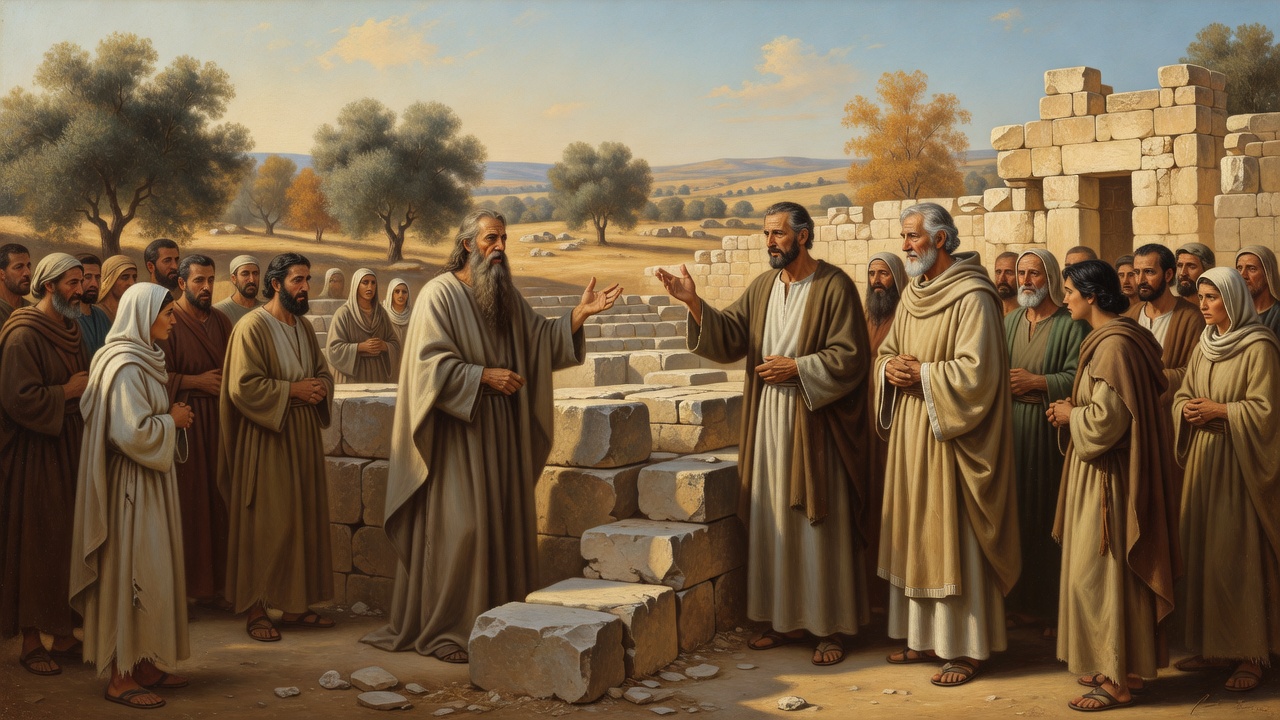
- When the foundation of the second temple was laid after the return from Babylon, older members of the community could still remember the magnificence of the original temple destroyed by Nebuchadnezzar. In response to their discouragement at the modest new structure, Haggai declared that the future glory of this house would surpass its former splendor.Sources: the Bible text itself · Zerubbabel · Haggai
- Haggai consulted the priests on questions of ritual law to illustrate a moral point. According to their rulings, holiness was not easily transmitted through indirect contact, whereas ceremonial defilement—such as from touching a corpse—spread immediately, mirroring how their past neglect had affected their offerings and harvests.Sources: the Bible text itself
- The restoration of the community was led by two key figures: Zerubbabel son of Shealtiel, who served as the civil governor, and Joshua son of Jehozadak, the high priest. At the end of the chapter, Haggai addresses Zerubbabel with the royal imagery of a signet ring, symbolizing divine authority and choice.Sources: the Bible text itself · Zerubbabel · Joshua
Notes written with AI assistance from open sources (Theographic Bible Metadata, CC BY-SA 4.0; Easton’s Bible Dictionary, public domain) and reviewed before publishing.
Places in this chapter
- Egypt · 30.129, 31.308 · verse 5
Only places identified with high confidence are shown (90% or more according to the scholarly sources compiled by OpenBible). Period map: DARE (Digital Atlas of the Roman Empire), CC BY 4.0; modern map: © OpenStreetMap contributors; places: OpenBible.info (CC BY 4.0).
Credits and license for this translation
الكتاب المقدس باللغة العربية، فان دايك
Arabic Van Dyck translation of the Holy Bible
Public Domain
Language: العربية (Arabic)
Dialect: standard
Translation by: Syrian Mission
Contributor: American Bible Society
2020-08-03
Source: http://ebible.org/arb-vd/ · eBible.org