Matthew 2
The New Testament of our Lord and Saviour Jesus Christ · Tap a verse to see its cross-references.
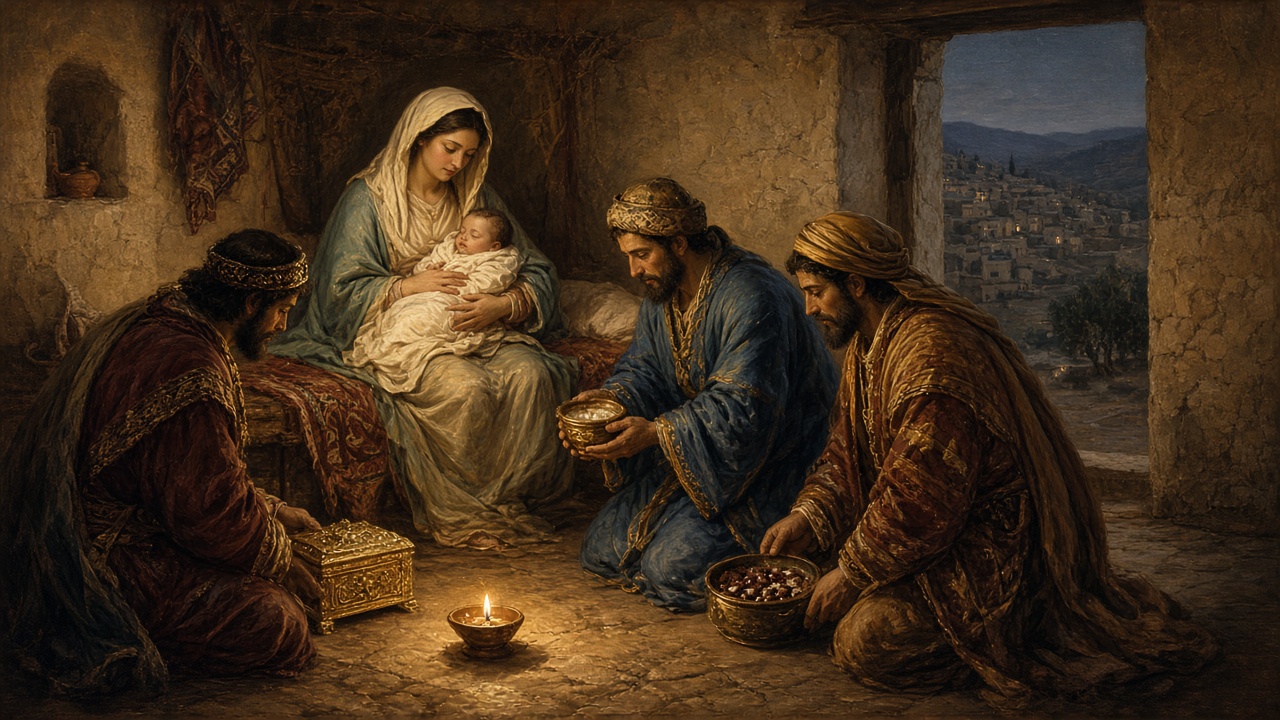
1Judéayú Béthlehem golzeegee Jesus gozlįįdá’ Hérod nant’án nlįį lę́k’e, áídá’ ya’áí hanadáhdí’ nṉee daagoyánihi hikai, Jerúsalemzhį’, 2Gádaaṉiigo, Jews binant’a’ gozlįįhíí hayú? Ya’áí hanadáhdí’ bits’iłsǫǫsé dah hiit’įįhíí bighą daahohiikąąhyú dekai. 3Hérod nant’án nlíni ła’íí nṉee dawa Jerúsalemyú daagolíni biłgo díí daidezts’ąądá’ doo bił daagozhǫ́ǫ́ da lę́k’e. 4Hérod okąąh yebik’ehi itisyú nadaandeehi ła’íí begoz’aaníí ye’ik’eda’iłchíhi íła’áyíílaago, Hayú Christ goleeh? daayiłṉiigo nayídaadiłkid. 5Áík’ehgo gádaabiłṉii, Judéayú Béthlehem golzeegee; Bik’ehgo’ihi’ṉań binkááyú na’iziidi n’íí k’e’eshchįįhíí k’ehgo, 6Júda bini’yú Béthlehem ńlííníí, Júdagee nant’án daanliiníí bił dáłedaanłt’éé: nant’án shichągháshé, Israel hat’i’íí, yá nant’aa doleełíí nits’ą́’dí’go goleehíí bighą, ṉii. 7Hérod dánant’į’ego nṉee daagoyánihíí yiká o’ił’a’dá’ nayídaadiłkid, Daadá’ ts’iłsǫǫsé dantsé hit’įį silįį? ṉiigo. 8Áídí’ Béthlehemyú odaayis’a’ gádaabiłṉiigo, Ishkiin ałts’ísę́ę nłt’éégo biká hadaanohtaa; baa nohkai lę́k’eyúgo shił nanádaagodołṉihgo shíí ałdó’ ákú hoshkąąhyú disháh. 9Nant’án áṉííhíí daidezts’ąądá’ dahiskai; hikaahdá’ ya’áí hanadáhdí’go ts’iłsǫǫsé dahs’ąągo daayo’įį n’íí bádįhyúgo hiltǫǫł nt’éégo, ishkiin ałts’ísę́hi sitįįgee bik’ehdí’ dahs’ąą silįį. 10Ts’iłsǫǫsé daayiłtsąądá’ dázhǫ́ yaa bił daagozhǫ́ǫ́ lę́k’e;
11Áídí’ kįh yuṉe’ ha’ákaidá’ ishkiin ałts’ísę́híí bą́ą́, Mary holzéhi, yiłgo daayiłtsąądá’, yich’į’ hayaa ádaadzaago daayokąąh: ilínihi nadaayiné’íí yidá’ch’ída’iztąągo óodo, jeeh didlidgo łikągolchini, frankincense holzéhi, ła’íí jeeh nch’í’i, myrrh holzéhi, yaa daizné’. 12Nṉee daagoyáni Bik’ehgo’ihi’ṉań, Hérod bich’į’yú nádohkáh hela’, daabiłṉiigo yaa nadaiyeełgo, dabíí bini’yú onákai, łahyúgo. 13Anákaidá’ Bik’ehgo’ihi’ṉań binal’a’á yaaká’dí’hi Joseph bił ch’í’ṉah ánágodlaa nayeełíí bee, gáṉíígo, Nádndáh, mé’ hik’e bą́ą́ biłgo Egyptyú bił nkáh, akú nahísóotąą, nohwił nanágosisṉi’zhį’; Hérod k’ad mé’ yiziłheego yiká hantaa godigháh. 14Áík’ehgo Joseph nádiidzaago mé’ihíí hik’e bąąhíí biłgo tł’é’yú Egyptyú okai. 15Hérod daztsąązhį’ da’akú naháztąą: Bik’ehgo’ihi’ṉań binkááyú na’iziidíí áṉíí n’íí, ShiYe’ Egyptdí’ hanṉáh biłdishṉii, nṉiidíí begolṉe’go ágodzaa.
16Áídí’ Hérod nṉee daagoyáni bich’į’ nadaazhch’a’go yígołsįįdá’ dázhǫ́ bágóchįįdgo, ishikíń naki bił łedaagodzaadí’ hayaa godezt’i’go dawa natseedgo yengon’ą́ą́ Béthlehemyú, nṉee daagoyáni Jesus yaa nayídaadiłkid n’íídí’ godezt’i’go. 17Jéremy, Bik’ehgo’ihi’ṉań binkááyú na’iziidi n’íí, gánṉiidíí begolne’, 18Rámayú ła’ bizhii daidits’ag, daachag ła’íí chaał daadilwosh, Rachel bichągháshé yighą hichago, yati’ inesk’azíí bee bich’į’ yádaach’iłti’ ndi doo hagot’éégo da lę́k’e, bichągháshé da’ádaadįhíí bighą.
19Hérod daztsąądá’ Bik’ehgo’ihi’ṉań binal’a’á yaaká’dí’hi Egyptgee Joseph nayeełíí bee bił ch’í’ṉah ánágodlaa, 20Gáṉíígo, Nádndáh, niye’ hik’e bą́ą́ biłgo Israel hat’i’i bini’yú bił nádnkáh: niye’ daiziłhee hádaat’įį n’íí nanezna’. 21Áídí’ nádiidzaago biye’ hik’e bąąhíí biłgo Israel hat’i’íí bini’yú onákai. 22Arkeláus Judéayú nant’án nanásdlį́į́, bitaa Hérod sitįį n’íígee nnańtłizhgo Joseph ya’ikonzįįdá’, ákú digháhzhį’ neldzid: áík’ehgo bindzeełíí bee Bik’ehgo’ihi’ṉań, Doo ákú ńṉáh da, biłnṉiid, áík’ehgo ni’ łahyúgo Galilee golzeeyú okai. 23Áídí’ kįh gozṉilíí Názareth golzeegee ndaagozle’; Bik’ehgo’ihi’ṉań binkááyú nada’iziidi, Áń Názarene holzee doleeł, daaṉii n’íí begolṉe’go.
Did you know?
Magi, Herod, and Nazareth
- The King Herod of this chapter is Herod the Great. His son Archelaus, by Malthace, a Samaritan woman, inherited a third of the kingdom: Idumea, Judea, and Samaria. Until a few days before Herod's death another son, Antipas, had been named successor, but in his last moments Herod named Archelaus; for fear of him, Joseph turned aside from Judea and withdrew to Galilee.Sources: Archelaus · the Bible text itself
- Matthew links the deaths of the boys in Bethlehem to words spoken through the prophet Jeremiah: a voice in Ramah, Rachel weeping for her children. Rachel, one of Jacob's wives, died giving birth to Benjamin and was buried by the wayside on the road to Ephrath, that is Bethlehem, directly north of the town. Her sepulchre is regarded with great veneration by the Jews.Sources: the Bible text itself · Rachel · Bethlehem
- Bethlehem, in the hill country of Judah, was earlier called Ephrath and was also known as the city of David; under the Romans it lay in Judea, the southernmost of the three divisions of Palestine. Joseph and Mary went instead to Nazareth in Galilee, their home, a town not mentioned in the Old Testament. The name Nazareth is generally supposed to come from the Hebrew netser, a shoot or sprout, though some connect it with a word for guarding or watching.Sources: Bethlehem · Judea · Nazareth · the Bible text itself
Notes written with AI assistance from open sources (Theographic Bible Metadata, CC BY-SA 4.0; Easton’s Bible Dictionary, public domain) and reviewed before publishing.
Places in this chapter
- Bethlehem · 31.704, 35.208 · verses 1, 5, 6, 8, 9, 16
- East · Today: region around Amman · 31.955, 35.934 · verses 1, 2, 9
- Jerusalem · 31.777, 35.234 · verses 1, 3
- Judea · Today: Judea 1 · 31.777, 35.234 · verses 1, 5, 22
- Egypt · 30.129, 31.308 · verses 13, 14, 15, 19
- Galilee · 32.760, 35.527 · verse 22
- Nazareth · 32.702, 35.298 · verse 23
Only places identified with high confidence are shown (90% or more according to the scholarly sources compiled by OpenBible). Period map: DARE (Digital Atlas of the Roman Empire), CC BY 4.0; modern map: © OpenStreetMap contributors; places: OpenBible.info (CC BY 4.0).
Credits and license for this translation
The New Testament of our Lord and Saviour Jesus Christ
New Testament in Apache, Western (US:apw:Apache, Western)
copyright © 2012 Wycliffe Bible Translators, Inc.
Language: Western Apache (Apache, Western)
Translation by: Wycliffe Bible Translators, Inc.
Copyright Information
© 2012,Wycliffe Bible Translators. All rights reserved.
This translation text is made available to you under the
terms of the Creative Commons License: Attribution-Noncommercial-No Derivative Works.
( http://creativecommons.org/licenses/by-nc-nd/3.0/ )
In addition, you have permission to port the text to different file formats, as long as you
do not change any of the text or punctuation of the Bible.
You may share, copy, distribute, transmit, and extract portions
or quotations from this work, provided that you include the above copyright
information:
You must give Attribution to the work.
You do not sell this work for a profit.
You do not make any derivative works that change any of the actual words or punctuation of the Scriptures.
Permissions beyond the scope of this license may be
available if you contact
us with your request.
The New Testament
in Apache, Western
© 2012,Wycliffe Bible Translators. All rights reserved.
This translation is made available to you under the terms of the
Creative Commons Attribution-No Derivatives license 4.0.
You may share and redistribute this Bible translation or extracts from it in any format, provided that:
You include the above copyright and source information.
You do not make any derivative works that change any of the actual words or punctuation of the Scriptures.
Pictures included with Scriptures and other documents on this site are licensed just for use with those Scriptures and documents.
For other uses, please contact the respective copyright owners.
2014-04-21
Source: http://ebible.org/apwNT/ · eBible.org