Luke 6
The New Testament of our Lord and Saviour Jesus Christ · Tap a verse to see its cross-references.
1Jews daagodnłsiníí bijįį nakigeehíí Jesus tł’oh nagháí hentííníí yiyi’yú higaał; bitsiłke’yu yił hikaahgo tł’oh nagháí binest’ą’ nadaayiṉiił; áígé’ daidnzhishgo daayiyąą lę́’e. 2Phárisees daanlíni ła’ gádaabiłṉii, Hat’íí bighą godilziníí bijįį doo hat’íí baa nach’ighaa dahíí ádaałt’įį? 3Jesus gáṉíí, Ya’ David ła’íí yił nakaihíí biłgo shiṉá’ daasilįįgo hago ádaasdzaa láń shįhíí doo hwahá baa da’ołshiih da née? 4Bik’ehgo’ihi’ṉań daach’okąąh goz’ąą yuṉe’ ha’ayáágo, báń Bik’ehgo’ihi’ṉań ye’okąąhgo baa hi’né’go nii’né’ n’íí náidnné’go yiyąą, ła’íí yił nakaihíí ałdó’ ła’ yá’ńné’ lę́’e; áí báńhíí okąąh yedaabik’ehi zhą́ daayiyąągo goz’ánihi. 5Shíí, nṉee k’ehgo Niyááhíí, godilziníí bijįį ndi beshik’eh, ṉii, Jesus. 6Łah Jews daagodnłsiníí bijįį ha’ánáłséh goz’ąą yuṉe’ Jesus ha’ayáágo iłch’ígó’aah lę́’e: akóṉe’ nṉee bigan dihe’nazhiṉéégo binawod ásdįįdi itah sidaa. 7Begoz’aaníí ye’ik’eda’iłchíhi ła’íí Phárisees daanlíni biłgo Jesus daineł’į́į́ lę́’e, godilziníí bijįį nṉeehíí náyilziih shį daanzįgo; ágádzaayúgo Jesus hat’íhíta yee yaa dahdaago’aahíí bighą. 8Áíná’ Jesus áí natsídaakeesíí yígółsįhíí bighą nṉee bigan binawod ásdįįdi gáyiłṉii, Nádndáhgo kodé’ hizįį. Áík’ehgo nádiidzaago áígee hizį’ lę́’e. 9Jesus begoz’aaníí ye’ik’eda’iłchíhi ła’íí Phárisees biłgo gádaayiłṉii, Dała’á nanohwídaadishkid, ya’ godilziníí bijįį nłt’éégo ách’ít’įįgo goz’ąą née, dagohíí dénchǫ’égo ách’ít’įį née? Ya’ nṉee hasdách’iłteehgo née, dagohíí ch’iziłheego née? 10Jesus nṉee yitah déz’įį lę́’e, áígé’ nṉee bigan binawod ásdįįdi gáyiłṉii, Yushdé’ dahdinlṉíh. Ágádzaaná’ bigan nłt’éé násdlį́į́, łahzhiṉééhíí ga’at’éé. 11Nṉee Jesus yik’edaanṉiihíí hadaashkeego gádaałiłdi’ṉii, Jesus hagoshą’ ádaahiidle’? 12Áíná’ Jesus dasahn dziłyú óyáá okąąhgo, Bik’ehgo’ihi’ṉań yich’į’ okąąhgo iskąą.
13Hayiłką́ą́yú biké’ hikahíí, Yushdé’, daayiłnṉiidná’ nakits’ádah hayiṉil: áí shinadaal’a’á daayiłṉii; 14Simon, (Peter yízhi’ yá áyíílaahíí,) bik’isn Andrew, ła’íí James, John, Philip, Barthólemew, 15Matthew, Thomas, ła’íí James Alphéus biye’i, Simon Zelótes holzéhi, 16Judas James bik’isn, ła’íí Judas Iscáriot, ch’íbido’aał doleełi.
17Dziłgé’ yił nkenákainá’ dziłíí bitl’ááhgee sizįį, áígee biké’ hikahíí, ła’íí nṉee łą́ą́go Judéagé’, Jerúsalemgé’, ła’íí tádá’yú Tyre ła’íí Sídongé’ daagolínihi daabidits’į́h hádaat’įįgo, ła’íí daanezgaihíí nádaabidilziih hádaat’įįgo baa náńłsą́ą́; 18Hayíí spirits nchǫ’i biyi’ daagolííníí ałdó’ baa hikai: áík’ehgo náda’bidilzii lę́’e. 19Nṉee dawa bedaadilchiid hádaat’įį lę́’e: binawodíí nádaabilziihíí bighą.
20Biké’ hikahíí yineł’į́į́go gáyiłṉii, Nohwíí tédaanołt’iyéhíí nohwiyaa gozhǫ́ǫ́ doleeł: Bik’ehgo’ihi’ṉań bilałtł’áhgee daanliiníí itah daanołįį. 21K’adíí shiṉá’ daanołiiníí nohwiyaa gozhǫ́ǫ́ doleeł: náda’dołdǫǫł. K’adíí daałchagíí nohwiyaa gozhǫ́ǫ́ doleeł: daałdloh doleeł. 22Shíí, nṉee k’ehgo Niyááhíí, shighą nṉee nohwik’edaanṉiihyúgo, ła’íí doo hádaanohwit’įį dayúgo, nchǫ’go nohwich’į’ yádaałti’yúgo, nohwizhi’ nchǫ’go yaa yádaałti’yúgo nohwiyaa gozhǫ́ǫ́ doleeł. 23Áí bijįį dázhǫ́ nohwił daagozhǫ́ǫ́go yaadaołjah le’: yaaká’yú itisgo nohwaa hi’né’i dázhǫ́ nchaa doleeł: nṉee nohwik’edaanṉiihíí bich’ą́’gé’ nṉee daanlínihíí Bik’ehgo’ihi’ṉań binkááyú nada’iziidi n’íí ałdó’ ágádaayiłsį lę́’e. 24Áíná’ nohwíí ízisgo da’ołt’iiníí, nohwá góyéé doleeł! ałk’iná’ dawa hádaałt’iiníí nohwíyéé. 25K’adíí náda’sołdįįdíí, nohwá góyéé doleeł! shiṉá’ daanołįį doleeł. K’adíí daałdlohíí, nohwá góyéé doleeł! ík’edaadoł’ṉii ła’íí daołchag doleeł. 26Nohwíí nṉee dawa nłt’éégo nohwaa yádaałti’ihíí, nohwá góyéé doleeł! áí bich’ą́’gé’ nṉee daanlínihíí Bik’ehgo’ihi’ṉań binkááyú nada’iziidíí daazhógo ádaadil’íni n’íí ágádaayiłnṉiid ałdó’.
27Shihíí daashidołts’agíí gádaanohwiłdishṉii, Nohwik’edaanṉiihíí nohwił daanzhǫǫ le’, hayíí bił daanołchǫ’íí nłt’éégo bich’į’ ádaanołt’ee le’, 28Yati’ yee daanohwókaałíí nłt’éégo bich’į’ natsídaałkees le’, ła’íí nchǫ’go nohwich’į’ ádaat’eehíí bá da’ołkąąh le’. 29Hadń nitł’ah yonłts’íyúgo łahzhiṉéé bich’į’ nnanínt’aah; hadń ni’íícho nich’ą́’ náidiłtsoozyúgo n’íí ałdó’ doo baa ńchį’ da. 30Dahadń hat’íí níyókeedíí baa nné’; hadń dahat’íhíta ṉíyééhíí nich’ą́’ náidnné’yúgo doo t’ąązhį’ bínáhóńkeed da. 31Nṉee hago’at’éégo nohwich’į’ ádaat’eego hádaałt’įįhíí k’ehgo nohwíí ałdó’ bich’į’ ágádaanołt’ee. 32Hayíí bił daanołshooníí zhą́ nohwił daanzhǫǫyúgo, hago’at’éégo nłt’éé áí? Nṉee doo daagodnłsį dahíí ndi hayíí bił daanzhooníí bił daanzhǫǫ. 33Hayíí nłt’éégo ádaanłsį shįhíí zhą́ bich’į’ nłt’éégo ádaanołt’eeyúgo, hago’at’éégo nłt’éé áí? Nṉee doo daagodnłsį dahíí ndi ágádaat’íni at’éé ałdó’. 34Nohwíí hadń hat’íí bá ch’ídaashołné’yúgo t’ąązhį’ shaa nné’ daanołsįgo, hago’at’éégo nłt’éé áí? nṉee doo daagodnłsį dahíí ndi dawahá łáłch’ínádai’né’i at’éé, da’áígee shaa nai’né’ daanzįgo. 35Nohwik’edaanṉiihíí nohwił daanzhǫǫ le’, ła’íí nłt’éégo ádaałt’įį, dahat’íhíta ch’ídaanołné’ le’ doo shaa nané’ daanołsį dago; áík’ehgo yaaká’gé’ łą́ą́go nohwaa nané’ ła’íí Da’tiséyú At’éhi bichągháshé daanołįį doleeł: áń nṉee doo ahédaanzį dahíí ła’íí daanchǫ’íí ndi yich’į’ nłt’éégo at’éé. 36NohwiTaa bił goch’oba’híí k’ehgo nohwíí ałdó’ nohwił goch’oba’ le’. 37Doo hadń baa nádaałt’įį da le’, áík’ehgo nohwíí ałdó’ doo nohwaa nádaach’it’įį da doleeł: nṉee doo nchǫ’go baa natsídaałkees da le’, áík’ehgo doo nchǫ’go nohwaa natsída’ikees da: nṉee nohwich’į’ nchǫ’go ánát’įįłíí baa nádaagodenoł’aah le’, áík’ehgo nohwíí ałdó’ nohwaa nágodet’aah: 38Nṉee baa daanołné’, áík’ehgo nohwíí ałdó’ nohwaa na’né’; áí nłt’éégo bínel’ąądgo, hayaa iłk’ínábénisdzilgo, nłt’éégo ąął nnésgohgo haláh odaazlįįgo nohwaa nach’iné’. Dáhołąągo kaa daasołné’ láńshį n’íí k’ehgo da’ágáhołąągo nohwaa nádo’né’. 39Iłch’ígót’aahgo na’goṉi’íí yee hadziigo gádaabiłnṉiid, Ya’nṉee biṉáá ágodiníí ła’ nṉee biṉáá ágodini łolǫǫs née? ágádaasdzaayúgo shą’ da’áła ínlwozh yuyaa ołiłdeeł? 40Biłch’ígót’aahíí biłch’ígó’aahi doo yitisgo at’éhi at’éé da: áíná’ daakówa nłt’éégo koł ch’ídaakost’ąąyúgo, áí bił ch’ígó’aahíí ga’ách’ít’éé daach’ileeh. 41Hat’íí bighą nik’isn biṉáá yuṉe’ tsįałch’ísę́ę sitaaníí hí’į́į́, áíná’ nihíí niṉáá yuṉe’ tsį nchaahi sitaaníí doo hí’į́į́ da? 42Ni niṉáá yuṉe’ tsį nchaahi sitaaníí doo hí’į́į́ daná’, hat’íí bighą nik’isn gáłnṉii, Shik’isn, ai tsį ałch’ísę́ę niṉáá yuṉe’ sitaaníí ná haoshtįįh? Ni nzhǫǫ ádńł’íni, iłtsé niṉáá yuṉe’ tsį nchaahi sitaaníí hatįįh, áík’ehgo nłt’éégo go’į́į́ nleehgo, áníita nik’isn biṉáá yuṉe’ tsį ałch’ísę́ę sitaaníí bá hatįįh. 43Tsint’áni nłt’éhihíí doo nest’áń dénchǫ’éhíí baa dahnándahi at’éé da; ła’íí tsint’áni dénchǫ’éhíí nest’áń nłt’éhihíí doo baa dahnándahi at’éé da. 44Tsint’áni dała’á hentį́į́go nest’áń baa dahnándahíí bee bígózį. Figs doo hosh baa ndaach’ihiṉiiłhi at’éé da, ła’íí dasts’aa’íí doo hosh diwozhíí baa ndaach’ihiṉiiłhi at’éé da. 45Nṉee nłt’éhihíí bijíí yuṉe’ nłt’éégo goz’aaníí bich’ą́’gé’ nłt’éhihíí zhą́ bee hagowá; áíná’ nṉee nchǫ’íí bijíí yuṉe’ nchǫ’go goz’aaníí bich’ą́’gé’ nchǫ’íí zhą́ bee hagowá: hago’at’éégo yách’íłti’ shįhíí kojíí yuṉe’ hago’at’éégo goz’ąą shįhíí bich’ą́’gé’ ách’iṉiihi at’éé.
46Hat’íí bighą, SheBik’ehń, sheBik’ehń, daashiłdołṉiigo shich’į’ ádaadołṉiiná’ da’ánohwiłdishṉiiyú doo ádaanołt’ee da? 47Dahadń shaa nyááhń shíyésts’ąągo shiyati’ yikísk’eh at’ééhń, díí k’ehgo ako at’éhi at’éé: 48Nṉee yúyahgo hagogéedgo tséé biká’ bigową ágodlaa: áík’ehgo tú idezjoolgo bigowąhíí bídilk’oł ndi doo hago adzaa da; nłdzilgo tséé biká’ ágolzaahíí bighą. 49Áíná’ dahadń shíyésts’ąą ndi doo yikísk’eh at’éé dahń, díí k’ehgo ako at’éhi at’éé, nṉee bigową dá sáí zhą́ yiká’ ágodlaa, doo tséé biká’ dahgoz’ąą dago; áí gowąhíí yich’į’ tú idezjoolgo dagoshch’į’ nangóngo’; áík’ehgo aanábígotł’įįł gozlįį.
Did you know?
The Sabbath, the Twelve, and the Plain
- On a Sabbath, as Jesus passed through the grainfields, his disciples picked heads of grain, rubbed them in their hands, and ate them, and some Pharisees called this unlawful. Jesus recalled that David and his hungry companions ate consecrated bread from the house of God, bread lawful only for the priests, and said that the Son of Man is Lord of the Sabbath. On another Sabbath he restored a man’s withered right hand in the synagogue while scribes and Pharisees watched for a reason to accuse him; a chronology dates both episodes to AD 28.Sources: the Bible text itself · Corn on the Sabbath · Healing a Withered Hand
- After spending the night in prayer on the mountain, Jesus called his disciples and chose twelve, whom he designated apostles. Among them were Simon, whom he named Peter, and Peter’s brother Andrew, fishermen from Bethsaida on the western coast of the Sea of Galilee, and Matthew, a tax collector at Capernaum who had formerly been known as Levi.Sources: the Bible text itself · Simon Peter · Andrew · Matthew
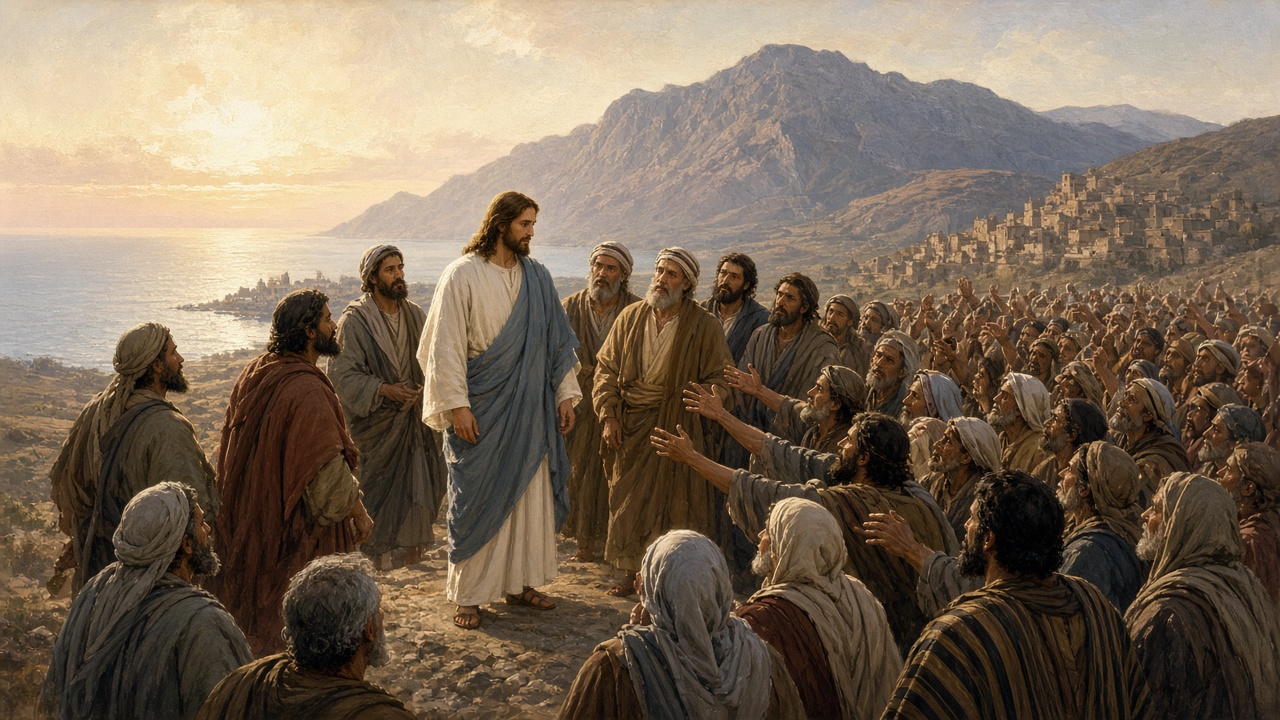
- Jesus came down with them and stood on a level place, where people from Judea, Jerusalem, and the sea coast of Tyre and Sidon had gathered to hear him and to be healed. Tyre and Sidon were ancient Phoenician cities on the Mediterranean; Sidon, the older city, lay about twenty-five miles north of Tyre. A chronology dates this teaching to AD 28 and titles it the Sermon on the Mount, though the narrative places Jesus on level ground after he came down from the mountain.Sources: the Bible text itself · Tyre · Sidon · Sermon on the Mount
Notes written with AI assistance from open sources (Theographic Bible Metadata, CC BY-SA 4.0; Easton’s Bible Dictionary, public domain) and reviewed before publishing.
Places in this chapter
- Jerusalem · 31.777, 35.234 · verse 17
- Judea · Today: Judea 1 · 31.777, 35.234 · verse 17
- Sidon · Today: Sandikli archaeological site in Sidon · 33.561, 35.372 · verse 17
- Tyre · 33.271, 35.196 · verse 17
Only places identified with high confidence are shown (90% or more according to the scholarly sources compiled by OpenBible). Period map: DARE (Digital Atlas of the Roman Empire), CC BY 4.0; modern map: © OpenStreetMap contributors; places: OpenBible.info (CC BY 4.0).
Credits and license for this translation
The New Testament of our Lord and Saviour Jesus Christ
New Testament in Apache, Western (US:apw:Apache, Western)
copyright © 2012 Wycliffe Bible Translators, Inc.
Language: Western Apache (Apache, Western)
Translation by: Wycliffe Bible Translators, Inc.
Copyright Information
© 2012,Wycliffe Bible Translators. All rights reserved.
This translation text is made available to you under the
terms of the Creative Commons License: Attribution-Noncommercial-No Derivative Works.
( http://creativecommons.org/licenses/by-nc-nd/3.0/ )
In addition, you have permission to port the text to different file formats, as long as you
do not change any of the text or punctuation of the Bible.
You may share, copy, distribute, transmit, and extract portions
or quotations from this work, provided that you include the above copyright
information:
You must give Attribution to the work.
You do not sell this work for a profit.
You do not make any derivative works that change any of the actual words or punctuation of the Scriptures.
Permissions beyond the scope of this license may be
available if you contact
us with your request.
The New Testament
in Apache, Western
© 2012,Wycliffe Bible Translators. All rights reserved.
This translation is made available to you under the terms of the
Creative Commons Attribution-No Derivatives license 4.0.
You may share and redistribute this Bible translation or extracts from it in any format, provided that:
You include the above copyright and source information.
You do not make any derivative works that change any of the actual words or punctuation of the Scriptures.
Pictures included with Scriptures and other documents on this site are licensed just for use with those Scriptures and documents.
For other uses, please contact the respective copyright owners.
2014-04-21
Source: http://ebible.org/apwNT/ · eBible.org