Luke 24
The New Testament of our Lord and Saviour Jesus Christ · Tap a verse to see its cross-references.
1Áí iskąą hik’e godilziníí bijįį dázhǫ́ t’ałbįgo tsébii’i’áńyú łikągolchini iłch’į’daizlaa n’íí odaizné’, ła’i ałdó’ yił hikai. 2Tsébii’i’áńyú hikaigo tséé daadin’ą́ą́ n’íí yó’olyiz lę́’e. 3Ákóṉe’ ha’ákaigé’ Jesus nohweBik’ehń bits’íhíí doo hwaa da lę́’e. 4Hayúshą’ daanzįná’ nṉee naki bidiyágé dázhǫ́ bik’enadidlaadi bit’ahgé’ nazįį silįį: 5Isdzáné tsídaadolyizgo hayaa ádaadzaa nt’éégo nṉeehíí gádaabiłṉii, Hat’íí bighą hiṉáhi nanezna’íí bitahyú hádaadeł’į́į́? 6Áń doo hwaa da, naadiidzaa: t’ah Gálileeyú naghaaná’ gádaanohwiłṉii n’íí bénádaałṉiih shį, 7Shíí, nṉee k’ehgo Niyááhíí, nṉee binchǫ’ daagolííníí baa shich’ilteehgo tsį’iłna’áhi biká’ dastsaah, áíná’ taagi jįį hileehgo naadiishdáh. 8Áík’ehgo áí áṉíí n’íí yénádaalṉiih. 9Tsébii’i’áńgé’ nákaiyú łats’ádahíí ła’íí ła’ Jesus biké’ hikahíí ałdó’ bił nadaagosṉi’. 10Mary Mágdalene, Jóanna, ła’íí Mary, James bimaa, ła’ isdzáné biłgo nadaal’a’á díí yił nadaagosṉi’. 11Ndi daazhógo ádaaṉii daanzįgo doo daayodląą da. 12Áíná’ Peter nádiidzaago tsébii’i’áńyú nádilwod; hayaa adzaago ákóṉe’ déz’įįd, nak’ą’łigai n’íí daazhógo siṉilgo yiłtsąą, áík’ehgo t’ąązhį’ gowąyú onádzaa, hagoshą’ ágodzaa nzįgo.
13Da’áí bijįį ła’ naki dilt’eego Jerúsalemhíí da’dáńyú gosts’idi dahgostǫ’yúshįgotah, Emmáus golzeeyú dezh’aazh. 14Díí ánágot’įįłíí dawa yaa łił nagolṉi’go goldoh. 15T’ah yádaałti’go łił nagolṉi’ nt’éégo Jesus bit’ah nyáágo bił dahiskai. 16Áíná’ daineł’į́į́ ndi hadń át’ííníí doo bídaagołsįįd da alzaa lę́’e. 17Jesus gádaabiłṉii, Hat’íílá baa łił nagołṉi’ goldoh, doo nohwił daagozhǫ́ǫ́ dago? 18Dała’á, Cléopas holzéhihíí, gábiłṉii, Ya’ dáni zhą́ Jerúsalemyú asta’ńyáhi, áníi áígee ánágot’įįłíí doo bígonłsį́ da née? 19Hago ágolzaahi áłdołṉii? ṉii, Jesus. Áík’ehgo gánádaabiłdo’ṉiid, Jesus, Názarethgé’ nlínihi, Bik’ehgo’ihi’ṉań binkááyú na’iziidi, dázhǫ́ ízisgo áná’ol’įįłi, biyati’ nłdzili, Bik’ehgo’ihi’ṉań ła’íí nṉee dawa biṉááłihi áłn’ṉii. 20Áń dánohwíí nohwi’okąąh yebik’ehi itisyú nadaandeehíí ła’íí nohwá nadaant’aahíí bángot’aahgo bidizideego ndaistįį, áígé’ tsį’iłna’áhi yiká’ daizes‐hįį: 21Áíná’ nohwíí Israel hadaasiit’i’íí hasdánohwiṉiił lą́ą́ daandzį: n’íí díí ánágot’įįł n’íí yúshdé’ taagi jįį silįį. 22Nohwitahgé’ ła’ isdzáné nohwił díyadaagot’eego ádaanohwizlaa, áń dázhǫ́ t’ałbįná’ tsébii’i’áńyú okai lą́ą́; 23Ndi Jesus bits’íhíí ákú doo hwaa da lą́ą́go, t’ąązhį’ nakai gádaaṉiigo, Bik’ehgo’ihi’ṉań binadaal’a’á yaaká’gé’hi nohwich’į’ ch’í’ṉah ádaadzaago gádaanohwiłṉii, Jesus hiṉaa. 24Ła’ bił nahikaihíí tsébii’i’áńyú okai, isdzáné da’ádaaṉii n’íí k’ehgo yaa hikai: ndi Jesus doo hwaa daayiłtsąą da. 25Áígé’ Jesus gádaabiłṉii, Nohwíí nṉee doo daagoyáni daanołínihi, Bik’ehgo’ihi’ṉań binkááyú nada’iziidi n’íí nadaagosṉi’íí doo dáhah daahołdląąh da: 26Christ áík’ehgo biniigodilṉe’go áígé’ yee ízisgo at’ééhíí baa godidot’aałgo dábik’eh lą́ą́ née? 27Mosesgé’ godezt’i’go Bik’ehgo’ihi’ṉań binkááyú nada’iziidi n’íí ádaaṉiihíí dawa, ła’íí Bik’ehgo’ihi’ṉań biyati’ bek’eda’ashchiiníí dahot’éhé dabíí baa k’e’eshchiiníí hat’íí golzeego ágolzeehíí yił nadaagosṉi’. 28Gotah dezh’aazh n’ííyú dák’ad nikáh: Jesus bádn dayúweh dahiyaa nt’éégo, 29Nił nahátąą le’, daabiłṉiigo nádaabokąąh; ałk’iná’ o’i’ą́ą́, k’ad tł’é’ goleeh, daabiłṉii. Áík’ehgo yił ha’ákaiyú yił naháztąą. 30Da’iyąągo bił dinezbįhgo báń náidn’ąągo ya’ahénzįgo oskąądná’ iłk’íyíné’go baa daizné’. 31Áníita áígee hadń át’į́į́ shįhíí nzhogo daayiłtsąą; nt’éégo Jesus dádaineł’į́į́zhį’ yitł’ąą tsídaazghal. 32Gádaałiłdi’ṉii, Nohwijíí dázhǫ́ diltłi’ ngonolįgo at’éé, itínyú nohwich’į’ yałti’ná’, áń Bik’ehgo’ihi’ṉań biyati’ bek’eda’ashchiiníí hat’íí ṉiigo aṉííhíí baa nohwił nagolṉi’ná’. 33Áígé’ dagoshch’į’ nádiit’aazhgo Jerúsalemyú onát’aazh, ákú łats’ádahíí ła’íí nṉee ła’ ishhah dała’ádaat’eego baa n’áázh, 34Nt’éégo gádaabiłṉii, NohweBik’ehń da’aṉii naadiidzaa lą́, Simon bich’į’ ch’í’ṉah ádilzaa ałdó’. 35Nṉee áníi n’áázhíí itínyú hago ágodzaahíí, ła’íí hago at’éégo Jesus báń iłk’íyíné’gee yínádaagosdzįįdíí yaa nadaagosṉi’.
36Gádaaṉiiná’ Jesus dabíí áí bitah sizįį silįįgo gádaayiłṉii, Iłch’į’gont’ééhíí bee nohwich’į’ goz’ąą le’. 37Ndi bił díyadaagodzaago tsídaadesyiz, ch’iidn daahiiltsąą daanzįgo. 38Jesus gádaabiłṉii, Hat’íí bighą tsídaadołyiz? Hat’íí bighą na’ódikidíí nohwiini’ biyi’ begoz’ąą? 39Shigan ła’íí shikee daanéł’į́į́, da’aṉii shíí ásht’į́į́: shídaadołṉih, áík’ehgo bídaagonołsįįh; ch’iidn bits’í ła’íí bits’in doo golį́į́ da go’į́į́, daał’įį go’į́į́ nkoh, shíí shits’í ła’íí shits’in golį́į́. 40Ánṉiidná’ bigan ła’íí bikee yił ch’í’ṉah áyíílaa. 41Dázhǫ́ bił daagozhǫ́ǫ́ ła’íí bił díyadaagot’ee ndi t’ah doo da’odląą daná’ Jesus gádaabiłṉii, Dahat’íhíta hidąąhíí ła’ daasołné’ née? 42Łóg sit’éédhíí ła’íí gosnih yaa daizné’. 43Náidnné’go biṉááł yíyą́ą́ lę́’e. 44Áígé’ gádaayiłṉii, T’ah nohwił nshłįįná’ díí bee nohwił nadaagosisṉi’ go’į́į́, Moses ngon’ą́ą́ lę́’ehi shaa k’e’eshchiiníí, ła’íí Bik’ehgo’ihi’ṉań binkááyú nada’iziidi n’íí k’eda’ashchiiníí, psalms holzéhi ndi, biyi’ dábegolṉe’ goz’ąą, daanohwiłdishṉii ni’. 45Áígé’ Bik’ehgo’ihi’ṉań biyati’ bek’e’eshchiiníí hat’íí ṉiigo aṉíí shįhíí bił ídaagozįgo ádaabizlaago, 46Gádaabiłṉii, Shíí Christ nshłíni, shiniigodilṉe’go taagi jįį hileehgo naadiishdáh golzeego shak’e’ashchįį, áík’ehgo dábik’ehyú ágodzaa: 47Ła’íí Jerúsalemgé’ godezt’i’go shizhi’íí bee yá’iti’ nṉee dahot’éhé hadaazt’i’íí bitahyú, bidaanchǫ’íí yich’ą́’zhį’ ádaaṉe’go binchǫ’híí bighą baa nádaagodit’aah golzeego. 48Díí daał’įį go’į́į́ ákoh baa nadaagołṉi’.
49ShiTaa nohwaa yiné’go ngon’ááníí nohwaa dishné’: Jerúsalem yuṉe’ nahísółtąą, yaaká’gé’ nawodíí bee nohwaa ngonyáázhį’.
50Áígé’ Jesus Jerúsalemgé’ binadaal’a’á yił ch’ékai, Béthanyzhį’, yádn ninyáágo, áígee hadag yaa dilṉiigo yá da’oskąąd, Nohwiyaa gozhǫ́ǫ́ doleeł, ṉii. 51Yá da’oskąądná’ yich’ą́’ yaaká’yú hadag be’ogoyáá. 52Binadaal’a’á daaboskąądgé’ Jerúsalemyú onákai, dázhǫ́ bił daagozhǫ́ǫ́go: 53Bik’ehgo’ihi’ṉań bich’į’ ahédaanzįgo da’ch’okąąh goz’ąą yuṉe’ dáda’okąąh nt’éé lę́’e.
Did you know?
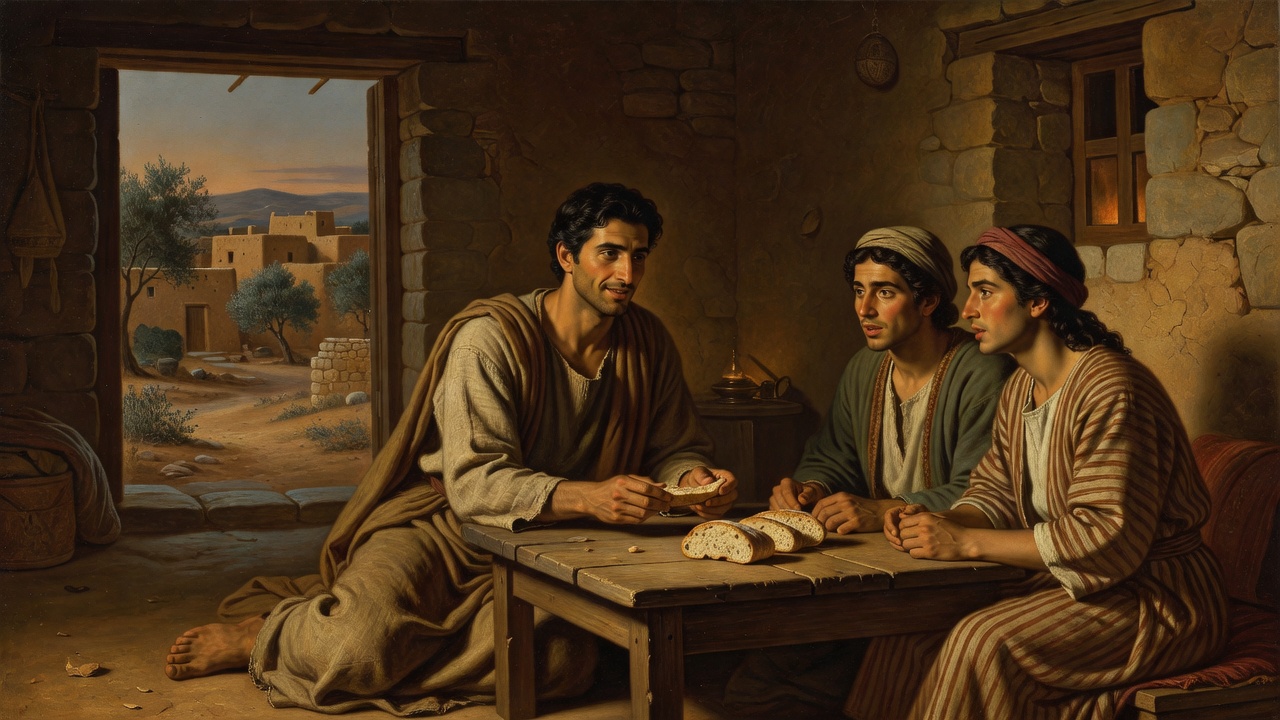
Resurrection morning and the road to Emmaus
- Luke describes Emmaus as a village about seven miles from Jerusalem. Easton's Bible Dictionary (1897) quotes that distance as three-score furlongs and records two identifications: el-Kubeibeh, over seven miles northwest of Jerusalem, whose name, 'little dome,' comes from the remains of a Crusaders' church still found there, and Khurbet Khamasa, 'the ruins of Khamasa,' about eight miles southwest, where Crusader ruins are also found.Sources: Emmaus · the Bible text itself
- Mary Magdalene, Joanna, Mary the mother of James, and other women with them were the ones who told the apostles what had happened at the tomb. Mary Magdalene takes her name from Magdala, her birthplace, and Easton's Bible Dictionary (1897) calls it a mistake to identify her with the woman called 'a sinner' in Luke 7. Joanna, the wife of Chuza, steward of Herod Antipas, tetrarch of Galilee, was one of the women who ministered to Jesus, and the same dictionary says he appeared to her after the resurrection.Sources: Mary Magdalene · Joanna · the Bible text itself
- One of the two disciples on the road is named Cleopas, a shortened form of Cleopatros. Easton's Bible Dictionary (1897) says that nothing definite is known about him, and that it is not certain he was the Clopas of John 19:25 or the Alphaeus of Matthew 10:3, although he may have been.Sources: Cleophas · the Bible text itself
Notes written with AI assistance from open sources (Theographic Bible Metadata, CC BY-SA 4.0; Easton’s Bible Dictionary, public domain) and reviewed before publishing.
Places in this chapter
- Galilee · 32.760, 35.527 · verse 6
- Jerusalem · 31.777, 35.234 · verses 13, 18, 33, 47, 49, 52
- Nazareth · 32.702, 35.298 · verse 19
Only places identified with high confidence are shown (90% or more according to the scholarly sources compiled by OpenBible). Period map: DARE (Digital Atlas of the Roman Empire), CC BY 4.0; modern map: © OpenStreetMap contributors; places: OpenBible.info (CC BY 4.0).
Credits and license for this translation
The New Testament of our Lord and Saviour Jesus Christ
New Testament in Apache, Western (US:apw:Apache, Western)
copyright © 2012 Wycliffe Bible Translators, Inc.
Language: Western Apache (Apache, Western)
Translation by: Wycliffe Bible Translators, Inc.
Copyright Information
© 2012,Wycliffe Bible Translators. All rights reserved.
This translation text is made available to you under the
terms of the Creative Commons License: Attribution-Noncommercial-No Derivative Works.
( http://creativecommons.org/licenses/by-nc-nd/3.0/ )
In addition, you have permission to port the text to different file formats, as long as you
do not change any of the text or punctuation of the Bible.
You may share, copy, distribute, transmit, and extract portions
or quotations from this work, provided that you include the above copyright
information:
You must give Attribution to the work.
You do not sell this work for a profit.
You do not make any derivative works that change any of the actual words or punctuation of the Scriptures.
Permissions beyond the scope of this license may be
available if you contact
us with your request.
The New Testament
in Apache, Western
© 2012,Wycliffe Bible Translators. All rights reserved.
This translation is made available to you under the terms of the
Creative Commons Attribution-No Derivatives license 4.0.
You may share and redistribute this Bible translation or extracts from it in any format, provided that:
You include the above copyright and source information.
You do not make any derivative works that change any of the actual words or punctuation of the Scriptures.
Pictures included with Scriptures and other documents on this site are licensed just for use with those Scriptures and documents.
For other uses, please contact the respective copyright owners.
2014-04-21
Source: http://ebible.org/apwNT/ · eBible.org