John 8
The New Testament of our Lord and Saviour Jesus Christ · Tap a verse to see its cross-references.
1Jesus dził Olives golzeeyú óyáá. 2Dázhǫ́ t’ahbį da’ch’okąąh goz’ąąyú nádzáá lę́k’e, akú nṉee dawa baa íła’adzaa; áík’ehgo nezdaago biłch’ídaago’aah. 3Begoz’aaníí ye’ik’eda’iłchíhi hik’e Phárisees daanlíni biłgo isdzán ła’ baa yił hikai, áń nant’į’ naghaago bígozįįd lę́k’e; áík’ehgo isdzánhíí iłṉí’zhį’ ndaist’e’dá’, 4Jesus gádaayiłṉii, Iłch’ígó’aahíí, díí isdzánhíí nant’į’ naghaago, da’aṉii ánát’įįłgo bígozįįd. 5Ágádaat’iiníí bił ndaats’inołṉe’ le’gá, ṉiigo Moses nohwee ngon’ą́ą́ ni’, begoz’áni biyi’: nihíí ánṉiiyúgo nt’é ńṉii? 6Nayídaantaahgo ágádaayiłṉii, dáhagot’éégo izadaahilt’e’ daanzigo. Jesus hayaa adzaago bigan yee łeezh yiyi’yú k’e’eshchįį lę́k’e, doo yidezts’ąą da hik’ehgo. 7Dayúweh nahódaadiłkidgo Jesus hizį’go gádaabiłṉii, Nohwitahyú ła’ binchǫ’ da’ádįhíí ntsé idołṉe’. 8Áígee hayaa ánádzaago bigan yee łeezh yiyi’yú k’ená’eshchįį lę́k’e. 9Nṉee díí daidezts’ąądá’ binchǫ’ daagolííníí yídaagołsįįdgo, báyáńdí’ áníi nagháhííyú onáhezkai: áík’ehgo Jesus dasahn ch’íńtłizh, isdzán bádįhgee siziiníí biłgo. 10Jesus hadag adzaago isdzán zhą́ sizįįgo yiłtsąągo yich’į’ hadzii, Isdzán, nṉee nchǫ’ daaniłṉiihíí hayú okai? Ya’ doo ła’ nṉee nił ch’ígonyį́į́ da? 11Isdzánhíí gábiłṉii, SheBik’ehń, doo hadíń da. Jesus gánábiłdo’ṉiid, Shíí ndi doo nił ch’ígonoshheeh at’éé da: ti’i, nchǫ’íí bee ánáo’ṉe’ hela’.
12Łah Jesus nṉee gánádaayiłdo’ṉiid, Shíí ni’gosdzáń biká’ nṉee begot’iiníí nshłįį: dahadíń shiké’ higaałń doo chagołheełyú higaał da doleeł, áídá’ ihi’ṉaa be’idindláádíí bíyéé doleeł. 13Phárisees daanlíni gádaabiłṉii, Dani zhą́ ádaa nagolṉí’; ádaa nagolṉí’íí doo da’aṉii da. 14Jesus gábiłṉii, Dashíí ádaa nagoshṉi’ ndihíí ádaa nagoshṉi’íí da’aṉii: hadí’ níyááhíí ła’íí hayú déyááhíí bígonsįhíí bighą; áídá’ nohwihíí hadí’ níyááhíí ła’íí hayú déyááhíí doo bídaagonołsį da. 15Nohwihíí nṉee k’ehgo zhą́ aayádaałti’; shihíí doo hadíń baa yashti’ da. 16Áídá’ shíí aayashti’yúgo, aayashti’íí da’aṉiihi: shíí doo dasahn aayashti’ dahíí bighą, shíí ła’íí shiTaa shinł’a’ń biłgo aayáhiilti’. 17Bedaagosoł’aaníí biyi’ nṉee naki dáłełt’éégo yaa nadaagolṉi’yúgo da’aṉii golzeego dahgoz’ąą. 18Dashíí ádaa nagoshṉi’, ła’íí shiTaa shinł’a’ń ałdó’ shaa nagolṉi’. 19Áík’ehgo gádaabiłṉii, NiTaahíí hayú? Jesus gánádaabiłdo’ṉiid, Shíí doo shídaagonołsį da, shiTaa ndi doo bídaagonołsį da: shídaagonołsįyúgo shiTaa ałdó’ bídaagonołsį doleeł ni’. 20Jesus zhaali iłch’į’nihi’ṉiił goz’ąą yuṉe’ aṉíí, da’ch’okąąh goz’ąą yuṉe’ iłch’ígó’aahgo: áídá’ doo hadíń biłtsood da ląą: bidizi’deehíí doo hwahá biká’ ngowáh dahíí bighą. 21Jesus gánádaabiłdo’ṉiid, Shíí dahdisháh, ch’éh shiká daadeh’įį doleełgo t’ah nchǫ’go ánádaaht’įįłgo nanohṉe’ doleeł: hayú déyááyú doo nohkáh át’éé da. 22Jews daanlíni gádaaṉii, Hayú déyááyú doo nohkáh át’éé da, ṉiihííshą’, dabíí ádiziłdeego aṉii née? 23Áídí’ gádaayiłṉii, Nohwíí yáá bitł’ááhdí’ nahkai; shihíí yaaká’dí’ nashaa: nohwíí díí ni’gosdzáń biká’ nṉee daanohłįį; shihíí doo ni’gosdzáń biká’ nṉee nshłįį da. 24Áí bighą, T’ah nchǫ’go ánádaaht’įįłgo nanohṉe’, daanohwiłdishṉii: áń nshłiiníí doo daahohdląą dayúgo, t’ah nchǫ’go ánádaaht’įįłgo nanohṉe’ doleeł. 25Áík’ehgo gánádaabiłdo’ṉiid, Hadíń lą́ą́ ánt’įį? Jesus gádaabiłṉii, Dantsé nohwił nagosisṉi’dá’ ánsht’ee daanohwiłdishṉii n’íí, da’áń ánsht’ee. 26T’ah łą́ą́go nohwich’į’ hasdziih godziih, łą́ą́go nohwaa yádaashti’ doleeł: áídá’ shinł’a’ń da’aṉiigo, áń shił nagosṉi’íí zhą́ ni’gosdzáń biká’ nṉee baa bił nagoshṉi’. 27Jesus biTaa baa yałti’íí doo yídaagołsį da. 28Jesus gánádaabiłdo’ṉiid, Shíí, nṉee k’ehgo Niyááhíí, dahdaashołteehdá’, áń nshłįįhíí bídaagonołsį ndi at’éé, dashíí shínik’ehgo doo nt’é áshłe’ da; áídá’ shiTaa shił ch’ígon’ááníí bee yashti’. 29Shinł’a’ń t’ah bił nshłįį: shiTaa doo hwahá dasahndi yó’oshiłt’e’ da; dábik’ehn dá bił bik’ehyú ánásht’įįł. 30Ágáṉíígo yałti’gee łą́ą́go daabosdląąd. 31Jews daanlíni Jesus daayosdląądíí gádaayiłṉii, Shiyati’íí dayúweh bikísk’eh ádaanoht’eeyúgo da’aṉii shiké’ hikaahíí daanohłįį; 32Áík’ehgo da’aṉii ágot’eehíí bídaagonołsį doleeł, áídí’ da’aṉii ágot’eehíí ch’ídaanohwiṉííł.
33Gádaayiłṉii, Abraham hat’i’íí daandlíni ádaant’ee, doo hadíń bi’isna’ daasiidlįį da: áídá’ hagot’éégo ánṉíhi, Ch’ídaanohwide’ṉiił, nṉiihíí? 34Jesus gádaabiłṉii, Da’aṉii, da’aṉiigo gádaanohwiłdishṉii, Dahadíń nchǫ’go ánát’įįłíí nchǫ’íí yisna’ nlįį. 35Isna’ nliiníí doo dahazhį’ binant’a’ bigową yuṉe’ golį́į́ da: áídá’ biye’híí zhą́ dahazhį’ bigową yuṉe’ golį́į́. 36Áík’ehgo Bik’ehgo’ihi’ṉań biYe’ ch’ídaanohwizṉilyúgo, da’aṉiigo ch’ídaanohwi’des’ṉil. 37Abraham hat’i’i daanohłįįgo nohwígonsį; da’ágát’éé ndi daashizołhee hádaaht’įį, shiyati’íí doo hak’i nohwiyi’ bá goz’ąą dahíí bighą. 38Shíí shiTaa bits’ą́’dí’ bígoł’ąąhíí bee nohwich’į’ yashti’: nohwihíí nohwitaa bits’ą́’dí’ bídaagonoł’ąąhíí ánádaaht’įįł. 39Áídí’ gádaabiłṉii, Abraham bits’ą́’dí’ daadihe’ṉa’. Jesus gádaabiłṉii, Abraham bichągháshé daanohłįįyúgo Abraham at’ííníí k’ehgo ánádaaht’įįł doleeł ni’. 40Áídá’ k’adíí daashizołhee hádaaht’įį, shíí da’aṉii ágot’eehíí Bik’ehgo’ihi’ṉań bits’ą́’dí’ disiits’áni baa nohwił nagoshṉi’: díí doo Abraham ye’at’éé da ni’. 41Nohwíí nohwitaa ánát’įįłíí k’ehgo ádaaht’įį. Áídí’ gádaabiłṉii, Néé nant’į’ na’ildeehíí doo bits’ą́’dí’ daagosiidlįį da; néé nohwiTaa dała’á, áí Bik’ehgo’ihi’ṉań. 42Jesus gádaabiłṉii, Bik’ehgo’ihi’ṉań daanohwiTaa nlįįyúgo, nohwił daanshǫǫ doleeł ni’: Bik’ehgo’ihi’ṉań bits’ą́’dí’go niyááhíí bighą; doo dashínik’eh niyáá da, Bik’ehgo’ihi’ṉań shinł’a’. 43Nt’é bighą’shiyati’íí doo bídaagonołsį da? Shiyati’íí doo ídaayełts’ąą hádaaht’įį dahíí bighą. 44Daanohwitaa, ch’iidn nant’án, áń hat’i’íí daanohłįį, áík’ehgo nohwitaa nchǫ’go hat’į́į́híí k’ehgo ádaaht’įį: dantsé godeyaadí’ nṉee naiłtseedi nlįį, bíí ła’íí da’aṉii ágot’eehíí doo nałinłtł’og da, da’aṉii ágot’eehíí doo ła’ biyi’ golį́į́ dahíí bighą. Łé’iłchoogo yałti’dá’ dabíí ye’at’éhi yee yałti’: łé’iłchóhi nlįįgo, łé’ichoohíí bitaa nlįį. 45Áídá’ shíí da’aṉii ádishṉiihíí bighą doo daashohdląą da. 46Hadíń ła’ dénchǫ’go ánásht’įįłíí ch’íshinoh’áah? Áídá’ da’aṉii ádishṉiiyúgo, nt’é bighą doo daashohdląą da? 47Dahadíń Bik’ehgo’ihi’ṉań bíyééhíí Bik’ehgo’ihi’ṉań biyati’íí yídésts’ąą: Bik’ehgo’ihi’ṉań doo bíyéé daanohłįį dahíí bighą doo ídaayełts’ąą da. 48Jews daanlíni gádaabiłṉii, Samáritan ńlíni, ch’iidn niyi’ golíni, daaniłn’ṉiihíí da’aṉii ádaan’ṉii shį ya’? 49Jesus gáṉíí, Ch’iidn doo shiyi’ golį́į́ da; áídá’ shiTaa diniłsį, nohwihíí doo daashidinołsį da. 50Nṉee daashidnłsiníí doo biká désh’įį da: dała’áńhíí zhą́ áí yiká déz’įį, áń aayánáltih doleeł. 51Da’aṉii, da’aṉiigo gádaanohwiłdishṉii, Dahadíń shiyati’ yikísk’eh at’ééhíí, da’itsaahíí doo yo’įį da doleeł. 52Jews daanlíni gánádaabiłdo’ṉiid, K’adíí nídaagosiilzįįd, ch’iidn niyi’ golį́į́híí. Abraham daztsąą, ła’íí Bik’ehgo’ihi’ṉań binkááyú nada’iziidíí nanezna’; áídá’ ni ánṉii, Dahadíń shiyati’ yikísk’eh at’ééhíí da’itsaahíí doo yolįh at’éé da, nṉii. 53Ya’ ni nohwitaa Abraham daztsąą n’íí bitisgo áńt’éhi née? Bik’ehgo’ihi’ṉań binkááyú nada’iziidíí nanezna’ n’íí ałdó’: hadíń lą́ą́ ánsht’ee ńnzį? 54Jesus gábiłṉii, Shíí ádiłdinszįyúgo, ádiłdinszįhíí doo nt’é da: shidi’dilzįhíí shiTaa at’éé; áń Bik’ehgo’ihi’ṉań daahohiikąąhń, daabiłdohṉii: 55Áídá’ nohwíí áń doo bídaagonołsį da; shíí zhą́ áń bígonsį: Doo áń bígonsį da, dishṉiiyúgo, nohwíí k’ehgo łé’ishchóhi yishłeeh: áídá’ shíí áń da’aṉiigo bígonsį, biyati’íí bikísk’eh ánsht’ee. 56Nohwitaa Abraham n’íí shee hayiłkaahíí yiłtséhgo bił gozhǫ́ǫ́ ni’: áí yiłtsąądá’ bił gozhǫ́ǫ́ ni’. 57Jews daanlíni gádaabiłṉii, Doo hwahá ashdladin nił łégódáh dadá’, hagot’éégo Abraham hí’į́į́ láń? 58Jesus gádaabiłṉii, Da’aṉii, da’aṉiigo gádaanohwiłdishṉii, Abraham dabíntségo shíí ánsht’ee. 59Áík’ehgo tséé nádaayiheslaago daabołṉe’ nt’éégo Jesus bits’ąą ńdest’įįdgo, da’ch’okąąh goz’ąądí’ nṉee biyi’dí’ ch’ínádzaa.
Did you know?
Light, Law, and Abraham
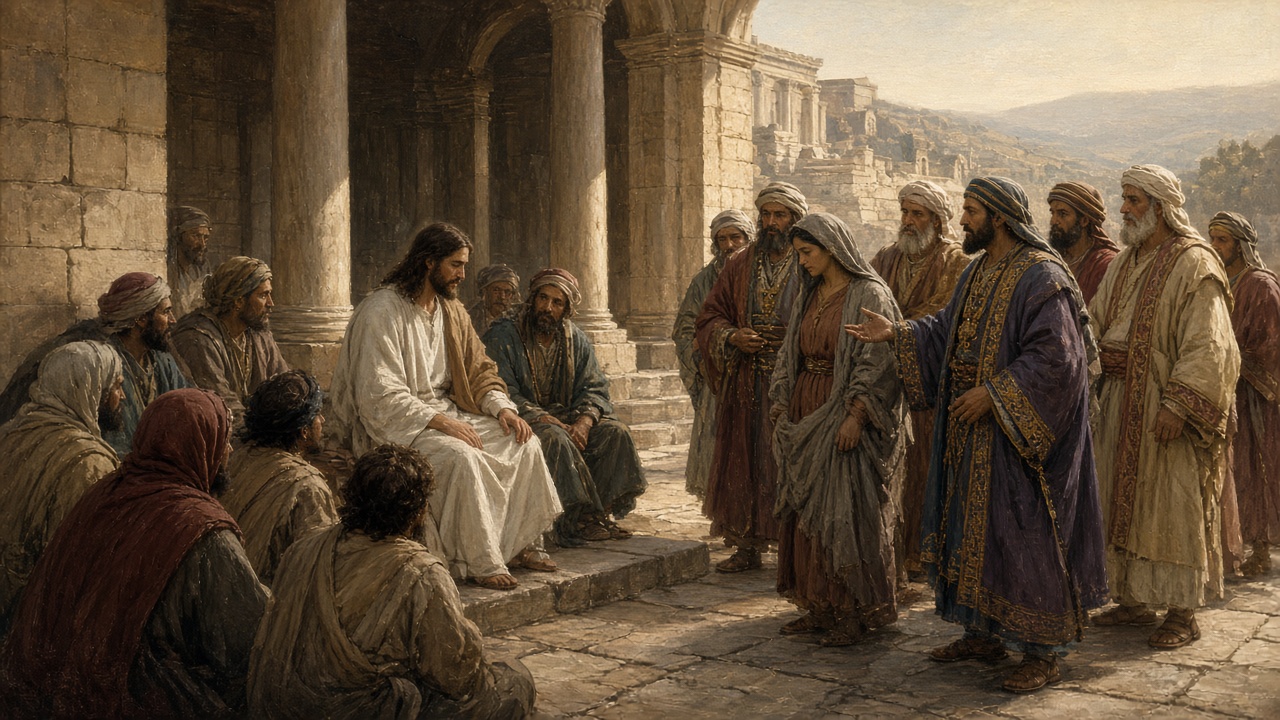
- John 8 opens as Jesus goes to the Mount of Olives and returns early in the morning to the temple courts, where he sits and teaches the people who gather. The Mount of Olives is a ridge east of Jerusalem, separated from the city by the Kidron valley and named for the olive trees that cover its sides.Sources: the Bible text itself · Mount of Olives
- Scribes and Pharisees bring in a woman caught in adultery and ask Jesus what he says about Moses' command in the Law to stone such a woman, seeking to test him and to gain a basis for accusing him. Still in the temple courts, near the treasury, Jesus later says, "I am the light of the world." A dated event list places both episodes in AD 29, each lasting one day.Sources: the Bible text itself · Woman Caught in Adultery · Light of the World/I am discourse
- When Jesus says that the truth will set them free, his hearers answer that they are Abraham's descendants and have never been slaves to anyone. Abraham is called "father of a multitude"; he was the son of Terah and the heir of the promises. After Jesus declares, "before Abraham was born, I am," they pick up stones to throw at him.Sources: the Bible text itself · Abraham
Notes written with AI assistance from open sources (Theographic Bible Metadata, CC BY-SA 4.0; Easton’s Bible Dictionary, public domain) and reviewed before publishing.
Places in this chapter
- Mount of Olives · 31.778, 35.246 · verse 1
Only places identified with high confidence are shown (90% or more according to the scholarly sources compiled by OpenBible). Period map: DARE (Digital Atlas of the Roman Empire), CC BY 4.0; modern map: © OpenStreetMap contributors; places: OpenBible.info (CC BY 4.0).
Credits and license for this translation
The New Testament of our Lord and Saviour Jesus Christ
New Testament in Apache, Western (US:apw:Apache, Western)
copyright © 2012 Wycliffe Bible Translators, Inc.
Language: Western Apache (Apache, Western)
Translation by: Wycliffe Bible Translators, Inc.
Copyright Information
© 2012,Wycliffe Bible Translators. All rights reserved.
This translation text is made available to you under the
terms of the Creative Commons License: Attribution-Noncommercial-No Derivative Works.
( http://creativecommons.org/licenses/by-nc-nd/3.0/ )
In addition, you have permission to port the text to different file formats, as long as you
do not change any of the text or punctuation of the Bible.
You may share, copy, distribute, transmit, and extract portions
or quotations from this work, provided that you include the above copyright
information:
You must give Attribution to the work.
You do not sell this work for a profit.
You do not make any derivative works that change any of the actual words or punctuation of the Scriptures.
Permissions beyond the scope of this license may be
available if you contact
us with your request.
The New Testament
in Apache, Western
© 2012,Wycliffe Bible Translators. All rights reserved.
This translation is made available to you under the terms of the
Creative Commons Attribution-No Derivatives license 4.0.
You may share and redistribute this Bible translation or extracts from it in any format, provided that:
You include the above copyright and source information.
You do not make any derivative works that change any of the actual words or punctuation of the Scriptures.
Pictures included with Scriptures and other documents on this site are licensed just for use with those Scriptures and documents.
For other uses, please contact the respective copyright owners.
2014-04-21
Source: http://ebible.org/apwNT/ · eBible.org