Acts 7
The New Testament of our Lord and Saviour Jesus Christ · Tap a verse to see its cross-references.
1Okąąh yebik’ehi da’tiséyú sitíni gábiłṉii, Ádaaniłch’iṉiihíí da’aṉii née? 2Stephen gáṉíí, Nṉee daanołíni, shik’ííyú, nṉee báyáń daanołíni, shídaayesółts’ąą; nohwitaa n’íí Abraham, doo hwahá Chárranyú ngoleeh daná’ Mesopotámiayú gólį́į́ ni’ná’ Bik’ehgo’ihi’ṉań bich’ą́’idindláád nlíni bich’į’ ch’í’ṉah ádelzaa, 3Áígee gábiłnṉiid, Nini’ ła’íí nik’íí bich’ą́’ dahnṉáhgo ni’ nił ch’í’ṉah áshłe’yú ńṉááł. 4Áík’ehgo Abraham Kaldéans bini’gé’ dahnyaago Charran golzeegee golį́į́ lę́’e: bitaa daztsąąná’ díí ni’ biyi’ daagonołįįzhį’ Bik’ehgo’ihi’ṉań bik’ehgo onágódle’ lę́’e. 5Áíná’ ni’ bíyééhíí doo ła’ baa gon’ą́ą́ da, doo ndi dałahndi nch’idel’eezgo da: áíná’ bichągháshé doo ła’ da ndi bíí ła’íí bich’ą́’gé’ daałideshchiinihíí daabíyéé doleełgo yángon’ą́ą́ lę́’e. 6Bik’ehgo’ihi’ṉań Abraham bich’į’ hananádziigo gánṉiid, Nich’ą́’gé’ daałideshchiiníí ni’ doo yídaagołsį da n’íí yiyi’ daagolį́į́ doleeł; áígee nṉee ni’ daabíyééhíí isná ádaabidle’go dį́į́dn gonenadín łegodzaazhį’ biniidaagonłt’éé doleeł. 7Nṉee isná ádaabisdlaahíí biniidaagodishłe’ doleeł; áí bikédé’go áígé’ ch’ékáhgo dząągee daashokąąh doleeł, ṉii lę́’e, Bik’ehgo’ihi’ṉań. 8Áígé’ Bik’ehgo’ihi’ṉań circumcísion bee Abraham yił łángot’ąą: áík’ehgo Abraham biye’ Isaac gozlįįgo tsebíí behiskaaníí bijįį círcumcise áyíílaa; áígé’ Isaac biye’ Jacob gozlįį; Jacobhíí biye’ke nakits’ádah daagozlįį, áí bich’ą́’gé’ nakits’ádahyú nṉee hat’i’ silįį. 9Jacob biye’kehíí daabidizhé Joseph daayołch’įį’go, yik’edaanṉiihgo Egyptyú baa nadaahezṉii: áíná’ Bik’ehgo’ihi’ṉań bił nlįįgo, 10Bich’į’ nadaagontł’ogíí bighą dawa yich’ą́’ binłtį́į́, áígé’ Pháraoh, Egypt yánant’aahíí, yił nzhǫǫgo ła’íí binadzahgee goyą́ą́go Bik’ehgo’ihi’ṉań ábíłsį; Pháraohíí Egypt dahot’éhé ła’íí bikįh biyi’ daagolííníí yánant’aago ábíílaa. 11Egypt ła’íí Cánaanyú dahot’éhé shiṉá’ góyéégo daagodeyaa: áígee daanohwitaa n’íí bich’iyą’ n’íí bich’ą́’ ádaasdįįdgo biniidaagonłt’éé lę́’e. 12Egyptyú nadą́’ gólį́į́ łą́ą́go Jacob yaat’ínzįįná’ daanohwitaa n’íí da’iłtsé ákú odais’a’ lę́’e. 13Iké’gee nanákainá’ Joseph, Daanohwik’isn nshłįį n’íí shíí ánsht’ee, daayiłṉiigo bídaagołsįįd; ła’íí Joseph bik’íí Pháraoh yígółsįįd. 14Áígé’ Joseph bitaa ła’íí bik’íí dawa biłgo gosts’idin ashdla’ hilt’eego yiká’o’ił’a’, 15Áík’ehgo Jacob Egyptyú o’íṉil, ákú Jacob daztsąą, ła’íí daanohwitaa n’íí ałdó’ da’iłké’go nanezna’, 16Áí dawa Sýkemyú onádaihezṉilgo iłch’į’ndaahi’ṉiił goz’ąą yuṉe’ da’iłké’go łedaahasṉil, áí goz’aaníí Abraham Sýkem biye’ Émmor biye’ke bich’ą́’gé’ zhaali bee nagohesṉii ni’. 17Bik’ehgo’ihi’ṉań Abraham bángon’ą́ą́ n’íí begolṉe’íí ałhánégé’ goldohná’ Abraham bich’ą́’gé’ daałideshchiinihíí Egyptgee łą́ą́ silįį lę́’e. 18Áíná’ Egyptyú ła’ nant’án nanásdlį́į́, áń Joseph doo yígółsį da lę́’e. 19Áń nohwíí hahiit’i’íí yik’edaanṉiih lę́’e, ła’íí daanohwitaa n’íí gádaayiłṉiigo bándaagoz’ąą, Mé’ daagozlįįhíí da’izlįįyú ch’ídaahołkaadgo da’akú nanṉe’ le’. 20Áígee Moses gozlįįgo dázhǫ́ dénzhóné lę́’e, áń bitaa golį́į́ yuṉe’ nadaach’iłteego taagi daahitąą: 21Áígé’ da’izlįįyú ch’ídaach’istįįyú Pháraoh bitsi’ nábinłtįįgo dabíí bizhaazhé k’ehgo yíhiłṉa’. 22Egyptyú daagolííníí bigoyą’íí dawa Moses bił ch’et’ą́ą́go dázhǫ́ nłt’éégo yałti’ ła’íí nłt’éégo ánát’įįł silįį. 23Moses dizdin bił łegodzaaná’, shik’ííyú Israel hat’i’íí bich’į’ dosháh nzį lę́’e. 24Áík’ehgo ła’ inaghanaghaago yiłtsąągo, áń yik’izhį’ onálwodgo yił nałts’įhgo daztsąą: 25Shíí hat’i’íí biniidaagonłt’ééhíí biyi’gé’ Bik’ehgo’ihi’ṉań shich’oṉiigo bił ch’ídishkaahíí yídaagołsį shį nzį lę́’e; ndi doo bídaagołsį da. 26Iskąą hik’e dabíí hat’i’i naki iłch’į’ dahnádilwo’go yiká ńyáá, nkenágoheltǫǫd nzįgo gádaayiłṉii, Iłk’isyú nołdlįįná’ hat’íí bighą iłṉí’dołṉíh? 27Áíná’ ba’ashhahgé’ gólíni doo bik’ehyú ánáyo’įįł dahń Moses k’ihzhį’ yenyilná’ gáṉíí, Hadń nohwinant’a’ ła’íí nohwaa yałti’i áníílaago áńt’įį? 28Adąąná’ nṉee Egýptian nlíni zíníłhįįhíí k’ehgo shíí ałdó’ shiziniłhéé née? 29Díí áṉííhíí bighą Moses dabíí hat’i’i yich’ą́’ halwodgo Mádiangee golį́į́ ngohéyáá, áígee biye’ke naki gozlįį. 30Áígé’ dizdin łegodzaa bikédé’go Dził Sína holzéhi biṉaayú da’izlįįyú ch’il diltłi’i biyi’gé’ Bik’ehgo’ihi’ṉań binal’a’á yaaká’gé’hi bich’į’ ch’í’ṉah ádelzaa. 31Moses yo’įįná’ bił díyagot’ee lę́’e: iłhánégo yineł’į́į́go nyáá hik’e Bik’ehgo’ihi’ṉań bich’į’ hadzii, 32Gáṉíígo, Shíí daanitaa n’íí Bik’ehgo’ihi’ṉań daayokąąhń nshłįį, Abraham, Isaac ła’íí Jacob Bik’ehgo’ihi’ṉań daayokąąhń nshłįį. Moses tsídolyizgo ditłidgo doo ázhį’ nádést’įįd da. 33Bik’ehgo’ihi’ṉań gábiłṉii, Nikee ádaandlee: ni’ biká’ síńziiníí ni’ godiyini at’éé. 34Egyptyú shichągháshé biniidaagonłt’éégo hish’įį, áí hish’įįgo ik’ídaadi’ṉiihíí dists’ag, áík’ehgo áí bich’ą́’ nshṉiiłyú níyáá. Ti’i, dák’ad Egyptyú nideł’a’. 35Dadíí Moses Israel hat’i’i doo hádaabit’įįgo gádaaṉii n’íí, Hadń nohwinant’a’ ła’íí nohwaa yałti’íí áníílaa? Da’áí Moses n’íí Bik’ehgo’ihi’ṉań binal’a’á yaaká’gé’hi ch’il biyi’gé’ bich’į’ ch’í’ṉah ádelzaa n’íí binkááyú Bik’ehgo’ihi’ṉań bides’a’, nant’án nlįįgo ła’íí Israel hat’i’íí biniidaagonłt’ééhíí yich’ą́’ yííṉííłgo bides’a’. 36Áí Moses n’íí ízisgo ánágot’įįłíí ła’íí godiyįhgo be’ídaagoziníí Egyptyú ła’íí Red Seayú ánát’įįł ni’ná’ Egyptgé’ ch’íiṉilgo da’izlįįyú nanałse’go dizdin łegodzaa. 37Da’áí Moses‐híí Israel hat’i’íí gádaayiłṉii ni’, Bik’ehgo’ihi’ṉań binkááyú Na’iziidi hileehgo nohwik’ííyú bitahgé’ Bik’ehgo’ihi’ṉań nohweBik’ehń nohwá habiłteeh, shíí hashiłtį́į́híí k’ehgo; áń hódaayesółts’ąą. 38Da’izlįįyú ha’ánáłséh n’ná’, díí Moses‐híí Bik’ehgo’ihi’ṉań binal’a’á yaaká’gé’hi Dził Sína holzeeyú bich’į’ yałti’ n’íí ła’íí daanohwitaa n’íí bigizhgee yałti’íí nlįįgo yati’ hiṉáhi nohwá baa hi’né’ ni’: 39Áń daanohwitaa n’íí doo bídaayésts’ąą hádaat’įį da ni’, doo hádaabit’įį da, áíná’ Egyptyúgo nádiikáhíí zhą́ bijíígé’ hádaat’įį lę́’e. 40Aaron gádaayiłṉii, Hat’íhíta daahohiikąąhíí nohwá ánle’, áí nohwá go’įį doleeł: díí Moses Egyptgé’ ch’ínohwiṉil n’íí hago adzaa shįhíí doo bídaagonlzį da. 41Áíná’ magashi bizhaazhé be’ilzaa’i ndi ádaizlaago dahat’íhíta yiyaa odaayihiṉiiłgo daayokąąh, dabíí ádaizlaahíí yaa bił daagozhǫ́ǫ́go. 42Áík’ehgo yáá biyi’gé’ dawaháhíí daayokąąhgo Bik’ehgo’ihi’ṉań dabiini’zhį’ ch’ídaabizṉil; Bik’ehgo’ihi’ṉań binkááyú nada’iziidi n’íí binaltsoos biyi’ k’e’eshchįįhíí k’ehgo, Israel hat’i’i daanołíni, da’izlįįyú dizdin nohwee łedaagosdzaa n’ná’ magashi bizhaazhé, dibełį́į́ bizhaazhéta nadaałtseedíí ła’íí dahat’íhíta shaa daahołṉiił lá née? 43Gowągolgai biyi’ Mólok holzéhi daayokąąhíí nadaałṉil, ła’íí daahołkąąhíí Rémphan holzéhi bits’iłsǫǫsé k’ehgo be’ilzaahíí ałdó’ nadaałṉil, díí be’ilzaago ádaasolaahíí daahołkąąhgo: áík’ehgo Bábylon bitisyú ch’ínołkáhgo ánohwishłe’. 44Daanohwitaa n’íí gowągolgai biyi’ da’okąąhi Bik’ehgo’ihi’ṉań yił daanlįįgo bebígózini da’izlįįyú goz’ąą, áí hago’at’éégo alṉéhíí Bik’ehgo’ihi’ṉań Moses yił ch’í’ṉah áyíílaahíí k’ehgo alzaa. 45Daanohwitaa n’íí Jesus bá nant’aago Bik’ehgo’ihi’ṉań doo Jews daanlįį dahíí bá ch’íineheyoodná’ gowągolgai biyi’ da’okąąhíí ni’ daabíyéé gozlįįyú daistsoozgo hikai, áí doo Jews daanlįį dahíí David dánant’aa silįįzhį’ Bik’ehgo’ihi’ṉań daanohwitaa n’íí dábidáhgee ch’ídaaniheyood; 46David Bik’ehgo’ihi’ṉań yił nzhǫǫ silįį, áík’ehgo Jacob Bik’ehgo’ihi’ṉań yokąąhń yiyi’ golį́į́ doleełíí bá ágóshłe’ nzį lę́’e. 47Ndi Sólomon holzéhigo Bik’ehgo’ihi’ṉań kįh yiyi’ golííníí bá ágólaa. 48Áíná’ Da’tiséyú At’éhi kįh dá nṉee bigan yee ádaizlaahi doo yiyi’ golį́į́ da; Bik’ehgo’ihi’ṉań binkááyú na’iziidíí gáṉíí n’íí k’ehgo, 49Yaaká’yú goz’aaníí biká’dah’asdáhá biká’gé’ nansht’aahíí át’éé, ni’gosdzáńhíí biká’ dahnádes’isíí át’éé: kįh hago’at’éhi shá ágóle’? ṉíí lę́’e Bik’ehgo’ihi’ṉań: hayúshą’ hanasółgo áíná’? 50Aishą’ shiganíí doo dawa bee ashłaa da lę́’e? 51Doo nohwee daagondlįį dahi, nohwijíí ła’íí nohwijeyi’ doo círcumcise ádaanołt’e’i dahíí k’ehgo doo daagodinołsíni da, dawahn Holy Spirit bich’ą́’zhį’go ádaanołt’ee, daanohwitaa n’íí ánádaat’įįł n’íí k’ehgo nohwíí ałdó’ ánádaałt’įįł. 52Hagee daanohwitaa n’íí Bik’ehgo’ihi’ṉań binkááyú nada’iziidi n’íí doo yiniidaagodezlaa da? Nłt’éégo Ánát’įįłíí yígháhíí dabí’iłtséná’ yaa nadaagolṉi’íí nadaistseed; áí Nłt’éégo Ánát’įįłíí nyee’íí biyi’zhį’ ch’ídaasołtįįgo daazesołhįį: 53Bik’ehgo’ihi’ṉań binadaal’a’á yaaká’gé’hi begoz’aaníí nohwaa daidez’ąą ndi doo bikísk’eh ádaanołt’ee da. 54Nṉee dała’adzaahíí Stephen áṉííhíí daidezts’ąąná’ dázhǫ́ bił daagoshch’ii’go biwoo nádaagai. 55Áíná’ Stephen, Holy Spirit ye’at’éégo, yaaká’yú dezghalgo Bik’ehgo’ihi’ṉań bich’ą́’idindláádíí ła’íí Jesus Bik’ehgo’ihi’ṉań dihe’nazhiṉéégo sizįįgo yiłtsąą, 56Áígé’ gáṉíí, Yáá iłch’ą́’ adzaago yaaká’yú nṉee k’ehgo Nyááhń Bik’ehgo’ihi’ṉań dihe’nazhiṉéégo sizįįgo hish’įį. 57Nádaadidilghaazhná’ bijeyi’ ndaadeshchidgo dawa bich’į’ nádnkįį. 58Kįh gozṉilíí bich’ą́’yú ch’ídaabist’e’go nyída’isṉe’: tséé yee da’dilṉiihíí bidiyágé nṉee áníi nagháhá, Saul holzéhi, dées’eezgee ndaayihezṉil. 59Stephen t’ah nyída’iłṉe’ná’ gáṉíígo oskąąd, Jesus sheBik’ehń, shiyi’siziiníí nádnné’. 60Hayaa adzaago nawode gánṉiid, SheBik’ehń, díí nchǫ’ihíí dákoh bik’izhį’ ádaaholé hela’. Ánṉiidná’ daztsąą.
Did you know?
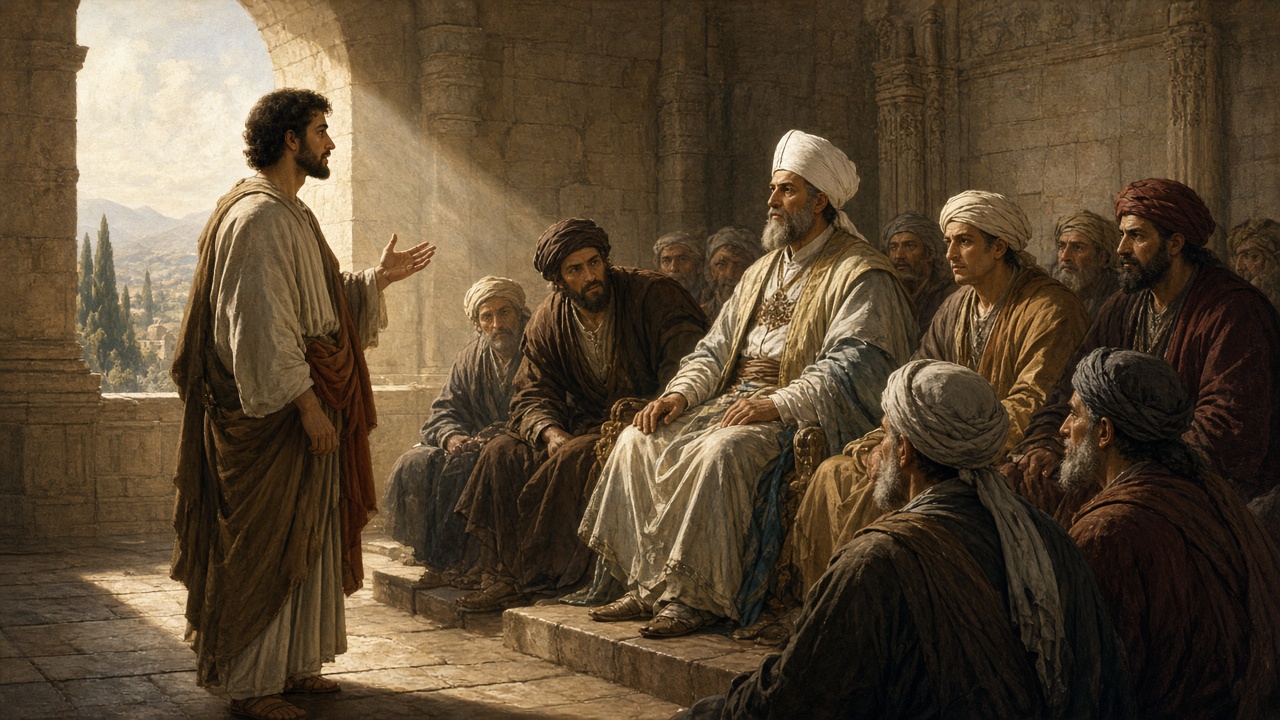
Stephen retells Israel's story
- Stephen opens his speech with Abraham still in Mesopotamia, before he settled in Haran, when he was told to leave his country and his kindred. Mesopotamia—Hebrew Aram-naharaim, “Syria of the two rivers”—was the name Greeks and Romans gave the region between the Euphrates and the Tigris; the Old Testament also calls it Padan-aram, “the plain of Aram,” and the north of that plateau was the early home of the Hebrews’ ancestors. Easton's Bible Dictionary (1897) notes that this first call is not mentioned in the Old Testament, though Genesis 12 implies it, and that Abraham left Ur in Chaldea and traveled about 300 miles north to Haran.Sources: the Bible text itself · Mesopotamia · Abraham
- Stephen says the bones of Jacob and the fathers were carried back to Shechem and placed in the tomb Abraham had bought from the sons of Hamor. Easton's Bible Dictionary (1897) identifies Hamor as a Hivite whose name means “he-ass,” notes that Acts 7:16 calls him Emmor, and says Jacob bought from him the plot at Shechem in which Joseph was later buried. The entry adds that Hamor’s son Shechem founded the city that took his name.Sources: the Bible text itself · Hamor
- Stephen places the burning bush in the desert near Mount Sinai and says Moses received living words there from the angel who spoke to him on the mountain. Easton's Bible Dictionary (1897) treats Sinai—a name linked with Sin, a moon god—as the same mountain district also called Horeb. The entry says the Hebrews reached that region in the third month after the Exodus, after a journey of about 150 miles from the Red Sea, including all the windings of the route, and remained encamped for about a year.Sources: the Bible text itself · Mount Sinai
Notes written with AI assistance from open sources (Theographic Bible Metadata, CC BY-SA 4.0; Easton’s Bible Dictionary, public domain) and reviewed before publishing.
Places in this chapter
- Haran · Today: Harran · 36.864, 39.033 · verses 2, 4
- Mesopotamia · Today: Aram-naharaim · 36.864, 39.033 · verse 2
- Chaldea · 30.962, 46.104 · verse 4
- Egypt · 30.129, 31.308 · verses 9, 10, 11, 12, 14, 15, 17, 18, 34, 36, 39, 40
- Canaan · 32.767, 35.333 · verse 11
- Shechem · Today: Tell Balatah · 32.214, 35.282 · verse 16
- Nile · Today: Nile River · 31.465, 30.367 · verse 19
- Midian · 28.495, 35.012 · verse 29
- Babylon · 32.543, 44.422 · verse 43
Only places identified with high confidence are shown (90% or more according to the scholarly sources compiled by OpenBible). Period map: DARE (Digital Atlas of the Roman Empire), CC BY 4.0; modern map: © OpenStreetMap contributors; places: OpenBible.info (CC BY 4.0).
Credits and license for this translation
The New Testament of our Lord and Saviour Jesus Christ
New Testament in Apache, Western (US:apw:Apache, Western)
copyright © 2012 Wycliffe Bible Translators, Inc.
Language: Western Apache (Apache, Western)
Translation by: Wycliffe Bible Translators, Inc.
Copyright Information
© 2012,Wycliffe Bible Translators. All rights reserved.
This translation text is made available to you under the
terms of the Creative Commons License: Attribution-Noncommercial-No Derivative Works.
( http://creativecommons.org/licenses/by-nc-nd/3.0/ )
In addition, you have permission to port the text to different file formats, as long as you
do not change any of the text or punctuation of the Bible.
You may share, copy, distribute, transmit, and extract portions
or quotations from this work, provided that you include the above copyright
information:
You must give Attribution to the work.
You do not sell this work for a profit.
You do not make any derivative works that change any of the actual words or punctuation of the Scriptures.
Permissions beyond the scope of this license may be
available if you contact
us with your request.
The New Testament
in Apache, Western
© 2012,Wycliffe Bible Translators. All rights reserved.
This translation is made available to you under the terms of the
Creative Commons Attribution-No Derivatives license 4.0.
You may share and redistribute this Bible translation or extracts from it in any format, provided that:
You include the above copyright and source information.
You do not make any derivative works that change any of the actual words or punctuation of the Scriptures.
Pictures included with Scriptures and other documents on this site are licensed just for use with those Scriptures and documents.
For other uses, please contact the respective copyright owners.
2014-04-21
Source: http://ebible.org/apwNT/ · eBible.org