1 Corinthians 15
The New Testament of our Lord and Saviour Jesus Christ · Tap a verse to see its cross-references.
1K’adíí shik’ííyú, yati’ baa gozhóni nohwich’į’ baa nagosisṉi’ n’íí nohwił ch’í’ṉah ánánáshdle’; áí nágodoh’ąą n’íí, áí bee ndaasozįį; 2Da’áí bee hasdánohwidi’ṉiił, baa nohwił nagosisṉi’ n’íí bínádaałṉiihgo daahonohtą’yúgo; doo ágádaanoht’ee dayúgo doo da’aṉiigo da’osohdląąd da. 3Yati’ shaa hi’né’íí itisgo at’éhi nohwaa daasiné’ ni’, gánohwiłdéṉiidgo, Christ nohwinchǫ’híí bighą daztsąą, Bik’ehgo’ihi’ṉań biyati’ bek’e’eshchiiníí k’ehgo; 4Áídí’ łehiiltįį, taagi hileehíí bijįį naadiidzaa, Bik’ehgo’ihi’ṉań biyati’ bek’e’eshchiiníí k’ehgo. 5Áídí’ Céphas bo’įį lę́k’e, áídí’ binal’a’á nakits’ádahíí ałdó’ daabo’įį lę́k’e: 6Áí bikédí’go nohwik’isyú, ínashood daanlínihíí, ashdla’ gonenadín bitisyú dała’ daabo’įį lę́k’e; áí dásdozhą́ dawa díí jįį t’ah daahiṉaa, áídá’ ła’ da’iłhaazh. 7Áí bikédí’go James bo’įį lę́k’e; áídí’ nadaal’a’á dawa ałdó’. 8Da’iké’yú shíí ałdó’ hiłtsąą ni’, doo gonshłeeh dagee gosilį́į́híí k’ehgo. 9Nadaal’a’á dawago shíí doo bił ótag dahíí nshłįį, nal’a’híí k’ehgo doo shido’jíí bik’eh da, Bik’ehgo’ihi’ṉań daayokąąhgo ha’ánáłséhíí góyéégo bich’į’ nagosh’áá lę́k’ehíí bighą. 10Bik’ehgo’ihi’ṉań biłgoch’oba’íí bee ánsht’eehíí k’ehgo ánsht’ee: biłgoch’oba’íí bee shaa godet’aaníí doo daazhógo shainé’ da; áídá’ da’des’a’íí dawa bitisgo nyeego nasízíid: áídá’ doo shíí ásht’į́į́ da, Bik’ehgo’ihi’ṉań biłgoch’oba’íí shił nliiníí át’į́į́. 11Ágát’éé ndi shíí dagohíí ła’ da’des’a’íí nohwich’į’ yádaałti’ ndi, díí k’ehgo yádaahiilti’go da’osohdląąd. 12Christ daztsąądí’ naadiidzaago baa na’goṉi’dá’, hagot’éégo nohwitahyú ła’, nanezna’íí doo naadikáh da, daadohṉii? 13Nanezna’íí doo naadikáh dayúgo Christ doo naadiidzaa da: 14Ła’íí Christ doo naadiidzaa dayúgo, nohwił nadaagohiilṉi’íí doo ílį́į́ da silįį, ła’íí nohwi’odlą’íí ałdó’ doo nt’é da silįį. 15Nanezna’íí doo naadikáh dayúgo Bik’ehgo’ihi’ṉań doo Christ naadiidzaago áyíílaa da, áík’ehgo Bik’ehgo’ihi’ṉań baa łéda’ilchoogo nohwígózį, Bik’ehgo’ihi’ṉań Christ naadiidzaago áyíílaa, daan’ṉiihíí bighą. 16Nanezna’íí doo naadikáh da lę́k’eyúgo, Christ ałdó’ doo naadiidzaa da: 17Ła’íí Christ doo naadiidzaa dayúgo, nohwi’odlą’ doo ílį́į́ da; áík’ehgo nohwinchǫ’íí t’ah biyi’ nahkai. 18Áík’ehgo Christ bił dała’á daanlįįgo da’iłhaazhíí ałdó’ ch’a’ondéeh. 19Dadíí ni’gosdzáń biká’gee daahin’ṉaago zhą́ Christ bee nłt’éégo ágot’eehíí ndaahóndliiyúgo, néé nṉee dawa bitisgo dénohwaagoch’oba’é. 20Áídá’ da’aṉii Christ daztsąądí’ naadiidzaa, da’iłhoshíí bitahdí’ dantsé naadiidzáhi nlįį. 21Áík’ehgo nṉee dała’á biláhyú da’itsaahi bengonyááhíí k’ehgo nṉee dała’á biláhyú nanezna’ n’íí naadikáh doo. 22Adam bits’ą́’dí’ nṉee dawa nanne’híí k’ehgo Christ bił dała’á daanliiníí dawa nadaahi’ṉaa doleeł. 23Áídá’ nṉee dała’á daantį́į́gee naahikáh doleeł, Christ dantsé naadiidzaahíí nlįį; áí bikédí’go Christ daabíyééhíí ałdó’ naadikáh, dabíí nádzáágo. 24Nadaant’aahíí dawa, ła’íí yedaabik’ehgo binawod daagolį́į́ n’íí dawa Christ da’ílíí yiłchiihíí bikédí’go, áń bilałtł’áhgee begoz’ąą n’íí biTaa, Bik’ehgo’ihi’ṉań, yainádi’aahdá’ goldohíí bengodogaał. 25Christ be’ina’íí dawa bikełtł’ááh nni’ṉilzhį’ yebik’eh doleełi at’éé. 26Da’iké’yú be’ina’ da’ílíí yiłchiihíí áí da’itsaahi. 27Bik’ehgo’ihi’ṉań dawahá Christ bikełtł’ááhzhį’ nyinṉil. Áídá’, Dawahá bikełtł’ááhzhį’ nni’ṉil, ṉiidá’ hadíń bikełtł’ááh dawahá nyinṉilíí doo itah nlįį dahíí nłt’éégo bígózį. 28Dawahá biyahzhį’ alzaadá’, Bik’ehgo’ihi’ṉań dawahá biYe’ biyahzhį’ áyíílaa n’íí biYe’ ałdó’ dabíí biyahzhį’ ádedlaa, áík’ehgo Bik’ehgo’ihi’ṉań dawa yebik’eh doleeł. 29Doo ágát’éé dayúgo, daztsáni bá baptize ádaabi’ — dilṉe’íí nt’é bighą ádaat’įį? Nanezna’íí doo naadikáh dadá’ nt’éshą’ bighą bá baptize ádaabi’dilṉe’? 30Ła’íí nt’éshą’ bighą dawa jįį da’o’aałgee négodzidíí bidahzhį’ nasiidzįį? 31Shik’ííyú, Christ Jesus biláhyú nohwee shił gozhǫ́ǫ́híí bighą gánohwiłdishṉii, Dawa jįį da’itsaahíí bee shich’į’ goz’ąą. 32Nṉee ni’gosdzáń biká’ zhiṉeehíí yádaałti’híí k’ehgo yashti’go gádishṉii, Dziłká’yú bégódzidi daagolííníí Ephesusgee bił nadaagonshkaad lę́k’eyúgo, nt’é bee hisht’įį, nanezna’íí doo naadikáh dadá’? Ła’ gádaaṉii, Haląą da’idąą le’, da’idląą le’: hiską́ą́ dahiitsaahíí bighą. 33Nohwich’į’ nadoch’aa hela’; nṉee daanchǫ’ihíí bił nach’ikaiyúgo nłt’éégo ách’ít’ééhíí yiłchǫǫh. 34Ch’ínádaanohdziid, nłt’éégo ihi’ṉaahíí baa nánohkáh, nchǫ’go ánádaahṉe’ hela’; nohwitahyú ła’ Bik’ehgo’ihi’ṉań doo yídaagołsį da: bik’ee ídaayádaanohdzį doleełhíí bighą ádaanohwiłdishṉii. 35Áídá’ nṉee ła’ na’ídaadiłkid, Hagot’éégo nanezna’ n’íí naadikáh? Bits’í hago’at’éhi yee naadikáh doleeł? daaṉiigo. 36Ni, nṉee doo gonyáni, nt’éhéta k’edíńlaahíí ntsé datsaahíí k’ehgo alṉe’yúgo zhą́ hajéeh: 37Hant’é hajéédíí doo áí ga’at’éhi k’edíńlaa da, k’edilzíí zhą́ k’edíńlaa, tł’oh nagháí dagohíí łahgo at’éhihíí shį: 38Hant’é hajéédíí Bik’ehgo’ihi’ṉań dabíí hát’į́į́yú áile’, áík’ehgo k’edilzíí dała’á n’ą́ą́go hajéédgo iłtah at’éégo ánolįgo áile’. 39Its’í doo dawa łełt’ee da: ła’ nṉee bits’í, ła’íí dawahá nadaakaihíí, ła’íí łóg, ła’íí dlǫ́’ ałdó’. 40Its’í ła’ yaaká’yú daagolį́į́, ła’ihíí ni’gosdzáń biká’ daagolį́į́: yaaká’yúhíí be’ízisgo at’éhi doo ni’gosdzáń biká’yúhíí be’ízisgo at’éhi łełt’ee da. 41Ya’áí dásahngo bits’ą́’dindláád, tł’é’gona’áí dásahngo ałdó’ bits’ą́’dindláád, ts’iłsǫǫsé dásahngo bits’ą́’dindláád; ts’iłsǫǫsé dała’á n’ą́ą́go łahgo at’éégo bits’ą́’dindláád. 42Nanezna’ n’íí naadikáhíí ałdó’ ágát’éé. Its’í k’edilzíí k’ehgo łehi’né’íí hichǫǫh, its’í łahgo at’éhi yee naadikáh, doo daahichǫǫhi da. 43Its’í doo ílį́į́go łehi’né’ n’íí ízisgo at’éégo nádidáhgo alṉe’: doo nalwodgo łehi’né’ n’íí binawod golį́į́go nádidáhgo alṉe’. 44Dá ni’gosdzáń biká’gee kots’íhihíí łehi’né’ n’íí yaaká’dí’go kots’íhihíí bee nách’ididáh. Kots’í ni’gosdzáń biká’gee golį́į́, ła’íí yaaká’dí’go kots’í gólį́į́. 45Gáṉíígo bek’e’eshchįį, Dantsé nṉee alzaahíí Adam holzéhi hiṉaa silįį; Adam iké’yúhíí spirit be’ihi’ṉaahíí silįį. 46Áídá’ its’í yaaká’dí’ gólííníí doo ntsé begonyáá da, ndi its’í ni’gosdzáń biká’ gólííníí ntsé begonyáá, áníita its’í yaaká’dí’ gólííníí begonyáá. 47Dantsé nṉee alzaahi ni’gosdzáń bits’ą́’dí’ nlįį, łeezh bee alzaa: iké’gee nṉeehíí yaaká’dí’ nyáá, áń nohweBik’ehń nlįį. 48Ni’gosdzáń biká’ nṉee łeezh be’ádaaszaahíí, dantsé nṉee łeezh be’alzaahíí k’ehgo ádaat’ee: ła’íí yaaká’yú daagolííníí, nṉee yaaká’dí’ nyááhíí k’ehgo ádaat’ee. 49Nṉee łeezh be’alzaahíí k’a’ádaandlįįgo daagosiidlįįhíí k’ehgo yaaká’dí’ nṉee ałdó’ k’a’ádaandlįį doleeł. 50Shik’ííyú, díí nohwił nagoshṉi’, nṉee daanliiníí bits’í hik’e dił biłgo Bik’ehgo’ihi’ṉań bilałtł’áhgee daanliiníí doo itah daaleeh da; its’í nanne’ doleełíí ihi’ṉaa doo ngonel’ąą dahíí doo bíyéé daaleeh at’éé da. 51Isąą, doo bígózį da n’íí nohwił ch’í’ṉah ashłe’; doo daanohwigha da’iilwosh da doleeł, áídá’ łahgo ádaant’eego ánohwi’dilṉe’ doleeł, 52Dagoshch’į’, ch’inesk’ołíí k’ehgo, iké’yú béshdilwoshé ánṉiidgee: béshdilwoshé áṉíí doleeł, ła’íí nanezna’ n’íí its’í doo hichǫǫhíí bee naadikáhgo ádolṉiił, ła’íí néé łahgo ádaant’eego ánohwi’dilṉe’ doleeł. 53Díí its’í hichǫǫhíí its’í áníidéhi doo hichǫǫh dahíí ík’eyidleeh doleeł, ła’íí díí its’í datsaahíí its’í áníidéhi doo datsaah dahíí ík’eyidleeh doleeł. 54Áík’ehgo díí its’í hichǫǫhíí doo hichǫǫh dahíí ík’eyiidlaago, ła’íí díí its’í datsaahíí doo datsaah dahíí ík’eyiidlaago, gáṉíígo bek’e’eshchiiníí begolṉe’ doleeł, Da’itsaah n’íí baa gonezṉaago doo nt’é da silįį. 55Da’itsaahíí ńlíni, ninawod bee nohwighą́ą́ n’íí hayú begoz’ąą? Da’itsaahíí ńlíni, gonłṉéé n’íí hayú goz’ąą? 56Nohwinchǫ’híí bighą da’itsaahíí nalwod; ła’íí begoz’aaníí biláhyú nchǫ’íí nalwod. 57Áídá’ Bik’ehgo’ihi’ṉań ba’ihégosį, áń nohweBik’ehń Jesus Christ biláhyú da’itsaahíí baa daagonlṉééhgo ánohwile’. 58Áí bighą, shik’ííyú, shił daanohshóni, nłdzilgo nasozįį, doo bits’ą́’ daadiho’náhgo da, da’ákozhą́ łą́ą́go nohweBik’ehń bá nada’ohsiid, nohweBik’ehń biláhyú bá nada’ohsiidíí doo da’ílínéhi at’éé dago bídaagonołsįhíí bighą.
Did you know?
The Resurrection of the Dead
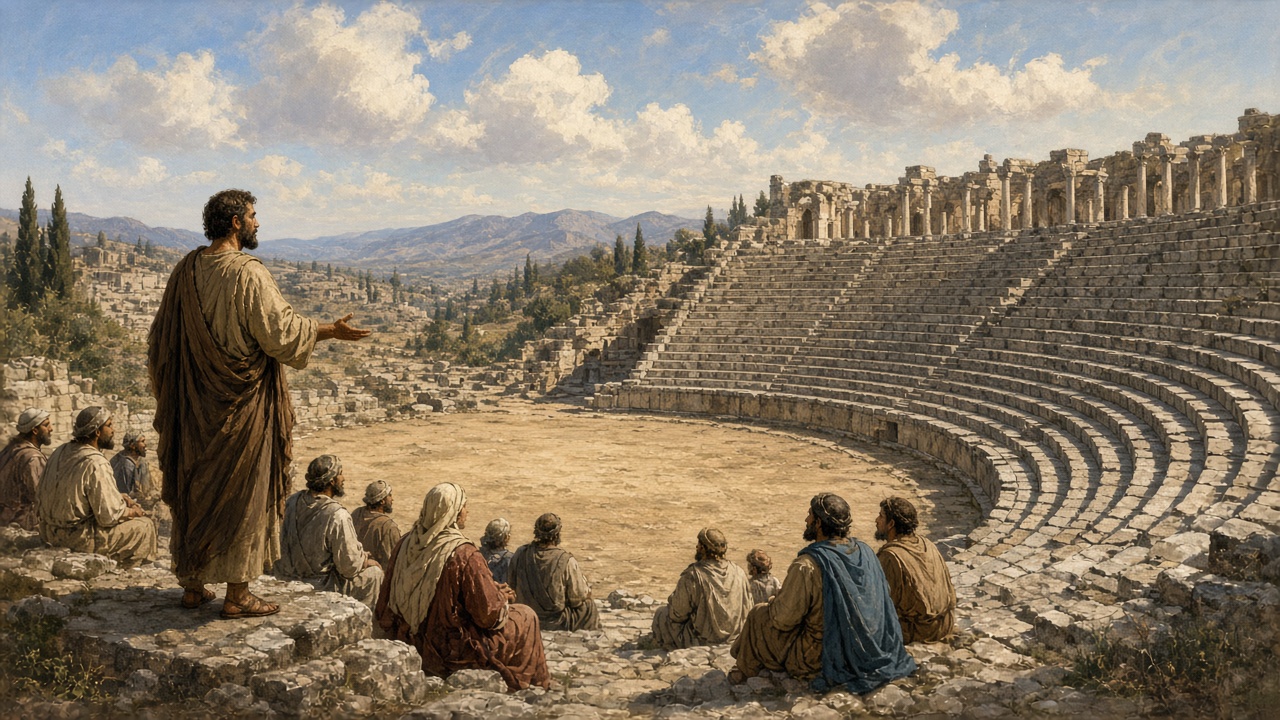
- When this chapter asks what was gained by fighting wild beasts in Ephesus, it names a city that Easton's Bible Dictionary calls the capital of proconsular Asia, known for an open-air theatre—the largest in the world, able to hold 50,000 spectators—where fights of wild beasts and of men with beasts were staged.Sources: Ephesus · the Bible text itself
- Easton's Bible Dictionary explains that Adam, a Babylonian word meaning red and the ordinary name for man in Hebrew and Assyrian, was the first man, formed from the dust of the earth, which is why he received that name. This chapter takes up that picture: death came through a man, the first man was of the dust, and the last Adam is a life-giving spirit.Sources: Adam · the Bible text itself
- Easton's Bible Dictionary (1897) identifies the James to whom Christ appeared after the resurrection, as this chapter records, as the brother or near kinsman of Jesus, also called James the Less, and says that he later headed the church in Jerusalem.Sources: James (Brother of Jesus) · the Bible text itself
Notes written with AI assistance from open sources (Theographic Bible Metadata, CC BY-SA 4.0; Easton’s Bible Dictionary, public domain) and reviewed before publishing.
Places in this chapter
- Ephesus · 37.939, 27.341 · verse 32
Only places identified with high confidence are shown (90% or more according to the scholarly sources compiled by OpenBible). Period map: DARE (Digital Atlas of the Roman Empire), CC BY 4.0; modern map: © OpenStreetMap contributors; places: OpenBible.info (CC BY 4.0).
Credits and license for this translation
The New Testament of our Lord and Saviour Jesus Christ
New Testament in Apache, Western (US:apw:Apache, Western)
copyright © 2012 Wycliffe Bible Translators, Inc.
Language: Western Apache (Apache, Western)
Translation by: Wycliffe Bible Translators, Inc.
Copyright Information
© 2012,Wycliffe Bible Translators. All rights reserved.
This translation text is made available to you under the
terms of the Creative Commons License: Attribution-Noncommercial-No Derivative Works.
( http://creativecommons.org/licenses/by-nc-nd/3.0/ )
In addition, you have permission to port the text to different file formats, as long as you
do not change any of the text or punctuation of the Bible.
You may share, copy, distribute, transmit, and extract portions
or quotations from this work, provided that you include the above copyright
information:
You must give Attribution to the work.
You do not sell this work for a profit.
You do not make any derivative works that change any of the actual words or punctuation of the Scriptures.
Permissions beyond the scope of this license may be
available if you contact
us with your request.
The New Testament
in Apache, Western
© 2012,Wycliffe Bible Translators. All rights reserved.
This translation is made available to you under the terms of the
Creative Commons Attribution-No Derivatives license 4.0.
You may share and redistribute this Bible translation or extracts from it in any format, provided that:
You include the above copyright and source information.
You do not make any derivative works that change any of the actual words or punctuation of the Scriptures.
Pictures included with Scriptures and other documents on this site are licensed just for use with those Scriptures and documents.
For other uses, please contact the respective copyright owners.
2014-04-21
Source: http://ebible.org/apwNT/ · eBible.org