Luke 6
Ŋwɛ menomenyɛɛ́ mekɛ́ · Tap a verse to see its cross-references.
Nkwɛ́ ayi bií uwyaá bɔɔ́ Jus
1Né bií uwyaá bɔɔ́ Jus fɔ, Jisɔs ne baá utɔɔ́ bií ákoóge né mekɔɔ́ gefɔgé nchi fɔ ɛyi ákuú nnó wid. Baá utɔɔ́ bií álɔ mánkɔ́gé ulɔnchi fɔ́ álálege ányɛɛ́. 2Bɔɔ́ Farasi ágɛ́gé mbɔ ágií áké, “Ulannó ɛnyú dépyɛɛ́ genó ɛyígé ɛbɛ́ ɛla ɛ́kamé nnó muú apyɛ bií uwyaá wɔ́?” 3Jisɔs agií ɛbwɔ́ awuú nkwɛ́ aké, “Ɛnyú délú danjɔɔ́ né mmu ŋwɛ Ɛsɔwɔ ndɛre mfwa Dɛvid ápyɛ́ nyá gébégé mesa ámmyɛ ji ne bɔɔ́ bií wɔ́? 4Akpɛ mmu ɛcha upɛ Ɛsɔwɔ ábɔ́ menyɛɛ́ yi ábɔ́ áchyɛ́ mbaá Ɛsɔwɔ, ányɛ́ ne áchyɛ́ ntó bɔɔ́ bií wɔ́? Ɛbɛ́ ɛjɔɔ́ nyá nnó muú ányɛgé fɔ menyɛɛ́ yimbɔ, ɛ́kosé mémpyɛ́ upɛ Ɛsɔwɔ.” 5Jisɔs ama jɔɔ́ ne bwɔ́ aké, “Ɛle *Maá Ntɛ Mekwaá ne akáge gáre genó yí muú ábɔɔ́ mampyɛ né bií uwyaá.”
Jisɔs apyɛ mende yi ɛbwɔ ɛgboó ji atoó
6Bií uwyaá ɛbifɔ́ úkwɔ́négé, Jisɔs ajyɛ kpɛ́ mmu Ɛcha mmyɛmenɛne, alɔ mánlɛ́régé bɔɔ́. Mende fɔ abɔ́ alú ɛfɛɛ́, ayi ɛbwɔnyɛ wuú ɛgboó. 7*Ánlɛré mabɛ́ Ɛsɔwɔ ne bɔɔ́ Farasi ábɔ́ ábáme Jisɔs nnó ámá ji mechɔ́ mmyɛ. Ápɛ́le ji dome mangɛ nnó apyɛ nyɛ mende yimbɔ atoó né bií uwyaá bwɔ́ ne ájɔɔ́ nnó ákwé ɛbɛ́. 8Yɛ́mbɔ Jisɔs akaá genó ɛyígé ɛbwɔ́ áfɛ́rege aké ne mende yimbɔ, “Kwilé chwɔ́ tɛ́né mbɛ ushu bwɔ́.” Ne akwilé achwɔ tɛ́ne ɛfɛɛ́. 9Mende yimbɔ átɛ́négé ɛfɛɛ́, Jisɔs agií ɛbwɔ́ aké, “Ɛbɛ́ ɛsé ɛké depyɛ ndé né bií uwyaá? Ɛke dépyɛ galɔ́gálɔ́ wá gabogabo? Mampyɛ mekwaá apó wá mánlyaá ji agbó?” 10Apɛ ɛbwɔ́ bɔɔ ne álé jɔ́ɔ ne mende yimbɔ aké, “Nyaá ɛbwɔ wyɛ.” Tɛ́netɛ́ne mende yimbɔ anyágé, ɛbwɔ wuú ɛtoó. 11Ɛwéna ɛpwɔ ɛbwɔ́ amu, matɔɔ́ ásɔ́ ɛbwɔ́ ájyɛ chó mánsɔ́ mala nnó áwá Jisɔs.
Jisɔs ajya áŋgbá bií áfyáneápeá
12Né gébé ɛyígémbɔ, Jisɔs alyá melɔ akwɔ́ mékwɛ́ fɔ́ mánɛmmyɛ mbaá Ɛsɔwɔ ne ala ɛwú anɛnemmyɛ utuú uko. 13Gébégé bií úkaá, akú baá utɔɔ́ bií; áchwɔ́gé ajya áfyanéápeá abi akúu ɛbwɔ́ nnó áŋgbá. 14Abi ájya ɛ́lé Simun ayi ákuú ntó nnó Pita ne Andru meŋmó Simun. Abifɔ álú Jɛmsi ne Jɔn, Filip ne Batolomyo. 15Matyo ne Tɔmasi, Jɛmsi maá Alfɔs, Simun ayi ákúu ji muú ukógé. 16Judas ayi maá Jɛmsi, ne Judas Iscarot ayi né meso gébé áchyɛ́ Jisɔs maŋkwaá.
Jisɔs alɛrege, agarege mekomejɔɔ́ Ɛsɔwɔ ne apyɛ bɔɔ́ mamée átóoge
17Ánérégé manjya ɛbwɔ́ alɔ mánshulé mekwɛ. Ashúlé akwya né mbaá ayi alú dɛdɛ, ne gejamégé bɔɔ́ gébɔ́ géchomé ɛ́fɛɛ́. Ábɔ́ átané malɔ mako ayi Judiya ne Jɛrosalɛ ne malɔ Tiya ne Sidɔn ayi álú mbále ɛbɛɛ́ mega. 18Ábɔ́ áchwɔ́ mánwú nkane Jisɔs álɛ́rege ne nnó ápyɛ mamée bwɔ́ ábyɛ́. Bɔɔ́ bí áló nchyɛ áchyɛ́ge ɛbwɔ́ ɛfwyale áchwɔ́ ntó, ne Jisɔs apyɛ ɛbwɔ́ átoó. 19Wyɛ́mbɔ ne gejamégé bɔɔ́ geŋmɛ́regé atɛ manjyɛ tá Jisɔs gétúgé uto bí útánege ji menyamyɛ úpyɛ́ bɔɔ́ mamée ako átóoge.
Jisɔs alɛrege mejé ɛwé wáwálé
20Né gébé gefɔ́ Jisɔs apɛ baá utɔɔ́ bií dómeé aké:
“Méjé ɛ́lú ne ɛnyú bí délú gekpo,
néndé *Gefwa ɛyigé Ɛsɔwɔ ágbárege gelú ɛyigé nyú.
21Méjé ɛ́lú ne ɛnyú bí mesa ámyɛ́ nyú nana,
denyɛ nyɛ́ menyɛɛ́ degbeé.
Méjé ɛ́lú ne ɛnyú bí delíle mbɔ náná,
ɛnyú dejwane nyɛ.
22“Méjé ɛlu ne ɛnyú mbɔgé dekwɔlege Maá Ntɛ Mekwaá, ne bɔɔ́ aké ápáa ɛnyú, áfwéne ɛnyú, áshyɛ nyú ne ákúu nyú mabɔ mabomabo. 23Bɛ́ge ne nechɔ́chɔ́ gébégé gefɔɔ́ genó ɛyígé ná gépyɛgé, gétúgé Ɛsɔwɔ akwyɛ́ mɛ́ gekpɛ́kpɛ́gé nsá nyú alu né mfaánebuú. Kaáge nnó wyɛ́mbɔ ne ukwéne antɛ bɔɔ́ bína áfwyalé nyá ukwéne bɔɔ́ ɛkpávé Ɛsɔwɔ.
24“Yɛ́mbɔ utóŋkwa úlú ne ɛnyú bi delú mbɔ né gefwa nana,
néndé débɔ́ mɛ́ nsá nyú.
25Utóŋkwa úlú ne ɛnyú bí dényɛɛ́ dégbéege náná,
néndé debɛɛ́ nyɛ́ mesa.
Utóŋkwa úlú ne ɛnyú bí déjwáne náná,
néndé delile nyɛ́ né masómé.
26“Utóŋkwa úlú ne ɛnyú gébégé bɔɔ́ ako áké áfɛɛ́ge ɛnyú, wyɛ́mbɔ ntó ne antɛ bwɔ́ abi mbɛ ábɔ́ ápyɛ ne bɔɔ́ ɛkpávé Ɛsɔwɔ abi gebyɔ́.
Bɔ́ gejeé ne bɔɔ́ mawámé
27“Yɛ́mbɔ ɛnyú bí déwúu mekomejɔɔ́ wa ngarege ɛnyú nnó, bɔ́gé gejeé ne bɔɔ́ mawámé nyú, pyɛ́ge galɔ́gálɔ́ ne bɔɔ́ bí ápáa ɛnyú. 28Yɛndégébé bɔɔ́ álwɛrégé ɛnyú, nɛ́gemmyɛ nnó Ɛsɔwɔ agɛ́ ɛbwɔ́ meshwɛ ájé bwɔ́, máge dénɛ́nemmyɛ mbaá Ɛsɔwɔ gétúgé bɔɔ́ bí áshyɛ́ ɛnyú.
Jisɔs alɛrege nnó ɛ́kagé muú ashuú gabo mfaá gabo
29Mbɔgé muú adogé wɔ neka né ɛtá ɛ́ma, bwɔ́lé ɛwé fɔ ntó ádo. Mbɔgé ɔfyɛgé bɔ nkú apeá né mmyɛ ne muú afɔɔ́gé ayi mfaá, kpɛ chyɛ́ ji ayi nteé. 30Muú akɔgé wɔ genó, chyɛɛ́ ji. Afɔɔ́gé genó jyɛ, ɔsɛgé sé géjí. 31Pyɛ́gé ɛtá bɔɔ́ wyɛ́ genó ɛyígé dekɛ́lege nnó ápyɛ ɛta nyú.
32“Mbɔgé ɛnyú degboó lé ne bɔɔ́ abi ágboó ne ɛnyú ndé nsá ayi ɛnyú debɔɔ́? Yɛ bɔɔ́ abi ápyɛɛ́ gabo, ágboó ne bɔɔ́ bi ágboó ne ɛbwɔ́. 33Ne mbɔgé ɛnyú depyɛ ɛ́lé galɔ́gálɔ́ ne bɔɔ́ bí apyɛ́ galɔ́gálɔ́ ne ɛnyú nsá nyú alu ɛ́fɔ́? Yɛ́ bɔɔ́ abi ápyɛɛ́ gabo, mbɔntó ne apyɛ́ɛ. 34Mbɔgé depwɔle unó mbaá bɔɔ́ bí dékaá nnó áshúuge nyɛ́ ɛta ɛnyú galɔ́gálɔ́ yi ɛnyú dépyɛ alɛ́? Abi deké álú bɔɔ́ ubeé ápyɛ ntó gefɔɔ́ gémá. Yɛ́ndémuú apwɔle genó ɛtá mejií wuú, akaáge nnó ashuge nyɛ́ geko. 35Genó ɛyigé débɔɔ́ mampyɛ gélú nnó gbógé ne bɔɔ́ mawámé ɛnyú ne pyɛ́ge galɔ́gálɔ́ ne ɛbwɔ́, depwɔ́ge ɛbwɔ́ ɛpwɔ, dégigé nnó áshuú. Debɔɔ́ nyɛ́ gekpɛ́kpɛ́gé nsá ne debɛɛ́ nyɛ baá Anyátá Ɛsɔwɔ. Néndé alɔme ne bɔɔ́ ubée ne abi álá támégé ji. 36Gɛ́ge bɔɔ́ meshwɛ wyɛ́ ndɛre Ntɛ nyú Ɛsɔwɔ agɛ́ne nyú meshwɛ.
Dépagé mpa bɔɔ́ ne metɔɔ́ usɔɔ́
37“Dépagé mpa muú ne ufyá ɛ́kagé Ɛsɔwɔ ápá ntó awu nyú mbɔ. Déchɔge muú mabɔ nnó apyɛ ubée ɛ́kagé Ɛsɔwɔ áchɔ́ ntó ami nyú. Jiíge nte gabo ayi bɔɔ́ ápyɛ́ ɛta nyú nnó Ɛsɔwɔ ajií ntó nte gabo awu nyú. 38Chyɛ́ge bɔɔ́ genó ɛyigé ɛbwɔ́ akɛ́lege, Ɛsɔwɔ achyɛ́ge nyɛ ntó ɛnyú. Yɛ́ndégébé aké achyɛgé, amɛge chánchá, akwyɛge aŋmɛrege nnó gégbeé gégbɛ́légé mme. Gefɔɔ́ ɛyígé démɛge genó déchyɛ́ge muú, mbɔntó ne ámɛge nyɛ áchyɛɛ́ ɛnyú.”
39Jisɔs ama tó ɛbwɔ́ neka nnó, “Ɛpɔfɔ kɔkɔge nnó muú amɛ nónómé ájáa ntɛ ayifɔ meti. Mbɔgé apyɛ́gé mbɔ, ɛbwɔ́ ako ákwéne mmu gepyɛɛ́. 40Kaáge nnó maá ŋwɛ akaágé fɔ́ ŋwɛ ápwɔ́ menlɛré wuú. Yɛ́mbɔ, gébégé aneregé mángií ŋwɛ, abɛɛ́ nyɛ́ ntó ndɛre ménlɛré wuú.
41Ulannó ɔ́chɛ́rege ɛkɛ́kɛ́ gabo ayi alu ɛke maá gejwaá né dambɔɔ́nnyi ntɛ meŋmɛ́ wyɛ́ ɔla ɔfyɛɛ́ mekpo né gabo ayi alu ɛke mekwɔkwɔ né dambɔɔ́nnyi awyɛ wɔ mbɔɔ́? 42Ɛ́pyɛmbɔ nnó ne ɔjɔɔ́ ne meŋmɛ́ wyɛ́ nnó, ‘Té mmyɛ we mfére wɔ gejwaá né dambɔɔ́nnyi ayi ɔla kaágé nnó mekwɔkwɔ ɛlú né dambɔɔ́nnyi wyɛ́.’ Wɔ muú dembwɔ́lé bɔ́ mbɛ féré ntó mekwɔkwɔ ɛwé ɛlú wɔ né dambɔɔ́nnyi, ne ɔkaá nkane ɔférége ɛkɛ́kɛ́ gejwaá ɛyigé lú meŋmɛ́ wyɛ né dambɔɔ́nnyi.”
Genɔɔ́ ne umpomé bií
43Jisɔs ama jɔɔ aké, “Genɔɔ́ yí gelɔ́gelɔ́ géwɔ́mé fɔ́ umpomé uboubo ne ɛyí gebogebo ntó géwɔ́mé fɔ́ umpomé ulɔ́úlɔ́. 44Yɛ́ndémuú akaágé genɔɔ́ né umpóme bí géjí géwɔ́me, muú ajyɛ fɔ́ ákyɛ́ genchɔ́gélé ɛyigé mbɔ́ mfaá genchɔ́gélé denywɔné. Muú ajyɛ fɔ́ né nepe ákyɛ́ ɛ́kɛ́. 45Muú melɔ́mélɔ́ ájɔgé depɔ delɔ́délɔ́ ɛti délú ji né metɔɔ́, muú mebomebo ájɔgé depɔ debodebo ɛti délú ji metɔɔ́. Ná ne ɛlú gétúgé genó ɛyi gélú muú né metɔɔ́ géjí ne gétánege ji meno.”
Ufɔɔ́ ántɛné upú ápeá
46Jisɔs ama gií aké, “Ulannó ɛnyú dekuú me Ata Ata! ne dela dépyɛ́ genó ɛyígé me njɔɔ́ge. 47Muú yi achwɔ́ awúu mekomejɔɔ́ wa ne ajyɛgé ápyɛɛ́ ndɛre ájɔɔ́, 48muú yimbɔ alu ɛké mende yi álɔɔ́ mantɛné gepú jií, ne abɔ mbɛ achó mme, afyɛ́ mataá chánchá ne ale tɛ́né géjí. Meso gébé geneágé nnyi géchwɔgé mammu géjí yɛ́mbɔ genyígé fɔ́ gétúgé átɛ́né géjí chánchá. 49Yɛ́mbɔ muú yi awuú mekomejɔɔ́ wa ne álá pyɛɛ́ ndɛre ákɛ́lege alu ɛké muú ayi atɛné gepú jií né nébɔ́me ɛniné álá cho áfyɛ́ mataá wɔ́. Meso gébé nnyi negbeégé né mmu gepú ɛyigémbɔ gékwé mme gbang.”
Did you know?
The Sabbath, the Twelve, and the Plain
- On a Sabbath, as Jesus passed through the grainfields, his disciples picked heads of grain, rubbed them in their hands, and ate them, and some Pharisees called this unlawful. Jesus recalled that David and his hungry companions ate consecrated bread from the house of God, bread lawful only for the priests, and said that the Son of Man is Lord of the Sabbath. On another Sabbath he restored a man’s withered right hand in the synagogue while scribes and Pharisees watched for a reason to accuse him; a chronology dates both episodes to AD 28.Sources: the Bible text itself · Corn on the Sabbath · Healing a Withered Hand
- After spending the night in prayer on the mountain, Jesus called his disciples and chose twelve, whom he designated apostles. Among them were Simon, whom he named Peter, and Peter’s brother Andrew, fishermen from Bethsaida on the western coast of the Sea of Galilee, and Matthew, a tax collector at Capernaum who had formerly been known as Levi.Sources: the Bible text itself · Simon Peter · Andrew · Matthew
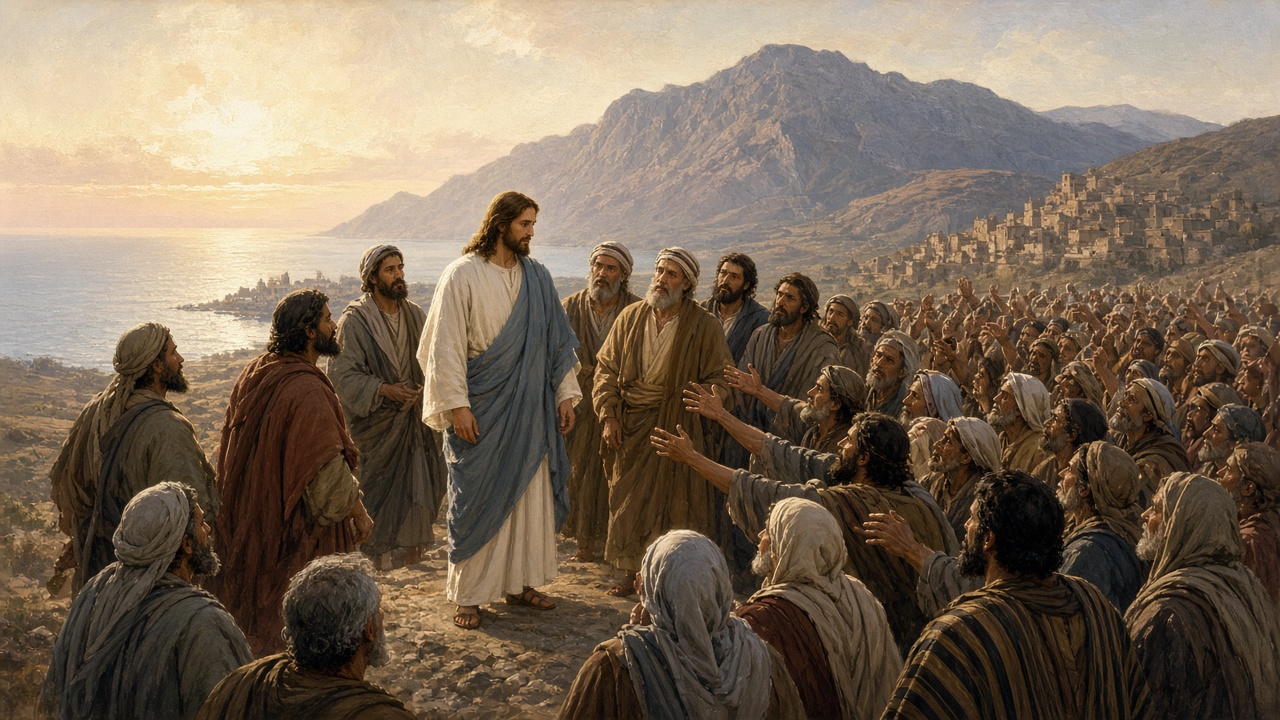
- Jesus came down with them and stood on a level place, where people from Judea, Jerusalem, and the sea coast of Tyre and Sidon had gathered to hear him and to be healed. Tyre and Sidon were ancient Phoenician cities on the Mediterranean; Sidon, the older city, lay about twenty-five miles north of Tyre. A chronology dates this teaching to AD 28 and titles it the Sermon on the Mount, though the narrative places Jesus on level ground after he came down from the mountain.Sources: the Bible text itself · Tyre · Sidon · Sermon on the Mount
Notes written with AI assistance from open sources (Theographic Bible Metadata, CC BY-SA 4.0; Easton’s Bible Dictionary, public domain) and reviewed before publishing.
Places in this chapter
- Jerusalem · 31.777, 35.234 · verse 17
- Judea · Today: Judea 1 · 31.777, 35.234 · verse 17
- Sidon · Today: Sandikli archaeological site in Sidon · 33.561, 35.372 · verse 17
- Tyre · 33.271, 35.196 · verse 17
Only places identified with high confidence are shown (90% or more according to the scholarly sources compiled by OpenBible). Period map: DARE (Digital Atlas of the Roman Empire), CC BY 4.0; modern map: © OpenStreetMap contributors; places: OpenBible.info (CC BY 4.0).
Credits and license for this translation
Ŋwɛ menomenyɛɛ́ mekɛ́
New Testament in Denya (CM:anv:Denya)
copyright © 2010 Wycliffe Bible Translators, Inc.
Language: Denya
Translation by: Wycliffe Bible Translators, Inc.
Copyright Information
© 2010, Wycliffe Bible Translators, Inc. All rights reserved.
This translation text is made available to you under the
terms of the Creative Commons License: Attribution-Noncommercial-No Derivative Works.
( http://creativecommons.org/licenses/by-nc-nd/3.0/ )
In addition, you have permission to port the text to different file formats, as long as you
do not change any of the text or punctuation of the Bible.
You may share, copy, distribute, transmit, and extract portions
or quotations from this work, provided that you include the above copyright
information:
You must give Attribution to the work.
You do not sell this work for a profit.
You do not make any derivative works that change any of the actual words or punctuation of the Scriptures.
Permissions beyond the scope of this license may be
available if you contact
us with your request.
The New Testament
in Denya
© 2010, Wycliffe Bible Translators, Inc. All rights reserved.
This translation is made available to you under the terms of the
Creative Commons Attribution-Noncommercial-No Derivatives license 4.0.
You may share and redistribute this Bible translation or extracts from it in any format, provided that:
You include the above copyright and source information.
You do not sell this work for a profit.
You do not change any of the words or punctuation of the Scriptures.
Pictures included with Scriptures and other documents on this site are licensed just for use with those Scriptures and documents.
For other uses, please contact the respective copyright owners.
2024-02-11
Source: http://ebible.org/anvNT/ · eBible.org