John 4
Ŋwɛ menomenyɛɛ́ mekɛ́ · Tap a verse to see its cross-references.
1Ɛkwɔ́ bɔɔ́ Farasi áwú nnó bɔɔ́ abi ajyɛɛ mbaa Jisɔs, ji awyage ɛbwɔ́ manaá Ɛsɔwɔ aja apwɔ abi ajyɛɛ mbaá Jɔn. 2Yembɔ wáwálé alú nnó Jisɔs jimbɔ awyáge fɔ́ bɔɔ́ manaá Ɛsɔwɔ, ɛlé baá utɔɔ́ bií ne áwyáge. 3Ne Jisɔs awúgé nnó bɔɔ́ Farasi áwu nnó bɔɔ́ abi áchwɔɔ́ ɛta wuú aja apwɔ abi Jɔn, alyaá Judiya akeré meso né Galilií, 4abɔ́ mankoó wyɛ né gebage mewaá Samariya ne afɛ́ né gebagé mewaá Galilií.
5Ákwɔ́négé né gebagé mewaá Samariya akwɔné melɔ ɛwé ákuú nnó Sikar. Sikar alú kwɔ́kwɔ́lé ne melú mme ɛwé Jakɔb abɔ́ achyɛ́ɛ maá wuú Josɛf. 6Ɛmbu manaá ɛwé Jakɔb abɔ́ áchomé ɛlú ntó ɛfɛɛ́. Jisɔs ákɛgé ápwagé, ajyɛ jwɔ́lé wyɛ. Gébé gélú kalaŋká ɛfyánéɛpeá ne ŋwɔmese ɛyigé Jisɔs akwɔné né mbaá yimbɔ.
7Ɛké ɛwyáge, mendée Samariya fɔ achwɔ́ ɛfɛɛ́ manchwɛ́ manaá. Jisɔs ajɔɔ́ ne ji aké, “Chyɛɛ́ me manaá nyú.” 8Gébé ɛyigémbɔ, baá utɔɔ́ bií áfɛ́ né melɔ manjyɛ na menyɛɛ́.
9Mendée Samariya yimbɔ aké, ne ji “Wɔ ɔlú muú Jus, me nlú muú Samariya, ɛpyɛɛ́mbɔ nnó ne ɔgií me manaá manyú?” Ajɔɔ́ mbɔ néndé bɔɔ́ Jus ne bɔɔ́ Samariya átuúgé fɔ.
10Jisɔs ashuú ji meko aké, “Wɔ ɔbɔ́ ɔkaá mbɔ ɛchyɛ ɛwé Ɛsɔwɔ achyɛgé ne gefɔgé muú ayi agií mbɔ wɔ manaá, mbɔ ɔgií ji, ne ji abɔ́ achyɛgé wɔ manaá ami machyɛge geŋwá.”
11Mendée yimbɔ ajɔɔ́ ne ji aké, “Ata ɔpɔ́ ne genó manchwɛ́ manaá, ne ɛmbu manaá ɛwéna ɛgomé. Ɔpyɛ́ɛ mbɔ nnó ne ɔgɛ́ manaá ami machyɛgé geŋwá? 12Nnó wɔ ɔŋeá gemɛ ɔpwɔ gekwenege ntɛ sé Jakɔb muú áchomé ɛsé ɛmbu manaá ɛwéna? Ɛwé jimbɔ, baá bií ne utú bií anyuú manaá wyɛ.”
13Jisɔs aké ne ji, “Yɛ́ndémuú ayi anyú manaá amina, mmwɔ́lé manaá ɛmágé pyɛ ji, 14yɛ́mbɔ, yɛ́ndémuú ayi anyúu manaá ami me nchyɛge nyɛ, mmwɔ́lé manaá ɛmágé pyɛ sé ji tɛ kwyakwya. Ne manaá ami me nchyɛge ji, mabwɔlége nyɛ mala ɛta wuú ɛké ɛmbu nnyi ɛwé ɛtanege manaá ami machyɛ́ge geŋwá ɛyi gélágé byɛ́.”
15Mendée yimbɔ aké, “Ata chyɛɛ́ me manaá amimbɔ nnó mmwɔ́lé manaá ɛpyɛgé sé me, ne nnó nchwɔ́ge sé fa manchwɛ́ manaá.”
16Jisɔs ajɔɔ́ ne ji, aké, “Chó kuú menɔ wyɛ ɛnyú déchwɔ́.”
17Ne mendée yimbɔ ashuú ji meko aké, “Me mmpɔ ne menɔ”,
Jisɔs aké, “Wɔ ɔlú cho ndɛre ɔké ɔpɔ́ ne menɔ, 18néndé ɔbɔ́ ɔbá mɛ́ anɔ ata, ne ayi ɔlú mbɔ ne ji nana, apɔ́ fɔ́ menɔ wyɛ. Genó ɛyigé wɔ ɔjɔɔ́ mbɔ gélú wáwálé.”
19Mendée yimbɔ ajɔɔ́ ne ji aké, “Ata ɛlúmbɔ ɛké wɔ ɔlú muú ɛkpávé Ɛsɔwɔ. 20Ukwene antɛ sé ábɔ́ ánógé Ɛsɔwɔ né mekwɛ ɛwéna, yɛ́mbɔ ɛnyú bɔɔ́ Jus deké ánógé ɛlé Ɛsɔwɔ né melɔ Jɛrosalɛ.”
21Jisɔs ajɔɔ́ ne ji aké, “Kámé genó ɛyigé me njɔɔ́gé, gébé gechwɔ́ nyɛ ɛyigé ɛnyú délá nógé sé Ɛsɔwɔ fa né mekwɛ ɛwéna, yɛɛ́ ɛbɛ́lé né Jɛrosalɛ. 22Ɛnyú bɔɔ́ Samariya dénógé genó ɛyigé délá kaágé, ɛsé bɔɔ́ Jus dénógé genó ɛyigé dékaágé néndé muú ayi áférege akwaá né ɛfwyale gabo atanege nyɛ ɛlé né mbaá bɔɔ́ Jus. 23Yɛ́mbɔ gébé gechwɔ́ɔ, ne géchwɔ́ mɛ́, ɛyige bɔɔ́ abi anógé Ntɛ sɛ wáwálé anoge nyɛ ji né gefɔɔ́ ɛyi gelu wáwálé ndɛre Mendoó Ɛsɔwɔ ɛlɛrege. Gɛ́ ufɔɔ́ bɔɔ́ abi Ɛsɔwɔ akɛ́lege nnó ánoógé ji mbɔ. 24Ɛsɔwɔ alú Mendoó ne bɔɔ́ abi anógé ji abɔ́ manógé ji né gefɔɔ́ ɛyi gelu wáwálé ndɛre Mendoó Ɛsɔwɔ ɛlɛrege.”
25Ne mendée yimbɔ aké, “Nkaá nnó Muú yi Ɛsɔwɔ akweré ji ɛlá gefwa, ayi akuú ji Kras achwɔ́ɔ, gébégé achwɔ́gé agarege nyɛ ɛsé yɛ́ndégenó cháŋéné.”
26Jisɔs agaré yɛ́ ji aké, “Me yi njɔ́ge mbɔ nlu ji awu.”
27Ɛké ɛwyágé baá utɔɔ́ Jisɔs áchwɔ́; ne álá meno mekpo fuú nkane ágɛ́né ji ajɔɔ́ge mejɔɔ́ ne mendée yɛ́mbɔ yɛ́ muú ayi agií ji nnó ɔkɛlege ndé, yɛ́ ɛbɛ́ ɛlé nnó ulannó ɔjɔɔ́ge mejɔɔ́ ne mendée yina apɔ́.
28Mendée yimbɔ alyaá yɛ́ ŋkwɔ́ manaá wuú ɛfɛɛ́ afɛ́ né melɔ ajyɛ gáré bɔɔ́ aké, 29“Chwɔ́ge dégɛ́ mende ayi agaré me yɛ́ndégenó ɛyige me mbɔ mpyɛ́ɛ. Nnó ji ne alu Muú yi Ɛsɔwɔ akweré ji ɛlá gefwa?” 30Ne bɔɔ́ átané né melɔ ájyɛ́ɛ gɛ́ Jisɔs.
31Né gébé ɛyigé mendée yimbɔ ajyɛɛ né melɔ, baá utɔɔ́ Jisɔs ákpeáge ji áké, “Ménlɛré nyɛ́ menyɛɛ́.”
32Yɛ́mbɔ Jisɔs ajɔɔ́ ne ɛbwɔ́ aké, “Me nwya menyɛɛ́ manyɛ́ ayi ɛnyú délá kaá wɔ́.”
33Ajɔɔ́gé mbɔ, baá utɔɔ́ bií ájɔɔ́ ne atɛ aké, “Nnó muú fɔ achwɔ́ ji ne menyɛɛ́?”
34Ndɛre ájɔɔ́gé mbɔ, Jisɔs aké, “Menyɛɛ́ wa alú ɛlé mampyɛ genó ɛyigé muú ayi atɔmé me akɛ́lege ne mampyɛ utɔɔ́ bií nnéré chánchá. 35Pɔ́ ɛnyú déjɔɔ́ge na nnó, ‘Ɛla amfaá ani ne mbwɛ́ ákwɔ́né mamferé?’ Yɛ́mbɔ me ngarege ɛnyú nnó bwɛge amɛ dépɛ makɔɔ́, mbwɛ akwɔné mɛ́ mamferé. 36Yɛ nana muú ayi aférégé mbwɛ́ abɔɔ́ nsa wuú ne anywerege mbwɛ́ yimbɔ́ ne mbwɛ́ yimbɔ ɛle geŋwá ɛyi gélágé byɛ́. Ɛ́bɛgé mbɔ, mempɛné ne memferé ábɛɛ́ ne nechɔ́chɔ́ chónchó. 37Ɛ́pyɛgémbɔ, nekanemejɔɔ́ ɛniné ajɔɔ́ nnó, ‘Mempɛné apɛgé, memferé aféré’ nelú wáwálé. 38Me ntɔ́ ɛnyú nnó déjyɛɛ́ déféré mbwɛ́ né mekɔɔ́ ɛwé ɛnyú déla dépɛ́ɛ mbwɛ́ wyɛ wɔ́. Bɔɔ́ abi chá ápyɛ utɔɔ́, ɛnyú débɔ́ nsá né utɔɔ́ bwɔ́.”
Gejamégé bɔɔ́ Samariya áfyɛ́ metɔɔ́ ne Jisɔs
39Né gébé ɛyigémbɔ gejamégé bɔɔ́ Samariya, áfyɛ́ metɔɔ́ ne Jisɔs gétúgé genó ɛyigé mendée yimbɔ agaré ɛbwɔ́ nnó, “Ágaré me yɛ́ndégenó ɛyigé mbɔ́ mpyɛ́ɛ.” 40Bɔɔ́ Samariya bimbɔ, ágɛ́gé Jisɔs, ánɛ́ ji mmyɛ nnó ajwɔ́lé ne ɛbwɔ́, ne Jisɔs abɛlé ne ɛbwɔ́ ndɔ ɛpeá.
41Né mboó ndɔ ɛyimbɔ, gejamégé bɔɔ́ ama áfyɛ́ metɔɔ́ ne Jisɔs gétúgé mekomejɔɔ́ ayi ji ágaré. 42Ne ájɔɔ́ ne mendée yimbɔ aké, “Ɛsé défyɛɛ́ metɔɔ́ ne Jisɔs nana ɛpɔ́sé gétúgé mekomejɔɔ́ ayi ɔgaré ɛsé néndé ɛsé ambɔɔ́ déwú ne dékaá nnó ji alu Mempoó bɔɔ́ mme wáwálé.”
Jisɔs apyɛ́ɛ maá muú kpaá gɔ́mena atoó
43Ndɔ yimbɔ ɛpea ɛkógé, Jisɔs alyaá melɔ Samariya afɛ́ né Galilií. 44Jisɔs jimbɔɔ́ abɔ́ ajɔɔ́ mɛ́ aké, “Muú ɛkpávé Ɛsɔwɔ apɔ́ ne ɛ́nógé né melɔ wuú.” 45Ákwɔ́négé né Galilií bɔɔ́ melɔ Galilií ásɛ́ ji amu apeá néndé ɛbwɔ́ ágɛ́ yɛ́ndégenó ɛyigé Ji apyɛɛ́ né Jɛrosalɛ gébégé ɛpaá koó upú. Ɛlé ɛbwɔ́ ntó ábɔ́ álú wyɛ.
46Ne Jisɔs ama ajyɛ́ɛ né melɔ Kana ɛwé ji abɔ́ apyɛɛ́ manaá mábwɔ́lé mmɔɔ́ né gebagé mewaá Galilií. Ne muú kpaá gɔ́mena fɔ abɔ́ alú né melɔ Kapanɔm ayi maá wuú abɔ amée. 47Mende yimbɔ awúgé nnó Jisɔs atané melɔ Judiya achwɔ́ né Galilií, ajyɛ́ nɛ ji mmyɛ nnó áchwɔ́ ápyɛɛ́ maá wuú ayi amée álá magbómagbó átoó.
48Ne Jisɔs ajɔɔ́ yɛ́ ne ji aké, “Me nlá mpyɛ́ gepɔgé ufélékpá ɛbi ulɛ́rege utó Ɛsɔwɔ wɔ́, ɛnyú défyɛɛ́ fɔ́ matɔɔ́ ne me.”
49Ajɔɔ́gé mbɔ, muú kpaá yimbɔ aké, “Ata chwɔ́ déjyɛ́ ɛkágé maá wa agbó.”
50Ne Jisɔs ajɔɔ́ ne ji aké, “Chó maá wyɛ́ atoge nyɛ.”
Ne mende yimbɔ akamé ne mekomejɔɔ́ ayi Jisɔs ajɔɔ́ mbɔ, afɛ́. 51Ndɛre mende yimbɔ ajyɛ́ɛ, baá défwɛ bií átuú ne ji né meti, ágaré ji áké, “Maá wyɛ alu mebɛ.” 52Ne mende yimbɔ agií ɛbwɔ́ gébé ɛyigé maá yimbɔ atoó. Áké, “Gefwene yimbɔ gébyɛ́ ji mmyɛ njuna né kalaŋká ama.”
53Ágárégé ji mbɔ, ate nnó ɛlé wyɛ né gébé ɛyigémbɔ ne Jisɔs abɔ́ ajɔɔ́ ne ji nnó, “Maá wyɛ atógé nyɛ.” Ndɛre ɛpyɛɛ́mbɔ mende yimbɔ ne ula gepú bií uko áfyɛ́ metɔɔ́ ne Jisɔs.
54Gɛ́ ndɔ ayi agbeé maŋáne apea ayi Jisɔs alɛré gepɔgé ufélékpá né Galilií gébégé atané né Judiya.
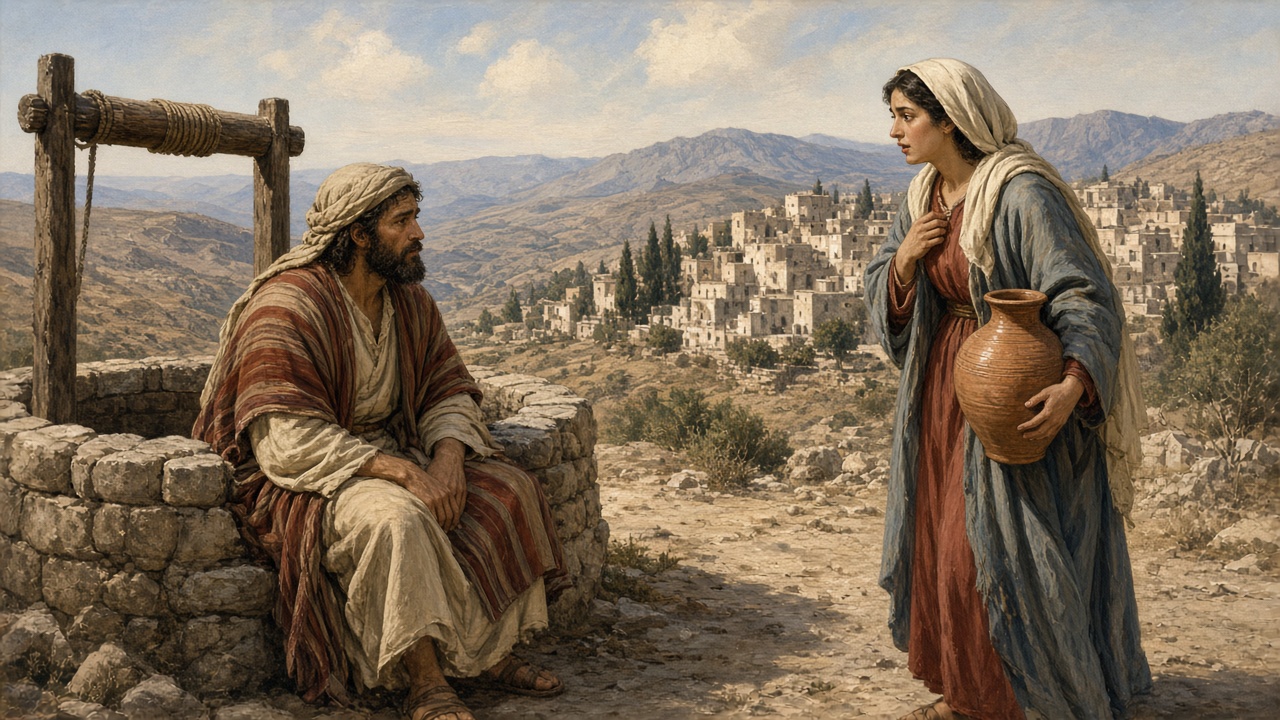
Did you know?
Living Water in Samaria
- Jesus left Judea to return to Galilee, and the Gospel says he had to pass through Samaria. Under the Romans in Jesus' time, Judea was the southernmost of Palestine's three divisions, distinguished from Samaria and Galilee, and the narrative notes that Jews did not associate with Samaritans.Sources: the Bible text itself · Judea
- He came to Sychar, near the plot of ground that Jacob had given his son Joseph, and, weary from the journey, sat down by Jacob's well. Easton's Bible Dictionary (1897) records that from the time of the Crusaders Sychar was usually identified with Shechem, but that explorations had identified it with 'Askar, a small Samaritan town on the southern base of Ebal, about a mile north of the well.Sources: the Bible text itself · Sychar
- The woman contrasted worship on this mountain with the Jewish claim that one must worship in Jerusalem, and she spoke of a coming Messiah, called Christ. When the disciples returned from buying food in the town, they were surprised that Jesus was speaking with a woman.Sources: the Bible text itself
Notes written with AI assistance from open sources (Theographic Bible Metadata, CC BY-SA 4.0; Easton’s Bible Dictionary, public domain) and reviewed before publishing.
Places in this chapter
- Galilee · 32.760, 35.527 · verses 3, 43, 45, 46, 47, 54
- Judea · Today: Judea 1 · 31.777, 35.234 · verses 3, 47, 54
- Samaria · Today: Samaria 2 · 32.276, 35.195 · verses 4, 5, 7, 9
- Jerusalem · 31.777, 35.234 · verses 20, 21, 45
- Mount Gerizim · 32.199, 35.273 · verse 20
Only places identified with high confidence are shown (90% or more according to the scholarly sources compiled by OpenBible). Period map: DARE (Digital Atlas of the Roman Empire), CC BY 4.0; modern map: © OpenStreetMap contributors; places: OpenBible.info (CC BY 4.0).
Credits and license for this translation
Ŋwɛ menomenyɛɛ́ mekɛ́
New Testament in Denya (CM:anv:Denya)
copyright © 2010 Wycliffe Bible Translators, Inc.
Language: Denya
Translation by: Wycliffe Bible Translators, Inc.
Copyright Information
© 2010, Wycliffe Bible Translators, Inc. All rights reserved.
This translation text is made available to you under the
terms of the Creative Commons License: Attribution-Noncommercial-No Derivative Works.
( http://creativecommons.org/licenses/by-nc-nd/3.0/ )
In addition, you have permission to port the text to different file formats, as long as you
do not change any of the text or punctuation of the Bible.
You may share, copy, distribute, transmit, and extract portions
or quotations from this work, provided that you include the above copyright
information:
You must give Attribution to the work.
You do not sell this work for a profit.
You do not make any derivative works that change any of the actual words or punctuation of the Scriptures.
Permissions beyond the scope of this license may be
available if you contact
us with your request.
The New Testament
in Denya
© 2010, Wycliffe Bible Translators, Inc. All rights reserved.
This translation is made available to you under the terms of the
Creative Commons Attribution-Noncommercial-No Derivatives license 4.0.
You may share and redistribute this Bible translation or extracts from it in any format, provided that:
You include the above copyright and source information.
You do not sell this work for a profit.
You do not change any of the words or punctuation of the Scriptures.
Pictures included with Scriptures and other documents on this site are licensed just for use with those Scriptures and documents.
For other uses, please contact the respective copyright owners.
2024-02-11
Source: http://ebible.org/anvNT/ · eBible.org