2 Corinthians 8
Ŋwɛ menomenyɛɛ́ mekɛ́ · Tap a verse to see its cross-references.
Gefɔɔ́ ɛyigé bɔɔ́ Ɛsɔwɔ áchyɛgé ɛchyɛ
1Aŋmɛ sé, ɛsé dékɛlege mampyɛ ɛnyú dékaá gefɔ ɛyigé machomelé bɔɔ́ Jisɔs né Masedonia álɛré galɔ́gálɔ́ Ɛsɔwɔ né geŋwá gebwɔ́. 2Ɛfwyale ɛwé ɛbwɔ́ ágɛne ɛja dɔɔ́ ɛte ɛbwɔ́ né mmuameno yɛ́mbɔ áwyaá wyɛ metɔɔ́ megɔ́mégɔ́ gbɛne ɛwé ɛpyɛɛ́ ɛbwɔ́ áchyɛɛ́ ɛchyɛ byagebyage yɛ lé ɛbwɔ́ álu gekpo. 3Ɛbwɔ́ áchyɛɛ́ ɛchyɛ ndɛre ɛbwɔ́ áwyaá, ne nkágé garé nnó ɛja kpaá ɛpwɔɔ́ amu, ne áchyɛɛ́ yɛ́ muú akpea ɛbwɔ́ wɔ́. 4Áshií nɛne ɛsé mmyɛ nnó dépyɛ ɛbwɔ́ ntó ágɛ́ meti mampógé bɔɔ́ Ɛsɔwɔ. 5Genó ɛyigé ɛbwɔ́ ápyɛ, gepwɔ ndɛre ɛsé debɔ́ défɛre. Ɛbwɔ́ abɔ kpɛ mbɛ áchyɛɛ́ gemɛge bwɔ́ mbaá Ata Ɛsɔwɔ ne áwyaá metɔɔ́ mampyɛ genó ɛyigé Ɛsɔwɔ akɛlege, áchyɛɛ́ gemɛge bwɔ́ ɛta sé. 6Titɔs ne alɔɔ́ ula mansɛ ɛchyɛ ɛwéna né geluagé nyú nnó dépoó ubya bɔ né Jɛrosalɛm. Getú ɛyigémbɔ, ɛsé dékpea ji nno akeré áchwɔ apoó ɛnyú déneré mampyɛ gecháchágé utɔɔ́ bina. 7Ɛnyú délu menɔ mbɛ né yɛ́ndé meti mamfyɛ metɔɔ́ ne Ɛsɔwɔ ne ɛshyɛ, mangaregé depɔré Ɛsɔwɔ cháŋéné, mankágé wáwálé ayi alu wyɛɛ́ cháŋéné, manchyɛɛ́ gemɛge nyú geko mampyɛ utɔɔ́ Ɛsɔwɔ, mambɔge gejeé ne ɛsé dɔɔ́, ɛsé ntó dékɛlege nnó ɛnyú ntó débɛ menɔ mbɛ né mechɔ manchyɛge ɛchyɛ ɛwéna ne matɔɔ́ nyú mako.
8Me njɔ́gé mbɔ, ɛpɔ́fɔ́ nnó ŋmɛrege ɛnyú mekpo mme nnó débɔ mampyɛgé mbɔ. Me ngarége lé ɛnyú nno bɔɔ́ abifɔ ákpane géchyɛɛ́ ápoógé atɛ. Ne nkɛlege nnó nkaá ndɛre ɛnyú ntó débɔɔ́ gejeé wáwálé ne bɔɔ́ abifɔ. 9Ɛnyú ambɔɔ́ dékaá galɔ́gálɔ́ ayi Ata sé Jisɔs Kras alɛre. Ji abɔ awyaá gefwa, yɛ́mbɔ akwe gekpo né galɔ́gálɔ́ nyú, nnó gétúgé gekpo ɛyigé ji akwene ɛnyú débɛ ne gefwa.
10Né mechɔ ŋka yina manchwɔ, majyɛɛ́ ami me nchyɛgé ɛnyú malu nnó ɛlú galɔ́gálɔ́ nnó ɛnyú dénere genó ɛyigé délɔɔ́ mampyɛ ŋmɛ ɛniné nju. Ɛnyú ne débɔɔ́ mbɛ mampyɛ genó né mechɔ ɛwéna ne ɛnyú ntó ne debɔ delu yɛ́ bɔɔ́ mbɛ abi áwyaá metɔɔ́ mampyɛgé geji, 11nnó déneré mampyɛ utɔɔ́ bina ne gefɔgé metɔɔ́ ɛwé ɛnyú délɔɔ́ ula. Ne nerege ubi ne genó ɛyi déwyaá né amu. 12Ne mbɔgé muú awyaá metɔɔ́ machyɛɛ́, Ɛsɔwɔ asɛlé genó ɛyi muú awyaá manchyɛɛ́ ɛpɔ́fɔ́ ɛyigé ji álá pɔ́ ne geji.
13Me njɔ́gé mbɔ ɛpɔ́fɔ́ nnó mpyɛɛ́ mmyɛ ɛpwyágé bɔɔ́ abifɔ, ɛnyú déwuúgé ubale. Nkɛlege lé nnó yɛ́ndégenó gebɛ janja ɛta ɛnyú ako. 14Ne nana ayi ɛnyú déwyaá gejame, kárégé ne bɔɔ́ abi álá pɔ́ ne genó nnó ɛbwɔ́ ábɛgé ne gejame, meso gébé ɛnyú dela depɔ ntó ne genó ɛbwɔ́ ápoó ɛnyú. Dépyɛgé mbɔ ɛnyú ako débɛ janja. 15Ásá né mmu ŋwɛ Ɛsɔwɔ nnó, “Muú yi anywere gejamégé menyɛɛ́, ábɔ́ fɔ́ menyɛɛ́ ayi ajame apwɔɔ́ ji wɔ́, ne ayi anywere lé gachyɛɛ́, abɔ ayi akwané ne ji kwanegé.”
Pɔl atɔ bɔ Titɔs nnó ájyɛ ásɛ ɛchyɛ Ɛsɔwɔ getú jií
16Yɛ́mbɔ matame mabɛ ne Ɛsɔwɔ ndɛre apyɛ Titɔs awyaá gefɔgé metɔɔ́ ɛwé ɛsé déwyaá mampoó ɛnyú. 17Ɛpɔ́fɔ́ wyɛ lé getugé ɛsé dékpea ji ne ji achwɔɔ́ ɛta nyú wɔ́. Ji mbɔɔ́ abɔ awyaá mɛ metɔɔ́ manchwɔ poó ɛnyú, getú ɛyigémbɔ ne jimbɔ abɔ ashuú mɛ manchwɔ gɛ́ ɛnyú. 18Ɛsé détɔme mbɔ ji ne ntɛ meŋmɛ ayifɔ. Ntɛ meŋmɛ yina alu muú ayi bɔɔ́ afɛɛ́ge utɔɔ́ bií né machomele bɔɔ́ Jisɔs ako néndé ji agaregé abya melɔ́mélɔ́ chánchá. 19Menɔ genó ayi fɔ alu nnó machomele bɔɔ́ Jisɔs ntó ájyaá ji nnó ɛsé dékɛne ne ji ulua dépyɛge utɔɔ́ ulɔ́úlɔ́ bina. Ndɛre dépyɛɛ́ mbɔ uchwɔɔ́ ne ɛnógé mbaá Ata, ne ulɛrege ntó nnó ɛsé déwyaá metɔɔ́ mampógé bɔɔ́.
20Ndɛre dépyɛɛ́ utɔɔ́ bina ulua, ɛwémbɔ ɛpyɛnnó ɛkágé muú fɔ́ afɛré nnó défya delu mmu, défyɛɛ́ ɛshyɛ mangɛ nnó ɛ́kágé genó fɔ gebɛ gyɛɛ́ né gekpɛkpɛge ɛchyɛ ɛwéna, ɛwé bɔɔ́ áchyɛgé byagebyage. 21Gétú ɛyigémbɔ ne ɛsé démmyɛ nnó dépyɛ lé genó ɛyi gewyaá ɛnógé né mbɛ ushu Ata jimbií, dékɛlegé mampyɛ ntó genó ɛyi gewyaá ɛnógé né mbɛ ushu yɛ́ndémuú.
22Ne ɛsé détɔme meŋmɛ sé fɔ ama nnó achwɔ́ ne ɛbwɔ́. Ɛsé démua mɛ ji ndɔndɔ ne ndɔ, ji alɛré nnó akpane gechyɛɛ́ mampyɛ utɔɔ́ Ɛsɔwɔ. Yɛ́ nana ji awyaá metɔɔ́ mampoó ɛnyú néndé ji afyɛɛ́ metɔɔ́ ne ɛnyú dɔɔ́. 23Ne ushuú cháchá Titɔs, ji alu lé ntɛ meŋmɛ ayi ápyɛɛ́ utɔɔ́ ulua ne me nnó dépoóge ɛnyú. Ne atɛ aŋmɛ abifɔ na, álú lé bɔɔ́ déntɔɔ́ abi átané né machomele bɔɔ́ Jisɔs ayifɔ. Utɔɔ́ bwɔ́ uchwɔɔ́ ne ɛnógé mbaá Kras. 24Ndɛre ɛlúmbɔ, pyɛge ndɛre njɔɔ́ mbɔ, mampyɛ machomelé bɔɔ́ Jisɔs ayifɔ ákaá nnó ɛnyú débɔ gejeé ne bɔɔ́ ne nnó ɛbwɔ́ ákaá nnó ɛsé délú cho mambɛ ne gempɔgé gétúgé nyú.
Did you know?
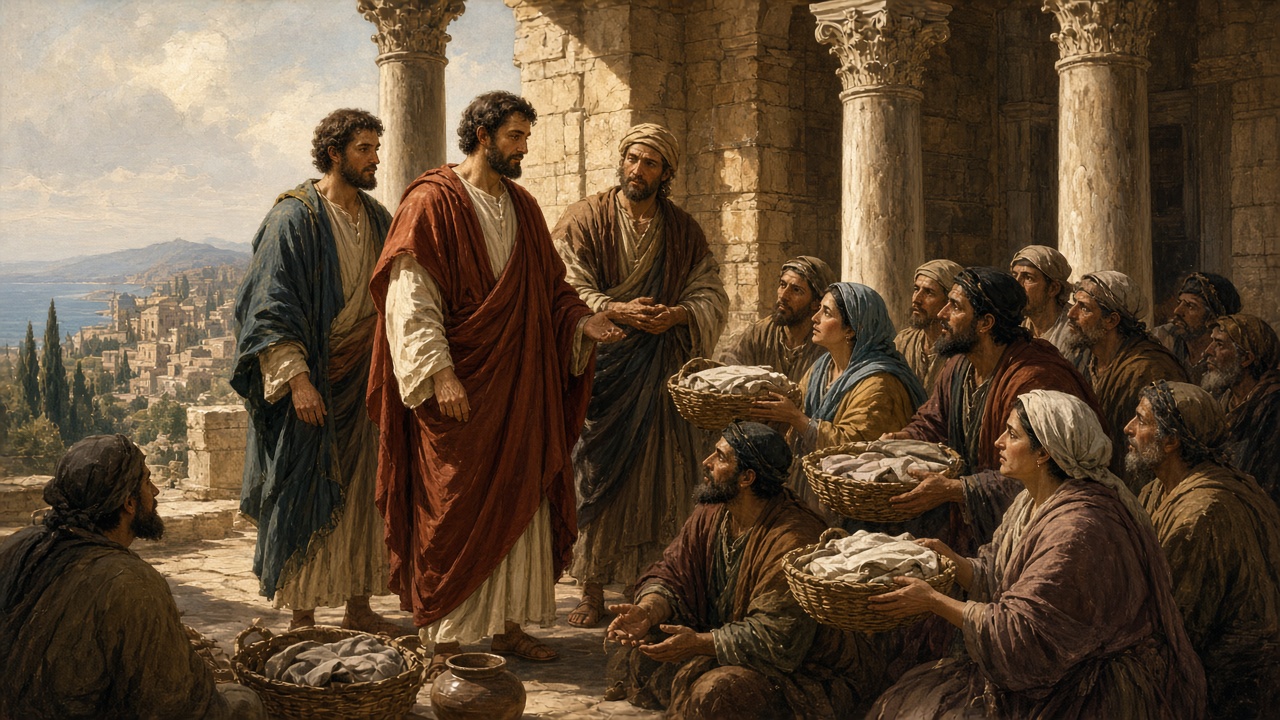
Generosity and the Jerusalem Collection
- In New Testament times Macedonia was a Roman province north of Greece. Paul was summoned by the vision of a man of Macedonia to preach the gospel there, and this chapter tells the Corinthians how those churches, in a terrible ordeal and deep poverty, gave joyfully and even beyond their ability.Sources: Macedonia · the Bible text itself
- Titus, whose name nowhere occurs in Acts, appears to have been a Gentile chiefly engaged in ministering to Gentiles. From Ephesus, Paul sent him to Corinth to forward the church's contributions for the poor saints at Jerusalem; in this chapter Paul urges him to complete that work, and Titus is coming eagerly of his own accord.Sources: Titus · the Bible text itself
- Along with Titus, Paul is sending a brother praised by all the churches for his work in the gospel and chosen by them to accompany the offering, and another brother whose earnestness has been proven many times and in many ways. He explains that this care is meant to avoid criticism of how the generous gift is administered, so that they do what is right not only in the eyes of the Lord but also in the eyes of other people.Sources: the Bible text itself
Notes written with AI assistance from open sources (Theographic Bible Metadata, CC BY-SA 4.0; Easton’s Bible Dictionary, public domain) and reviewed before publishing.
Places in this chapter
Only places identified with high confidence are shown (90% or more according to the scholarly sources compiled by OpenBible). Period map: DARE (Digital Atlas of the Roman Empire), CC BY 4.0; modern map: © OpenStreetMap contributors; places: OpenBible.info (CC BY 4.0).
Credits and license for this translation
Ŋwɛ menomenyɛɛ́ mekɛ́
New Testament in Denya (CM:anv:Denya)
copyright © 2010 Wycliffe Bible Translators, Inc.
Language: Denya
Translation by: Wycliffe Bible Translators, Inc.
Copyright Information
© 2010, Wycliffe Bible Translators, Inc. All rights reserved.
This translation text is made available to you under the
terms of the Creative Commons License: Attribution-Noncommercial-No Derivative Works.
( http://creativecommons.org/licenses/by-nc-nd/3.0/ )
In addition, you have permission to port the text to different file formats, as long as you
do not change any of the text or punctuation of the Bible.
You may share, copy, distribute, transmit, and extract portions
or quotations from this work, provided that you include the above copyright
information:
You must give Attribution to the work.
You do not sell this work for a profit.
You do not make any derivative works that change any of the actual words or punctuation of the Scriptures.
Permissions beyond the scope of this license may be
available if you contact
us with your request.
The New Testament
in Denya
© 2010, Wycliffe Bible Translators, Inc. All rights reserved.
This translation is made available to you under the terms of the
Creative Commons Attribution-Noncommercial-No Derivatives license 4.0.
You may share and redistribute this Bible translation or extracts from it in any format, provided that:
You include the above copyright and source information.
You do not sell this work for a profit.
You do not change any of the words or punctuation of the Scriptures.
Pictures included with Scriptures and other documents on this site are licensed just for use with those Scriptures and documents.
For other uses, please contact the respective copyright owners.
2024-02-11
Source: http://ebible.org/anvNT/ · eBible.org