Revelation 6
Jesucristo oy oa’pak: Kenda Jesucristoa; monigka’uyatenok; Diostaj mo’manopo’yarea’ika’ne · Tap a verse to see its cross-references.
Sietetaʼ eʼtiondapikeʼ Ovejasiʼpoa okkuʼuy.
1Diosen Ovejasiʼpoa nogtida eʼtiondapik ekkujted ijtiahuayʼuy. Kenpaʼti:
—Yatiak. Yatiahuayʼ. Cuatro huanoeonhuahuikaʼeria onokteteyoʼ ʼuttaʼda edaʼte konig kurud eapaʼ ʼuttaʼda enaʼte ijpe̱e̱ʼuy.
2Yereda caballotaj ijtiahuaypo keʼna caballote oʼhuadpo kumej oʼto̱e̱po. Huayakhueʼ huakaʼeri huakuot oʼedepo huayakhueʼ eʼkaʼtaʼ oʼpakpo nogtaj nogtaj Diosen takaʼtaj huayakhueʼ yaʼmagkadhuahuikaʼapet. Kenda ijtiahuayʼuy.
3Diosen Ovejasiʼpoa bottaaʼ eʼtiondapik ekkujdeʼte
—Yatiak. Yatiahuayʼ. Bottaaʼ huanoeonhuahuikaʼeria eaʼte ijpe̱e̱ʼuy.
4Nogda caballo huabed oʼhuaʼ. Keʼna caballote onʼhuadpo huaboroʼ siroda oʼepo huadariere aratbut huayahuaya enʼmanoeyanhuahuikaʼte huayahuaya kanʼbarakikeʼpo caballo huabedte huahuaderitaj Diosa teyda ya̱ʼe̱a̱ʼapet.
5Diosen Ovejasiʼpoa bapaaʼ eʼtiondapik ekkujdeʼte,
—Yatiak. Yatiahuayʼ. Bapaaʼ huanoeonhuahuikaʼeria eaʼte ijpe̱e̱ʼuy.
Caballo huasik ijtiahuayʼuy. Keʼna caballote onʼhuadpo huataʼhuahuayʼeaʼ huabaʼa eʼto̱e̱ʼ ijtiahuayʼuy. 6Bottaʼ bottaʼ huanoeonhuahuikaʼeriomeyen huanopoyaʼ eaʼte ijpe̱e̱po,
—Nogok sueʼda aypo o̱ʼe̱a̱po. Trigo nogkilotida huakkaʼteda e̱e̱ʼte nogmeʼnoetida eʼbaaʼhuapa o̱ʼe̱nok. Bapaʼ kilos cebadakid aypo huakkaʼteda e̱e̱ʼte nogmeʼnoetida eʼbaaʼhuapa o̱ʼe̱nok. Hue̱ymey olivotaj okteghueʼ yaneʼ. Kenpaʼti uva hue̱ymeytaj okteghueʼ yaneʼ. Ijpe̱e̱ʼuy. Olivo huada konig huasihuaj huakaʼ o̱ʼe̱. Uva huada konig vino huakaʼ o̱ʼe̱.
7Diosen Ovejasiʼpoa bottaʼ bottaaʼ eʼtiondapik ekkujdeʼte,
—Yatiak. Yatiahuayʼ. Bottaʼ bottaaʼ huanoeonhuahuikaʼeria eaʼte ijpe̱e̱ʼuy.
8Caballo huaeykon ijtiahuayʼuy. Keʼna caballote enʼhuadte onʼdikkaʼuy Huamabueyikaʼapoeri. Keʼnentaʼpoyen konig kubarakonig ijtiahuayʼuy. Keʼna oʼpaknok huakkaʼtada barakikaʼdik ya̱ʼneapet. Aratbut nogtaj nogtaj huayahuaya onʼbahuadiaypo yanʼbarakonhuahuaʼpo huakkaʼda yanʼmabueyikapet. Kenpaʼti aypotaʼ yanʼkusitokpo yanʼmabueyikapet, huakkaʼ onʼmadigpakpo huakkaʼnada yanʼmabueyikapet. Kenpaʼti toyahuehueʼdikda hua̱e̱ʼeria huakkaʼtada yaʼmabatiarakikapet.
9Diosen Ovejasiʼpoa huabaniga̱ʼ eʼtiondapik ekkujdeʼte aratbutkudaken noki̱re̱gtaj ijbatiahuayʼuy. Diostaj ʼuhua eʼnigbarakikaʼ kutopa o̱ʼi̱kaʼ. Kutopatoyo aratbut noki̱re̱gtaj ijbatiahuayʼuy. Kenomeya̱ Diosen huaʼa onʼmanmadikikaʼuynig kenpaʼti Diosensiʼpo Jesucristotaj yoknopo̱e̱ onʼbatiaʼpakikaʼnok kenomeytaj oknopo̱e̱hueʼ hua̱e̱ʼeria onʼbarakuyate. Kenomey huaknopo̱e̱ʼerien noki̱re̱gtaj ijbatiahuayʼuy.
10—Kenpaʼda huadaknanada i̱ʼi̱kaʼ, Dios Huairi. Kenda ijkaʼapoy eaʼnayo iʼkikaʼne. ¿Huadariyaʼ oknopo̱e̱hueʼ hua̱e̱ʼeria oroʼomeytaj boʼarakuyne. Kenomeytaj menokata castiga magkaʼdik ya̱ʼe̱a̱po? —ʼUttaʼda huaknopo̱e̱ʼerikudaken noki̱re̱ga̱ Diostaj oʼnonaʼuy.
11Ken yereda yudtaj huaok Diosa oʼbayokuy. Huaknopo̱e̱ʼerikudaktaj oʼbayokuy. “Nogi̱timon yanʼnigi̱kaʼ. Nogok nogomey huaknopo̱e̱ʼeri huamaʼbuy Jesucristotaj huanigpe̱i̱kaʼeritaj huehueaʼ dakhuapa kanakbarakeneʼ dakaʼda yanʼnigunhuaʼ.” Diosa oʼmanaʼuy.
12Diosen Ovejasiʼpoa nogbaʼyo eʼayhuaʼ eʼtiondapik ekkujte doa eʼtiahuaydeʼte huadari diga̱ʼda o̱ʼi̱ye̱ga̱ponig, konig sikda yudtanig niokpo oʼsikpakaponig, konig mimiaʼda puug oʼbedpakaponig kenda ijtiahuaymey. 13Kenpaʼti konig huakkaʼda eʼbapokte higuera huada burada diga̱ʼda onʼdakotikaʼ, huakkaʼda onʼdakotikaʼ ken konigti huakkaʼ siokpo kurudya̱ʼ huadariyo oʼbakotapetnig kenda ijtiahuaymey. 14Kenpaʼti berobaʼ oʼkorigonpo onteʼti tiahuayhueʼdik o̱ʼi̱kaʼ konigti kurud oʼkorigonpo onteʼti tiahuayhueʼdik ya̱ʼe̱a̱petnig kenda ijtiahuaymey. Kenpaʼti ayaʼ huakupa nogyondakon yanʼhuaʼapetnig, ayaʼ hua̱gkutaʼmej nogyondakon yanʼhuaʼapetnig kenda ijtiahuaymey. 15Ayaʼada Diostaj onʼmeʼpukpo huataʼ aʼtiokayaʼpo huakogyo̱ yanʼi̱re̱gapet kenpaʼti sipanaʼkupatoyo yanʼi̱re̱gapet. Gobierno huairi, huakupe huairi, sorotataj huairi, huamataʼmoneri huairi, huanabaʼere ayaʼada yanʼi̱re̱gapet. Huakupataj huidtoneʼtaj onaʼpo:
16—Oroʼomeytaj boʼtibukaʼ huidtoneʼ. Diostaj moki̱re̱ga̱ʼ. Ovejasiʼpoa castiga eʼmagkaʼ moki̱re̱ga̱ʼ. —Huakupataj huidtoneʼeretaj ya̱ʼnonaʼapet. Kenda ijpe̱e̱mey kenpaʼti ijtiahuaymey.
17Oy ayaʼ dakhueaʼ huakaʼeritaj Diosa kenpaʼda castiga yaʼmagkaʼapet. Diostaj beʼapiʼ okmonhueʼdik o̱ʼne.
Did you know?
The Opening of the Six Seals
- The first four seals reveal four riders on white, bright red, black, and pale green horses, summoned one by one by the four living creatures. Each horseman brings a distinct affliction across the earth, ranging from conquest and the loss of peace to widespread famine, plague, and death.Sources: the Bible text itself
- The third horseman holds a pair of scales, accompanied by a proclamation setting the price of a quart of wheat or three quarts of barley at a denarius, reflecting severe inflation and food rationing while oil and wine are preserved.Sources: the Bible text itself
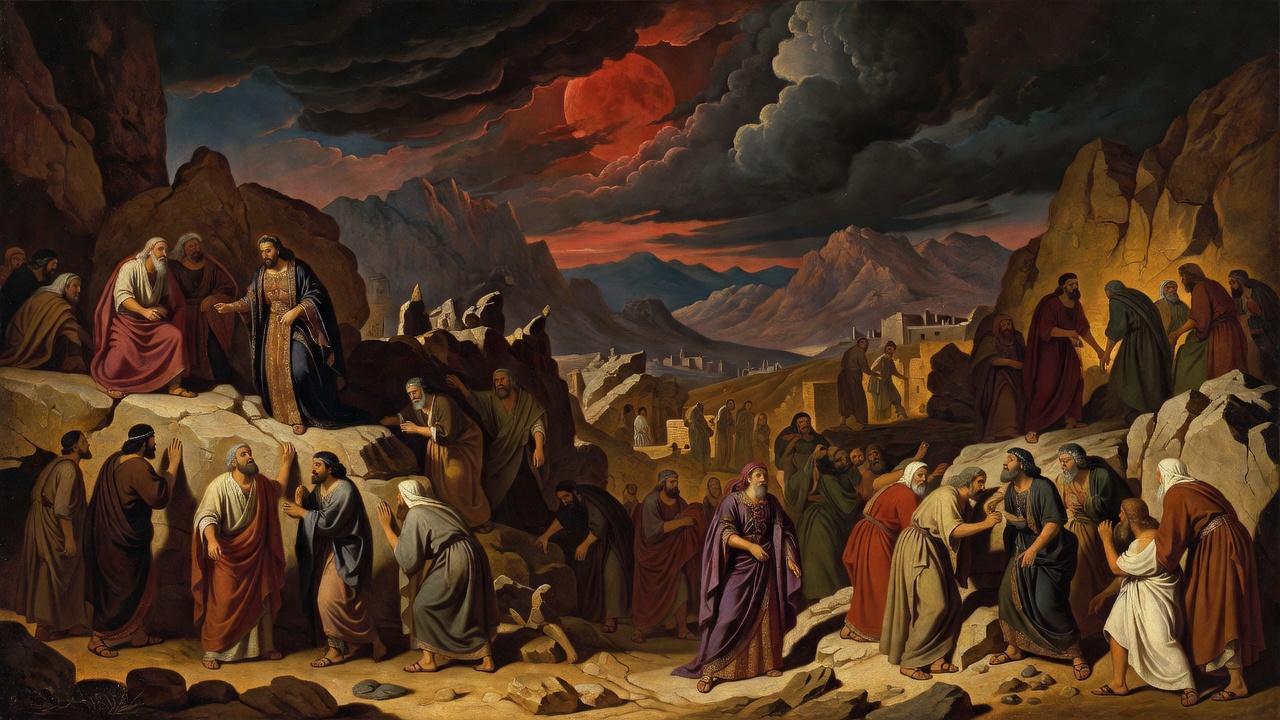
- When the fifth and sixth seals are opened, the focus shifts to the souls of slain believers waiting under the altar, followed by immense cosmic and earthly upheavals that lead people of every social station to hide in mountain caves.Sources: the Bible text itself
Notes written with AI assistance from open sources (Theographic Bible Metadata, CC BY-SA 4.0; Easton’s Bible Dictionary, public domain) and reviewed before publishing.
Credits and license for this translation
Jesucristo oy oa’pak: Kenda Jesucristoa; monigka’uyatenok; Diostaj mo’manopo’yarea’ika’ne
New Testament in Amarakaeri (PE:amr:Amarakaeri)
copyright © 2008 Wycliffe Bible Translators, Inc.
Language: Amarakaeri
Translation by: Wycliffe Bible Translators, Inc.
Amarakaeri [amr], Peru
Copyright Information
© 2008, Wycliffe Bible Translators, Inc. All rights reserved.
This translation text is made available to you under the
terms of the Creative Commons License: Attribution-Noncommercial-No Derivative Works.
( http://creativecommons.org/licenses/by-nc-nd/3.0/ )
In addition, you have permission to port the text to different file formats, as long as you
do not change any of the text or punctuation of the Bible.
You may share, copy, distribute, transmit, and extract portions
or quotations from this work, provided that you include the above copyright
information:
You must give Attribution to the work.
You do not sell this work for a profit.
You do not make any derivative works that change any of the actual words or punctuation of the Scriptures.
Permissions beyond the scope of this license may be
available if you contact
us with your request.
The New Testament
in Amarakaeri
© 2008, Wycliffe Bible Translators, Inc. All rights reserved.
This translation is made available to you under the terms of the
Creative Commons Attribution-Noncommercial-No Derivatives license 4.0.
You may share and redistribute this Bible translation or extracts from it in any format, provided that:
You include the above copyright and source information.
You do not sell this work for a profit.
You do not change any of the words or punctuation of the Scriptures.
Pictures included with Scriptures and other documents on this site are licensed just for use with those Scriptures and documents.
For other uses, please contact the respective copyright owners.
2024-02-11
Source: http://ebible.org/amrNT/ · eBible.org