Acts 12
Jesucristo oy oa’pak: Kenda Jesucristoa; monigka’uyatenok; Diostaj mo’manopo’yarea’ika’ne · Tap a verse to see its cross-references.
Jacobotaj onʼarakuyate kenpaʼti Pedrotaj o̱gkuda̱ʼuyate.
1Kenokaʼ Antioquía huanigpe̱i̱kaʼeria Judea huamaʼbuytaj huakupe onʼtaʼmonaʼuyate. Kenokaʼ Herodes Roma huairi Jerusalényo̱ o̱ʼe̱po keʼnen sorotataj Jesúsen huanigpe̱i̱kaʼeritaj huaboaʼda dakhueaʼda onʼmagkaʼpo, sueʼtada onʼmagkaʼuyate. 2Jacobotaj kanʼarakeʼpo sorotatataj oʼmataʼmonaʼnok siroa Jacobotaj onʼarakuyate. Jacobo Juanen huamaʼbuy o̱ʼu̱yate. 3Jacobotaj enʼarakte judío huairi durugda o̱ʼnenok Herodes kenda oʼpe̱e̱depo Pedrotakon oʼkuda̱ʼuyate. Biahueʼ pan huapeʼ fiesta e̱e̱ʼte Pedrotaj o̱gkuda̱ʼuyate. 4Pedrotaj enʼkuda̱deʼte meya̱huedda bottaʼ bottaʼ sorotataj onʼtiokikaʼpo, sikyoed nog kupoada onʼtiokikaʼpo, bisik nog kupoakon onʼtiokikaʼpo, sikyo nog kupoakon onʼtiokikaʼpo. Judíoen fiesta eʼpokdeʼte aʼarakyaʼpo aratbutpoyaʼ ijto̱o̱ro̱kapoy Herodesa oʼnopo̱e̱ʼuy. 5Huabakuda̱ʼ jakyo sorotataj Pedrotaj dakaʼda enʼtiokikapiʼ Jesúsen huanigpe̱i̱kaʼerianayo onʼpakpo onʼtionaʼpakonhuaʼpo. Pedrotaj kaʼtihuapokeʼpo Diostaj onʼtionaʼpakonhuaʼuyate.
Huabakuda̱ʼ jakyaʼ Diosa o̱ʼo̱ro̱kaʼuyate Pedrotaj.
6Ken sikyo o̱ʼe̱po, emeʼte aratbut kanʼtiahuayeʼpo Herodes Pedrotaj o̱ro̱kaʼdik e̱e̱ʼtada bottaʼ sorotataa Pedrotaj nopoyo onhueda̱ʼpo onʼtotay. Bottaʼ sirobia onʼbaʼtidukupo Pedrotaj. Kenpaʼti akbogpete nogomey sorotataj huatiokaʼeri o̱ʼnepo. 7Jakyo ijhuiti ehueʼ Diosen huataʼmoneri oʼbo. Huabakuda̱ʼ jakyo jeyda o̱ʼe̱po Diosen huataʼmoneri Pedrotaj huapidtaʼ oʼdeydeypo oʼmaboaʼpo,
—I̱dada yaboʼ. —Onaʼnok.
Ken sirobia eʼbaʼtidukuʼ oktikuonkaʼuy.
8—Bakaʼbia teyaʼ yatagpotinukuʼ, huaʼiot yaoton. —Diosen huataʼmoneria onaʼuyate.
Pedroa eʼotdeʼte,
—Huaot yaotonpo, doʼtaj betahuaʼ. —Diosen huataʼmoneria onaʼuyate.
9Ken Diosen huataʼmoneritaj oʼtahuaʼpo huabakuda̱ʼ jakyaʼ Pedro o̱ʼo̱ro̱kpo. Diosen huataʼmoneria meʼo̱ro̱ketpiʼ buttidapiʼ i̱jje̱t nopo̱e̱hueʼ o̱ʼe̱po ijyorokidapiʼ Pedro oʼnopo̱e̱po. 10Huakkuru sorotataj huatiokaʼeritaj oʼtimononpo nogtaʼkon oʼmatimononpo siro jakhuiʼkayte o̱ʼneatoʼuy. Siro jakhuiʼkay adpen huakkaʼ jak o̱ʼe̱. Onda ekhuikeʼte oʼnoro̱kuyate. Kurute oʼtohuaʼpo adtaʼmon Diosen huataʼmoneria Pedrotaj okhuaʼuyate.
11—Huabakuda̱ʼ jakyaʼ Diosen huataʼmoneria doʼtaj meʼo̱ro̱kaʼdene, huaboaʼda Pedroa oʼnokotdepo, Herodes Huairitaj kenpaʼti judío aratbuta doʼtaj menarakapeyaʼpo doʼtaj katiokeʼpo Diosa keʼnen huataʼmoneri menigtaʼmonaʼdene, buttida o̱ʼe̱. —Pedroa huanopoyaʼda oʼnopo̱e̱ʼuyate.
12Kenda Pedro oʼnoponhuaʼpo Maríaen jakyo oʼhuaʼuyate. María Juan Marcosen hua̱ye̱ o̱ʼu̱y. Maríaen jakyo huakkaʼda onʼkupopak Diostaj onʼtionaʼpakonhuaʼpo. 13Akbogpetaʼ Pedroa oʼmanaʼpo Rode muneʼyo̱a̱ akbogpete oʼhuatiakpo beati yaetapo oʼhuatiakuy. 14Pedroa oaʼ o̱ki̱a̱ʼpo huakkaʼda oʼdurugpakonpo okhuikehueʼada oʼkorudpo oʼketpo, “Kurute Pedro o̱ʼe̱,” oʼmanaʼuyate.
15—Namaʼda iaʼ. —Eʼnonaʼte “buttida ijjay,” Rode oʼmanaʼuyate.
—Pedro ehueʼ o̱ʼe̱. Keʼnen huataʼmoneri o̱ʼe̱ta. —Onaʼti oʼnonaʼuy.
16Ken konig enʼbatiaʼpakte Pedroa menigokhuikeʼ oʼmananhuaʼuy. Kenokaʼ oʼnokhuikeʼdepo Pedrotaj onʼtiahuaypo onʼmameʼpukeonuyate. 17Pedroa oʼbatepo yanʼbatik oʼmanaʼpo. Diosa huabakuda̱ʼ jakyaʼ meʼo̱ro̱kaʼne, Pedroa oʼmanbatiaʼpakpo,
—Jacobotaj kenpaʼti huamaʼbuytaj konig ijmanbatiaʼpaki kenda yanʼmanbatiaʼpaktiʼ. —Pedroa oʼmanaʼdepo nogyon oʼbakhuaʼuyate. 18Emedeʼte, “¿Pedro men ya̱ʼe̱? ¿Beʼa yatikuj?” Huayahuaya huabakuda̱ʼ jakyaʼ sorotataj onʼmeʼpukpo diga̱ʼda onʼbatiaʼpakuyate. 19“Pedrotaj yanʼukpo yanʼtotiak.” Herodesa eʼmanaʼte huahuayhueʼ o̱ʼnenok, “¿Menpaʼ yaʼmonate?” Sorotatataj oʼmanaʼpo, “Sorotatataj yanʼarak.” Herodesa oʼmanaʼuyate. Nogok Herodes Judea huadariyaʼ oʼhuaʼuyate. Cesarea huakkaʼ jakyo a̱ʼi̱kayaʼpo oʼhuaʼuyate.
Herodestaj i̱da oʼbueyaʼuyate.
20Kenokaʼ Tiro huakkaʼ jak aratbuttaj kenpaʼti Sidón huakkaʼ jak aratbuttaj Herodes oʼmahua̱diayʼuyate. Herodes huairien huadariyaʼ Sidón aratbuttaj Tiro aratbuttere aypo oʼbayokikaʼuyatenok. Sidón aratbutere Tiro aratbutere Herodeste onʼbahuahuaʼnigʼa, huairitaj kudhued Blastotaj onʼhuahuaypo onʼbatiaʼpakuyate. Blasto huairien jak huato̱e̱ʼeri o̱ʼu̱yate “Oroʼtaj moʼtinoeye̱ʼ.” Huairitaj monigbatiaʼpak. Tiro aratbutere Sidón aratbutere oʼnonaʼuyate. 21Ken huameʼnoete meneʼbatiaʼpak. Herodesa oaʼmeʼpo ken huameʼnoete Herodes huairien ʼuruda huaok oʼotpo huairien huahuadte oʼhuaddepo. Tiro aratbuttaj Sidón aratbuttere oʼmanbatiaʼpakuyate.
22—Keʼna oʼmanbatiaʼpaknig “Huabokerek ehueʼ o̱ʼe̱. Keʼna Dios Huairi o̱ʼe̱.” —ʼUttaʼda onʼmanaʼuyate. 23“Diosyoʼda huadakda o̱ʼi̱kaʼ.” Herodesa ahueʼ o̱ʼe̱nok ijhuiti ehueʼ Diosen huataʼmoneria dakhueʼ o̱ʼeanʼuy. Moro̱kduʼada oʼpeʼpo oʼbueyaʼuyate.
24Nogya̱ʼ nogya̱ʼ Jesús Huairitaj onʼmanbatiaʼpakonhuaʼnok huakkaʼada huaboaʼda onʼnigpe̱e̱ʼuyate.
25Ken, Bernabé Sauloere Jerusalényo̱ paiʼda aratbuttaj huakupe onʼbayokeʼdepo dakhuapa o̱gkaddepo Juantaj onʼtohuaʼpo Jerusalénya̱ʼ onʼkumejdepo. Antioquíayo onhuaʼuyate. Juan onʼdikkaʼuyate Marcos.
Did you know?
Peter's escape and Herod's death
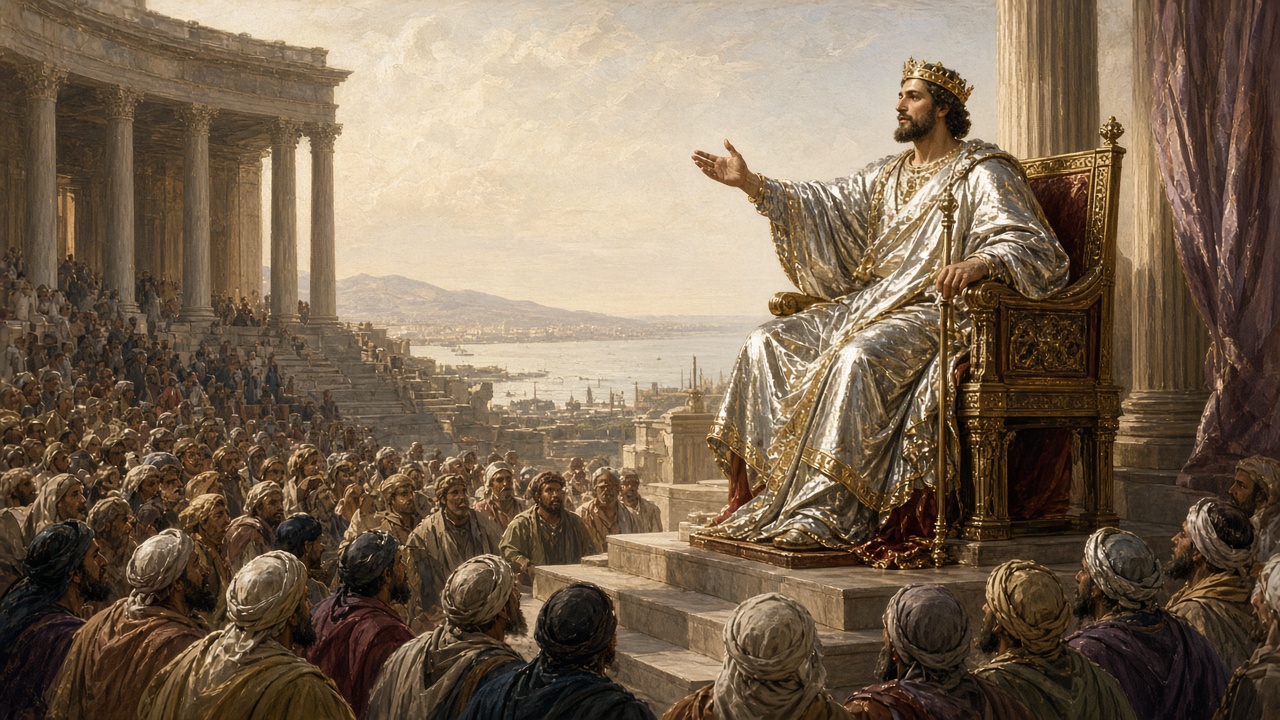
- The King Herod of this chapter is Herod Agrippa I, grandson of Herod the Great, who in time held his grandfather's entire kingdom and the title of king. He put James to death and imprisoned Peter. Easton's Bible Dictionary (1897) says that on the second day of a festival honoring the emperor Claudius, Agrippa appeared in the great theatre at Caesarea wearing magnificent silver robes; it was early in the day, and the sun's rays dazzled those who saw him.Sources: Herod Agrippa I · the Bible text itself
- The James killed with the sword was James the son of Zebedee, brother of the apostle John, a fisherman who had worked in partnership with Peter. Easton's Bible Dictionary (1897) calls him the first of the apostles to be put to death and says that Herod Agrippa had him beheaded. The James whom Peter tells the believers to notify is another man: the same dictionary identifies him as the James who headed the church in Jerusalem.Sources: James (Son of Zebedee) · James (Brother of Jesus) · the Bible text itself
- Once he knew he was free, Peter went to the house of Mary, mother of John Mark, in Jerusalem, which Easton's Bible Dictionary (1897) calls a common meeting place of the disciples; many people were gathered there praying. The servant who came to the outer gate was Rhoda, a name that means a rose; overjoyed at his voice, she ran inside to announce him and forgot to open the gate. John, also called Mark, was Mary's son—Mark, his Roman name, gradually replaced the Jewish name John—and he later left Jerusalem with Barnabas and Saul.Sources: Mary (Mother of John Mark) · Rhoda · John Mark · the Bible text itself
Notes written with AI assistance from open sources (Theographic Bible Metadata, CC BY-SA 4.0; Easton’s Bible Dictionary, public domain) and reviewed before publishing.
Places in this chapter
- Caesarea · Today: Caesarea Maritima · 32.500, 34.892 · verse 19
- Judea · Today: Judea 1 · 31.777, 35.234 · verse 19
- Sidon · Today: Sandikli archaeological site in Sidon · 33.561, 35.372 · verse 20
- Tyre · 33.271, 35.196 · verse 20
- Jerusalem · 31.777, 35.234 · verse 25
Only places identified with high confidence are shown (90% or more according to the scholarly sources compiled by OpenBible). Period map: DARE (Digital Atlas of the Roman Empire), CC BY 4.0; modern map: © OpenStreetMap contributors; places: OpenBible.info (CC BY 4.0).
Credits and license for this translation
Jesucristo oy oa’pak: Kenda Jesucristoa; monigka’uyatenok; Diostaj mo’manopo’yarea’ika’ne
New Testament in Amarakaeri (PE:amr:Amarakaeri)
copyright © 2008 Wycliffe Bible Translators, Inc.
Language: Amarakaeri
Translation by: Wycliffe Bible Translators, Inc.
Amarakaeri [amr], Peru
Copyright Information
© 2008, Wycliffe Bible Translators, Inc. All rights reserved.
This translation text is made available to you under the
terms of the Creative Commons License: Attribution-Noncommercial-No Derivative Works.
( http://creativecommons.org/licenses/by-nc-nd/3.0/ )
In addition, you have permission to port the text to different file formats, as long as you
do not change any of the text or punctuation of the Bible.
You may share, copy, distribute, transmit, and extract portions
or quotations from this work, provided that you include the above copyright
information:
You must give Attribution to the work.
You do not sell this work for a profit.
You do not make any derivative works that change any of the actual words or punctuation of the Scriptures.
Permissions beyond the scope of this license may be
available if you contact
us with your request.
The New Testament
in Amarakaeri
© 2008, Wycliffe Bible Translators, Inc. All rights reserved.
This translation is made available to you under the terms of the
Creative Commons Attribution-Noncommercial-No Derivatives license 4.0.
You may share and redistribute this Bible translation or extracts from it in any format, provided that:
You include the above copyright and source information.
You do not sell this work for a profit.
You do not change any of the words or punctuation of the Scriptures.
Pictures included with Scriptures and other documents on this site are licensed just for use with those Scriptures and documents.
For other uses, please contact the respective copyright owners.
2024-02-11
Source: http://ebible.org/amrNT/ · eBible.org