Revelation 7
Haalin Mallano · Tap a verse to see its cross-references.
Wotindar Maytamin Yettsadhaana Israveel Eena
1Ogosa budonte Barjosa gaanana oynna peensa karra oynnadar woyayse ke daaka keam i haapade. Peendar ko hannaar, bazindar ko hannaar, haaqandar ko hannaar, jibare jibarshoamadettsi oynna goynaka peendar nivayna jibarshayna jibarenam kedi yedidine.
2Lay dehea Barjosa maytaminam yedaa ab Barjosa gaana haynsa utambara ki nivaka i haapade. Peenbee bazinbeam kenin kaysoadettsi hayamo kena imbhaana oynna Barjosa gaananana yisa upsin dheg hayayse, 3“Wosa Barjoana waadimayna eenasa wotindar maytamin wonin qanenka yekka peenam ko hannaar, bazinam ko hannaar, haaqanam ko hannaar kayseebhode!” kena ki hamade. 4Maytamin daran qandhaana eenasaar paydinam i qansade; Israveel eenasa muldhan wulsa maytamin daran qandhaana shii eedi tobbhaa kaysa apo oydi (144,000) ke dahade.
5Yiwda muldhara shii tabhi lamaa (12,000),
Roobeel muldhara shii tabhi lamaa (12,000),
Gaad muldhara shii tabhi lamaa (12,000),
6Aseer muldhara shii tabhi lamaa (12,000),
Niptaaleem muldhara shii tabhi lamaa (12,000),
Minase muldhara shii tabhi lamaa (12,000),
7Simoon muldhara shii tabhi lamaa (12,000),
Lewi muldhara shii tabhi lamaa (12,000),
Yisaakoor muldhara shii tabhi lamaa (12,000),
8Zaabloon muldhara shii tabhi lamaa (12,000),
Yoseep muldhara shii tabhi lamaa (12,000),
Biiniam muldhara shii tabhi lamaa (12,000),
maytamin yindar qandhaana ke dahade.
Apala Cawli Qaadhoono Thoothino Eeno
9Ogosa budonte, marrato! Hayyear paydana damima kattsi thoothi eedi i haapade. Kediar zarsin wulbee, muldhan wulbee, peen wulbee, apon wulbera utaanane; apala cawli qaadhayse meetha haccha yisa aanindar yedayse bitamon borkotonbee Yaatabesa birante woyayse ke dahade. 10Upsi gebhikaar
“Dhacchea bitamon borkotondar dooqaa
wosa Barjoabee Yaatabene!”
hamayse keda ilate.
11Barjosa gaanana wul bitamon borkotonbee, donzanabee, damma oynnabesa gasante woyayse ke dahade. Bitamon borkotonsa birante kumpurdhayse Barjona goodimada yin ke giyade:
12“Amiin! Shawkadhabee, gobshibee, pakalmakkobee,
dheg hama gobshibee, hayamobee, kantabe
rooro wul lay wosa Barjoana ko dee; amiin!”
ke hamade.
13Donzanasaar kalaa ina yi giyna: “Igina apalan cawlin qaadhaana haybene? Hamora ke nivaa?” ki hamade. 14Intaar “Imbo! Ya dhesaada dhese” kina i hamade. Kidiar ina yin ki giyade: “Igina gebhon gaalera utaana eenane; yisa apalanamaar Yaatasa zombhinka shivayse ke calshade. 15Ogonante
Barjosa bitamon borkotonsa birante dahayse
sootinbee rooronbe Barjosa gazan ooninte
kina waadadha ke waadadhe.
Bitamon borkotondar dooqaar kesa shipo kida maate.
16Keeda kaara os kedi daaqardhehe, dheebardhehe;
haynsa oydhamonbee usumenbe keam kaamehe.
17Harrna hambhidianna, bitamon borkotonsa shaarinte dahaa Yaata keam gishea kida dee;
sadan imen noqon aapin elendar keam kida entse.
Barjoar ermitin wulam kesa aapira kida qode”
ina ki hamade.
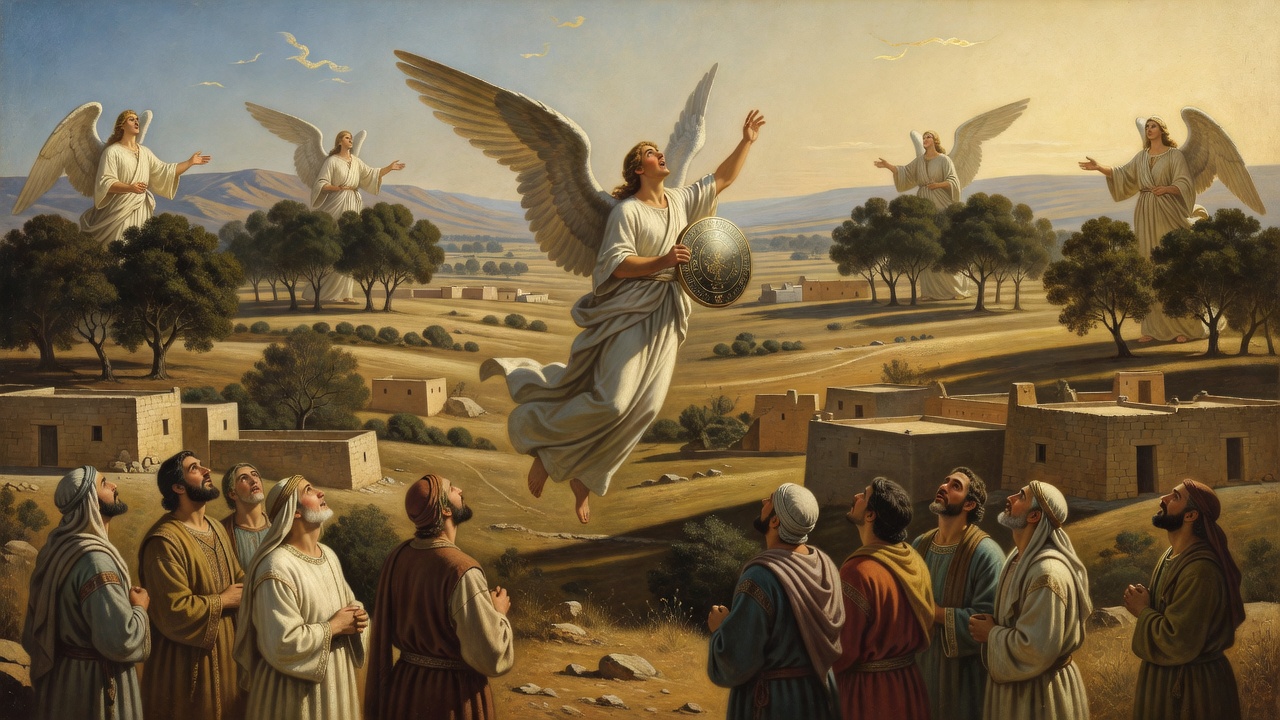
Did you know?
The sealed tribes and the great multitude
- Revelation 7 numbers the sealed as 144,000, twelve thousand from each of the tribes of Israel named in the chapter. Israel was another name for Jacob, the second-born of the twin sons of Isaac and Rebekah; Easton's Bible Dictionary (1897) explains Jacob's name as someone who follows on another's heels, or a supplanter.Sources: the Bible text itself · Jacob (Israel)
- Although Reuben was the eldest son of Jacob and Leah, the list of the sealed begins with Judah and then names Reuben. The list also includes both Joseph and Manasseh; Manasseh was Joseph's elder son, and Jacob adopted him and his brother Ephraim as his own sons.Sources: the Bible text itself · Reuben · Manasseh (son of Joseph)
- After the sealing, the vision shows a multitude too large to count, from every nation, tribe, people, and tongue, standing before the throne and the Lamb, wearing white robes and holding palm branches. One of the elders says they have come out of the great tribulation and have washed their robes and made them white in the blood of the Lamb.Sources: the Bible text itself
Notes written with AI assistance from open sources (Theographic Bible Metadata, CC BY-SA 4.0; Easton’s Bible Dictionary, public domain) and reviewed before publishing.
Credits and license for this translation
Haalin Mallano
The New Testament in the Banna language of Ethiopia
copyright © 2014 SIM International
Language: Banna (Hamer-Banna)
Translation by: SIM
This translation text is made available to you under the
terms of the Creative Commons License: Attribution-Noncommercial-No Derivative Works.
( http://creativecommons.org/licenses/by-nc-nd/3.0/ )
In addition, you have permission to port the text to different file formats, as long as you
do not change any of the text or punctuation of the Bible.
You may share, copy, distribute, transmit, and extract portions
or quotations from this work, provided that you include the above copyright
information:
You must give Attribution to the work.
You do not sell this work for a profit.
You do not make any derivative works that change any of the actual words or punctuation of the Scriptures.
Permissions beyond the scope of this license may be
available if you contact
us with your request.
This translation is made available to you under the terms of the
Creative Commons Attribution-Noncommercial-No Derivatives license 4.0.
You may share and redistribute this Bible translation or extracts from it in any format, provided that:
You include the above copyright and source information.
You do not sell this work for a profit.
You do not change any of the words or punctuation of the Scriptures.
Pictures included with Scriptures and other documents on this site are licensed just for use with those Scriptures and documents.
For other uses, please contact the respective copyright owners.
2014-10-15
Source: http://ebible.org/amf/ · eBible.org